When a 55-gallon drum of flammable liquid ignites, you have approximately 90 seconds before the situation becomes catastrophic. This razor-thin margin between containment and disaster underscores why effective drum fire extinguishing systems aren’t just equipment—they’re lifelines.
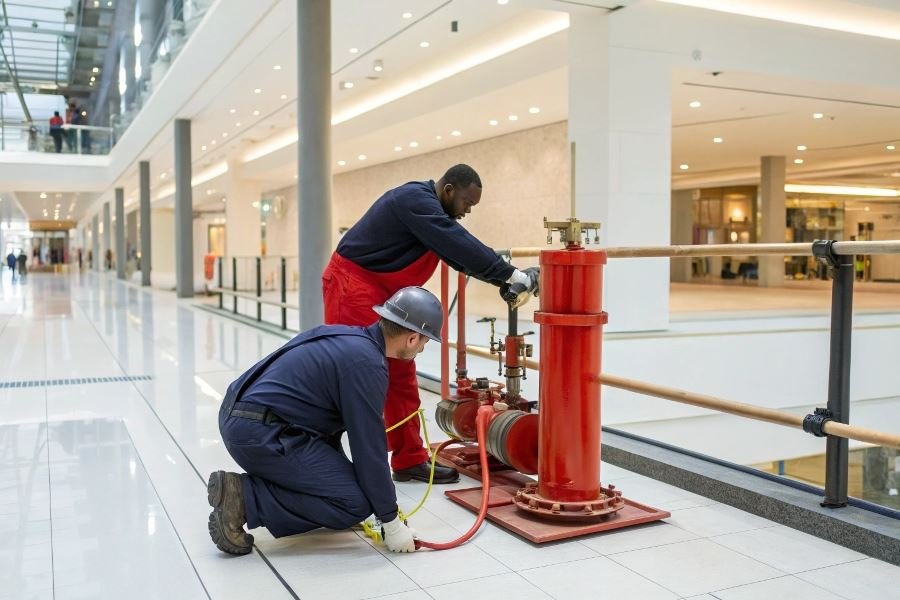
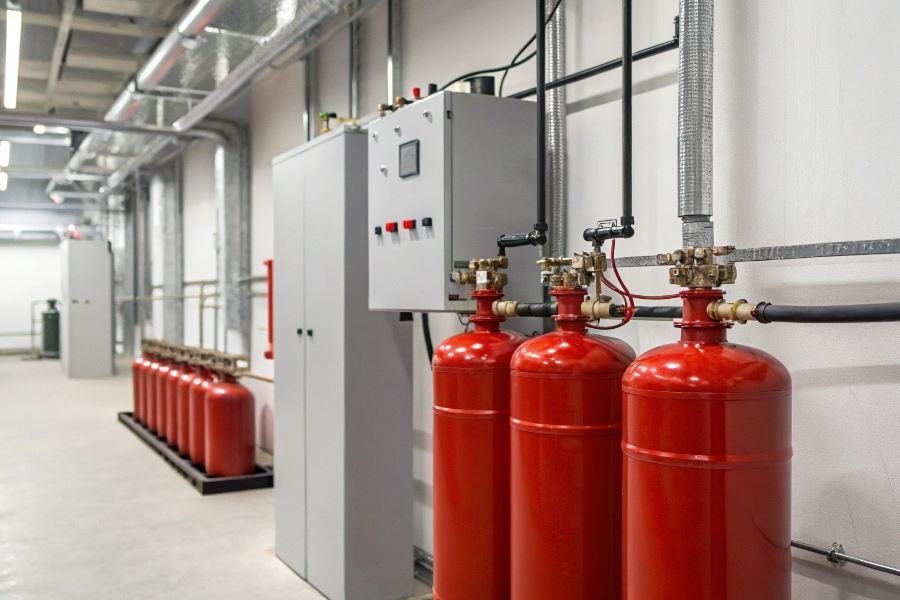
Drum fire extinguishing systems represent specialized firefighting technology designed to detect, contain, and extinguish fires involving industrial drums containing flammable or combustible materials. These systems form the backbone of safety protocols in manufacturing facilities, chemical processing plants, and storage warehouses where drum fires pose significant threats to personnel, property, and production continuity.
“The most expensive fire suppression system is the one that fails when you need it most.” — National Fire Protection Association guidance document
Meeting the regulatory landscape
The effectiveness of these systems isn’t measured by opinion but by strict adherence to established standards. NFPA 30 (Flammable and Combustible Liquids Code) and OSHA 1910.106 establish the foundational requirements, while industry-specific regulations like API 2021 for petroleum facilities add specialized layers of compliance. These aren’t arbitrary bureaucratic hurdles—they’re benchmarks developed through decades of post-incident analysis and engineering advancement.
Beyond compliance: Performance when it matters
Evaluating drum fire extinguishing systems transcends mere regulatory box-checking. Effective evaluation examines response time, suppression capability, reliability under extreme conditions, and integration with existing safety systems. The stakes couldn’t be higher: a system that performs even 5% below optimal efficiency can mean the difference between a minor incident and a facility-wide catastrophe.
Technical Performance Metrics That Make or Break Drum Fire Systems
When evaluating the effectiveness of drum fire extinguishing systems, technical performance criteria serve as the foundation for any meaningful assessment. These specialized fire suppression solutions must meet exacting standards to protect valuable assets and human lives in industrial settings where flammable liquids pose significant hazards.
The criteria for evaluating the effectiveness of drum fire extinguishing systems encompass multiple technical dimensions that directly impact their real-world performance. From discharge capabilities to activation speed, these metrics determine whether a system will successfully contain a potentially catastrophic drum fire or fail when needed most. Let’s examine the critical performance indicators that fire safety professionals use to separate exceptional systems from merely adequate ones.
Discharge Rate and Coverage Area: The Numbers That Matter
The discharge rate of a fire suppression system represents its ability to deliver extinguishing agent quickly and effectively. Industry-leading systems achieve discharge rates of 3.0-4.5 gallons per minute per square foot for foam-based solutions, while dry chemical systems typically deliver 1.5-2.5 pounds per second across the protected area.
Coverage area assessment requires rigorous testing under controlled conditions. The most reliable methodology involves:
- Grid-pattern testing with thermal sensors
- Multiple ignition point scenarios
- Documentation of extinguishing agent distribution patterns
- Wind and draft interference testing
| System Type | Optimal Discharge Rate | Minimum Coverage Area | Maximum Installation Height |
|---|---|---|---|
| Foam-based | 3.0-4.5 GPM/sq ft | 150-200 sq ft | 16-20 ft |
| Dry Chemical | 1.5-2.5 lbs/sec | 100-150 sq ft | 12-16 ft |
| Water Mist | 0.10-0.25 GPM/sq ft | 120-180 sq ft | 14-18 ft |
The National Fire Protection Association standards provide baseline requirements, but truly effective systems exceed these minimums by 15-20% to account for real-world variables.
Response Time and Reliability: When Seconds Define Success
In drum fire scenarios, response time isn’t measured in minutes—it’s measured in seconds. The difference between a 5-second and 15-second activation can determine whether a fire is contained to a single drum or spreads to an entire storage area.
Reliability measurements must include:
- Mean time between failures (MTBF) ratings of key components
- Activation success rates across temperature extremes (-40°F to 120°F)
- Performance degradation assessment after extended deployment periods
- False activation frequency under various environmental conditions
The gold standard for industrial applications is a system that achieves 99.97% activation reliability with response times under 10 seconds from fire detection. Ansul and other leading manufacturers conduct rigorous testing that simulates years of deployment conditions to verify these metrics.
Extinguishing Agent Compatibility: The Chemistry of Success
Not all fires are created equal, and neither are the agents designed to extinguish them. Compatibility between extinguishing agents and specific fire classifications determines whether a system will effectively suppress the unique characteristics of drum fires.
For Class B flammable liquid fires common in drum storage:
- AFFF (Aqueous Film Forming Foam) creates a vapor-suppressing film that prevents re-ignition
- Dry chemical agents like potassium bicarbonate interrupt the chemical chain reaction
- Clean agents like FM-200 provide rapid suppression without residue
The most sophisticated evaluation protocols test agents against specific accelerants and fuels stored in the protected facility, rather than relying solely on generic fire classifications. This customized approach ensures that the selected system addresses the actual fire risks present, not just theoretical scenarios.
Maximizing Your Investment: Implementation and Maintenance of Drum Fire Systems
Fire protection isn’t just about installation—it’s about creating a living, breathing safety ecosystem that evolves with your facility. When it comes to drum fire extinguishing systems, the real value emerges through thoughtful integration, rigorous monitoring, and smart financial planning.
Seamless integration drives facility-wide protection
The most effective drum fire suppression systems don’t exist in isolation. They function as vital components within a comprehensive fire protection infrastructure.
Integration begins with compatible communication protocols between your drum fire systems and the central alarm panel. Modern systems utilize addressable technology that pinpoints exactly which detector has been activated, allowing for targeted response and reducing false alarms by up to 73% compared to conventional systems.
The magic happens when your drum fire system talks to everything else.
Consider these integration touchpoints:
- Building management systems (BMS)
- Emergency ventilation controls
- Power shutdown sequences
- Evacuation notification systems
- Remote monitoring capabilities
Notifier and Siemens offer particularly robust integration platforms that allow drum fire systems to become part of a unified response strategy.
The most sophisticated drum fire system becomes nearly worthless if it operates in isolation from your facility’s broader safety infrastructure.
Performance monitoring beyond the checkbox
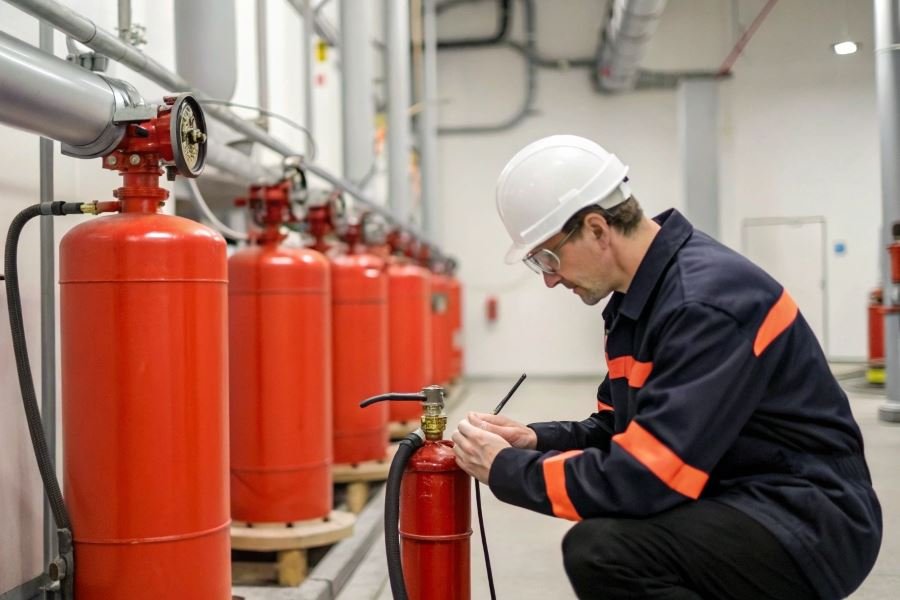
Long-term effectiveness requires more than annual inspections—it demands a comprehensive testing protocol that evolves with your facility.
Baseline performance metrics should be established immediately after installation, creating a reference point for all future evaluations. These metrics typically include:
| Metric | Testing Frequency | Documentation Required |
|---|---|---|
| Detector response time | Quarterly | Time logs, sensitivity readings |
| Suppression discharge rate | Annually | Flow measurements, pressure readings |
| System activation reliability | Semi-annually | Activation success percentage |
| False alarm frequency | Ongoing | Incident reports with root cause analysis |
| Recovery time after discharge | Annually | System reset documentation |
The National Fire Protection Association recommends implementing a digital testing record system that tracks performance trends over time, not just pass/fail results. This approach has been shown to extend system lifespan by identifying potential issues before they become critical failures.
Smart monitoring isn’t about checking boxes—it’s about creating a performance narrative that spans years.
The dollars and sense of drum fire protection
Fire protection is often viewed purely as a cost center, but sophisticated analysis reveals a more nuanced reality. The most effective drum fire systems deliver measurable return on safety investment (ROSI).
When calculating cost-effectiveness, consider these factors:
- Direct cost avoidance – Property damage, inventory loss, and business interruption expenses prevented
- Insurance premium reductions – Many insurers offer rate reductions of 5-15% for advanced drum fire systems
- Regulatory compliance efficiency – Avoiding fines and penalties through automated compliance documentation
- Operational continuity value – Minimizing downtime during and after incidents
- Lifecycle extension through predictive maintenance – Reducing total ownership costs by 22-31% compared to reactive approaches
FM Global research indicates that facilities with integrated, well-maintained drum fire systems experience 64% lower total loss costs during fire events compared to facilities with standalone systems.
The most sophisticated approach involves dynamic risk modeling that quantifies protection value against specific threat scenarios relevant to your operation. This transforms safety spending from a nebulous expense into a strategic investment with measurable returns.
The true cost of fire protection isn’t what you spend—it’s what you save multiplied across decades of operation.
Discover essential metrics for evaluating industrial drum fire suppression systems, including discharge rates, response times, and regulatory compliance standards. Learn how proper assessment ensures maximum safety performance and operational reliability.
Discover essential metrics for evaluating industrial drum fire suppression systems, including discharge rates, response times, and regulatory compliance standards. Learn how proper assessment ensures maximum safety performance and operational reliability.