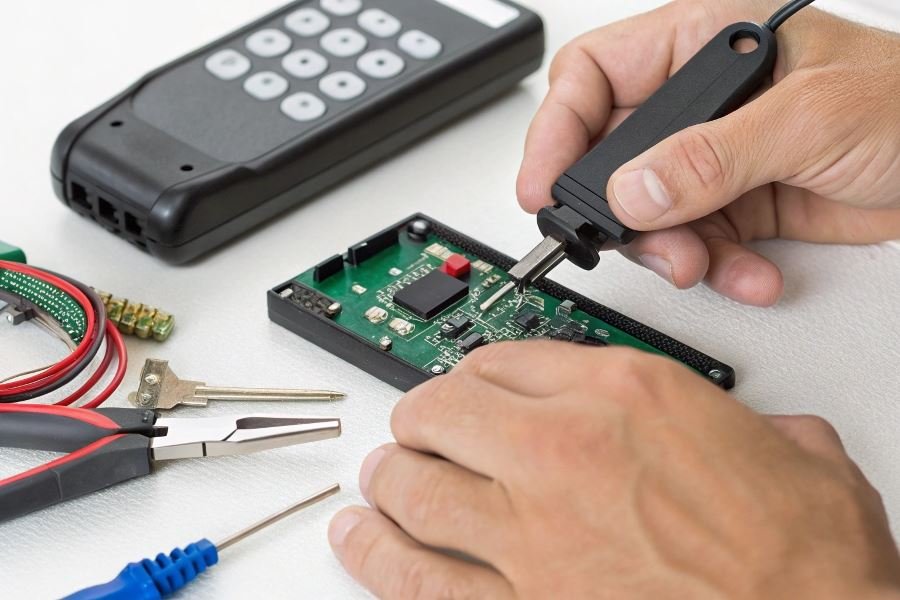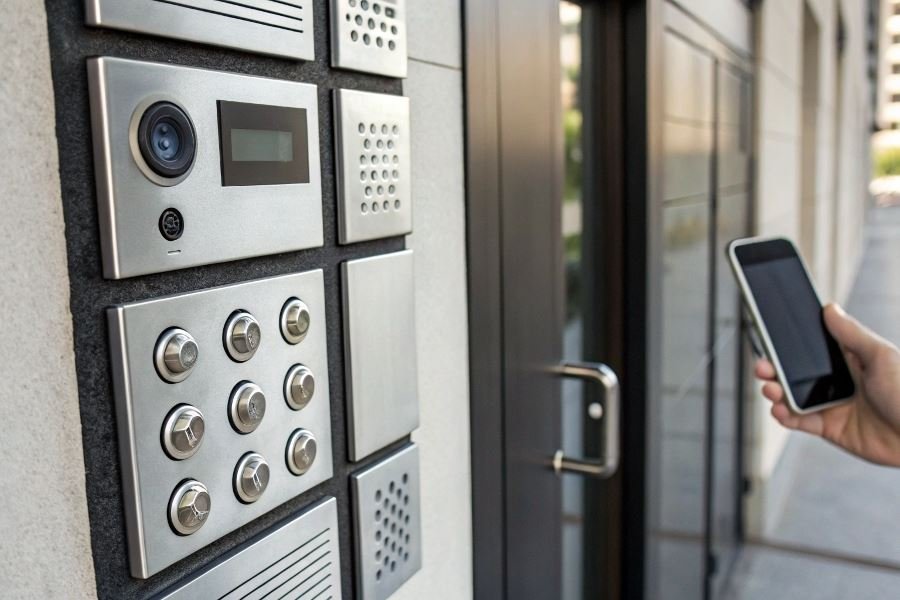
Ever wondered why some buildings feel impenetrable while others seem to welcome anyone who walks by? The difference often comes down to something small enough to fit in your pocket—the intercom key.
When we examine the landscape of residential and commercial security, intercom systems stand as the first line of defense. These silent sentinels have evolved dramatically from simple buzzers to sophisticated access control networks, with the humble key remaining at the heart of their functionality. The right key doesn’t just open doors—it creates peace of mind.
The security journey: From mechanical to digital
Intercom systems have undergone remarkable transformation since their widespread adoption in the 1960s. What began as basic audio communication devices have evolved into integrated security networks featuring video, smartphone connectivity, and advanced authentication methods.
The keys that operate these systems have experienced an equally impressive evolution:
- Traditional mechanical keys: The original standard, offering simplicity but limited security features
- Magnetic stripe cards: Introduced in the 1970s, bringing programmable access
- RFID fobs and cards: Contactless technology that revolutionized building entry in the 1990s
- Smartphone-based digital keys: The latest innovation, turning personal devices into secure credentials
Why your key choice matters more than you think
Selecting the appropriate intercom key isn’t merely a technical decision—it’s a strategic security choice that impacts:
“The strength of your security system is only as good as its weakest access point.”
Different environments demand different solutions. High-security facilities might require biometric verification, while residential buildings might prioritize convenience with RFID technology. Understanding these distinctions helps property managers and homeowners make informed decisions that balance accessibility with protection.
Unlocking the World of Intercom Access
The evolution of intercom keys represents one of the most fascinating intersections of convenience and security in modern building access systems. From traditional mechanical options to cutting-edge smartphone solutions, the landscape of intercom access control continues to transform how we enter our spaces.
When examining types of keys for intercoms: comparison and features reveals that each solution offers distinct advantages depending on your security needs, budget constraints, and technological preferences. The right choice ultimately depends on balancing security requirements with user convenience in your specific environment.
Traditional Mechanical Keys: The Reliable Veterans
Traditional mechanical keys remain surprisingly relevant in today’s digital landscape. Their enduring popularity stems from several key advantages:
Unmatched durability – Quality mechanical keys can withstand extreme weather conditions, from freezing temperatures to scorching heat, without performance degradation. Many mechanical systems continue functioning flawlessly after decades of service.
Zero power requirements – During power outages, mechanical keys continue working perfectly while electronic alternatives may fail completely.
Cost efficiency – The initial investment for mechanical intercom systems typically runs 30-50% lower than electronic alternatives, with keys costing as little as $2-5 per unit for replacements.
However, mechanical systems do present certain limitations:
- Key duplication concerns
- No access logging capabilities
- Limited flexibility for temporary access
RFID and Contactless Fobs: The Perfect Middle Ground
RFID (Radio-Frequency Identification) and contactless key fobs represent the sweet spot between traditional reliability and modern convenience.
Programming versatility – Modern RFID systems allow administrators to:
- Instantly activate/deactivate specific fobs
- Set time-restricted access periods
- Track entry/exit patterns
Durability advantages – With no mechanical components to wear out, quality fobs from manufacturers like HID Global typically last 5-10 years under normal use conditions.
| Feature | RFID Fobs | Mechanical Keys |
|---|---|---|
| Replacement cost | $8-15 | $2-5 |
| Programming | Yes | No |
| Access tracking | Comprehensive | None |
| Battery dependency | Minimal | None |
| Weather resistance | Excellent | Excellent |
The convenience factor cannot be overstated – simply wave the fob near the reader and gain instant access. This contactless approach proves particularly valuable in high-traffic environments or during inclement weather.
Smartphone-Based Digital Keys: The Future Has Arrived
The integration of smartphones into intercom systems represents the cutting edge of access control technology.
Unparalleled convenience – Users can:
- Access buildings using devices they already carry
- Share temporary access with visitors remotely
- Receive notifications when specific users enter
Advanced security protocols – Modern smartphone access systems from companies like ButterflyMX employ military-grade encryption that significantly outperforms traditional alternatives.
Seamless integration capabilities – Digital keys excel at connecting with:
- Smart home ecosystems
- Video monitoring systems
- Building management platforms
The ability to remotely grant temporary access to delivery personnel, maintenance workers, or guests represents perhaps the most compelling advantage of smartphone-based systems. Property managers can issue time-limited digital keys that automatically expire, eliminating the security concerns of unreturned physical keys.
While smartphone solutions typically require the largest initial investment, their reduced maintenance costs and enhanced functionality often deliver superior long-term value for properties seeking comprehensive security solutions.
Making the Right Choice: Intercom Key Selection
Security Levels That Actually Matter
When evaluating intercom key technologies, security should top your priority list. The difference between key types isn’t just about convenience—it’s about who gets through your door.
RFID proximity cards offer mid-tier security with encrypted communication between card and reader. While basic 125 kHz cards can be cloned with specialized equipment, higher-frequency 13.56 MHz HID iCLASS cards employ rolling code technology that significantly raises the security bar.
The vulnerability gap between basic and advanced RFID is substantial—think padlock versus bank vault.
Magnetic keys (including magnetic cards and Dallas keys) represent older technology with moderate security profiles. Their simplicity makes them vulnerable to duplication, with some Dallas keys being cloneable through readily available devices.
Mobile credentials have revolutionized access control security. Systems from providers like ButterflyMX use AES-256 encryption—the same standard protecting government classified information. These virtual keys generate unique access codes for each entry attempt, making unauthorized duplication nearly impossible.
Mobile credential systems reduce security breaches by up to 91% compared to traditional key systems, according to industry security assessments.
Biometric systems stand at the security summit, with fingerprint and facial recognition technologies offering authentication that’s uniquely tied to the individual. Modern systems from Suprema include liveness detection to prevent spoofing attempts using photos or replicas.
Cost-Benefit Analysis That Saves Money
The true cost of intercom keys extends far beyond initial purchase price:
| Key Type | Initial Cost | Replacement Cost | Management Overhead | Lifespan |
|---|---|---|---|---|
| RFID Cards | $3-15/card | $3-15/card | Moderate | 2-5 years |
| Magnetic Keys | $2-8/key | $2-8/key | High | 1-3 years |
| Mobile Credentials | $5-12/user | $0 | Low | Indefinite |
| Biometric | $0 | $0 | Low | Indefinite |
RFID systems require moderate initial investment ($300-1,200 for readers plus per-card costs). While individual cards seem inexpensive, replacement costs accumulate rapidly in high-turnover environments.
Magnetic key systems appear cost-effective initially but demand significant administrative overhead. Each lost key typically requires reprogramming the entire system—a hidden cost that compounds over time.
Mobile credential systems may carry higher upfront costs ($800-2,500 for installation) but eliminate physical key replacement expenses entirely. The administrative dashboard from providers like Openpath allows instant revocation and issuance of credentials without physical interaction.
The five-year total cost of ownership for mobile credential systems averages 43% lower than physical key alternatives when accounting for all expenses.
Future-Proofing Your Access System
Compatibility considerations determine whether your intercom system grows with your needs or becomes obsolete.
Integration capability should be non-negotiable. Modern systems from Salto support multiple credential types simultaneously, allowing gradual migration between technologies without wholesale replacement.
Scalability factors become crucial as your property or business expands. Cloud-based systems can typically add unlimited users without hardware modifications, while physical key systems often hit capacity limits.
Technology roadmap alignment matters tremendously. The access control industry is rapidly moving toward mobile and biometric solutions. Systems with modular readers from companies like Kisi allow component upgrades without replacing entire infrastructures.
Backward compatibility provides insurance against obsolescence. The best systems maintain support for legacy credentials while embracing newer technologies, creating smooth transition paths rather than forcing abrupt changes.
When selecting your intercom key technology, remember that today’s decision shapes your security posture, operational efficiency, and technological flexibility for years to come. The wisest choice balances immediate needs with long-term adaptability.
Discover the essential differences between mechanical keys, RFID fobs, and smartphone-based digital solutions for modern intercom systems. Learn how to select the perfect security option for your property based on reliability, convenience, and future compatibility.
Discover the essential differences between mechanical keys, RFID fobs, and smartphone-based digital solutions for modern intercom systems. Learn how to select the perfect security option for your property based on reliability, convenience, and future compatibility.