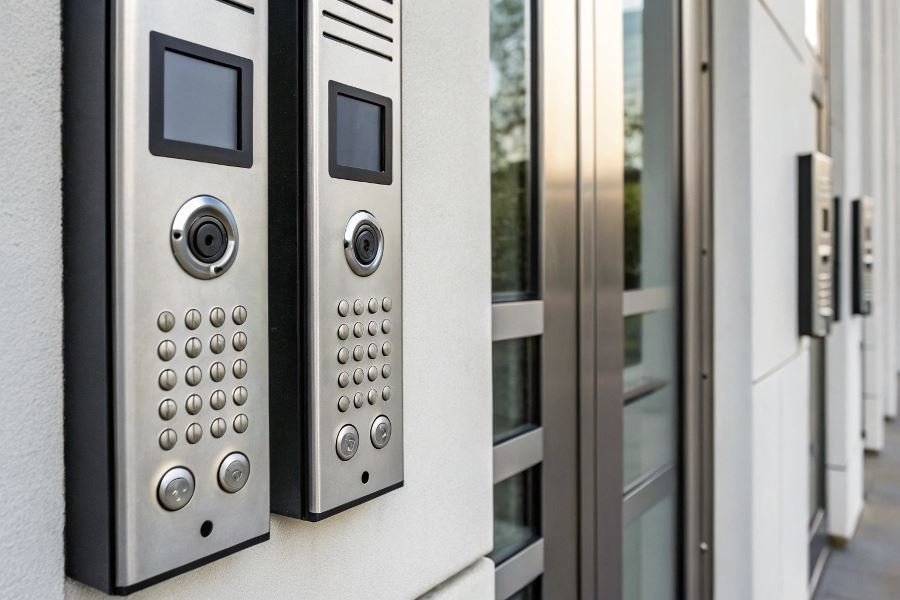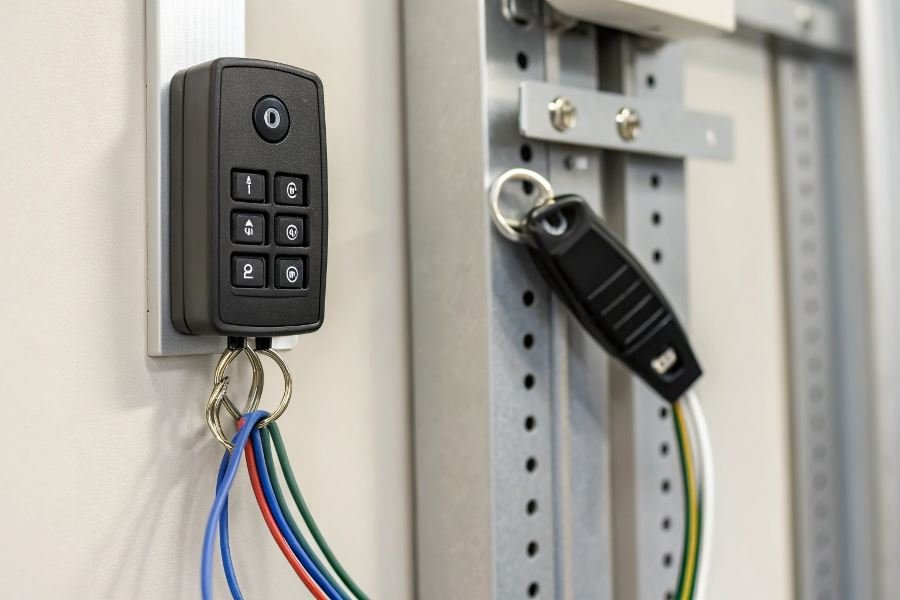
Ever wondered what’s standing between your property and unwanted visitors? It’s not just a door—it’s the technology behind your intercom system.
Key readers have revolutionized how we control access to our homes, businesses, and secure areas. These unassuming devices serve as digital gatekeepers, granting entry only to those with proper credentials. At their core, intercom key readers authenticate users through various methods—from traditional physical keys to modern wireless technologies that fit in your pocket.
The journey of key reader technology tells a fascinating story of security evolution. What began as simple mechanical locks in the early 20th century transformed into magnetic card readers in the 1960s, then evolved into proximity cards by the 1990s. Today’s sophisticated systems can recognize your smartphone from several feet away or authenticate your identity through encrypted RFID tags smaller than a postage stamp.
When evaluating wired versus wireless key readers, several critical factors come into play:
- Installation complexity: Wired systems require physical connections, while wireless options offer flexibility
- Power reliability: Traditional wired readers draw consistent power, whereas wireless versions depend on batteries or alternative sources
- Security protocols: Both technologies offer encryption, but with different vulnerability profiles
- Maintenance requirements: Cable degradation versus battery replacement schedules
- Integration capabilities: How seamlessly they connect with other security systems
The distinction between these technologies isn’t merely academic—it directly impacts reliability, convenience, and security effectiveness. Modern building managers increasingly face this critical decision: stick with proven wired infrastructure or embrace the flexibility of wireless innovation?
Understanding these fundamentals provides the foundation for making informed decisions about which technology best suits your specific security needs.
Wired vs Wireless Key Readers: The Ultimate Intercom Security Showdown
When selecting an access control system for your property, the choice between wired and wireless key readers represents a fundamental decision that impacts everything from installation complexity to long-term security. The technology behind these systems has evolved dramatically, offering property owners unprecedented options for securing their premises while maintaining convenience.
A thorough comparison of wired and wireless key readers for intercoms reveals distinct advantages and limitations for each technology. Understanding these differences allows property managers and homeowners to make informed decisions based on their specific security needs, building infrastructure, and budget constraints.
Installation: The Battle of Complexity
Wired systems demand physical connections throughout your property—a process that can range from straightforward to extraordinarily complex depending on your building’s construction. Installation typically requires:
- Running cables through walls, ceilings, or underground conduits
- Professional electrical work for power connections
- Potential structural modifications in existing buildings
Wireless readers, by contrast, eliminate most physical infrastructure requirements. Installation typically involves:
- Mounting the reader at access points
- Setting up the wireless network connection
- Programming credentials without disruptive construction
For retrofitting existing buildings, wireless systems offer a clear advantage, reducing installation time by up to 75% compared to wired alternatives. However, buildings with concrete or metal infrastructure may require signal boosters to ensure reliable wireless connectivity.
Power and Reliability: The Critical Balance
| System Type | Power Source | Backup Options | Reliability Factors |
|---|---|---|---|
| Wired | Building electrical | UPS/Generator | Cable integrity |
| Wireless | Batteries/Solar | Internal batteries | Signal strength |
Wired readers draw consistent power directly from your building’s electrical system, offering uninterrupted operation during normal conditions. When paired with backup generators or UPS systems, they maintain functionality even during power outages.
Wireless options typically rely on batteries or solar power, creating both advantages and vulnerabilities. Modern wireless readers from companies like HID Global feature low-power consumption technology, with batteries lasting 2-5 years under normal use. Some advanced models incorporate energy harvesting from RFID interactions, extending operational life significantly.
Security: Vulnerabilities and Protections
The security landscape reveals nuanced differences between these technologies:
Wired systems offer:
- Physical security through hardwired connections
- Immunity to wireless jamming or interference
- Potential vulnerability to wire cutting or tampering
Wireless readers provide:
- Advanced encryption protocols (AES-256 standard)
- Over-the-air security updates
- Protection against physical wire tampering
- Vulnerability to sophisticated signal interference
Modern wireless systems from manufacturers like Salto Systems incorporate anti-tampering mechanisms that trigger alerts when physical interference is detected, significantly enhancing security profiles.
Maintenance Requirements and System Longevity
Maintenance considerations diverge significantly between these technologies:
Wired systems typically require:
- Periodic inspection of physical connections
- Minimal component replacement
- 10-15 year average lifespan for quality components
Wireless readers generally need:
- Battery replacement every 2-5 years
- Firmware updates to maintain security
- 7-10 year average hardware lifespan
The total cost of ownership extends beyond initial installation, with wireless systems generally requiring more frequent maintenance interventions but offering easier component replacement.
Cost Analysis: Beyond the Price Tag
Initial investment for wired systems typically runs 30-40% higher than wireless alternatives due to installation labor and materials. However, the long-term value equation must consider:
- Operational reliability requirements
- Anticipated building modifications
- Security level requirements
- Maintenance capabilities and costs
For properties with existing infrastructure or new construction, wired systems may offer superior long-term value despite higher upfront costs. Properties requiring flexibility or frequent reconfiguration typically benefit from the adaptability of wireless systems despite potentially higher lifetime maintenance costs.
Choosing Your Perfect Intercom Key Reader
When selecting between wired and wireless key readers for your intercom system, the decision ultimately hinges on your specific needs, environment, and future plans. Let’s explore the ideal applications for each technology and peek into what’s coming next in this rapidly evolving security landscape.
Where wired readers shine brightest
Wired key reader systems continue to dominate in scenarios where reliability and security cannot be compromised. These systems excel in:
High-security environments – Government facilities, data centers, and financial institutions consistently choose wired systems for their tamper-resistant connections and immunity to wireless interference or hacking attempts.
New construction projects – When building from the ground up, incorporating wired infrastructure during construction eliminates the aesthetic compromises of retrofitting and provides a rock-solid foundation for security systems.
The reliability factor cannot be overstated for mission-critical applications where downtime isn’t an option.
Wired systems from manufacturers like HID Global and Kisi continue to set the standard for facilities requiring 99.99% uptime and comprehensive audit trails.
When wireless takes the crown
Wireless key reader implementation shines in several scenarios that would challenge traditional wired setups:
Historic buildings and retrofits – When drilling through marble walls or century-old woodwork isn’t an option, wireless readers from Salto Systems provide elegant solutions that preserve architectural integrity.
Temporary or evolving spaces – Coworking environments, pop-up retail, and rapidly changing office layouts benefit tremendously from the flexibility wireless systems offer.
Remote gates and entry points – Locations where running cable would be prohibitively expensive or physically impossible (across driveways, gardens, or to detached structures) are perfect candidates for wireless technology.
| Feature | Wired Advantage | Wireless Advantage |
|---|---|---|
| Installation Complexity | Higher | Lower |
| Flexibility for Relocation | Limited | Excellent |
| Power Reliability | Excellent | Depends on battery life |
| Maintenance Requirements | Lower | Higher (battery replacement) |
| Initial Cost | Higher for retrofits | Lower for existing structures |
The crystal ball: future trends
The intercom key reader landscape is evolving rapidly, with several exciting developments on the horizon:
Biometric integration is becoming increasingly sophisticated, with fingerprint, facial recognition, and even gait analysis being incorporated into both wired and wireless systems. Suprema is pioneering multimodal biometric readers that combine multiple verification methods.
Energy harvesting technology is addressing the Achilles’ heel of wireless systems – battery life. New readers can generate power from ambient light, thermal differentials, or even the kinetic energy of doors opening and closing.
AI-powered access control is perhaps the most transformative trend, with systems learning user patterns to detect anomalies and potential security breaches. These systems can automatically adjust security protocols based on time of day, occupancy levels, or threat assessments.
Unified ecosystem integration means your intercom key reader won’t just control access – it will communicate with HVAC systems, lighting controls, and visitor management software to create truly intelligent buildings.
The line between wired and wireless technologies continues to blur as hybrid systems emerge, offering the reliability of wired connections with the flexibility of wireless endpoints. The future belongs to systems that can seamlessly adapt to changing security needs while providing frictionless user experiences.
Discover the key differences between wired and wireless intercom key readers for optimal security. Compare installation complexity, reliability, vulnerability factors, maintenance needs, and cost-effectiveness to make an informed choice for your property access system.
Discover the key differences between wired and wireless intercom key readers for optimal security. Compare installation complexity, reliability, vulnerability factors, maintenance needs, and cost-effectiveness to make an informed choice for your property access system.