
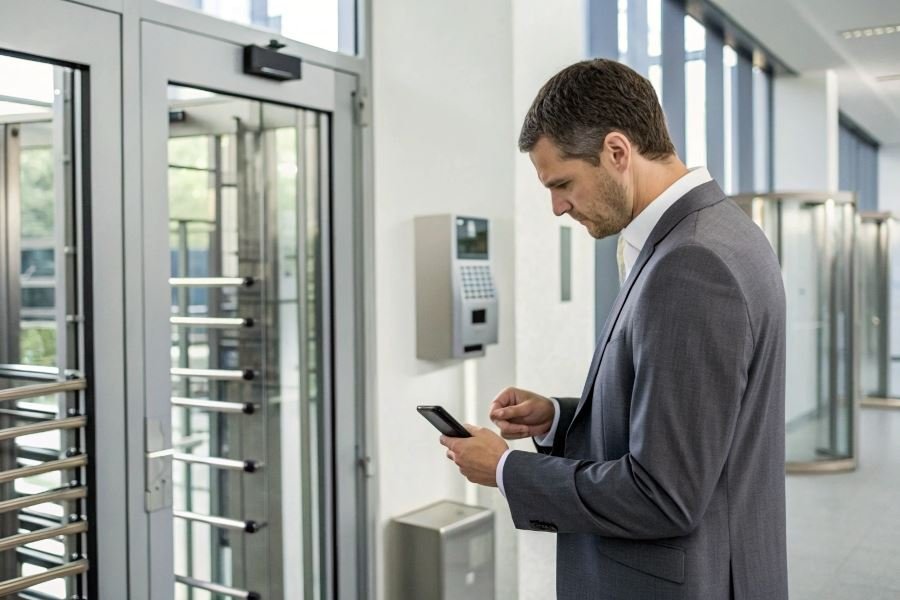
Ever wondered what actually happens when you wave your badge at that little box outside your office door? That small gesture triggers a sophisticated security dance that’s been evolving since the first electronic access control systems emerged in the 1960s.
Access control systems serve as the digital doormen of our physical spaces, determining who goes where and when. At their core, these systems rely on identifiers—unique credentials that link a physical person to their digital permissions. Think of identifiers as your security passport, carrying your specific clearance levels throughout a facility.
The technology behind these identifiers has undergone remarkable transformation. What began with simple magnetic stripe cards has evolved into a diverse ecosystem including proximity cards, biometric scanners, mobile credentials, and even implantable microchips. Each identifier type offers distinct advantages in security, convenience, and cost-effectiveness.
When selecting the right identifier for your environment, three factors reign supreme: security requirements, user experience, and infrastructure compatibility. A hospital might prioritize high-security biometrics for medication rooms while using simple proximity cards for general areas. Meanwhile, a tech startup might embrace mobile credentials that allow employees to enter using smartphones they already carry.
The identifier you choose doesn’t just control access—it shapes how people interact with your space every day. The perfect system balances robust security with frictionless experience, creating protection that feels invisible until the moment it’s needed.
The Ultimate Guide to Access Control Identifiers
The security landscape has transformed dramatically, with modern access control systems becoming the cornerstone of facility protection. When selecting the right system, understanding the various types of identifiers for access control systems: advantages and disadvantages becomes crucial for making informed decisions that balance security, convenience, and cost-effectiveness.
Physical Credential Identifiers
Key cards and proximity cards remain the workhorses of access control. These wallet-sized credentials use either magnetic stripe technology (swipe cards) or RFID technology (proximity cards). Proximity cards offer the convenience of “tap and go” access without physical contact, reducing wear and tear while speeding up entry processes.
The average proximity card costs between 3−8 per user but delivers years of reliable service.
Key cards excel in environments requiring moderate security with high traffic flow, such as office buildings and educational institutions. However, they’re susceptible to loss, theft, and unauthorized sharing—creating potential security vulnerabilities that require immediate administrative action.
Key fobs and RFID tags provide similar functionality in more durable packages. These compact devices attach to keychains, making them less likely to be forgotten or misplaced. HID Global and Kisi offer robust options that withstand harsh environments while providing read ranges from 2-24 inches depending on the technology.
“The durability factor of key fobs translates to lower replacement costs over time, despite their higher initial investment.”
Traditional keys and mechanical identifiers represent the oldest access control technology still in widespread use. While lacking the audit trail capabilities of electronic systems, mechanical keys remain reliable in power outages and require no technical infrastructure. Their primary disadvantages include difficult key management at scale and the security compromise when keys are lost.
Biometric Identifiers
Fingerprint recognition systems have revolutionized access control by eliminating credential sharing and loss. These systems, like those from Suprema, offer false acceptance rates as low as 0.0001% while processing identifications in under one second.
| Biometric Type | False Acceptance Rate | Processing Speed | Approximate Cost |
|---|---|---|---|
| Fingerprint | 0.0001% – 0.1% | 0.5-1.5 seconds | 150−500 |
| Facial | 0.001% – 0.1% | 0.3-2.0 seconds | 500−2,500 |
| Iris/Retinal | 0.0001% – 0.00001% | 1.0-3.0 seconds | 1, 500−10,000 |
Facial recognition technology has gained tremendous traction, particularly in high-security environments. Modern systems can distinguish between live faces and photographs, operate in varying lighting conditions, and integrate with existing CCTV infrastructure. Privacy concerns and potential algorithmic biases remain important considerations.
Iris and retinal scanning provides the highest security level among biometric options. These systems analyze unique patterns in the eye that remain stable throughout life. While exceptionally secure, their higher cost and more intrusive scanning process limit widespread adoption to high-security facilities like data centers and government installations.
Digital and Mobile Identifiers
Mobile credentials and smartphone access represent the fastest-growing segment in access control. Using Bluetooth or NFC technology, solutions from Openpath allow users to unlock doors with their smartphones—devices they’re already carrying and less likely to share.
PIN codes and passwords offer simplicity and low implementation costs but suffer from security limitations. Users tend to choose easily guessable combinations or share codes with colleagues. However, when implemented as part of a multi-factor approach, PINs provide an effective security layer.
Multi-factor authentication solutions combine two or more identifier types, dramatically increasing security. A typical configuration might require something you have (card), something you know (PIN), and something you are (biometric). This layered approach ensures that a single compromised factor doesn’t result in unauthorized access.
The ideal identifier type ultimately depends on your specific security requirements, budget constraints, and organizational culture—balancing the need for robust protection with practical usability.
Making the Smart Choice: Identifier Technology for Access Control
Security Assessment as Your North Star
Selecting the right identifier technology begins with an honest security assessment. The threat profile of your facility should dictate your choice—not the other way around. High-security environments like data centers or research facilities demand multi-factor authentication, typically combining biometrics with smart cards or mobile credentials. For standard office environments, proximity cards might suffice when paired with proper management protocols.
The selection criteria should include:
- Vulnerability to duplication – Biometrics and mobile credentials offer significantly higher protection against cloning than traditional cards
- Authentication factors – Single-factor (something you have) vs. multi-factor (adding something you know or are)
- Encryption standards – 128-bit AES encryption has become the minimum acceptable standard for credential data protection
- Integration capabilities with existing security infrastructure
The strongest identifier is one that matches your actual security needs—not necessarily the most expensive option on the market.
The Real Cost Equation
When evaluating identifier technologies, looking beyond the initial price tag reveals the true cost-benefit picture:
| Identifier Type | Initial Cost | Ongoing Expenses | Replacement Costs | User Experience |
|---|---|---|---|---|
| Proximity Cards | Low ($2-5/card) | Medium (card management) | High (lost cards) | Simple |
| Smart Cards | Medium ($6-15/card) | Medium | High | Good |
| Mobile Credentials | High (setup) | Low | Very Low | Excellent |
| Biometrics | Very High | Low | None | Variable |
The total cost of ownership often favors technologies that initially seem more expensive. For example, mobile credentials through platforms like HID Mobile Access eliminate the ongoing expense of replacing lost cards—a significant but often overlooked cost center. Similarly, biometric systems from providers like Suprema eliminate credential management entirely.
Smart organizations look at five-year cost projections rather than upfront expenses when making these decisions.
Tomorrow’s Access Control Today
The access control landscape is evolving rapidly, with several clear trends emerging:
Contactless is king. The shift toward touchless experiences has accelerated, with mobile credentials and facial recognition gaining tremendous momentum. Openpath and similar providers are leading this transformation with cloud-based mobile access solutions.
Behavioral biometrics represent the next frontier. Beyond fingerprints and facial recognition, systems are beginning to authenticate users based on walking gait, typing patterns, and even the unique way individuals interact with doors and entryways.
Unified credential ecosystems are becoming the standard. The days of separate badges for different buildings are ending, replaced by single credentials that work across physical and digital domains through standards like FIDO2.
AI-powered contextual authentication is emerging as a game-changer. These systems consider not just who you are, but when and where you’re attempting access, creating dynamic security profiles that adapt to changing conditions.
The most forward-thinking organizations are already implementing hybrid systems that can evolve with technology, rather than requiring complete overhauls every few years.
The future belongs to flexible, user-centric systems that balance security with convenience while maintaining adaptability to emerging threats and technologies.
Explore the complete spectrum of access control identifiers from traditional cards to cutting-edge biometrics. Compare security levels, costs, and implementation challenges of each technology to find the perfect solution for your facility.
Explore the complete spectrum of access control identifiers from traditional cards to cutting-edge biometrics. Compare security levels, costs, and implementation challenges of each technology to find the perfect solution for your facility.