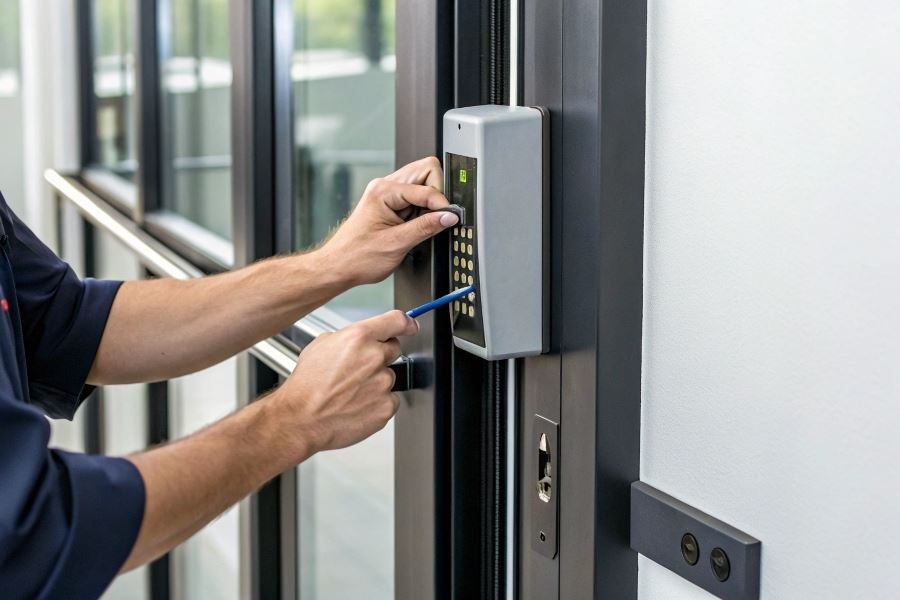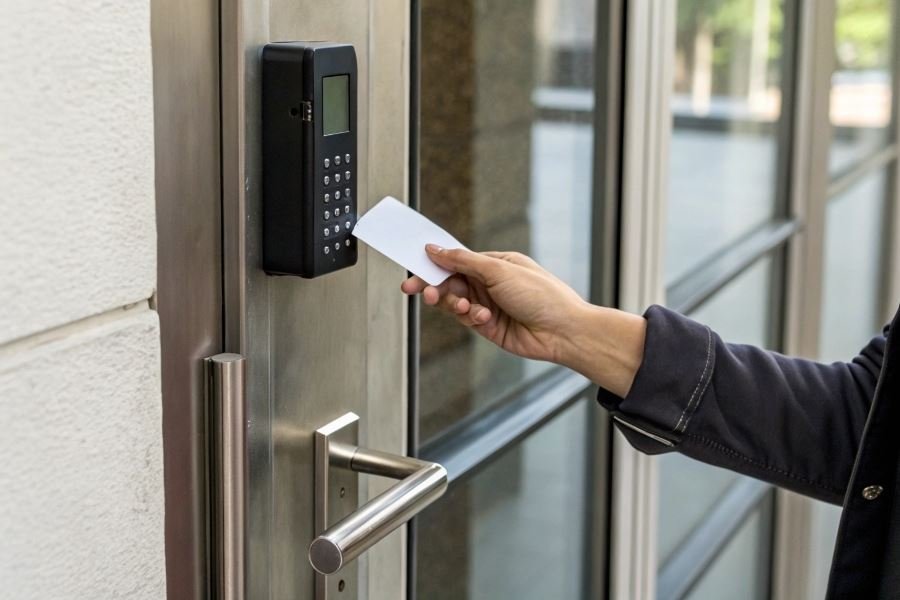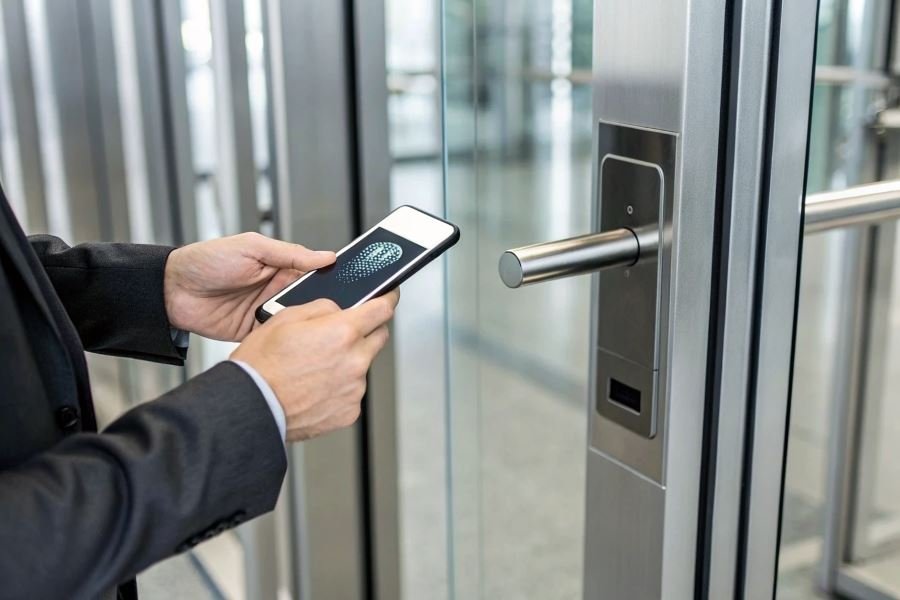
Remember when access cards were cutting-edge technology? Fast forward to today, and your smartphone has become the key to everything—including physical doors. The transformation has been nothing short of remarkable.
Access control systems have evolved dramatically since their inception as simple mechanical locks. The 1960s brought us the first card-based systems, the 1990s saw the rise of proximity cards, and by the early 2000s, smart cards dominated the landscape. But the real game-changer arrived when mobile technologies entered the access control arena, merging our digital and physical security worlds into one seamless experience.
The numbers tell a compelling story: according to industry research, mobile credential adoption has grown by over 150% since 2020. Nearly 67% of enterprises are either implementing or actively planning mobile access solutions—a clear signal that this technology has moved beyond novelty to necessity.
What’s powering this revolution? A perfect storm of complementary technologies:
The technological backbone
- Near Field Communication (NFC): Operating at close range, NFC creates secure, encrypted connections between your phone and readers
- Bluetooth Low Energy (BLE): Enables longer-range communication while preserving battery life
- WiFi integration: Allows for real-time system updates and remote management
- Biometric authentication: Adds an additional security layer through fingerprint or facial recognition
These technologies don’t just work in isolation—they create an ecosystem where convenience doesn’t compromise security. Your smartphone becomes a credential that’s harder to lose and easier to manage than any physical key or card ever was.
The Mobile Revolution in Access Control
The days of fumbling for keycards or remembering complex PIN codes are rapidly becoming relics of the past. Smartphone-based access credentials have fundamentally transformed how we interact with secured spaces. When examining mobile technologies in modern access control readers, the advantages consistently outweigh the disadvantages across multiple dimensions—from user experience to enterprise-level implementation.
Smartphone Integration Transforms User Experience
The marriage between smartphones and access control creates an unparalleled convenience factor. Most professionals already carry their phones everywhere, making them the perfect vessel for access credentials. The HID Mobile Access platform demonstrates this perfectly, allowing users to simply tap or twist their phone near a reader to gain entry—no more digging through pockets or purses for misplaced cards.
Gesture-based access adds another layer of intuitive interaction. Systems like Openpath enable “wave to unlock” functionality, where proximity combined with a simple hand gesture triggers the unlock mechanism. This touchless approach has gained significant traction, especially as hygiene concerns remain top-of-mind in shared spaces.
Mobile credential management also eliminates the administrative headache of physical cards. Digital credentials can be:
- Issued instantly to new employees
- Revoked immediately when access rights change
- Updated remotely without requiring in-person visits
Enhanced Security Through Digital Innovation
Mobile access technologies offer substantially stronger security protocols than traditional methods. The multi-layered approach includes:
| Security Feature | Implementation | Benefit |
|---|---|---|
| Biometric verification | Fingerprint/facial recognition | Ensures credential is used by authorized person |
| End-to-end encryption | AES-256 protocols | Prevents credential cloning or interception |
| Multi-factor authentication | Combines device possession with biometrics or PIN | Creates multiple security layers |
The Brivo Mobile Pass exemplifies this approach by combining cloud-based credential management with device-specific authentication. Each transaction generates unique encrypted data, making replay attacks virtually impossible.
Dynamic credential rotation represents another significant security advancement. Unlike static keycards that maintain the same data indefinitely, mobile credentials can automatically update their encryption keys, creating a moving security target that’s exponentially harder to compromise.
Enterprise-Level Cost Efficiency and Scalability
The financial advantages of mobile access control become particularly compelling at scale. Traditional access card systems incur ongoing costs that mobile solutions eliminate:
- No physical cards to purchase ($5-15 per card)
- Zero replacement costs for lost/damaged credentials
- Reduced administrative overhead for credential management
Kisi demonstrates how cloud-based mobile access systems can scale effortlessly from single-door implementations to enterprise-wide deployments across multiple locations. The infrastructure requirements are minimal—often just replacing or adapting existing readers while maintaining the same wiring and backend systems.
Operational analytics provide another dimension of value. Mobile systems generate rich data about access patterns, enabling organizations to optimize space utilization and security protocols based on actual usage rather than assumptions. This intelligence-driven approach transforms access control from a pure security expense into a business optimization tool.
The flexibility to implement mobile credentials alongside existing systems creates a smooth migration path, allowing organizations to transition at their own pace without disrupting operations or requiring massive capital expenditures. This hybrid approach represents perhaps the most practical advantage for established enterprises looking to modernize their security infrastructure.
The Dark Side of Mobile Access Control: Navigating the Challenges
Security vulnerabilities that keep experts awake
Mobile access control technologies offer remarkable convenience, but they also introduce new attack vectors that traditional card-based systems don’t face. Bluetooth Low Energy (BLE) connections—the backbone of many mobile credential systems—can be susceptible to man-in-the-middle attacks when improperly implemented. In fact, researchers at Black Hat 2023 demonstrated how certain BLE implementations could be compromised using devices costing less than $50.
The mitigation strategies are evolving rapidly. Leading manufacturers like HID Global have implemented end-to-end encryption and dynamic key rotation to prevent credential cloning. The most robust systems now employ a multi-layered security approach:
| Security Layer | Function | Effectiveness |
|---|---|---|
| Encryption | Protects data in transit | High when using AES-256 |
| Biometric verification | Ensures credential belongs to authorized user | Very high with liveness detection |
| Certificate pinning | Prevents spoofing of authentication servers | High against most MITM attacks |
| Geofencing | Restricts access based on location | Moderate (can be spoofed) |
The strongest security implementations don’t rely on a single protective measure but create a fortress of overlapping defenses.
Implementation hurdles that frustrate deployment
The transition to mobile credentials isn’t as simple as flipping a switch. Organizations face substantial infrastructure challenges that can derail even the most enthusiastic adoption plans.
Legacy systems often require complete hardware replacement rather than simple upgrades. A mid-sized office building might need to replace 50-100 readers at $300-500 each—a significant capital expenditure that’s difficult to justify without clear ROI metrics.
Compatibility issues create another layer of complexity. The OSDP protocol has emerged as an industry standard, but many buildings still operate with proprietary Wiegand interfaces that don’t support the bidirectional communication mobile credentials require.
Network infrastructure presents perhaps the most overlooked challenge. Mobile credential systems demand:
- Reliable Wi-Fi coverage in reader locations
- Sufficient bandwidth for credential verification
- Backup systems for network outages
- IT expertise for ongoing maintenance
Organizations with limited IT resources often find themselves unprepared for the technical debt these requirements create.
Privacy concerns in an increasingly regulated world
Mobile credentials collect substantially more data than traditional access cards. They can track precise entry and exit times, movement patterns within buildings, and potentially integrate with other systems to create detailed behavioral profiles.
This data collection occurs against a backdrop of increasingly stringent privacy regulations. The California Consumer Privacy Act (CCPA) and similar legislation give individuals significant rights regarding their personal data, including:
- The right to know what data is collected
- The right to delete personal information
- The right to opt out of data sales
- The right to non-discrimination for exercising these rights
Organizations implementing mobile access control must navigate these requirements carefully. Genetec, a leader in unified security solutions, recommends implementing privacy by design principles, including data minimization and purpose limitation.
“The most successful mobile access deployments aren’t just technically sound—they’re ethically implemented with transparent data practices that build trust with users.”
Regulatory compliance extends beyond privacy to accessibility requirements. The Americans with Disabilities Act (ADA) mandates that access control systems be usable by individuals with disabilities, creating additional design considerations for mobile-only deployments that might exclude those without smartphones.
Explore the evolution of mobile access control systems, comparing NFC, Bluetooth, and biometric technologies. Discover security benefits, cost efficiencies, potential vulnerabilities, and implementation challenges for modern facility management.
Explore the evolution of mobile access control systems, comparing NFC, Bluetooth, and biometric technologies. Discover security benefits, cost efficiencies, potential vulnerabilities, and implementation challenges for modern facility management.