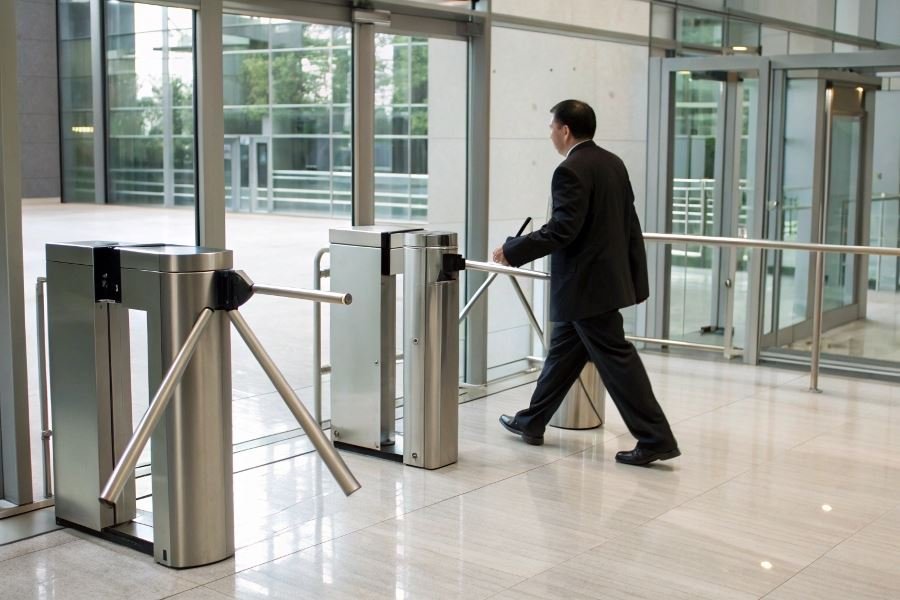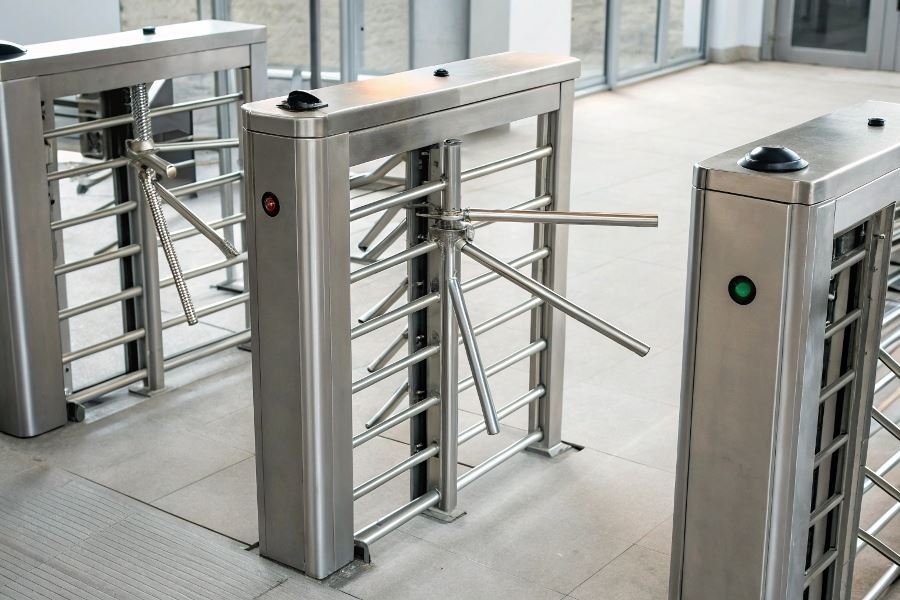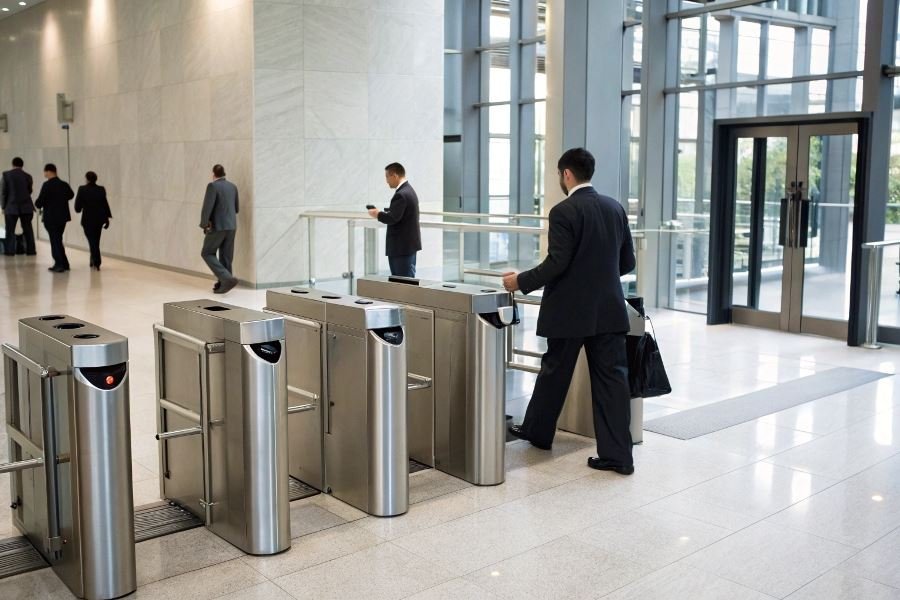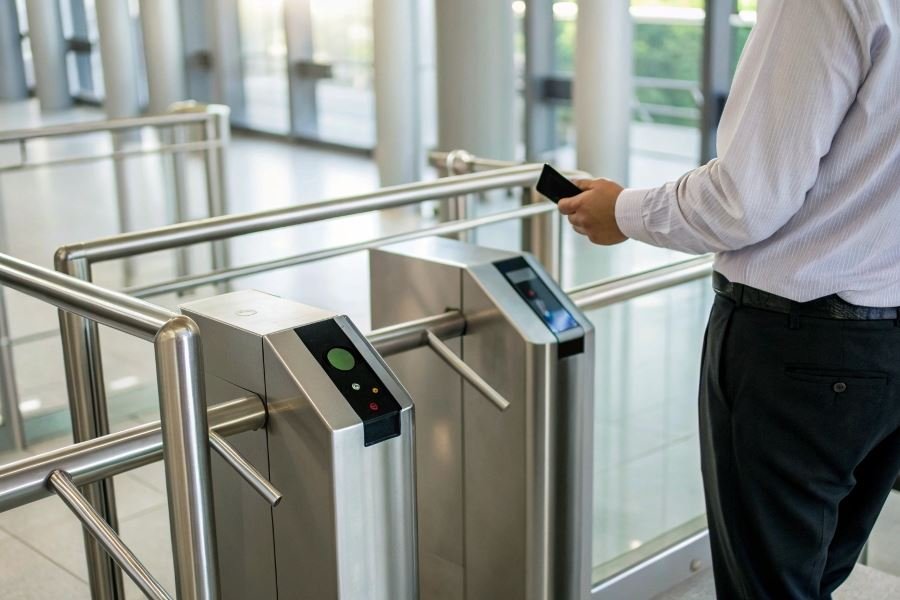
Ever walked into a high-security facility and wondered how that sleek turnstile knew to let some people through while stopping others? Behind that seemingly simple decision lies an intricate dance of hardware and software that’s revolutionizing facility security.
Integrated turnstile systems combine physical barriers (the turnstiles themselves) with sophisticated electronic access control systems that authenticate users through credentials like key cards, biometrics, or mobile devices. This marriage of mechanical engineering and digital intelligence creates a security ecosystem that’s both robust and responsive.
The journey from simple mechanical barriers to today’s smart systems tells a fascinating story of innovation. The first electronic access control systems emerged in the 1960s, but it wasn’t until the 1990s that integration with physical barriers became sophisticated. Today’s systems leverage cloud computing, AI analytics, and IoT connectivity to create security solutions that would have seemed like science fiction just decades ago.
The business case for integration
For organizations, these integrated solutions deliver compelling advantages:
- Operational efficiency: Automated entry reduces staffing needs while increasing throughput
- Enhanced security: Multi-factor authentication dramatically reduces unauthorized access
- Actionable intelligence: Real-time monitoring and reporting provide valuable insights into facility usage patterns
- Scalability: Modern systems grow with your organization, adapting to changing security needs
When properly implemented, these systems don’t just protect assets—they transform how spaces function, creating environments that are simultaneously more secure and more accessible to authorized users.
The Technical Backbone of Seamless Access Control
Hardware Compatibility: The Foundation of Integration
When building a robust security infrastructure, the marriage between turnstiles and access control systems begins with hardware compatibility. This critical foundation determines whether your entire system will function as a cohesive unit or become a collection of disconnected components.
The integration of turnstiles with access control systems requires careful consideration of interface specifications. Modern turnstiles typically feature standardized input/output terminals that accept 12-24V DC signals from controllers. These dry contact interfaces serve as the communication bridge between the physical barrier and the brain of your access system.
Compatibility checklist for successful integration:
- Power requirements (12V, 24V, or 110V AC)
- Signal type compatibility (Wiegand, OSDP, RS-485)
- Physical connection points (terminal blocks, RJ45 ports)
- Fail-safe/fail-secure mechanisms
- Environmental ratings (IP54, IP65 for outdoor installations)
The most versatile turnstiles offer multiple interface options, allowing them to communicate with virtually any access control system. HID Global controllers, for example, seamlessly connect with tripod turnstiles from manufacturers like Automatic Systems through standardized Wiegand protocols.
Communication Protocols: Speaking the Same Language
For turnstiles and access control systems to work in harmony, they must speak the same digital language. This communication framework determines how quickly and securely information travels between components.
The evolution of protocols has dramatically improved system capabilities:
| Protocol | Data Security | Distance Limitation | Bidirectional | Industry Adoption |
|---|---|---|---|---|
| Wiegand | Basic | 500 ft | No | High |
| OSDP | AES-128 bit | 4,000 ft | Yes | Growing |
| RS-485 | Moderate | 4,000 ft | Yes | Moderate |
| TCP/IP | High | Network dependent | Yes | Increasing |
OSDP (Open Supervised Device Protocol) has emerged as the gold standard, offering superior encryption and the ability to monitor connection status—critical for high-security applications. This protocol allows for real-time supervision of the communication line, immediately alerting security personnel if tampering occurs.
Authentication Methods: The User Experience Layer
The final piece of the integration puzzle focuses on how users interact with your turnstile system. Authentication methods range from traditional to cutting-edge, each offering different balances of security, convenience, and throughput speed.
Modern authentication options include:
- Credential-based: Cards, fobs, mobile credentials via HID Mobile Access
- Biometric verification: Fingerprint, facial recognition, iris scanning
- Multi-factor combinations: Credential plus PIN or biometric
- Contactless technologies: NFC, Bluetooth Low Energy (BLE)
The implementation of facial recognition systems from providers like Suprema has revolutionized high-throughput environments, allowing authentication at walking speed without physical credential presentation.
Integration Architecture: Centralized vs. Distributed
The architecture of your integrated system significantly impacts scalability and resilience. Centralized systems route all decisions through a main controller, while distributed intelligence places decision-making capabilities at each access point.
For enterprise deployments, distributed architecture offers:
“The ability to maintain functionality during network outages is not just a convenience—it’s a security imperative that prevents unauthorized access during system failures.”
When selecting components for your integrated solution, ensure the turnstile manufacturer provides detailed integration documentation and API access. This foresight prevents costly compatibility issues and enables future expansion without replacing existing infrastructure.
Turnstile Integration: From Blueprint to Reality
Assessing Your Site’s Security Landscape
The foundation of any successful turnstile and access control integration begins with a comprehensive site assessment. This critical first step involves mapping your facility’s unique security vulnerabilities, traffic patterns, and operational requirements.
A thorough security assessment typically examines:
- Entry/exit points and their peak usage times
- Existing security infrastructure compatibility
- Compliance requirements specific to your industry
- Traffic flow analysis (both routine and emergency scenarios)
Security requirement analysis isn’t just about identifying weaknesses—it’s about understanding the rhythm of your facility. A manufacturing plant with shift changes creates different traffic patterns than a corporate headquarters with flexible hours. Your integration strategy must account for these nuances.
The most successful security implementations begin with asking the right questions, not assuming the right answers.
Organizations that skip proper assessment often face costly retrofits. A financial services firm in Chicago learned this lesson when their hastily installed turnstiles created 12-minute lobby backups during morning rush—a problem that could have been identified with proper traffic flow analysis.
Installation Excellence: Navigating the Complexity
The physical installation of integrated turnstile systems presents unique challenges that demand meticulous planning and execution.
Power and connectivity requirements often surprise facility managers. Modern turnstiles with biometric readers, cameras, and network connectivity may require:
| Component | Power Requirement | Data Requirement |
|---|---|---|
| Standard turnstile | 110-240V AC | Ethernet/PoE |
| Biometric reader | 12-24V DC | Dedicated network line |
| Access controller | Backup power source | Secure server connection |
Installation challenges frequently center around structural considerations. Turnstiles exert significant force on mounting surfaces, particularly during emergency egress situations. Floor reinforcement is often necessary, especially with optical turnstiles from manufacturers like Automatic Systems that require precise alignment.
Cable management represents another common hurdle. The cleanest installations conceal cabling within floor conduits installed before the turnstiles arrive—a detail easily overlooked in planning phases.
Sustaining Your Investment: Maintenance and Future-Proofing
An integrated turnstile system is not a “set and forget” investment. Establishing a proactive maintenance protocol extends system lifespan and prevents costly downtime.
Effective maintenance strategies include:
- Quarterly mechanical inspections of moving parts
- Monthly software updates and security patches
- Bi-annual recalibration of sensors and biometric readers
- Emergency power system testing
Future-proofing your investment requires selecting systems with modular architecture. The security landscape evolves rapidly—today’s cutting-edge HID Global credentials may be tomorrow’s legacy technology.
Forward-thinking organizations select platforms with open APIs that can integrate with emerging technologies without wholesale replacement. This approach creates a migration path for incorporating innovations like mobile credentials, behavioral analytics, and health screening capabilities.
The most sustainable implementations build in 30% additional capacity beyond current needs, allowing for organizational growth without immediate infrastructure expansion.
By approaching turnstile integration with methodical assessment, installation excellence, and long-term maintenance planning, organizations create security infrastructure that delivers both immediate protection and adaptable functionality for years to come.
Discover how integrating turnstiles with access control systems enhances security infrastructure while streamlining operations. Learn key technical requirements, implementation strategies, and long-term benefits for comprehensive facility protection.
Discover how integrating turnstiles with access control systems enhances security infrastructure while streamlining operations. Learn key technical requirements, implementation strategies, and long-term benefits for comprehensive facility protection.