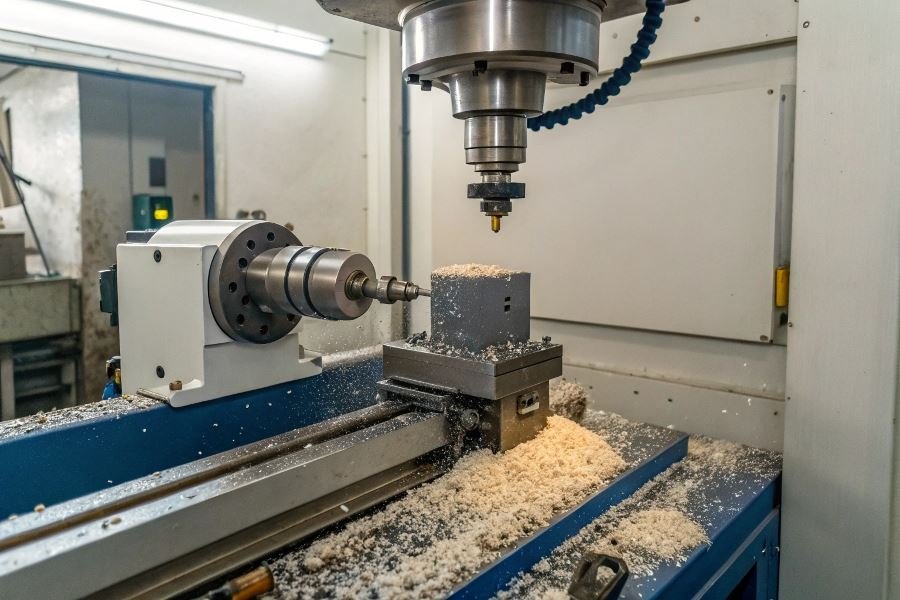
What if your crushing operation could run 24/7 with minimal human intervention while increasing output by up to 30%? This isn’t science fiction—it’s the reality of today’s automated crushing systems transforming industries across America.
Automated crushing systems represent the intelligent integration of mechanical processing equipment with advanced control technologies. At their core, these systems combine primary crushers, secondary processors, conveyor networks, and sophisticated sensors—all orchestrated by central control systems that continuously optimize performance. Unlike their manual predecessors, these systems make real-time adjustments based on material properties, equipment conditions, and production targets.
The journey from manual rock-breaking to today’s smart crushing operations tells a fascinating story of industrial evolution. When the first mechanical crushers appeared in the 1800s, they revolutionized mining and construction. The Blake jaw crusher, patented in 1858, marked a turning point, but operators still relied heavily on experience and intuition. The 1970s brought the first computer-controlled crushing plants, though primitive by today’s standards. The real game-changer came in the early 2000s with the integration of IoT sensors, machine learning, and predictive maintenance.
“Modern automated crushing systems don’t just process material—they learn from it.”
Today’s market shows accelerating adoption across mining, construction, and recycling sectors. Industry analysts report that approximately 65% of large-scale operations have implemented some form of automation, with mid-sized companies following quickly. The North American market for these systems has grown at a compound annual rate of 8.3% since 2020, with projections suggesting this pace will continue through 2028.
Crushing It: The Operational and Financial Edge
When production managers evaluate equipment upgrades, the conversation inevitably turns to automated crushing systems: advantages and payback periods dominate these discussions because the stakes are simply too high to ignore. Modern crushing operations have evolved far beyond the manual, labor-intensive processes of previous decades, with automation delivering transformative results across multiple performance metrics.
Throughput That Transforms Bottom Lines
Automated crushing systems deliver production increases that manual operations simply cannot match. The numbers tell a compelling story:
| Performance Metric | Manual Systems | Automated Systems | Improvement |
|---|---|---|---|
| Hourly Throughput | 60-80 tons/hr | 150-200+ tons/hr | Up to 150% |
| Operational Uptime | 65-75% | 85-95% | Up to 30% |
| Material Waste | 8-12% | 3-5% | Up to 60% reduction |
These systems maintain optimal feed rates continuously, automatically adjusting to material variations that would require manual intervention in traditional setups. Metso Outotec crushing systems, for instance, utilize load-sensing technology that can adjust crusher settings in real-time, preventing overloading while maximizing throughput.
The efficiency gains come from eliminating production bottlenecks. Automated conveyor systems ensure consistent material flow, while computerized monitoring prevents the feast-or-famine cycles that plague manual operations. The result? Production increases of 30-50% are common, with some operations reporting even higher gains.
The Human Element: Safety and Labor Economics
Perhaps the most compelling advantage comes from the human side of the equation. Automated crushing environments dramatically reduce exposure to hazardous conditions:
Injury reduction rates of 65-85% are typical after full automation implementation, as workers move from direct material handling to system monitoring positions.
Labor costs typically represent 30-40% of operational expenses in crushing operations. Automation reshapes this economic picture by:
- Reducing required personnel by 40-60% for the same output
- Eliminating overtime costs during high-demand periods
- Minimizing training and turnover expenses
- Allowing skilled workers to focus on higher-value activities
A single automated crushing line can often replace the output of two manual lines while requiring just 25-30% of the labor force. Sandvik automated systems have demonstrated payback periods as short as 14-18 months based on labor savings alone in high-wage markets.
Quality Control That Never Sleeps
The consistency advantage cannot be overstated. Automated systems deliver:
- Size distribution variation reduced by 70-80%
- Consistent product quality regardless of operator experience
- Real-time quality monitoring and adjustment
Modern systems from providers like Kleemann incorporate continuous particle analysis technology that ensures product specifications remain within tight tolerances. This translates directly to customer satisfaction and premium pricing opportunities.
The quality control extends to maintenance as well. Predictive analytics identify potential failures before they occur, scheduling maintenance during planned downtime rather than forcing emergency shutdowns. This preventative approach extends equipment life by 15-25% while maintaining consistent output quality.
For operations processing 500,000+ tons annually, these combined advantages typically deliver complete system payback within 2-3 years, with continued benefits flowing directly to the bottom line for years afterward. The question isn’t whether automation makes financial sense, but rather how quickly it can be implemented.
The Real Numbers Behind Automated Crushing ROI
When capital expenditure meets operational efficiency, the conversation inevitably turns to return on investment. Automated crushing systems represent a significant upfront commitment, but their long-term financial impact tells a compelling story that extends far beyond the initial sticker shock.
Breaking down the investment equation
The initial investment for automated crushing systems typically ranges from $250,000 for basic setups to over $2 million for comprehensive plant-wide automation. This investment encompasses:
- Hardware components (crushers, conveyors, sensors)
- Control systems and software integration
- Installation and commissioning
- Staff training and operational transition
Implementation costs often surprise first-time buyers when they discover that equipment represents only about 60-70% of total project costs. The remaining 30-40% covers integration, testing, and organizational adaptation.
The hidden cost trap: Many operations underestimate site preparation and infrastructure upgrades, which can add 15-25% to projected budgets if not properly accounted for during planning phases.
The operational mathematics of automation
The financial transformation begins once systems are operational. Modern automated crushing systems deliver measurable savings through:
| Cost Reduction Category | Typical Annual Savings | Primary Drivers |
|---|---|---|
| Labor costs | 30-45% | Reduced headcount, reallocation to higher-value tasks |
| Energy consumption | 15-25% | Optimized crusher operation, reduced idle time |
| Maintenance expenses | 20-35% | Predictive maintenance, reduced emergency repairs |
| Material yield | 8-12% increase | Precise fragmentation, reduced overprocessing |
Revenue enhancement comes from multiple directions simultaneously. Operations using Metso Outotec or Sandvik automated systems consistently report 15-20% throughput increases, while achieving more consistent product quality that commands premium pricing.
Real-world payback timelines
The most compelling evidence comes from operations that have completed the transition to automation. Consider these documented cases:
A mid-sized aggregate producer in Nevada implemented a $1.2 million automation upgrade in 2021. Their payback period? Just 19 months, primarily through a 32% reduction in operational costs and 22% increase in saleable product.
Similarly, a limestone quarry operation in Texas invested $850,000 in automated crushing technology and recovered their investment in 24 months through labor reallocation and energy savings alone.
The industry average tells us most operations achieve full ROI within 18-36 months, with variables including:
- Scale of implementation (partial vs. complete automation)
- Previous operational efficiency
- Market conditions and product pricing
- Utilization rates and production volumes
Companies implementing Siemens automation platforms report particularly strong results when integrating crushing automation with broader plant management systems, reducing payback periods by an additional 3-6 months through synergistic efficiencies.
The financial case for automated crushing systems becomes increasingly compelling as labor costs rise and operational margins tighten. While the initial investment demands careful consideration, the documented payback periods demonstrate why forward-thinking operations are making the transition despite the upfront costs.
Discover how automated crushing systems boost efficiency and deliver rapid ROI through increased throughput, reduced labor costs, and improved product quality. Explore implementation costs and real-world payback timeframes for industrial applications.
Discover how automated crushing systems boost efficiency and deliver rapid ROI through increased throughput, reduced labor costs, and improved product quality. Explore implementation costs and real-world payback timeframes for industrial applications.