Ever watched a $15,000 grain crusher grind to a halt during harvest season? The financial impact can be devastating—lost production time, emergency repair costs, and the ripple effect through your entire operation. Yet many operators still treat maintenance as an afterthought rather than a strategic investment.
Grain crushers represent the heartbeat of processing operations, transforming raw harvests into valuable products. Their continuous operation depends entirely on how well you maintain them. The difference between a crusher that lasts 5 years versus 15+ years often comes down to one factor: preventative maintenance.
The maintenance multiplier effect
For every dollar invested in preventative maintenance, operations typically save $3-5 in emergency repairs and downtime costs. This multiplier effect becomes particularly significant with high-throughput crushers processing thousands of pounds daily.
Different crusher types demand specialized care:
- Roller mills require regular gap adjustments and roller resurfacing
- Hammer mills need frequent hammer replacement and screen inspection
- Plate mills demand consistent plate alignment and wear monitoring
The efficiency equation
Properly maintained crushers don’t just avoid breakdowns—they operate at peak efficiency. A well-maintained crusher can reduce energy consumption by up to 20% compared to a neglected one processing the same volume. This translates directly to lower operating costs and higher throughput.
The most successful operations implement scheduled maintenance protocols rather than waiting for problems to emerge. This proactive approach transforms maintenance from a necessary evil into a competitive advantage, ensuring consistent product quality and maximizing equipment lifespan.
The Strategic Spare Parts Playbook for Grain Crushers
When your grain crusher grinds to a halt, production doesn’t just slow down—it stops completely. Smart operators know that having the right spare parts on hand isn’t just convenient—it’s essential for business continuity. Let’s dive into the components that matter most and how to build a strategic approach to maintenance.
Understanding spare parts and maintenance of grain crushers before making purchasing decisions can save thousands in downtime and emergency repairs. The difference between a minor hiccup and a major production crisis often comes down to preparation and knowledge of critical components.
Critical Wear Components That Make or Break Performance
The workhorses of any grain crusher are its hammers, screens, and bearings—components that endure relentless friction and impact. These parts don’t just wear out; they transform through use in ways that directly impact your output quality and efficiency.
Hammers face the most brutal conditions, striking grain thousands of times per minute. Look for hardened steel alloys with chromium content above 12% for maximum durability. Hammer Mill Supply offers hammers with documented lifespans 30% longer than standard options.
Screens determine your final product consistency. The aperture size and material thickness affect both throughput and particle size distribution. Most operations benefit from keeping at least two complete screen sets on hand—one installed and one ready for quick changeover.
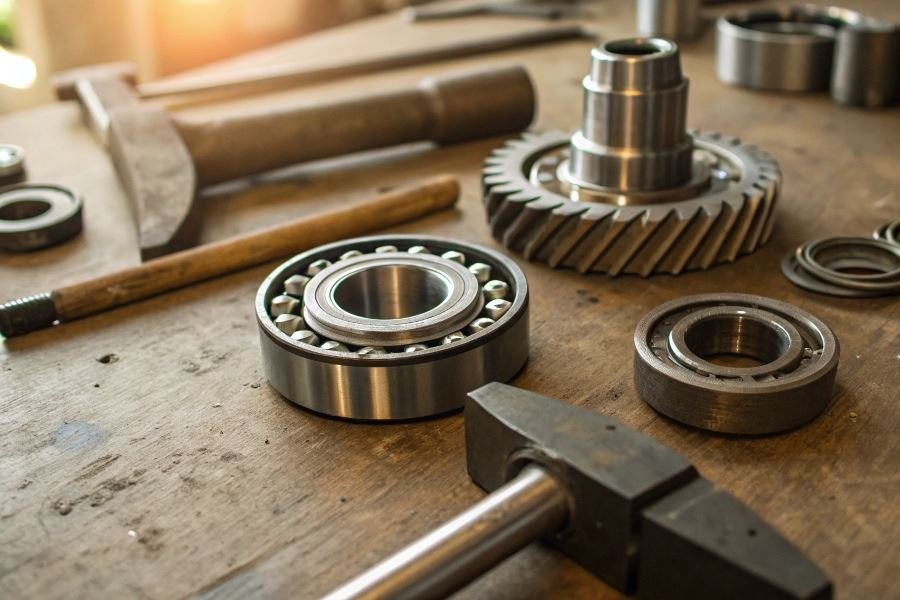
Bearings might seem less exciting, but they’re the silent guardians of your operation. Premium sealed bearings from manufacturers like SKF can operate up to 5,000 hours in dusty environments compared to 2,000 hours for standard alternatives.
OEM vs Aftermarket: The Quality Equation
| Factor | OEM Parts | Quality Aftermarket | Budget Aftermarket |
|---|---|---|---|
| Initial Cost | $$$ | $$ | $ |
| Lifespan | 100% | 80-110% | 40-70% |
| Warranty | Comprehensive | Limited | Minimal/None |
| Compatibility | Perfect | Excellent | Variable |
The debate between original equipment manufacturer (OEM) and aftermarket parts isn’t simply about cost. While OEM parts from companies like Schutte Buffalo ensure perfect compatibility, quality aftermarket alternatives from reputable suppliers can offer 90% of the performance at 70% of the cost.
Material composition matters more than brand name. Request material certifications regardless of source. High-carbon steel hammers with proper heat treatment will outperform inferior OEM options every time.
The compatibility factor can’t be overlooked. Some aftermarket manufacturers reverse-engineer parts without accounting for proprietary alloys or precise tolerances. Always verify that aftermarket parts meet or exceed OEM specifications for critical dimensions and hardness ratings.
Building Your Strategic Spare Parts Inventory
Smart inventory management means analyzing your specific usage patterns rather than following generic recommendations. Track component lifespans meticulously—the data will reveal patterns unique to your operation.
The 80/20 rule applies perfectly here: roughly 20% of your spare parts will address 80% of your maintenance needs. Focus your inventory investment on these high-turnover items:
- Complete sets of hammers
- Screen assemblies in your most-used configurations
- Bearing kits including seals and lubricants
- Drive belts and tensioning components
Seasonal operations require special consideration. If your crusher runs intensively during harvest periods, your spare parts strategy should include complete quick-change assemblies that can be swapped in minutes rather than hours.
Establish relationships with multiple suppliers to ensure availability during industry-wide shortages. The modest premium paid for redundant supply chains pales compared to the cost of extended downtime during critical production periods.
Mastering Grain Crusher Maintenance for Long-Term Value
Building maintenance routines that actually work
Effective grain crusher maintenance isn’t just about extending equipment life—it’s about protecting your investment. The cornerstone of proper maintenance is establishing a consistent schedule that becomes second nature to your operation. Documentation isn’t just paperwork; it’s your operational memory.
Start by creating a digital maintenance log that tracks:
- Daily visual inspections (looking for unusual wear patterns)
- Weekly lubrication points and schedules
- Monthly bearing checks and belt tension assessments
- Quarterly comprehensive inspections of all moving parts
Pro tip: Photograph key components when new and after maintenance sessions. These visual references become invaluable for spotting gradual wear that might otherwise go unnoticed.
“The most expensive maintenance is the maintenance you skip.”
Many operators find success with maintenance management software like UpKeep or Fiix that sends automated reminders and stores historical maintenance data. This approach transforms maintenance from reactive to proactive, potentially reducing downtime by up to 30%.
Essential tools for crusher care
The right tools make maintenance efficient rather than a burden. Your grain crusher maintenance toolkit should include:
Basic essentials:
- High-quality grease gun with appropriate lubricants
- Torque wrench calibrated to manufacturer specifications
- Digital caliper for measuring wear on critical components
- Infrared thermometer for bearing temperature monitoring
Advanced diagnostics:
- Vibration analyzer to detect early bearing failures
- Amp meter to monitor motor performance
- Alignment tools for proper belt tracking
| Tool Category | Essential Items | Approximate Investment |
|---|---|---|
| Hand Tools | Wrench set, screwdrivers, hex keys | $150-300 |
| Measurement | Calipers, feeler gauges, tape measure | $100-250 |
| Lubrication | Grease gun, oil applicators, funnels | $75-150 |
| Diagnostics | Infrared thermometer, multimeter | $150-400 |
Beyond physical tools, invest in manufacturer documentation and training resources. Many crusher manufacturers like Roff Mills offer detailed maintenance manuals and even virtual training sessions that can transform a maintenance novice into a capable technician.
Selecting maintenance-friendly crushers
When evaluating grain crushers with maintenance in mind, focus on these critical factors:
-
Accessibility of wear components – Can you reach bearings, belts, and rollers without major disassembly? Units with hinged panels or quick-release mechanisms dramatically reduce maintenance time.
-
Parts availability and standardization – Crushers using industry-standard bearings and belts from manufacturers like SKF or Gates ensure you’re never waiting weeks for proprietary components.
-
Modular design philosophy – The ability to replace individual components rather than entire assemblies can reduce repair costs by 40-60%.
Look beyond the sticker price to evaluate the true ownership cost. A crusher from Ferrell-Ross might cost 15% more upfront but require half the maintenance hours of a budget alternative.
The most maintenance-friendly crushers feature self-adjusting mechanisms, automated lubrication systems, and clear visual indicators of wear. These features might seem like luxuries until you calculate the value of avoided downtime and extended service life.
Discover essential grain crusher maintenance strategies and critical spare parts selection tips to maximize equipment lifespan, improve operational efficiency, and reduce long-term costs. Expert guide for optimal performance.
Discover essential grain crusher maintenance strategies and critical spare parts selection tips to maximize equipment lifespan, improve operational efficiency, and reduce long-term costs. Expert guide for optimal performance.