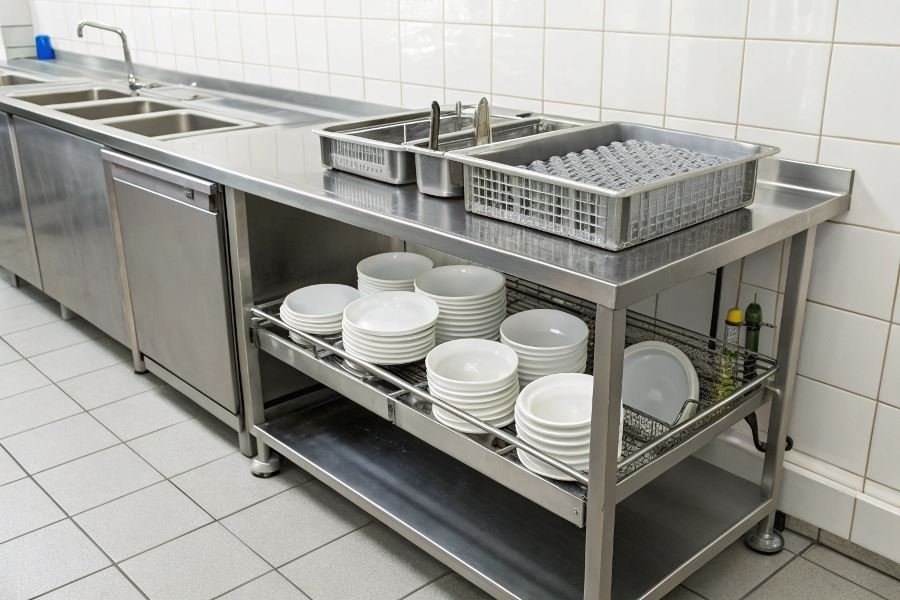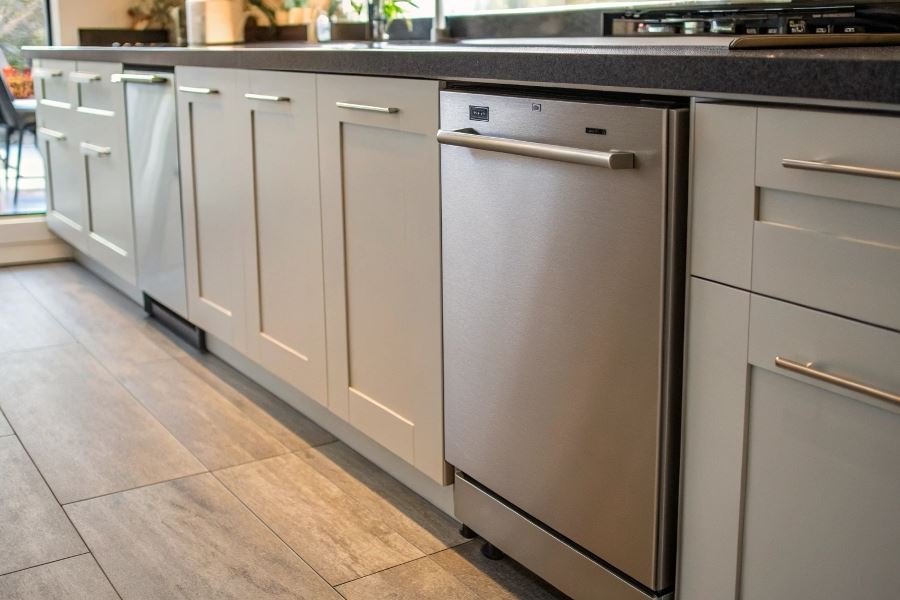
Ever stood in your kitchen, staring at a dishwasher that simply won’t fit under your counter? You’re not alone. A staggering 32% of first-time dishwasher buyers report installation problems related to incorrect measurements. The difference of just half an inch can transform your dream kitchen upgrade into a renovation nightmare.
Choosing the right dimensions for tables that house dishwashers isn’t just about aesthetics—it’s about functionality, efficiency, and preventing costly mistakes. Think of dishwasher dimensions as the architectural foundation of your kitchen workflow. Get them wrong, and you’re looking at awkward spaces, inefficient loading, and potentially damaged cabinetry.
The measurement trinity: Width, height, and depth
Standard dishwashers typically measure 24 inches wide, 24 inches deep, and 35 inches high—but these numbers can vary significantly between models and manufacturers. European models often run slightly smaller, while commercial-grade units can be substantially larger.
Pro tip: Always measure the actual space available in your kitchen, not just the current appliance. Walls are rarely perfectly straight, and floors aren’t always level.
How dimensions impact performance
The relationship between size and cleaning power isn’t always intuitive. A compact 18-inch dishwasher might use water more efficiently than its larger counterparts, while taller units can accommodate awkwardly shaped items like serving platters or blender pitchers.
Consider this: the interior dimensions directly affect loading capacity. A well-designed 24-inch dishwasher with optimized rack configuration might hold more dishes than a poorly designed 26-inch model. It’s not just about raw space—it’s about usable space.
Ergonomic considerations
Your dishwasher’s height affects how comfortably you can load and unload it. The ideal height positions the bottom rack at approximately 20-22 inches from the floor—high enough to minimize bending but low enough for easy access to the top rack. This seemingly small detail can make a tremendous difference in daily comfort, especially for those with back issues.
Standard Dishwasher Table Dimensions That Matter
When planning your kitchen layout, understanding the dimensions of tables for dishwashers is crucial to avoid costly mistakes and ensure seamless integration. Getting these measurements right the first time can save you from headaches during installation and throughout the appliance’s lifetime.
The perfect dishwasher setup requires precise measurements across multiple dimensions. Homeowners often overlook the importance of proper dimensions of tables for dishwashers when making their purchasing decisions, leading to installation nightmares and compromised functionality. Let’s dive into the exact specifications that will guarantee your dishwasher fits perfectly in your kitchen space.
Height That Harmonizes With Your Countertop
The standard height for dishwasher tables typically ranges between 33.5 to 35 inches. This measurement is critical because:
- Counter alignment: Most kitchen countertops stand at 36 inches tall, allowing for a 1/2-inch to 1-inch clearance above the dishwasher for easy installation
- Adjustable feet on most modern dishwashers can provide up to 1.5 inches of height customization
- Proper height ensures ergonomic loading and unloading without uncomfortable bending
For ADA-compliant installations, lower heights of approximately 32 inches are available from manufacturers like Bosch and Whirlpool, accommodating users with mobility considerations.
Width and Depth Dimensions That Fit Your Space
Width requirements vary significantly based on dishwasher type:
| Dishwasher Type | Standard Width | Typical Depth |
|---|---|---|
| Standard | 24 inches | 24-25 inches |
| Compact | 18 inches | 22-24 inches |
| Custom Panel | 23.5-24 inches | 23-25 inches |
The depth measurement deserves special attention as it includes:
- Base cabinet depth (typically 24 inches)
- Door clearance when fully opened (additional 25-27 inches of space needed)
- Control panel protrusion (can add 1-2 inches to overall depth)
European models from brands like Miele often feature slightly different dimensions, sometimes running narrower at 23.5 inches wide, requiring precise measurements before purchase.
Installation Clearance Requirements
Proper installation demands attention to clearance spaces that many buyers overlook:
- Side clearance: Minimum 1/2-inch on each side for proper ventilation and to prevent moisture damage
- Top clearance: At least 1/4-inch between dishwasher and countertop underside
- Rear clearance: 2-3 inches for water connections, drain hoses, and electrical hookups
For corner installations, you’ll need at least 2 inches of clearance from adjacent cabinets to allow the dishwasher door to open fully without hitting cabinet hardware.
Modern dishwashers from KitchenAid and GE now include detailed dimension guides that account for these clearance requirements, making the selection process more straightforward for homeowners.
Remember that non-standard installations—like those in islands or peninsulas—require additional planning for water supply, drainage, and electrical connections, often necessitating at least 3-4 inches of additional clearance behind the unit.
By carefully considering these dimensional requirements, you’ll ensure your dishwasher fits perfectly, functions optimally, and integrates seamlessly with your kitchen design for years to come.
Mastering Dishwasher Table Dimensions
Measuring kitchen space with precision
The foundation of any successful dishwasher table installation begins with accurate measurements. Don’t trust your eyeballing skills here—grab a tape measure and document every critical dimension. Start by measuring the available width, depth, and height where your dishwasher table will live. Remember to account for door clearances, drawer pulls, and traffic patterns in your kitchen workflow.
Measurement golden rule: Always measure twice, cut or purchase once. A single inch miscalculation can mean the difference between perfect fit and frustrating returns.
For optimal functionality, allow at least 36 inches of clearance in front of your dishwasher table for comfortable loading and unloading. Height measurements deserve special attention—standard countertop height runs 34-36 inches, but your specific needs might vary based on user height and comfort.
Matching dimensions to your dishwasher model
Different dishwasher models demand different support structures. Standard residential dishwashers typically measure 24 inches wide, 24 inches deep, and 35 inches high—but compact models, commercial units, and drawer-style dishwashers each have unique requirements.
| Dishwasher Type | Typical Width | Typical Depth | Height Range | Table Considerations |
|---|---|---|---|---|
| Standard | 24″ | 24″ | 33.5-35″ | Standard support, weight capacity 100-150 lbs |
| Compact | 18″ | 22″ | 32-34″ | Narrower design, reinforced corners |
| Commercial | 24-27″ | 28-30″ | 34-38″ | Heavy-duty construction, moisture resistance |
| Drawer-style | 24-36″ | 23-26″ | Variable | Multiple support points, modular design |
When selecting your table, factor in the dishwasher’s weight (especially when fully loaded with dishes and water), vibration patterns during operation, and connection requirements. Premium tables from manufacturers like Bosch and KitchenAid often include specialized features designed to complement their specific dishwasher models.
Future-proofing your dishwasher table investment
The smartest buyers think beyond today’s needs. Consider how your kitchen usage might evolve over the next 5-10 years. Will you upgrade to a larger capacity dishwasher? Might you remodel your kitchen layout? These possibilities should inform your current purchase decision.
Adaptable dishwasher tables offer:
- Adjustable height mechanisms that accommodate different dishwasher models
- Modular components that can be reconfigured as needs change
- Material durability that withstands kitchen humidity and temperature fluctuations
- Universal compatibility with multiple dishwasher brands and styles
Look for tables with reinforced corners and edges that resist damage during inevitable kitchen shuffles. Stainless steel options from Viking or Thermador command premium prices but offer exceptional longevity and adaptability.
The most versatile tables incorporate subtle design elements like slightly oversized dimensions (with trim kits available) and removable panels that allow for future customization. Some forward-thinking manufacturers even offer conversion kits that transform standard dishwasher tables into specialized storage or prep stations should your appliance configuration change.
Remember that investing in quality now typically costs less than replacing an inadequate table prematurely. The difference between economy and premium options often amounts to less than $100—a small price for years of headache-free dishwasher operation.
Discover the perfect dishwasher table dimensions for your kitchen. Our comprehensive guide helps you avoid common sizing mistakes, ensure proper installation, and optimize kitchen ergonomics for maximum efficiency and comfort.
Discover the perfect dishwasher table dimensions for your kitchen. Our comprehensive guide helps you avoid common sizing mistakes, ensure proper installation, and optimize kitchen ergonomics for maximum efficiency and comfort.