Ever wondered why some food businesses consistently deliver safe products while others struggle with contamination issues? The answer might be sitting right in your production area.
Behind every successful food enterprise stands a fleet of unsung heroes: production tables. These workhorses form the literal foundation upon which food safety and operational efficiency are built. When selecting these critical surfaces, the stakes couldn’t be higher—your choice directly impacts everything from cross-contamination prevention to worker productivity and regulatory compliance.
The FDA Food Code and NSF International have established rigorous standards for food-contact surfaces, requiring them to be non-absorbent, smooth, and free from crevices that could harbor dangerous pathogens. Since the implementation of the Food Safety Modernization Act in 2011, these requirements have become even more stringent, with inspectors paying particular attention to work surface materials and construction.
Material matters more than you think. Stainless steel (particularly 304-grade) dominates the industry for good reason—it resists corrosion, withstands sanitizing chemicals, and doesn’t harbor bacteria. However, specialized operations might benefit from alternatives:
“The right production table isn’t just equipment—it’s an investment in your operation’s safety culture and efficiency pipeline.”
When evaluating production tables, consider these three critical factors:
- Process requirements – Will the table support heavy equipment? Need drainage channels? Require height adjustability?
- Cleaning protocols – How will the table be sanitized? Daily pressure washing demands different construction than simple wipedowns.
- Workflow integration – The perfect table enhances rather than hinders your production sequence.
Remember that your specific enterprise needs—whether you’re processing raw meats, assembling sandwiches, or packaging baked goods—should drive your selection process, not just what’s available in a catalog.
Essential Factors for Production Table Selection
When setting up a food processing facility, the humble production table becomes the unsung hero of your operation. These workhorses form the backbone of food preparation, assembly, and packaging processes across the industry. Selecting the right production table isn’t just about finding a flat surface—it’s about investing in a critical piece of infrastructure that directly impacts food safety, worker efficiency, and operational longevity.
The process of how to choose a production table for a food enterprise requires careful consideration of materials, structural integrity, and sanitation features. Each element plays a crucial role in ensuring your tables meet both regulatory requirements and practical needs. Let’s dive into what truly matters when making this investment.
Food-Grade Materials That Last
Stainless steel reigns supreme in food production environments, but not all stainless steel is created equal:
- 304 grade (18/8) – The industry standard offering excellent corrosion resistance for most applications
- 316 grade – Superior resistance to salt and acidic foods, ideal for seafood processing
- 430 grade – More affordable but less corrosion-resistant, suitable for dry preparation areas
The surface finish matters tremendously. A #4 finish (brushed) offers the optimal balance between smoothness and scratch concealment, while a 2B mill finish provides excellent cleanability but shows scratches more readily.
“The right table material isn’t just about compliance—it’s about reducing your long-term maintenance costs and extending equipment lifespan.”
Structural Integrity Under Pressure
Production tables must withstand significant daily abuse. Key structural considerations include:
| Load Capacity | Recommended Use | Reinforcement Type |
|---|---|---|
| 200-300 lbs | Light prep work | Standard undershelf |
| 500-700 lbs | General production | Hat channel reinforcement |
| 1000+ lbs | Heavy equipment support | Full frame reinforcement |
Stability features should include adjustable feet for uneven floors and cross-bracing for tables exceeding 72 inches in length. For mobile applications, look for locking casters with a minimum 5-inch diameter for proper floor clearance.
Customization options worth considering include:
- Height adjustability (standard 34-36″ vs. custom heights)
- Backsplashes (typically 4-6″ high)
- Undershelves and overshelves for maximizing workspace
- Cutouts for sinks or equipment integration
Sanitation-First Design Elements
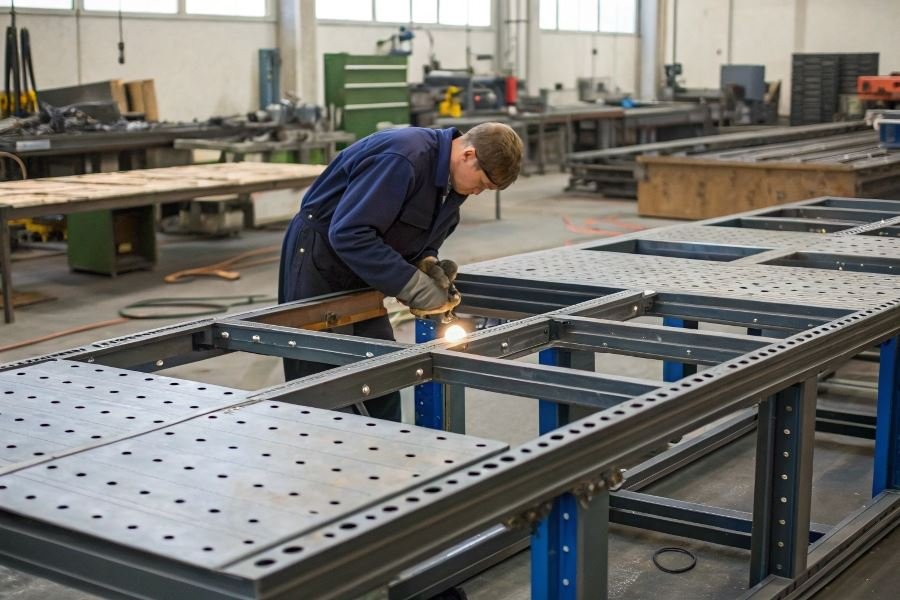
In food production, cleanability isn’t optional—it’s essential. Seamless construction eliminates crevices where bacteria can hide. Look for tables with continuously welded seams that have been properly ground and polished rather than spot-welded joints.
Rounded edges and corners serve dual purposes:
- Preventing food particle accumulation
- Reducing injury risk to workers
Drainage considerations are particularly important for wet processing areas. Tables with slight slopes (1-2°) toward a drainage point prevent standing water. Some specialized tables include:
- Perforated tops for drainage
- Marine edges to contain liquids
- Integrated gutters with drainage ports
The intersection between table components should feature sanitary design principles—no exposed threads, no hollow tubing with open ends, and minimal horizontal surfaces where debris can collect.
When selecting production tables, remember that initial cost often reflects long-term value. Premium tables with proper sanitary design and quality materials typically deliver better ROI through extended service life and reduced contamination risks—making them the smarter investment for serious food enterprises.
The Ultimate Guide to Production Tables for Food Enterprises
When it comes to food production efficiency, the humble work table is the unsung hero of your operation. The right table can dramatically improve workflow, ensure food safety compliance, and even reduce worker fatigue. Let’s dive into the three essential production table types that every food enterprise should consider.
Standard work tables that deliver
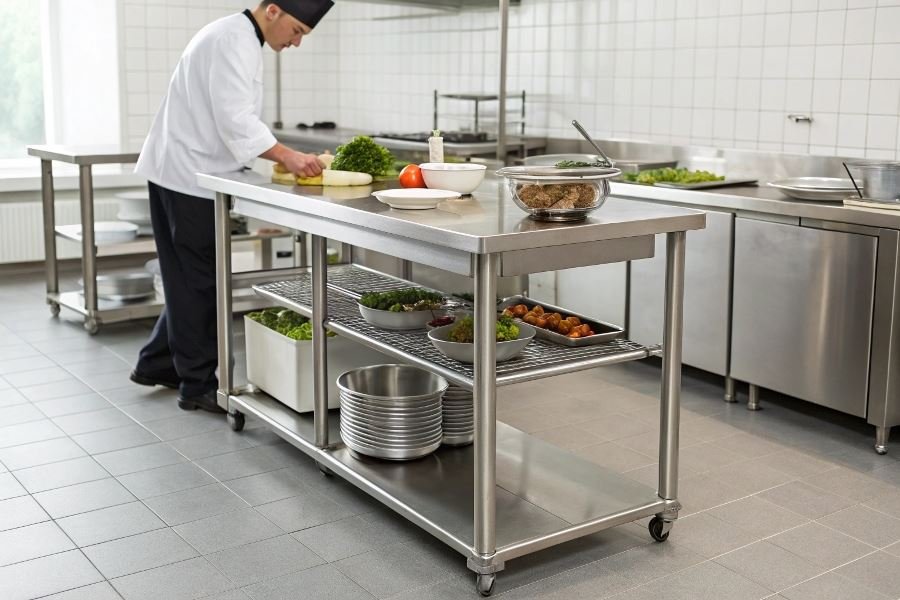
Standard stainless steel work tables form the backbone of any food production facility. These workhorses offer unmatched durability and sanitation benefits that make them indispensable.
Material matters: 304-grade stainless steel provides the perfect balance of corrosion resistance and durability, while 316-grade offers superior protection against acidic foods and salt environments.
Most standard tables feature:
- 14-16 gauge steel tops that resist denting
- Adjustable undershelf for storage
- Galvanized legs with adjustable feet
- Weight capacities ranging from 400-1000 pounds
The difference between economy and premium models often comes down to weld quality and reinforcement structures.
When selecting standard tables, consider height carefully—30-36 inches is typical, but proper ergonomics suggests work surfaces should be 3-4 inches below elbow height for most tasks.
Specialized preparation tables for precision work
Different food preparation tasks demand specialized surfaces and features. These purpose-built tables elevate specific functions to new levels of efficiency.
Bakers’ tables incorporate marble or composite inserts that maintain the cool temperatures essential for pastry work. The best models include flour drawers and integrated scale platforms.
Meat preparation tables feature:
- Raised edges to contain liquids
- Polyethylene cutting surfaces that resist knife damage
- Integrated sanitizing systems
- Sloped designs for proper drainage
Fish and seafood preparation requires specialized tables with ice beds or refrigerated surfaces to maintain freshness during processing.
Vegetable prep tables often incorporate sink cutouts and disposal chutes that streamline the washing-to-cutting workflow, reducing cross-contamination risks and saving valuable seconds per operation.
Mobile and adjustable tables for operational agility
The modern food enterprise demands flexibility, and mobile tables deliver exactly that.
Height-adjustable tables have revolutionized ergonomics in food production. Pneumatic or electric systems allow height adjustments from 28-45 inches, accommodating different workers and tasks throughout the day.
Mobile tables with heavy-duty locking casters offer:
- Quick reconfiguration for changing production needs
- Ability to move workstations to product (rather than vice versa)
- Simplified cleaning access to floor areas
- Temporary expansion of production capacity
The return on investment for quality mobile tables comes not just from flexibility, but from reduced worker strain and increased throughput during peak production periods.
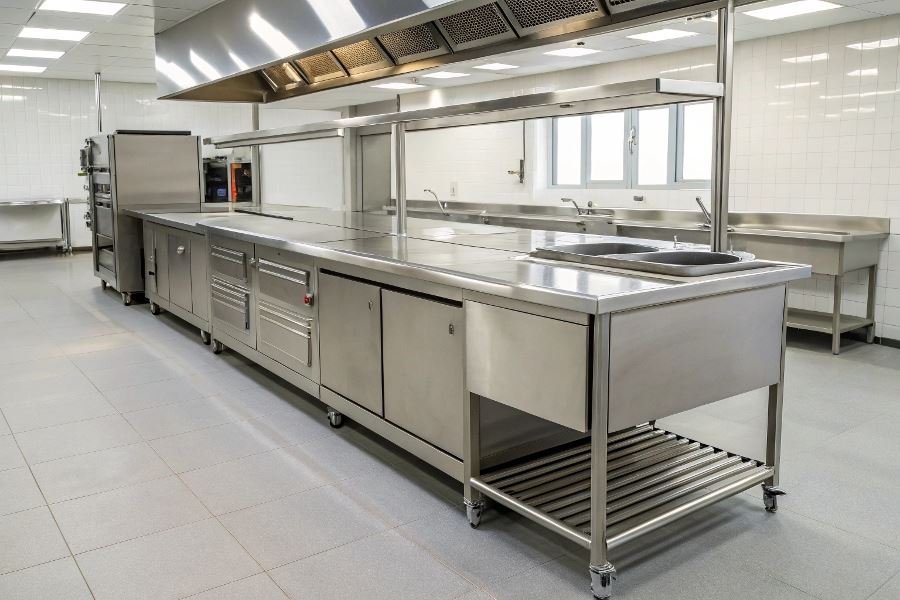
For maximum versatility, consider modular table systems that can be connected and reconfigured as needed. These systems often feature standardized heights and connection mechanisms that allow tables to function independently or as part of larger workstations.
When selecting mobile options, pay special attention to caster quality—polyurethane wheels provide the best combination of floor protection, quiet operation, and durability under heavy loads.
The right combination of these three table types creates a production environment that can adapt to changing demands while maintaining the highest standards of efficiency and food safety.
Discover how to select the perfect food-grade production table for your enterprise. Learn about essential materials, structural requirements, sanitation features, and specialized table types that ensure food safety and operational efficiency.
Discover how to select the perfect food-grade production table for your enterprise. Learn about essential materials, structural requirements, sanitation features, and specialized table types that ensure food safety and operational efficiency.