Ever watched $10,000 worth of premium seafood spoil because someone chose the wrong transport cart? That’s the reality facing food businesses daily—where the humble cart becomes the difference between profit and devastating loss.
Behind every successful food operation lies a carefully considered logistics system where transport carts play a surprisingly critical role. The FDA reports that approximately 48 million Americans experience foodborne illness annually, with improper transportation contributing significantly to this number. Selecting appropriate carts for transporting food products isn’t merely about convenience—it’s about protecting public health, maintaining compliance, and preserving your bottom line.
The logistics landscape has transformed dramatically since the Food Safety Modernization Act was signed into law in 2011. This legislation shifted focus from responding to contamination to preventing it, placing new demands on every link in the food supply chain. Today’s food transport carts must navigate a complex matrix of requirements:
“The right cart doesn’t just move product—it preserves integrity, prevents cross-contamination, and maintains temperature control throughout the journey.”
Regulatory realities shaping cart selection
The FDA’s Sanitary Transportation rule establishes specific requirements for vehicles and transportation equipment. Non-compliance doesn’t just risk citations—it threatens brand reputation and customer trust. Modern food transport carts must be:
- Designed for thorough cleaning and sanitization
- Constructed of non-toxic, non-absorbent materials
- Capable of maintaining required temperatures
- Equipped with appropriate monitoring systems
Selecting the right cart means navigating this regulatory landscape while optimizing for operational efficiency—a challenge that demands careful consideration of multiple criteria.
The Ultimate Cart Selection Guide for Food Transport
Engineering Food-Grade Excellence
When it comes to transporting perishables, the material composition of your cart isn’t just a specification—it’s your first line of defense against contamination. Food-grade carts require materials that resist corrosion, prevent bacterial growth, and withstand rigorous sanitization protocols. Stainless steel (304 or 316 grade) dominates the premium segment, offering unparalleled durability and compliance with FDA regulations. Meanwhile, high-density polyethylene (HDPE) provides a lightweight alternative that doesn’t sacrifice hygiene standards.
The criteria for selecting carts for transporting food products extend beyond mere materials to include construction integrity. Seamless welding eliminates crevices where bacteria might flourish, while rounded corners facilitate thorough cleaning. Industry leaders like Rubbermaid Commercial have pioneered carts with antimicrobial protection built directly into the polymer structure, reducing bacterial growth by up to 99.9% between cleanings.
Dimensional Intelligence for Operational Efficiency
Size matters—especially when navigating crowded kitchens or loading docks. The optimal cart strikes a delicate balance between capacity and footprint:
| Cart Size | Ideal Application | Maximum Load Capacity | Typical Clearance Needed |
|---|---|---|---|
| Compact (36″×24″) | Small kitchens, retail | 400-600 lbs | 42″ doorways |
| Standard (48″×30″) | Restaurants, catering | 700-1,000 lbs | 54″ pathways |
| Industrial (60″×30″) | Warehousing, distribution | 1,200-2,000 lbs | 66″ corridors |
Weight distribution deserves particular attention. A cart’s weight-to-capacity ratio directly impacts operator fatigue and product integrity. The latest composite materials from manufacturers like Metro deliver impressive strength while reducing cart weight by up to 30% compared to traditional all-metal designs.
Movement Mechanics and Human Factors
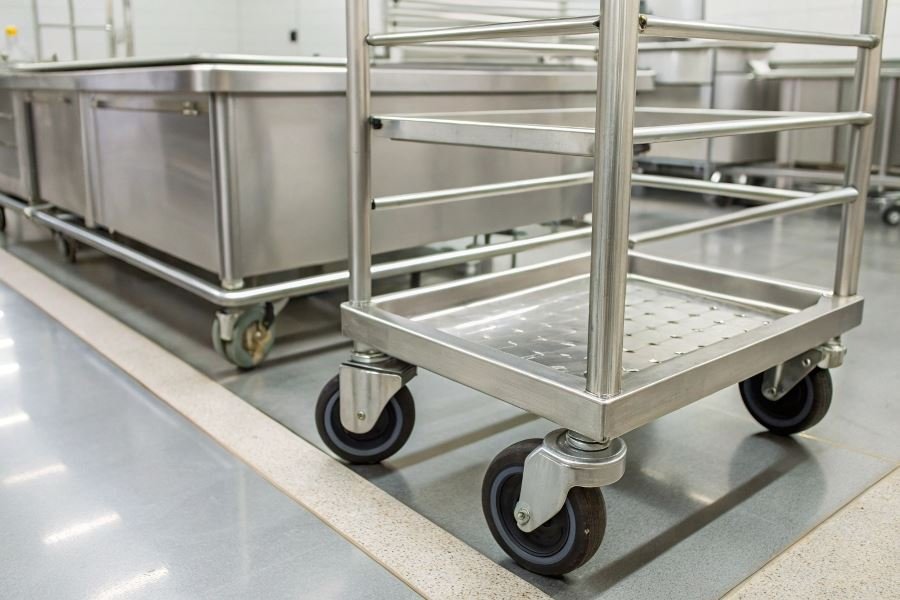
The finest cart becomes worthless if it can’t navigate real-world environments with precision. Advanced casterization transforms ordinary carts into precision instruments:
Polyurethane wheels provide the perfect compromise between floor protection and load capacity, operating 70% quieter than hard rubber alternatives.
Modern ergonomic design elements address the human side of the equation. Height-adjustable handles accommodate operators from 5’2″ to 6’4″, while strategically positioned grab bars enable intuitive control during tight maneuvers. The Cambro Flex Station exemplifies this approach with its modular design that allows customization based on specific workflow requirements.
Braking systems have evolved beyond simple wheel locks to include directional locking mechanisms that transform four-wheel swivel carts into straight-line tracking machines at the flip of a lever. This feature proves invaluable when navigating long corridors or ramps where directional stability prevents dangerous runaway situations.
The intersection of maneuverability and ergonomics culminates in thoughtful details like recessed push handles that prevent knuckle injuries when passing through doorways and bumper systems that absorb impacts without transferring shock to transported goods. These seemingly minor features can dramatically reduce workplace injuries and product damage, delivering substantial ROI beyond the initial purchase price.
Beyond Basics: Advanced Cart Selection Criteria for Food Transport
Temperature Control That Preserves Quality
Temperature management isn’t just a feature—it’s the lifeline of food transport. Modern food transport carts now offer precision temperature control systems that maintain food safety zones within ±2°F. The difference between basic and advanced solutions is striking: while standard carts might offer simple insulation, premium models from companies like Metro incorporate active heating and cooling technologies.
The most effective carts employ double-wall construction with polyurethane foam insulation, creating thermal barriers that maintain temperatures for up to 4 hours without power. This becomes critical when transporting items between preparation areas and service points across large facilities.
Industry insight: Look for carts with digital temperature displays and data logging capabilities—these features not only ensure compliance but provide documentation that can prove invaluable during inspections.
Some advanced models feature compartmentalized designs allowing simultaneous transport of hot (140°F+) and cold (below 40°F) items without cross-temperature contamination—a game-changer for operations serving diverse menu items.
Sanitization Features That Ensure Compliance
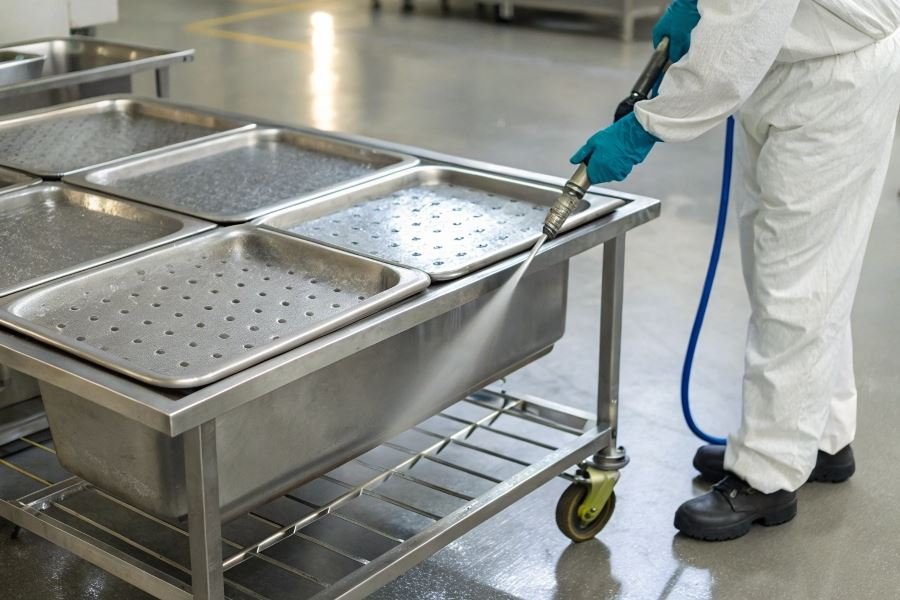
Food safety regulations demand rigorous cleaning protocols, making sanitization features non-negotiable. The most advanced carts incorporate materials and design elements specifically engineered for food safety:
Materials that matter:
- Antimicrobial surfaces that inhibit bacterial growth between cleanings
- Coved corners that eliminate hard-to-clean crevices where contaminants hide
- Non-porous surfaces that prevent absorption of liquids and odors
Cambro and other leading manufacturers have pioneered carts with removable components that can be run through commercial dishwashers, dramatically reducing cleaning time while improving sanitization effectiveness.
Durability That Delivers Long-Term Value
The true cost of a food transport cart extends far beyond the initial purchase price. Advanced carts distinguish themselves through construction quality and maintenance requirements that translate to years of additional service life.
Construction elements that signal quality:
| Feature | Benefit | Expected Impact |
|---|---|---|
| Welded stainless steel frames | Eliminates weak points at joints | 5-7 years additional service life |
| Heavy-duty casters with sealed bearings | Smooth operation on varied surfaces | Reduces replacement frequency by 60% |
| Reinforced door hinges | Prevents sagging and seal failures | Maintains temperature integrity longer |
Maintenance requirements vary dramatically between economy and premium models. While budget carts might require component replacement every 6-12 months, commercial-grade options from Rubbermaid Commercial often feature modular designs where individual parts can be replaced without specialized tools.
The most advanced carts now include self-diagnostic systems that alert operators to potential maintenance issues before they cause food safety problems or operational downtime—a feature that pays for itself through prevented product loss and extended equipment life.
When evaluating long-term value, consider not just the warranty period but the availability of replacement parts and the manufacturer’s history of supporting older models. The best manufacturers maintain parts inventories for discontinued models for at least 7-10 years, ensuring your investment remains serviceable even as newer models enter the market.
Discover essential criteria for selecting food transport carts that ensure safety, compliance, and efficiency. Learn about materials, temperature control, and sanitization features that protect product integrity while maximizing operational performance.
Discover essential criteria for selecting food transport carts that ensure safety, compliance, and efficiency. Learn about materials, temperature control, and sanitization features that protect product integrity while maximizing operational performance.