Did you know that 48% of foodborne illness outbreaks can be traced back to improper sanitation practices? Behind every delicious street taco or gourmet food truck burger lies an invisible battlefield where proper sanitation makes the difference between culinary delight and potential disaster.
Food cart sanitation isn’t just about passing inspections—it’s the foundation of customer trust, business longevity, and public health protection. The mobile nature of food carts creates unique challenges that stationary restaurants don’t face: limited space, restricted water access, and constantly changing environments all complicate the sanitation equation.
The regulatory landscape: Navigating compliance
The FDA Food Code serves as the backbone of sanitation requirements nationwide, though specific regulations vary by state and municipality. Most jurisdictions require:
- Regular health department inspections
- Proper handwashing stations
- Temperature-controlled storage
- Food handler certifications
- Approved water sources and waste disposal systems
“The regulations aren’t obstacles—they’re guardrails keeping your business on the road to success,” notes the National Food Truck Association.
When sanitation standards slip
The consequences of neglecting proper sanitation extend far beyond potential fines:
One foodborne illness outbreak can cost a small food business an average of $75,000 in legal fees, medical claims, and lost business—not including the incalculable damage to reputation.
More importantly, proper sanitation protects your customers’ health and your business’s future. With social media amplifying both positive and negative experiences, a single sanitation misstep can go viral for all the wrong reasons.
By embracing sanitation as a core business value rather than a regulatory burden, food cart operators transform compliance from a checkbox exercise into a competitive advantage that customers can taste.
Building Food-Safe Carts That Meet Industry Standards
Engineering Excellence in Food Cart Materials
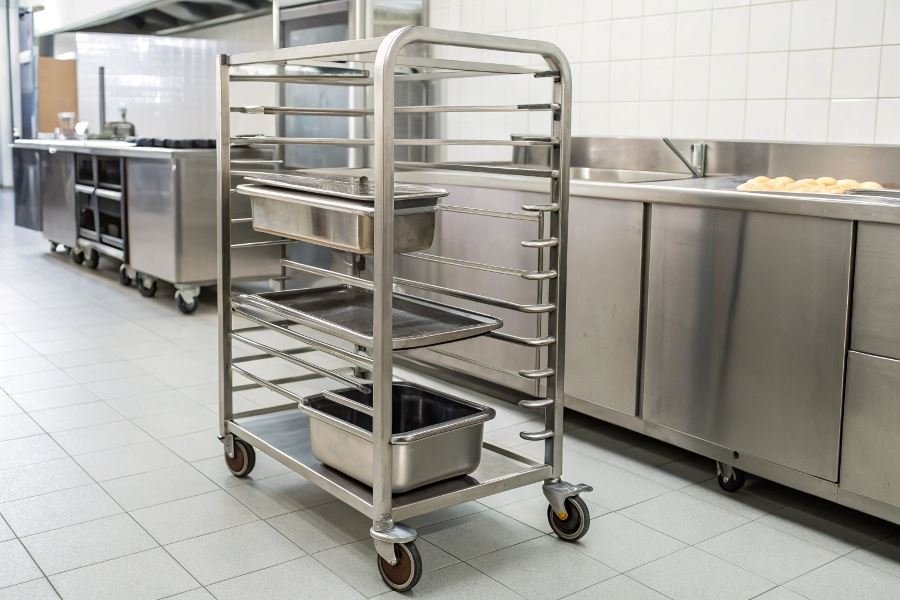
The foundation of any food service cart begins with its construction materials. Food-grade stainless steel (304 or 316 grade) dominates the industry for good reason—it resists corrosion, withstands sanitizing chemicals, and maintains structural integrity through countless cleaning cycles. Unlike painted carbon steel that chips or wood that harbors bacteria, stainless steel provides a non-porous surface where pathogens can’t hide.
When implementing sanitary requirements for carts in the food industry, design considerations become equally critical. Rounded corners and seamless construction eliminate crevices where food particles might accumulate. The most effective carts feature fully welded joints rather than bolted connections, preventing microscopic gaps that become bacterial breeding grounds. Leading manufacturers like Lakeside Manufacturing design their carts with NSF International certification in mind, ensuring every component meets food safety standards.
Cleaning Protocols That Eliminate Contamination Risks
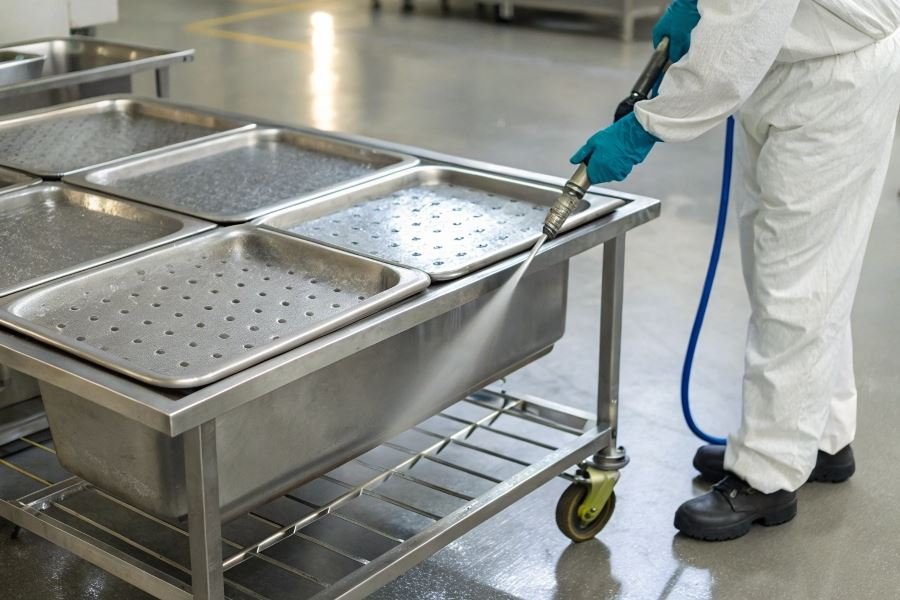
Maintaining food cart sanitation requires more than occasional wipe-downs. Effective cleaning regimens follow a three-step process:
- Pre-cleaning: Remove visible debris and food particles
- Washing: Apply detergent solution with mechanical action
- Sanitizing: Apply chemical sanitizers at proper concentration
The frequency of these procedures varies by usage environment:
| Environment | Cleaning Frequency | Sanitizing Agent |
|---|---|---|
| Hospital | After each use | Quaternary ammonium (800 ppm) |
| Restaurant | Daily minimum | Chlorine solution (50-100 ppm) |
| Food Production | Between product changes | Iodine compounds (12.5-25 ppm) |
Temperature logging during sanitization proves critical—most sanitizers require specific temperature ranges for maximum effectiveness. Digital temperature indicators from ThermoWorks provide instant verification that sanitizing solutions maintain proper temperatures throughout the cleaning process.
Safe Food Handling on Mobile Platforms
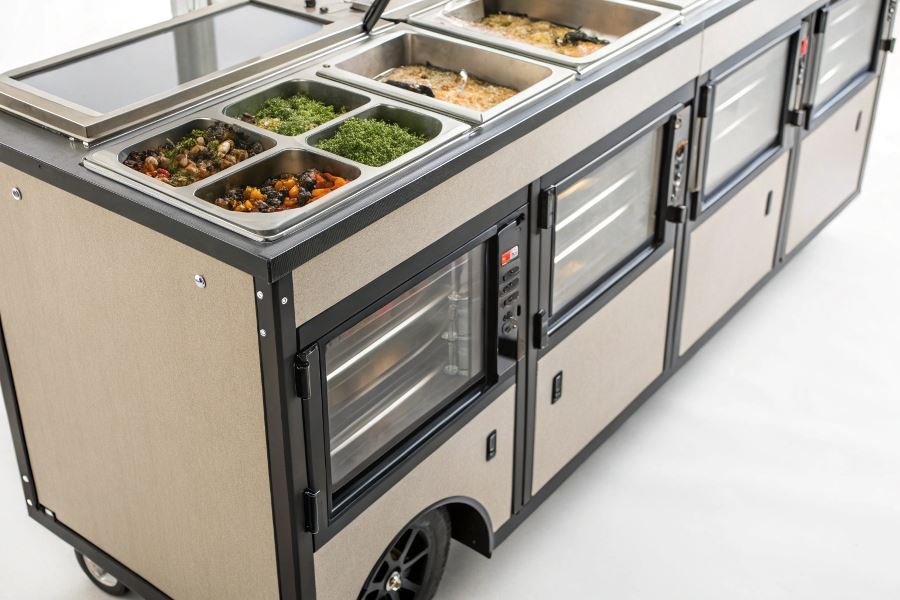
The mobility of food carts creates unique challenges for maintaining temperature control and preventing cross-contamination. Effective cart designs incorporate separate zones for raw and ready-to-eat foods, preventing dangerous cross-contamination scenarios. Color-coded containers and dedicated utensils reinforce these separations visually.
Temperature control remains paramount. Hot foods must stay above 135°F (57°C), while cold items require temperatures below 41°F (5°C). The danger zone between these temperatures allows rapid bacterial multiplication. Modern carts integrate temperature-maintaining technologies:
- Insulated compartments with silicone gaskets
- Eutectic cold plates for refrigeration without power
- Heat-retaining materials like specialized ceramics
Food rotation follows the FIFO (First In, First Out) principle, with clear labeling systems indicating preparation dates and expiration times. Cambro storage containers with their CamSquares system exemplify this approach with transparent design and integrated date markers.
Proper drainage systems prevent standing water where microorganisms thrive. Sloped surfaces direct liquids to designated collection points, while removable drip trays allow thorough cleaning of these critical areas. This attention to liquid management prevents the formation of biofilms—complex bacterial communities that resist standard cleaning procedures.
By adhering to these comprehensive standards, food service operations ensure their mobile carts maintain the same rigorous safety protocols as stationary kitchens, protecting both public health and business reputation.
Mastering the Implementation of Cart Sanitation Standards
Food safety isn’t just about regulations—it’s about reputation, customer trust, and business longevity. When it comes to food carts, implementing and maintaining proper sanitation standards requires systematic approaches that go beyond occasional cleaning. Let’s dive into the critical components that make sanitation programs work in the real world.
Training Staff for Sanitation Excellence
The most sophisticated sanitation protocols mean nothing without properly trained personnel. Effective staff training programs should include:
Hands-on demonstration sessions rather than passive learning. Research from the Food Safety Training Institute shows that practical demonstrations improve compliance by 67% compared to lecture-only approaches.
Training must address the “why” behind procedures, not just the “how.” When staff understand that improper cart sanitation can lead to foodborne illnesses affecting thousands annually, compliance rates dramatically improve.
“The most expensive training is the training you never provided—especially after a food safety incident.”
Training should incorporate cart-specific challenges, including:
- Hard-to-reach areas unique to mobile food equipment
- Proper chemical dilution rates for food-contact surfaces
- Cross-contamination prevention specific to compact workspaces
- Temperature monitoring in variable environments
Refresher training should occur quarterly, not just annually, with spot-checks and micro-training sessions integrated into regular operations.
Documentation Systems That Actually Work
Documentation isn’t just paperwork—it’s your legal shield and operational compass. Effective documentation systems include:
Digital tracking solutions that simplify compliance. Mobile applications like FoodSafe allow staff to document cleaning procedures in real-time with photo verification.
Create cleaning logs that are cart-specific, addressing unique components like:
| Component | Cleaning Frequency | Verification Method |
|---|---|---|
| Food contact surfaces | After each use | ATP testing |
| Wheels/undercarriage | Daily | Visual inspection + weekly deep clean |
| Water tanks | Every 4 hours of operation | pH testing |
| Ventilation systems | Weekly | Particulate measurement |
Documentation should include:
- Sanitation Standard Operating Procedures (SSOPs) with visual guides
- Chemical inventory management records
- Corrective action reports for sanitation failures
- Training completion records with competency verification
The most effective systems integrate digital and physical documentation, ensuring accessibility during inspections and operational continuity during technology failures.
Inspection and Maintenance Rhythms
Regular inspection isn’t just about finding problems—it’s about preventing them. Effective inspection programs include:
Three-tiered inspection protocols that incorporate daily operator checks, weekly supervisor reviews, and monthly third-party assessments.
Preventive maintenance schedules should address sanitation-critical components:
- Water pump systems require bi-weekly disassembly and sanitization
- Drainage systems need weekly biofilm prevention treatments
- Seals and gaskets should undergo monthly replacement assessment
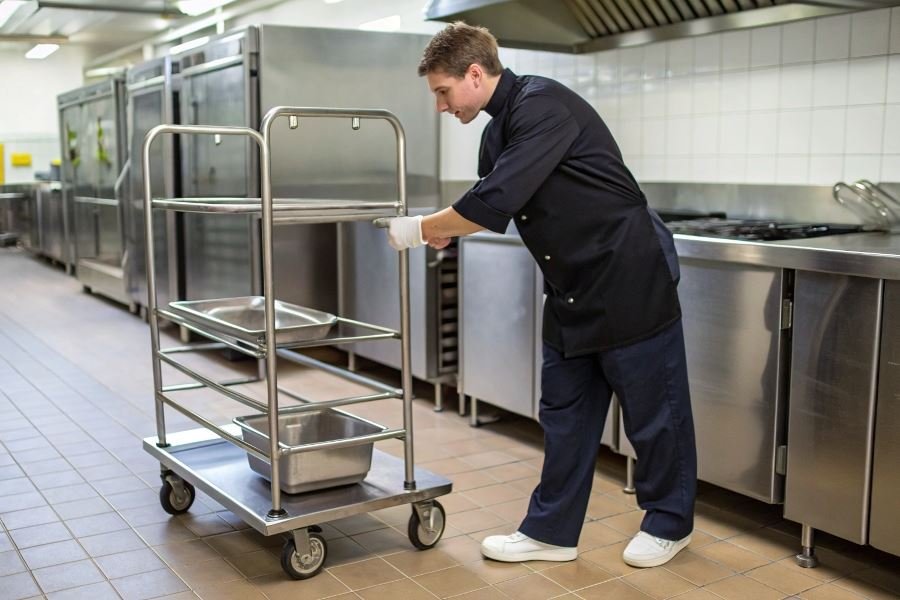
- Cart wheel mechanisms require weekly cleaning to prevent cross-contamination
The most successful operations implement a “clean-as-you-go” culture supported by:
- 15-minute sanitation windows scheduled throughout operational hours
- Pre-opening and post-closing sanitation checklists
- Quarterly deep-cleaning sessions for comprehensive sanitization
By implementing these systematic approaches to cart sanitation, food businesses create not just compliance, but a competitive advantage. When sanitation becomes ingrained in operational culture rather than treated as a regulatory burden, both food safety and customer satisfaction naturally follow.
Discover essential food cart sanitation requirements for industry compliance. Learn proper cleaning protocols, food-safe construction standards, and maintenance practices to ensure safety and avoid penalties while operating your mobile food business.
Discover essential food cart sanitation requirements for industry compliance. Learn proper cleaning protocols, food-safe construction standards, and maintenance practices to ensure safety and avoid penalties while operating your mobile food business.