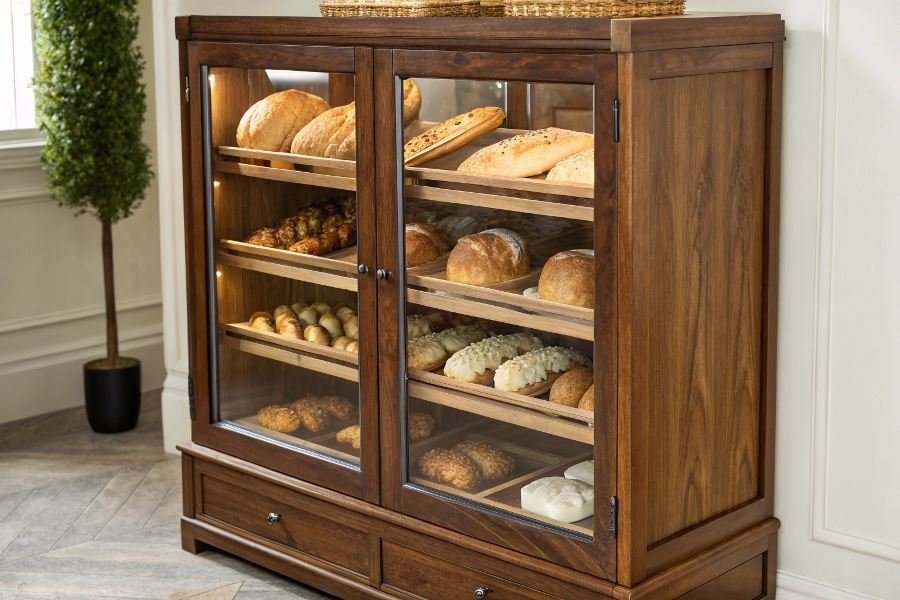
Ever watched a customer’s face fall when biting into a stale croissant? That moment costs you more than a single sale—it chips away at your business foundation. For small bakeries and cafés, bread storage isn’t just logistics; it’s the invisible guardian of your reputation.
Fresh bread speaks volumes. The contrast between properly stored artisanal loaves and their neglected counterparts is immediately apparent in texture, aroma, and taste. A quality bread cabinet preserves not just moisture content but the very essence of what makes your baked goods special. When customers return specifically for your perfectly crusty-outside, soft-inside sourdough, you’ve created something invaluable.
Selecting the right bread display solution requires balancing multiple factors that directly impact your bottom line. Temperature control, humidity management, and visibility work together to extend product life while showcasing your craftsmanship. The ideal cabinet maintains bread at its peak condition while silently selling through visual appeal.
“The bread cabinet is the stage where your star products perform. Choose poorly, and even your finest creations will fall flat.”
Beyond aesthetics, your storage solution affects operational efficiency. Staff accessibility, cleaning requirements, and energy consumption all contribute to long-term costs. The most beautiful cabinet becomes a liability if it demands excessive maintenance or consumes electricity like a hungry beast.
When investing in bread display equipment, remember: you’re not just buying furniture—you’re securing your product quality, customer satisfaction, and ultimately, your business reputation.
Smart Selection Criteria for Bread Display Cabinets
Space Optimization for Maximum Profit
The right bread cabinet transforms your bakery’s profitability. When evaluating size and capacity, start with your daily bread production numbers. A neighborhood bakery producing 100-150 loaves daily needs approximately 15-20 square feet of display space, while artisanal operations with 200+ daily items require 25-40 square feet minimum.
Establishing clear criteria for choosing a bread cabinet for small business operations means balancing visibility with practical space constraints. The industry standard suggests allocating 30% of your customer-facing floor space to display cabinets, ensuring sufficient room for customer movement while maximizing product visibility.
Height considerations matter significantly. Cabinets between 65-72 inches tall maximize vertical space without requiring staff to use step stools. The sweet spot for shelf depth ranges from 14-18 inches—deep enough to accommodate various bread types while keeping products within easy customer reach.
Climate Control Technology
Temperature and humidity represent the difference between crusty perfection and stale disappointment. Modern bread cabinets should maintain precise environmental conditions:
- Temperature range: 68-75°F (20-24°C) for most bread varieties
- Humidity control: 65-75% relative humidity prevents crusts from softening
Premium models from True Manufacturing and Federal Industries offer independent humidity zones, allowing you to display crusty artisanal loaves alongside softer sandwich breads without compromising either.
The most expensive cabinet isn’t always the best—look for precision control systems rather than unnecessary features.
Digital controllers with ±1°F accuracy and automatic humidity adjustment represent the current gold standard. Avoid systems with wide temperature fluctuations exceeding 5°F, as these accelerate staling and reduce shelf life by up to 40%.
Construction Quality and Materials
| Material | Durability | Maintenance | Cost |
|---|---|---|---|
| Tempered Glass | 7-10 years | Low | $$ |
| Stainless Steel | 10-15+ years | Medium | $$$ |
| Powder-Coated Steel | 5-8 years | Medium | $ |
| Acrylic Panels | 3-5 years | High | $ |
The frame construction determines your cabinet’s longevity. Welded stainless steel frames from manufacturers like Turbo Air command premium prices but typically last 12-15 years with proper maintenance. Budget-friendly bolt-together frames may require replacement within 5-7 years.
Energy Efficiency Considerations
LED lighting systems reduce energy consumption by 60-80% compared to fluorescent alternatives while generating less heat that could affect bread quality. Look for ENERGY STAR certified models, which typically recover their price premium within 24-36 months through reduced utility costs.
Door construction significantly impacts efficiency. Double-pane glass with argon gas filling maintains interior conditions while reducing condensation and energy loss. Self-closing mechanisms with magnetic seals prevent accidental openings that compromise interior climate control.
The best bread cabinets balance immediate budget constraints with long-term operational costs. Premium models from Structural Concepts might cost 30-40% more upfront but offer 25-30% lower operating costs and typically extend product freshness by 4-6 hours—translating directly to reduced waste and higher profits.
Beyond the Basics: Smart Bread Cabinet Selection
Energy Efficiency That Pays You Back
Smart bread cabinet selection starts with understanding the operational costs. Modern bread display units can vary dramatically in energy consumption—from 1.5 kWh to 4.5 kWh per day. This difference might seem small until you calculate the annual impact: efficient models can save up to $400 yearly on electricity alone.
The latest LED lighting systems consume 85% less energy than traditional fluorescent options while generating less heat—a double win for bread preservation and your utility bills. Look for cabinets with Energy Star ratings or European A++ classifications, which typically deliver 30-40% greater efficiency than standard models.
The most expensive bread cabinet isn’t always the one with the highest price tag—it’s the one draining your profits through excessive energy consumption.
Temperature recovery time also matters significantly. Premium cabinets return to optimal temperature within 2-3 minutes after door openings, while budget options might take 7-10 minutes—each extended recovery period consuming additional electricity and potentially compromising product quality.
Design That Sells Without Saying a Word
The visual appeal of your bread display directly influences purchasing decisions. Studies show that properly illuminated bakery displays can increase sales by up to 30% compared to poorly lit alternatives.
Consider these design elements that drive customer engagement:
- Visibility radius: Optimal displays are visible from at least 15-20 feet away
- Product highlighting: Strategic lighting that emphasizes texture and color
- Unobstructed viewing angles: 270° visibility significantly outperforms 180° cabinets
| Design Feature | Impact on Customer Behavior |
|---|---|
| Glass clarity | 22% longer viewing time with anti-reflective coating |
| Shelf spacing | 18% higher purchase rate with optimized product density |
| Color temperature | 3000K-3500K lighting increases perceived freshness by 27% |
The cabinet’s exterior should complement your overall store aesthetic while standing out enough to draw attention. Brushed stainless steel remains the gold standard for durability and visual appeal, though customizable front panels are gaining popularity for brand-specific displays.
Maintenance That Doesn’t Consume Your Day
The hidden cost of bread cabinets often lies in maintenance requirements. Models with removable crumb trays and slide-out shelving can reduce cleaning time by 65% compared to fixed-component alternatives.
Self-cleaning glass technologies have advanced significantly, with hydrophobic coatings that repel fingerprints and food particles. These surfaces typically require 75% less frequent cleaning while maintaining optimal visibility.
Consider these maintenance factors before purchasing:
- Accessibility of refrigeration components for service technicians
- Availability of replacement parts (some imported models have 6-8 week lead times)
- Tool-free access to common maintenance points
- Washable air filters that protect cooling systems
The most maintenance-friendly units feature modular designs where components can be serviced or replaced individually rather than requiring complete system overhauls. This approach can extend cabinet lifespan by 40-60% while reducing lifetime maintenance costs by thousands.
When evaluating cleaning accessibility, look beyond the sales pitch—request a demonstration of the cleaning process and time yourself. What takes 5 minutes in a showroom might require 30 minutes in a busy retail environment.
Discover the 7 essential criteria for selecting the perfect bread cabinet for your small business. Learn how size, temperature control, durability, energy efficiency, and design impact product freshness, customer satisfaction, and your bottom line.
Discover the 7 essential criteria for selecting the perfect bread cabinet for your small business. Learn how size, temperature control, durability, energy efficiency, and design impact product freshness, customer satisfaction, and your bottom line.