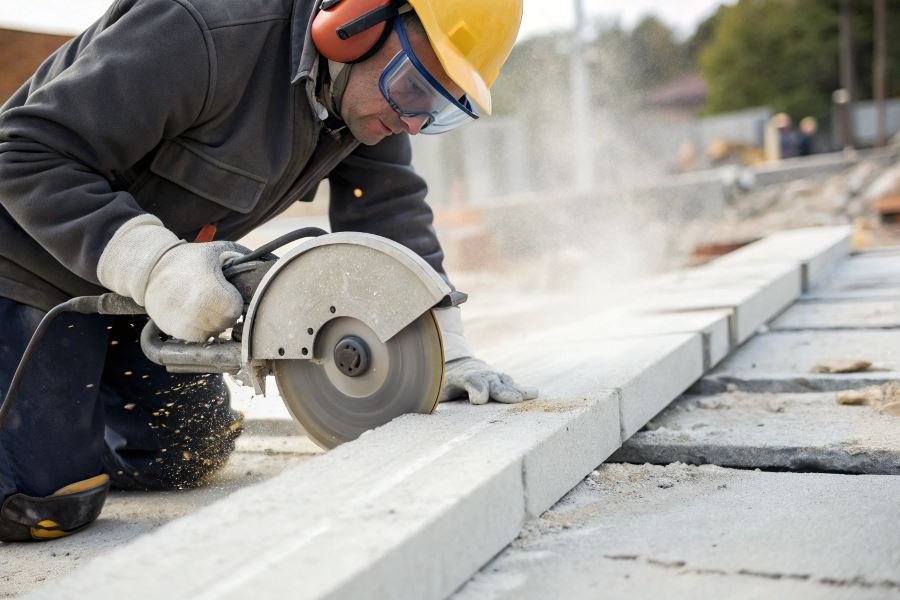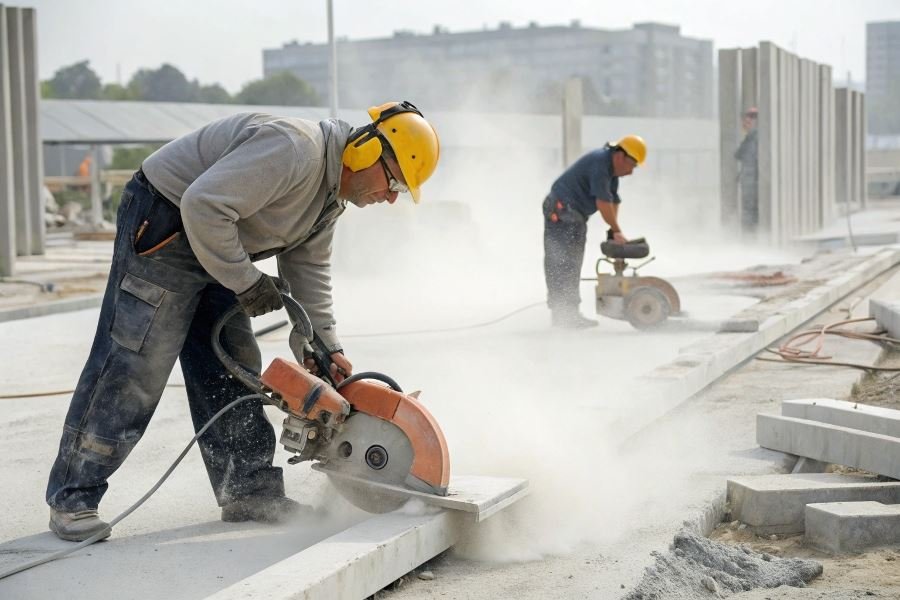
Ever watched a massive concrete wall being sliced through with surgical precision? That’s wall saw technology at work—a cornerstone of modern construction that transforms what was once backbreaking demolition into controlled, precise cutting operations.
Wall saws represent the intersection of raw power and precision engineering, designed to cut through reinforced concrete, brick, and stone with remarkable accuracy. These specialized tools have revolutionized renovation projects, infrastructure modifications, and new construction techniques by enabling contractors to create precise openings for doors, windows, HVAC systems, and structural modifications without compromising building integrity.
When choosing between electric and gasoline wall saws, contractors face a decision that directly impacts project efficiency, cost, and environmental footprint. Electric models typically deliver consistent torque with zero emissions, making them ideal for indoor operations where ventilation is limited. They operate at lower noise levels (typically 85-95 dB compared to 100-110 dB for gas models) and require less maintenance with fewer moving parts.
Gasoline-powered alternatives offer unmatched mobility and raw cutting power, particularly valuable at remote sites without reliable power sources. Their higher horsepower ratings—often 15-25 HP versus 10-15 HP for comparable electric models—translate to faster cutting speeds through heavily reinforced materials.
The decision ultimately hinges on project-specific factors:
- Working environment (indoor vs. outdoor)
- Power availability at the job site
- Cutting depth requirements (gas models often achieve greater depths)
- Transportation logistics between job sites
- Environmental regulations in your operating jurisdiction
Selecting the appropriate wall saw technology isn’t merely about preference—it’s about matching the tool precisely to the task at hand, ensuring optimal performance, safety, and project economics.
The Ultimate Showdown: Electric vs Gasoline Wall Saws
Raw Power and Cutting Capabilities
When contractors face challenging concrete cutting projects, the choice between electric and gasoline wall saws can make or break efficiency and results. Electric wall saws typically deliver 15-20 horsepower, while their gasoline counterparts often push beyond 25 horsepower. This power differential translates directly to cutting depth capabilities—electric models generally manage 15-18 inches in reinforced concrete, while gas-powered units can reach depths exceeding 24 inches.
The decision between electric vs gasoline wall saws: which is better for different tasks ultimately depends on material density and project requirements. Electric saws excel with precision cuts in standard concrete and masonry, maintaining consistent torque throughout operation. Meanwhile, gasoline models dominate when tackling heavily reinforced concrete or dense natural stone, where raw power becomes non-negotiable.
Material performance comparison:
| Material Type | Electric Performance | Gasoline Performance |
|---|---|---|
| Standard Concrete | Excellent (clean cuts) | Very Good (faster but rougher) |
| Reinforced Concrete | Good (slower on rebar) | Excellent (powers through) |
| Natural Stone | Good (depth limited) | Excellent (superior depth) |
| Brick/Block | Excellent (precise) | Good (often overpowered) |
Mobility and Operational Constraints
Electric wall saws offer unmatched convenience in indoor environments—zero emissions, significantly reduced noise (typically 85-90dB versus 100-105dB for gas models), and no fuel management. However, they remain tethered to power sources, requiring either proximity to electrical outlets or generator support for remote locations.
Gasoline wall saws shine in remote applications where power access is limited or non-existent. Their self-contained operation allows for true mobility across sprawling job sites. However, this freedom comes with ventilation requirements—proper airflow is essential when operating indoors to prevent dangerous carbon monoxide buildup.
Setup requirements vary dramatically between the two options. Electric models typically weigh 20-30% less than comparable gas units, making mounting and repositioning less labor-intensive. However, electrical requirements can be demanding, with many professional models requiring 480V three-phase power that may necessitate specialized electrical work before operation.
The True Cost Equation
Initial investment for professional-grade wall saws varies significantly:
Electric wall saw systems: 8, 000−15,000
Gasoline wall saw systems: 10, 000−18,000
The higher entry price for gasoline models only tells part of the story. Maintenance expenses reveal a more complex picture:
- Electric saws require minimal routine maintenance beyond blade replacement and occasional bearing service, typically costing 500−800 annually
- Gasoline saws demand regular engine maintenance including oil changes, air filters, spark plugs, and fuel system service, pushing annual maintenance costs to 1, 200−2,000
The long-term operational math favors electric models for frequent users. Electricity costs for a standard 8-hour cutting day average 15−25, while gasoline consumption for equivalent work typically runs 45−60. For contractors completing 100+ cutting days annually, this operational difference can exceed $4,000 yearly.
However, productivity factors can offset these differences. Gasoline saws typically complete cuts 15-25% faster in challenging materials, potentially saving significant labor costs on large projects where time efficiency outweighs fuel expenses.
The final calculation must include project versatility—contractors handling diverse applications might justify investing in both technologies, using electric for precision indoor work and gasoline for demanding outdoor applications where power access is limited and maximum cutting depth is essential.
Making the Cut: Your Decision Framework for Wall Saw Selection
Project-driven selection criteria
Choosing between electric and gasoline wall saws ultimately comes down to matching the tool with your specific project demands. For indoor renovation projects with access to reliable power, electric wall saws deliver the precision and clean operation you need. Their lower noise levels and zero emissions make them ideal for residential remodels and commercial interior work where ventilation is limited.
Conversely, remote construction sites and infrastructure projects benefit tremendously from gasoline-powered saws. When cutting bridge supports, highway dividers, or foundation walls far from power sources, the mobility and sustained power of gas models prove invaluable. Their ability to operate continuously without power drops makes them essential for time-sensitive projects with thick reinforced concrete.
Material considerations should drive your decision as well. For precision architectural cuts in marble or granite, electric saws provide the consistent torque and vibration control needed for premium finishes. Meanwhile, demolition work involving heavily reinforced concrete often demands the raw power and endurance of gasoline models.
Tomorrow’s cutting edge
The wall saw landscape is evolving rapidly, with several innovations poised to reshape the electric vs. gasoline debate. Battery technology breakthroughs represent the most significant development, with high-capacity lithium-ion systems now approaching the runtime of gas models. Hilti and Husqvarna have introduced cordless systems that deliver impressive cutting depth without sacrificing mobility.
The gap between electric and gas performance continues to narrow with each product cycle.
Hybrid systems are emerging as compelling alternatives, combining the best attributes of both power sources. These systems use small gas generators specifically designed to power electric cutting motors, offering:
| Feature | Benefit |
|---|---|
| Lower emissions | 40-60% reduction compared to traditional gas models |
| Reduced noise | Operating at 85-90 dB versus 100+ dB for standard gas saws |
| Consistent power | Stable voltage delivery for precision cutting |
| Fuel efficiency | Up to 30% less fuel consumption |
Environmental regulations are accelerating development in electric technology. As emissions standards tighten globally, manufacturers are investing heavily in electric alternatives that match or exceed gas performance metrics.
Professional excellence in wall saw operation
Regardless of your power source choice, professional considerations remain paramount. Certification requirements vary by region, but most jurisdictions require specialized training for wall saw operation. Organizations like the Concrete Sawing & Drilling Association offer comprehensive certification programs covering both electric and gasoline equipment.
Safety protocols differ significantly between the two technologies:
- Electric saws require ground fault circuit interrupters and water management systems to prevent electrical hazards
- Gasoline models demand proper ventilation planning and carbon monoxide monitoring
- Both types necessitate comprehensive blade inspection routines and appropriate personal protective equipment
Industry best practices increasingly emphasize total cost assessment rather than just purchase price. While electric models typically command higher upfront costs, their lower maintenance requirements and operational expenses often result in better long-term value. Gasoline saws generally offer lower initial investment but require regular engine maintenance and fuel management.
The most successful contractors maintain both types in their arsenal, selecting the appropriate tool based on project requirements rather than personal preference. This flexibility ensures optimal performance across diverse cutting scenarios while maximizing equipment lifespan through appropriate application.
Discover the key differences between electric and gasoline wall saws to make the right choice for your construction projects. Compare power, mobility, costs, and performance across different materials to maximize efficiency and ROI.
Discover the key differences between electric and gasoline wall saws to make the right choice for your construction projects. Compare power, mobility, costs, and performance across different materials to maximize efficiency and ROI.