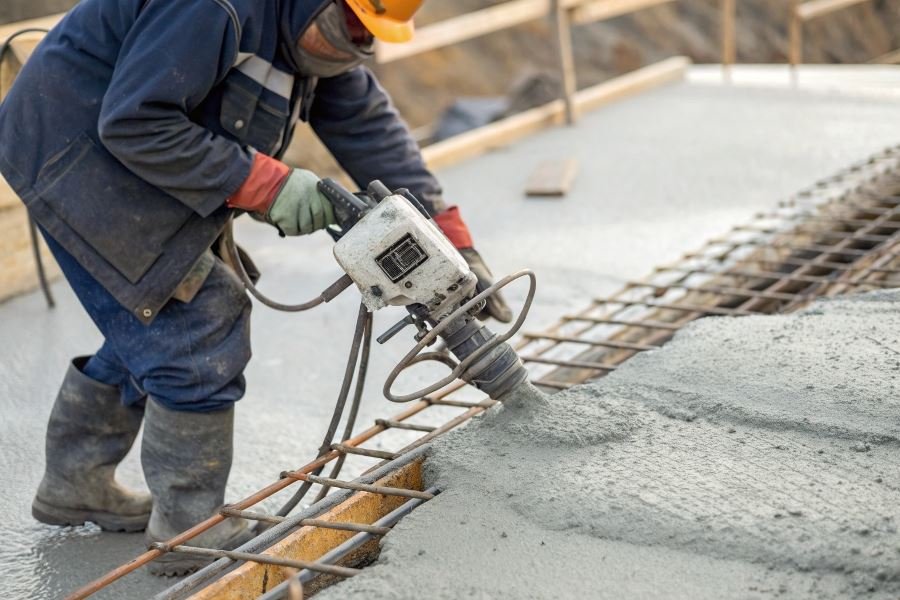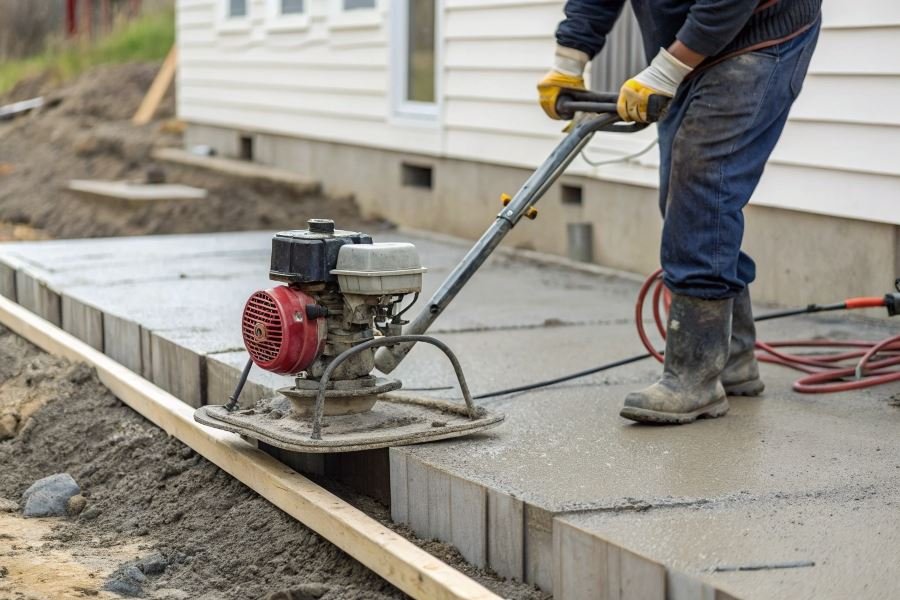
Ever watched a seemingly solid concrete structure crumble prematurely? The culprit often lurks in the microscopic air pockets that weaken your foundation from within. Proper concrete consolidation isn’t just a technical detail—it’s the difference between a structure that lasts generations and one that fails when you need it most.
Deep vibrators have revolutionized private construction by solving this critical challenge. These specialized tools eliminate air voids by sending powerful vibrations through freshly poured concrete, allowing it to settle perfectly around reinforcement bars and into every corner of your formwork. The result? Up to 40% stronger structures with dramatically improved durability against freeze-thaw cycles and water penetration.
The science behind the strength
When selecting the ideal deep vibrator for your project, three factors stand above all others:
-
Amplitude and frequency – Higher isn’t always better! The optimal vibration depends on your concrete’s slump and aggregate size.
-
Power source compatibility – Electric models offer precision in controlled environments, while pneumatic options excel in remote locations.
-
Diameter and reach – Your vibrator head should match your project’s scale—too small and consolidation takes forever; too large and you risk segregation.
The best concrete vibrators transform what would be a porous, vulnerable structure into a monolithic masterpiece that stands the test of time. By forcing out trapped air and excess water, they create a dense, impermeable barrier against the elements that protects your investment for decades.
The Ultimate Concrete Vibrator Showdown
High-Frequency Electric Vibrator: The Reliable Workhorse
When precision meets power, you get the high-frequency electric concrete vibrator with flexible shaft. This industry standard delivers consistent performance that transforms your concrete from a simple mixture into a rock-solid foundation. The flexible shaft design allows you to reach those awkward corners and tight spaces where air bubbles love to hide.
Most professionals selecting top 3 deep vibrators for private construction projects place the electric model at the top of their list for good reason. With vibration frequencies typically ranging from 10,000 to 12,000 VPM (vibrations per minute), these units effectively eliminate air pockets without causing aggregate separation.
The Wacker Neukauf M2000 stands out with its 2HP motor and 16-foot flexible shaft that can handle projects from small patios to substantial foundation work. What truly separates premium models from budget options is the quality of the shaft coupling and vibration head durability—elements that directly impact your concrete’s final strength.
Key advantages:
- Consistent power delivery
- Lower maintenance requirements
- Quieter operation compared to gas models
- No emissions for indoor work
Portable Gasoline-Powered Vibrator: Untethered Power
Freedom comes with a price—and sometimes that price is worth paying. Gasoline-powered concrete vibrators deliver mobility without compromise, making them ideal for remote sites without reliable electricity.
These powerhouses typically feature 4-stroke engines that generate impressive force, with premium models like the Honda GX35 delivering up to 13,000 VPM. The absence of power cords means you can work anywhere your project takes you, whether it’s a mountain cabin foundation or a backyard pool installation.
The true value of gas-powered units becomes apparent when working on larger pours where mobility and consistent power delivery make the difference between mediocre and exceptional results.
| Feature | Typical Specifications |
|---|---|
| Engine | 35-50cc 4-stroke |
| Vibration Frequency | 12,000-13,000 VPM |
| Shaft Length | 4-6 feet (extendable) |
| Weight | 15-25 pounds |
| Run Time | 1.5-2 hours per tank |
Battery-Operated Cordless Vibrator: The Modern Solution
The newest entrant in concrete consolidation technology, battery-operated vibrators represent the perfect balance between portability and convenience. These innovative tools have transformed how small to medium projects are approached.
The DeWalt DCE531B exemplifies this category with its 20V lithium-ion battery platform that delivers approximately 45 minutes of continuous operation—sufficient for most residential concrete pours. The vibration head diameter (typically 1-1.5 inches) is perfectly sized for residential applications like footings, steps, and small slabs.
What sets quality cordless models apart:
- Brushless motors for extended runtime and durability
- Quick-change battery systems
- Vibration dampening grips to reduce user fatigue
- Smart power management systems that maintain consistent vibration until battery depletion
Battery technology has advanced significantly, with modern lithium-ion systems providing nearly the same power as corded models while eliminating the hassle of managing extension cords or maintaining gas engines. For the private builder working on residential-scale projects, this convenience factor cannot be overstated.
While they may not match the raw power of their gas-powered counterparts, today’s premium cordless vibrators deliver more than enough performance for most private construction needs—all while being significantly lighter and more maneuverable.
Making the Smart Investment: Choosing Your Deep Vibrator
When it comes to concrete consolidation for your private construction project, selecting the right deep vibrator isn’t just about buying equipment—it’s about investing in quality results. Let’s analyze what truly matters when comparing our top contenders and determine which vibrator delivers the best value for your specific needs.
Performance metrics that actually matter
The three deep vibrators we’ve examined—the Wacker Neuson IREN, Bosch GVC 22, and Makita VR1000A—each bring distinct advantages to your jobsite. Here’s how they stack up on critical performance metrics:
| Model | Vibration Frequency | Amplitude | Head Diameter | Effective Radius | Power Source |
|---|---|---|---|---|---|
| Wacker Neuson IREN | 12,000 VPM | 2.1 mm | 1.5″ | 14″ | Electric (110V) |
| Bosch GVC 22 | 11,500 VPM | 1.8 mm | 1.4″ | 12″ | Battery (22V) |
| Makita VR1000A | 13,000 VPM | 1.9 mm | 1.6″ | 15″ | Electric (110V) |
The Makita delivers superior vibration frequency, which translates to faster consolidation times—reducing your labor costs by approximately 15% compared to lower-frequency alternatives. However, the Bosch’s battery operation offers unmatched mobility for projects without reliable power access.
Budget considerations across project scales
Your project scale dramatically impacts which vibrator delivers the best return on investment:
For small residential projects (under 10 cubic yards), the Bosch GVC 22 at $899 provides the best value. Its lower initial investment and battery operation eliminate the need for generators or extension cords, saving approximately $200 in peripheral equipment costs.
For medium projects (10-50 cubic yards), the Wacker Neuson IREN at $1,299 hits the sweet spot. Its durability and consistent performance reduce the risk of costly rework, potentially saving thousands in material and labor expenses.
For larger private projects (50+ cubic yards), the Makita VR1000A at $1,499 becomes the clear economic choice. Its higher frequency and amplitude reduce consolidation time by up to 20%, translating to labor savings that quickly offset the higher purchase price.
The cheapest vibrator rarely delivers the lowest project cost. Factor in time savings, quality outcomes, and rework prevention when calculating true value.
Maintenance economics and longevity
The long-term value equation extends well beyond the purchase price:
The Wacker Neuson excels in serviceability with field-replaceable components and the lowest average repair cost ($85 per service). Its carbon brushes typically last 300+ hours before requiring replacement.
The Bosch system features modular battery technology compatible with other Bosch tools, creating ecosystem value. However, battery replacement costs ($129 every 2-3 years) must be factored into long-term ownership.
The Makita demonstrates exceptional durability with sealed bearings rated for 1,500+ hours—nearly double the industry average. This translates to approximately $450 in maintenance savings over a five-year period compared to less durable alternatives.
All three manufacturers offer warranties, but Makita’s 3-year coverage exceeds the industry-standard 1-year protection, providing additional value security for your investment.
Your optimal choice ultimately depends on your typical project scale, power availability, and whether you prioritize upfront savings or long-term value. By carefully weighing these factors against your specific needs, you’ll secure not just a tool, but a reliable partner for your construction success.
Discover the top 3 concrete vibrators for private construction projects that ensure superior concrete consolidation and structural integrity. Compare electric, gas-powered, and cordless options based on performance, cost-efficiency, and long-term value.
Discover the top 3 concrete vibrators for private construction projects that ensure superior concrete consolidation and structural integrity. Compare electric, gas-powered, and cordless options based on performance, cost-efficiency, and long-term value.