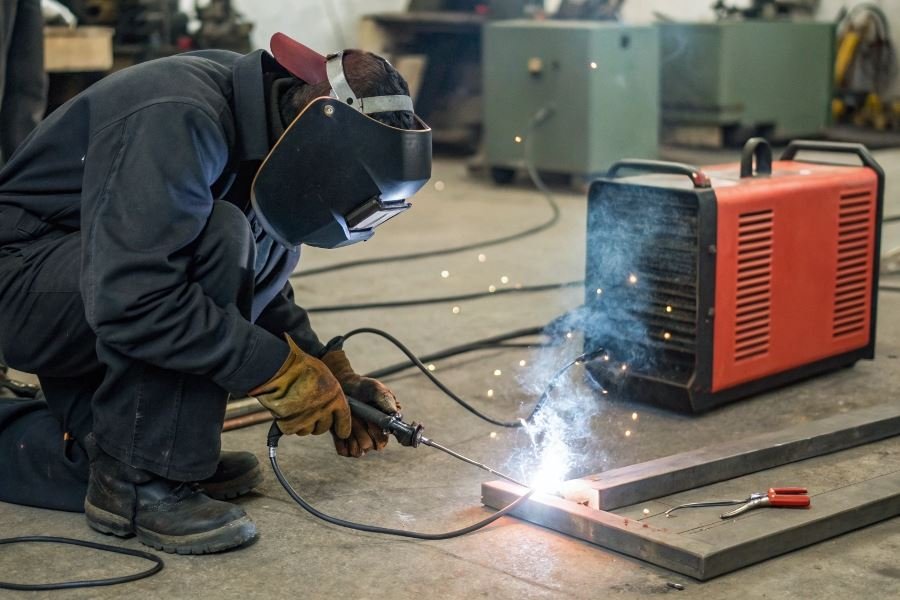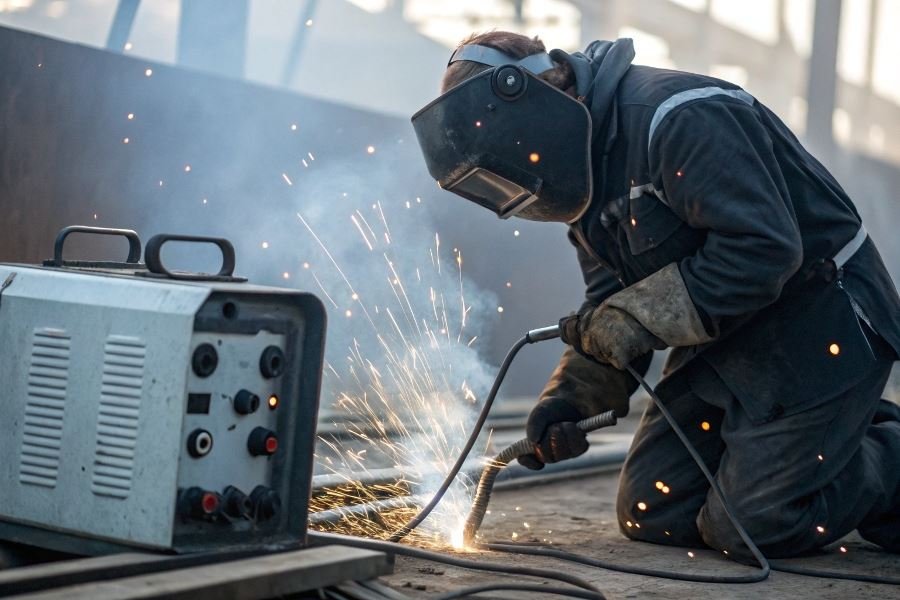
Ever watched a skyscraper rise from nothing but steel and concrete? Behind that marvel stands the humble welding machine—perhaps the most underappreciated hero in construction. The difference between structural integrity and catastrophic failure often comes down to the quality of your welds and, by extension, your welding equipment.
Choosing the right welding machine isn’t just a technical decision—it’s a business investment that directly impacts project timelines, worker safety, and your bottom line. Construction professionals who understand the key characteristics of welding equipment consistently deliver stronger, more reliable structures while reducing costly rework.
The construction landscape demands specialized welding solutions. From towering commercial projects to residential foundations, different scenarios call for specific machine types. Stick welders (SMAW) remain workhorses for their portability and versatility in outdoor environments. MIG welders offer speed and clean results for structural steel, while TIG welders provide precision for detailed architectural elements. Multi-process machines have gained popularity for contractors handling diverse projects, offering flexibility without sacrificing quality.
“The characteristics of your welding machine directly translate to the characteristics of your construction project.”
Your equipment’s power output, duty cycle, and portability dramatically influence construction outcomes. Insufficient amperage leads to weak joints in load-bearing structures. Poor duty cycles create workflow bottlenecks during critical phases. And in the field, where power sources may be limited and positions challenging, features like generator compatibility and weight become surprisingly crucial factors in project success.
Power That Builds: Essential Welding Machine Characteristics
When selecting welding equipment for construction projects, understanding the power and performance characteristics separates successful operations from costly delays. Construction welding demands machines that can withstand punishing conditions while delivering consistent results across various materials and thicknesses.
The key characteristics of welding machines for construction work revolve around three critical performance metrics that determine whether your equipment will shine or fail when you need it most. These specifications aren’t just numbers on a spec sheet—they represent the difference between completing projects on schedule and facing expensive downtime.
Duty Cycle: The Marathon Runner’s Stamina
Duty cycle represents the percentage of a 10-minute period that a welding machine can operate at a specific amperage without overheating. For construction applications, this is non-negotiable:
- Heavy construction requires 60%+ duty cycles at working amperage
- Light-duty machines (20-30% duty cycles) create costly bottlenecks
- Temperature extremes reduce effective duty cycle performance
A Miller Electric XMT 350 offers an impressive 60% duty cycle at 350 amps, making it ideal for structural steel work. Compare this to entry-level machines that might offer only 20% duty cycles at similar outputs—forcing operators to wait 8 minutes for every 2 minutes of welding.
The true cost of inadequate duty cycle isn’t measured in minutes of downtime, but in project delays and labor expenses that compound daily.
Amperage Range: Power When and Where You Need It
Construction welding requires exceptional amperage flexibility to handle everything from delicate sheet metal to massive structural components:
| Application | Required Amperage Range | Material Thickness |
|---|---|---|
| Thin Sheet Metal | 40-90A | 18-12 gauge |
| Medium Fabrication | 90-200A | 1/8″-3/8″ |
| Heavy Structural | 200-350A+ | 3/8″+ |
Modern inverter-based machines like the Lincoln Electric Power Wave S500 deliver precise amperage control from 5-550A, allowing a single machine to handle virtually any construction task. This versatility eliminates the need for multiple specialized welders, reducing equipment costs and simplifying logistics.
The amperage stability under load is equally crucial—fluctuations of more than 3-5% can compromise weld integrity, especially in critical structural applications where code compliance is mandatory.
Voltage Capabilities: Matching Power to Process
Construction welding machines must accommodate various input power scenarios while delivering consistent output voltage:
- Multi-voltage inputs (208V-575V) for adaptability across job sites
- Single-phase vs. three-phase considerations affect maximum output
- Generator compatibility essential for remote locations
The ESAB Rebel EMP 285ic exemplifies this flexibility, automatically adjusting to input power from 120V-230V without manual reconfiguration. This adaptability proves invaluable when moving between construction sites with varying power infrastructure.
Output voltage capabilities determine which welding processes are available. MIG welding typically requires 14-26V, while stick welding demands 20-40V for proper arc stability. TIG welding needs precise voltage control, particularly at the lower end (10-20V) for thin materials.
For heavy construction applications, machines must maintain stable voltage under load, with primary power requirements often exceeding 50 amps at 230V or 30 amps at 460V. Inadequate input power manifests as voltage drop under load—compromising weld quality and potentially creating structural weaknesses that may not be immediately visible.
By prioritizing these three critical performance characteristics—duty cycle, amperage range, and voltage capabilities—construction professionals can select welding equipment that delivers reliability, versatility, and code-compliant results across diverse project requirements.
Making the Perfect Match: Welding Machine Selection for Construction Success
Aligning Machine Capabilities with Construction Demands
Selecting the right welding machine for construction work isn’t just about buying equipment—it’s about making a strategic investment in your project’s success. The key lies in matching specific welding characteristics to your construction applications. For structural steel work, a machine with high duty cycle and 300+ amp capacity ensures you can handle thick materials without downtime. Meanwhile, repair and maintenance tasks might be better served by multi-process machines offering MIG, TIG, and stick welding flexibility.
Application-specific selection matters tremendously. Consider pipeline construction, where you’ll need machines with specialized features like slope control and hot pass settings. The Miller PipeWorx excels here with its purpose-built programming for consistent root passes. For fabrication shops handling diverse materials, inverter-based machines with programmable memory settings allow quick transitions between aluminum, stainless steel, and carbon steel projects.
The right welding machine isn’t the most expensive one—it’s the one that perfectly matches your specific construction applications while providing room for growth.
Premium vs. Standard Equipment: The Real Cost Equation
The price gap between premium and standard welding equipment can be substantial, but analyzing the true cost requires looking beyond the initial purchase price. Let’s break down the numbers:
| Feature | Standard Equipment | Premium Equipment | Long-term Impact |
|---|---|---|---|
| Initial Cost | $1,200-2,500 | $3,000-8,000 | Higher upfront investment |
| Energy Efficiency | 65-75% | 85-95% | $300-500 annual savings |
| Duty Cycle | 30-40% | 60-100% | Increased productivity, fewer machines needed |
| Repair Frequency | Every 1-2 years | Every 3-5 years | Lower maintenance costs |
| Resale Value | 20-30% of purchase | 40-60% of purchase | Better ROI |
The math often favors premium equipment for high-volume operations. A construction company completing 15+ welding hours daily might recoup the additional investment in just 14-18 months through reduced downtime and energy savings. However, for occasional use or specialized applications, standard equipment with targeted capabilities may deliver better value.
Building for Tomorrow: Reliability Factors That Matter
Reliability isn’t just a feature—it’s the foundation of construction welding success. When evaluating long-term reliability, look beyond the warranty period to these critical factors:
Component quality makes all the difference. Machines using copper windings rather than aluminum typically offer superior heat dissipation and longevity. The Lincoln Electric Flextec 650X exemplifies this with its copper-wound transformers designed for extreme temperature tolerance.
Environmental protection features become crucial for construction sites. IP23 ratings should be your minimum standard, while machines with IP44 or higher provide superior protection against dust and moisture—essential for outdoor construction projects that can’t stop when weather changes.
Serviceability often gets overlooked until it’s too late. Modular designs like those found in the ESAB Rebel series allow for field repairs and component replacement without shipping the entire unit back to manufacturers—a critical consideration when project timelines are tight and welding is on the critical path.
The most reliable machines also offer firmware updateability, ensuring your investment can adapt to new materials and techniques without hardware replacement. This future-proofing capability transforms welding machines from depreciating assets into evolving tools that maintain relevance through changing construction standards and materials.
Discover the essential characteristics of welding machines for construction projects. Learn about duty cycles, power requirements, and performance features that ensure quality welds and project success in demanding construction environments.
Discover the essential characteristics of welding machines for construction projects. Learn about duty cycles, power requirements, and performance features that ensure quality welds and project success in demanding construction environments.