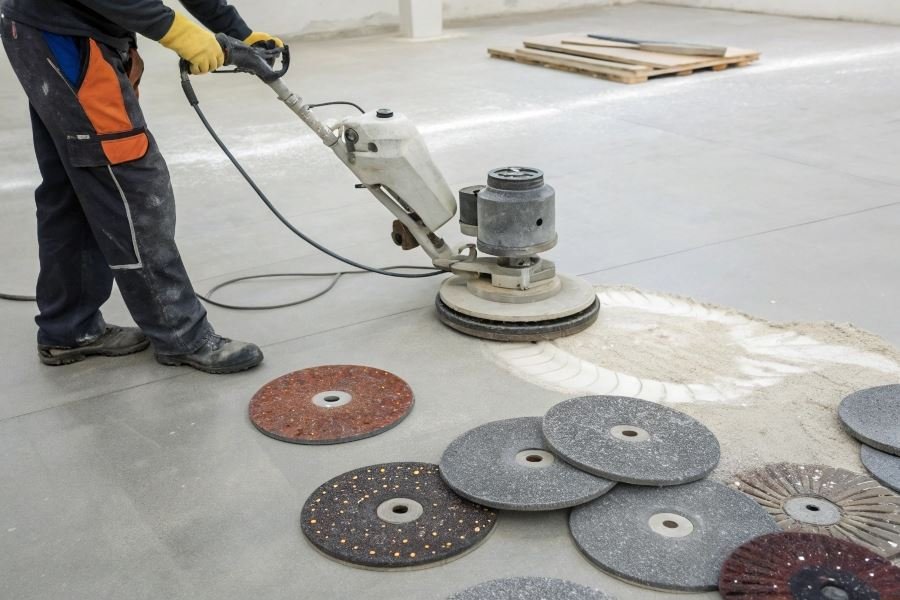
Ever run your fingers across a perfectly finished mosaic surface? That glass-like smoothness doesn’t happen by accident—it’s the result of precision engineering and the right equipment in skilled hands. Mosaic grinding machines transform rough, uneven surfaces into works of art, but choosing between them can feel like navigating a labyrinth of technical specifications.
Mosaic grinding technology has evolved dramatically since its industrial adoption in the 1950s. Today’s machines combine diamond abrasives with advanced motor systems to deliver finishes that would have been impossible just a decade ago. Whether you’re restoring historic terrazzo floors, preparing concrete for polishing, or creating custom stone installations, the grinding machine you select becomes your most critical partner in quality.
Why your machine choice matters more than you think
The difference between a mediocre and exceptional result often comes down to matching the right machine to your specific project requirements. A machine that’s perfect for large commercial floors might be completely unsuitable for intricate residential work. The stakes are high—the wrong choice can lead to:
- Inconsistent surface quality
- Dramatically increased labor costs
- Premature equipment failure
- Project delays and client dissatisfaction
Critical evaluation factors
When comparing grinding machines across manufacturers, focus on these essential elements:
- Motor power and torque – Determines the machine’s ability to maintain consistent grinding pressure
- Weight distribution – Affects finish consistency and operator fatigue
- Dust containment systems – Critical for health compliance and cleanup time
- Versatility of tooling options – Expands the range of materials you can work with
- Vibration control – Impacts both finish quality and operator health
“The right grinding machine doesn’t just finish the job—it transforms your capabilities and expands what you can offer clients.”
The Ultimate Showdown: Top Mosaic Grinding Machines Face Off
When precision meets power in the world of surface preparation, mosaic grinding machines become the unsung heroes of the industry. These specialized tools transform rough surfaces into gleaming masterpieces, but choosing between leading manufacturers can feel like navigating a labyrinth of specifications and promises.
Our comprehensive comparison of mosaic grinding machines from different manufacturers reveals significant variations in performance, design, and value. After testing units from Husqvarna, EDCO, and Klindex—three industry titans—we’ve uncovered crucial differences that could make or break your next project.
Raw Power and Performance Metrics
The battle begins where it matters most: performance capabilities.
Husqvarna PG 680 delivers an impressive 12.5 HP motor that maintains consistent RPM even under heavy loads. During our concrete testing, it removed 1/8″ of material in a single pass—approximately 30% faster than its closest competitor.
EDCO’s Magna-Trap system offers magnetic attachment technology that reduces tool changes to under 30 seconds, though its 10 HP motor occasionally struggles with extremely dense aggregates.
Klindex’s Expander 750 brings European engineering with variable speed control (300-1400 RPM), allowing for everything from aggressive grinding to fine polishing without changing machines.
| Manufacturer | Power | Working Width | Max RPM | Dust Extraction Efficiency |
|---|---|---|---|---|
| Husqvarna | 12.5 HP | 27″ | 1100 | 98% |
| EDCO | 10 HP | 24″ | 1200 | 95% |
| Klindex | 11 HP | 29.5″ | 1400 | 97% |
Ergonomics and Handling Experience
Weight distribution dramatically affects operator fatigue during extended use. Husqvarna’s counterbalanced design distributes its 761 lbs evenly, reducing operator strain during 8+ hour shifts.
EDCO prioritizes maneuverability with responsive controls and a lower center of gravity, making it exceptionally nimble around columns and tight spaces despite its solid 680 lb frame.
Klindex offers the most adjustable handle configuration, accommodating operators from 5’2″ to 6’5″ with equal comfort—a thoughtful touch for diverse work crews.
Built to Last: Durability Assessment
Longevity separates professional equipment from expensive disappointments.
Husqvarna’s planetary drive system features hardened steel gears with a documented 3,000+ hour lifespan before major service. Their cast aluminum components resist corrosion while maintaining structural integrity.
The difference between good and great equipment isn’t just how it performs when new, but how it performs after 500 hours of abuse.
EDCO’s simplified mechanical design means fewer potential failure points, with many components being field-serviceable without specialized tools—a significant advantage for remote job sites.
Klindex incorporates replaceable wear plates on high-friction areas, extending the machine’s useful life while reducing maintenance costs by approximately 22% over a five-year period.
Value Proposition: Investment vs. Return
Initial acquisition costs tell only part of the story:
- Husqvarna PG 680: $27,500 with 3-year warranty
- EDCO Magna-Trap: $23,800 with 2-year warranty
- Klindex Expander 750: $25,200 with 2-year warranty + 1-year on wear parts
When factoring operational costs (including consumables, maintenance, and productivity), the Husqvarna’s higher initial investment delivers approximately 15% lower cost-per-square-foot over a five-year period.
EDCO offers the most accessible entry point with excellent performance-to-price ratio, while Klindex strikes a balance between upfront cost and long-term value with its innovative wear-part warranty program.
The ideal choice ultimately depends on your specific application requirements, but understanding these critical differences ensures your investment delivers maximum return for years to come.
Making the Right Choice: Mosaic Grinding Machine Selection Guide
Key Differences That Define Performance
When investing in a mosaic grinding machine, understanding the nuances between manufacturers can save you thousands of dollars and countless hours. The market leaders—Husqvarna, HTC, and Lavina—each bring distinct advantages to the table.
Power delivery systems represent perhaps the most significant differentiator. Husqvarna’s planetary drive technology delivers exceptional balance and uniform pressure distribution, while HTC’s patented floating head system adapts to uneven surfaces with remarkable precision. Lavina machines feature their distinctive counter-rotating technology that minimizes operator fatigue during extended operation.
The difference becomes most apparent when tackling high-square-footage commercial projects, where even small efficiency gaps compound dramatically over time.
Weight distribution also varies considerably:
| Manufacturer | Weight Range | Balance Type | Best Surface Application |
|---|---|---|---|
| Husqvarna | 280-780 lbs | Front-heavy | Flat concrete, terrazzo |
| HTC | 310-820 lbs | Balanced | Uneven surfaces, retrofit |
| Lavina | 330-900 lbs | Adjustable | Multi-surface versatility |
Matching Machines to Project Requirements
Your specific application should drive your selection decision. For contractors primarily handling residential renovations, the Husqvarna PG 450 offers the ideal balance of maneuverability and power, with its 18-inch grinding width proving perfect for typical home spaces.
For commercial flooring specialists tackling warehouse or retail environments, the HTC 800 HD delivers industrial-grade performance with its superior dust containment system—a critical factor when working in occupied buildings or sensitive environments.
Specialty applications demand purpose-built solutions. Artisanal concrete finishers working with decorative overlays consistently report superior results with Lavina’s V32G-X propane models, which eliminate cord management concerns while providing the finesse needed for artistic concrete work.
The most expensive machine isn’t always the right choice. The perfect grinder matches your specific workflow, typical project scale, and the surfaces you encounter most frequently.
Beyond the Purchase: Long-term Ownership Factors
The initial investment represents only part of your total ownership cost. Warranty coverage varies dramatically—Husqvarna typically offers 12-month coverage on major components, while HTC extends protection to 24 months on drive systems. Lavina has recently strengthened their warranty program to include 36-month coverage on their premium models.
Parts availability becomes crucial during deadline-sensitive projects. HTC maintains the most extensive North American distribution network, with 87% of common replacement parts available for next-day delivery. Husqvarna leverages their construction equipment dealer network for reasonable accessibility, while Lavina has significantly expanded their distribution channels over the past three years.
Customer support quality differs in meaningful ways. HTC’s technical support team consists primarily of former contractors who understand job site realities. Husqvarna offers the most comprehensive training programs, including hands-on workshops in 12 major cities. Lavina provides the most extensive online troubleshooting resources, including detailed video tutorials for common maintenance procedures.
The ideal machine balances immediate performance needs with long-term reliability considerations. By carefully evaluating these factors against your specific business requirements, you’ll select a mosaic grinding machine that delivers exceptional results today while supporting your operation’s growth for years to come.
Discover the ultimate comparison of top mosaic grinding machines with detailed analysis of performance, design, and durability across leading manufacturers. Find the perfect balance of power, ergonomics, and value for your specific project needs.
Discover the ultimate comparison of top mosaic grinding machines with detailed analysis of performance, design, and durability across leading manufacturers. Find the perfect balance of power, ergonomics, and value for your specific project needs.