
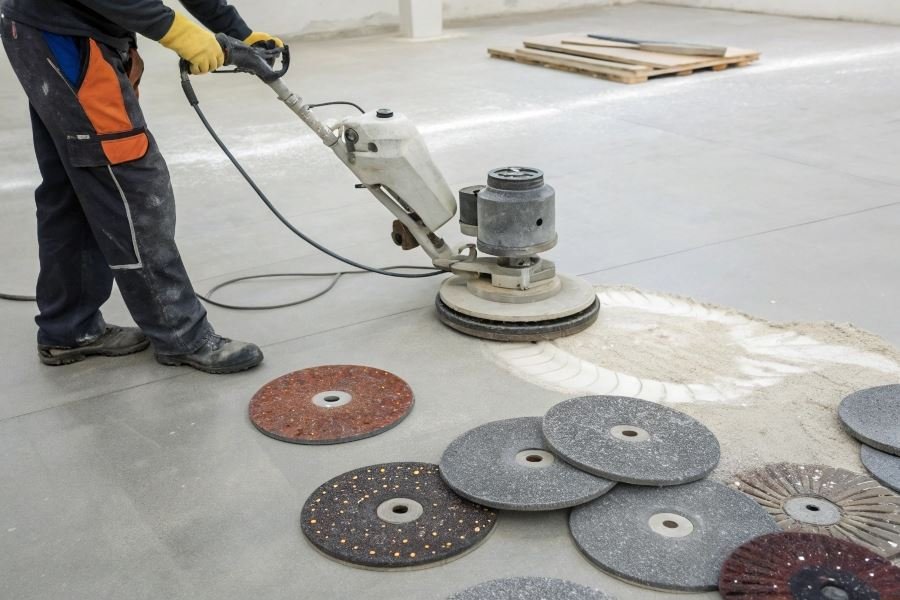
Ever watched a master craftsman transform rough stone into a breathtaking mosaic? Behind that artistry lies a critical decision that many overlook: choosing the right diamond disc.
When it comes to mosaic grinding, your diamond disc isn’t just an accessory—it’s the foundation of your entire project. The difference between professional results and amateur hour often comes down to this single choice. Diamond discs are the unsung heroes of mosaic work, determining not just how your finished piece will look, but how efficiently you’ll work and how long your equipment will last.
The diamond disc landscape
Diamond discs come in a surprising variety of specifications, each designed for specific materials and applications:
- Metal-bonded discs excel at aggressive material removal on harder stones
- Resin-bonded discs deliver finer finishes and polishing capabilities
- Hybrid discs offer versatility for multi-stage projects
The grit rating of your disc (ranging from coarse 30-grit to ultra-fine 3000+) determines whether you’re rough cutting or putting on that mirror finish. Meanwhile, the bond hardness affects how quickly the disc wears down during use.
“The right disc doesn’t just cut better—it transforms your entire workflow, reducing project time by up to 40% while extending machine life.”
Your selection impacts three critical factors: the quality of your finished mosaic, the lifespan of your grinding machine, and your overall efficiency. Using an inappropriate disc doesn’t just waste time—it can permanently damage both your materials and equipment, turning what should be a satisfying creative process into an expensive exercise in frustration.
The Diamond Disc Decision Matrix
Selecting the right diamond disc for your mosaic grinding machine isn’t just about grabbing whatever’s on sale at the hardware store. It’s about understanding the intricate relationship between your tool, the material you’re working with, and the finish you’re aiming to achieve.
The process of how to properly select diamond discs for a mosaic grinding machine requires careful consideration of three critical factors: material compatibility, grit size, and bond type. Each of these elements plays a crucial role in determining not only the quality of your finished mosaic but also the efficiency and longevity of your equipment.
Material Matters: Matching Discs to Mediums
Different mosaic materials demand different diamond disc specifications. This isn’t just manufacturer marketing—it’s physics and material science at work.
Glass mosaics require discs with finer diamonds and softer bonds. The brittle nature of glass means it can chip or crack easily under aggressive grinding. Look for discs specifically labeled for glass work, typically with a concentration of 25-30% diamonds.
Ceramic tiles occupy the middle ground. Standard ceramic-rated discs with medium bond hardness work well here. For porcelain ceramics (which are denser), you’ll want discs with slightly harder bonds and higher diamond concentration.
Stone materials like marble, granite, or slate demand robust discs with harder bonds and larger diamond particles. The natural variation in stone density means you might need different discs for different stone types:
| Stone Type | Recommended Diamond Concentration | Ideal Bond Hardness |
|---|---|---|
| Marble | 20-25% | Medium |
| Granite | 30-35% | Hard |
| Slate | 25-30% | Medium-Hard |
Grit Gradations: From Rough to Refined
The grit size of your diamond disc determines whether you’re removing material quickly or creating a polished finish.
Coarse grits (30-70) excel at aggressive material removal. They’re your go-to for initial shaping, edge grinding, and removing significant amounts of material. The trade-off? A rougher finish that will require further refinement.
Medium grits (80-220) balance material removal with surface quality. They’re perfect for general-purpose grinding and preparing surfaces for final polishing.
Fine grits (230-800) focus on surface refinement rather than material removal. These discs create smoother surfaces and prepare your mosaic for final finishing.
Ultra-fine grits (1000+) are exclusively for polishing and creating high-gloss finishes, particularly on stone surfaces.
The secret to professional results lies in sequential grinding—starting with coarser grits and progressively moving to finer ones, never skipping more than one grit level in your progression.
Bond Types: Wet vs. Dry Considerations
The bond material holding the diamonds in place significantly impacts performance and application method.
Resin bonds offer flexibility and work well for both wet and dry applications. They’re quieter during operation and produce less vibration, making them ideal for detailed work. However, they wear faster, especially in dry conditions with harder materials.
Metal bonds provide exceptional durability and heat resistance. They’re the preferred choice for heavy-duty grinding, particularly with natural stone. Metal-bonded discs typically require water cooling to:
- Prevent overheating
- Extend disc life
- Reduce airborne dust
- Improve cutting efficiency
Hybrid bonds combine the advantages of both resin and metal, offering a balance of durability and flexibility. They’re becoming increasingly popular for versatile workshop environments where various materials are processed.
When selecting between wet and dry grinding methods, consider not just the bond type but also your working environment, dust control capabilities, and the specific requirements of your mosaic project.
Diamond Disc Mastery: Selection and Maintenance Secrets
Top Diamond Discs for Mosaic Artisans
When excellence matters in mosaic work, three diamond discs consistently outperform the competition. The Husqvarna Tacti-Cut S50 offers unparalleled precision for detailed mosaic cutting with its 10mm segment height and specialized bond matrix. Mosaic professionals praise its ability to handle delicate materials without chipping.
For versatility across materials, the Alpha Porcellana stands as the industry benchmark. Its continuous rim design delivers exceptionally clean edges on porcelain, glass, and natural stone—essential when creating intricate mosaic patterns where precision matters.
The SHDIATOOL Professional rounds out the top three with its remarkable durability-to-cost ratio. Its hot-pressed diamond segments maintain cutting efficiency through hundreds of hours of operation, making it ideal for high-volume mosaic production.
| Diamond Disc | Best For | Approximate Lifespan | Price Range |
|---|---|---|---|
| Husqvarna Tacti-Cut S50 | Precision cutting | 120-150 hours | 89−120 |
| Alpha Porcellana | Multi-material versatility | 100-130 hours | 75−110 |
| SHDIATOOL Professional | High-volume production | 150-180 hours | 65−95 |
Extending Disc Life Through Proper Care
Diamond disc longevity depends significantly on maintenance practices. Proper cooling stands as the single most critical factor—always ensure adequate water flow during operation. Insufficient cooling accelerates diamond loss and can cause catastrophic disc failure.
Never store discs stacked directly on each other. Instead, use dividers or dedicated storage racks to prevent segment damage. After each use, remove slurry buildup with a stiff nylon brush and warm water—accumulated debris dramatically reduces cutting efficiency.
The difference between a 100-hour disc life and a 200-hour disc life often comes down to cooling and cleaning discipline, not the disc quality itself.
Periodic “dressing” rejuvenates dulling discs. Run the disc through abrasive material like concrete block to expose fresh diamonds. This simple maintenance step can restore 70-80% of original cutting efficiency when performed correctly.
Quality vs. Budget: The True Cost Calculation
The initial price tag tells only part of the story. A premium diamond disc priced at $95 that delivers 150 hours of operation costs approximately $0.63 per hour. Meanwhile, a budget alternative at $40 might last only 40 hours—costing $1.00 per hour while delivering inferior cuts.
Beyond hourly cost, quality discs provide:
- Reduced material waste from cleaner, more precise cuts
- Lower power consumption due to efficient cutting action
- Decreased machine wear from reduced vibration and smoother operation
When factoring these benefits, premium discs typically deliver 30-45% better overall value despite higher upfront costs. For professional mosaic work, this translates to approximately 1, 200−1,800 in annual savings for moderate-volume operations.
The most compelling argument for quality comes from consistency. Premium discs maintain their cutting characteristics throughout their lifespan, while budget options often deteriorate rapidly after initial use—creating inconsistent results that can compromise artistic integrity in detailed mosaic work.
Discover expert techniques for selecting the perfect diamond discs for your mosaic grinding machine. Learn about material compatibility, grit sizes, and bond types to achieve professional results while extending tool life and maximizing efficiency.
Discover expert techniques for selecting the perfect diamond discs for your mosaic grinding machine. Learn about material compatibility, grit sizes, and bond types to achieve professional results while extending tool life and maximizing efficiency.


