Ever watched a construction crew transform a chaotic dirt patch into a perfectly level surface? That’s the magic of a vibrating plate compactor—a powerful tool that’s reshaping how we approach construction and landscaping projects. But here’s the $64,000 question: should you rent one for your next project or make the investment to purchase?
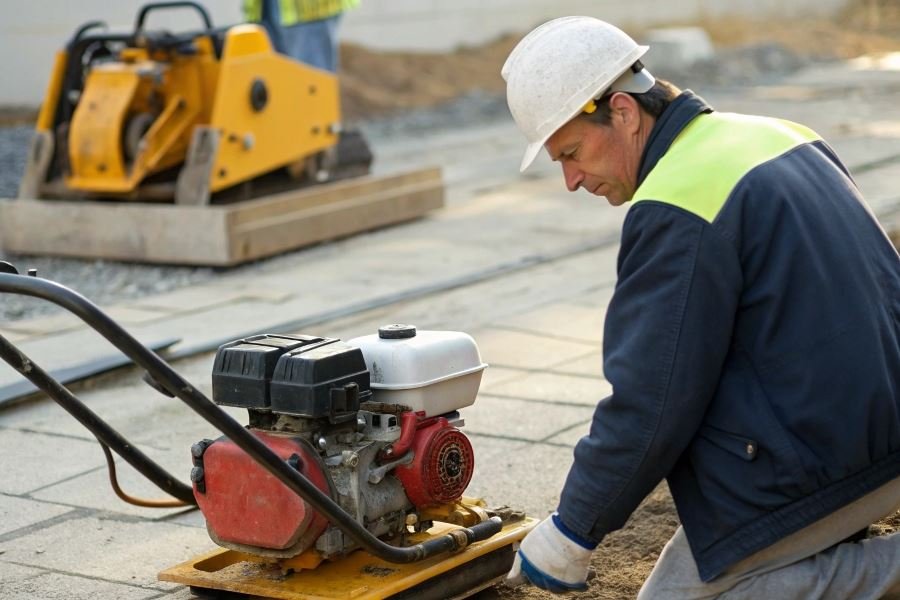
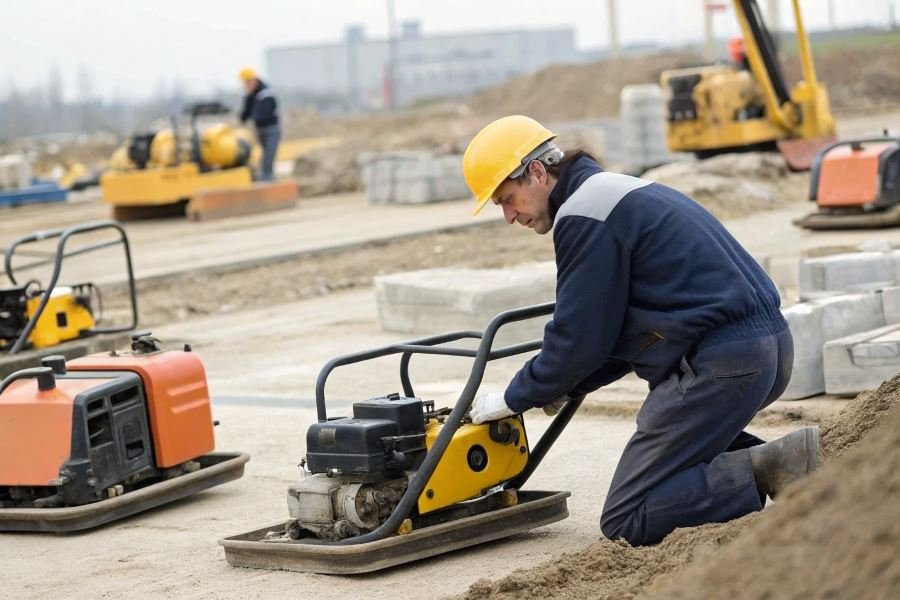
A vibrating plate compactor (sometimes called a plate tamper) is essentially a flat-bottomed machine that uses vibration to compact soil, gravel, or asphalt. These workhorses are indispensable for creating stable foundations for patios, driveways, and walkways, as well as preparing ground for construction projects of all sizes.
“The right equipment decision can be the difference between profit and loss on a project.” — Construction Equipment Magazine
When facing the rent-versus-buy decision, several critical factors come into play:
Usage frequency: The tipping point
Most industry experts suggest that if you’ll use the equipment more than 60% of the time you’d normally rent it, purchasing becomes more economical. For a contractor working on multiple projects simultaneously, ownership often makes sense. For the occasional user, rental typically wins.
Hidden costs beyond the price tag
Ownership costs include:
- Purchase price (1, 500−5,000 for professional models)
- Maintenance and repairs
- Storage space
- Insurance
- Depreciation
Rental costs typically run 70−150 per day, with weekly rates offering substantial discounts.
Project timeline considerations
For short-term projects, rental provides flexibility without the long-term commitment. However, for ongoing work or companies with predictable project pipelines, ownership eliminates the logistical headaches of pickup, return, and availability concerns.
The profitability equation isn’t just about dollars—it’s about maximizing efficiency and minimizing downtime on your projects. The right choice depends on your specific circumstances, project scope, and long-term business strategy.
The Dollars and Sense of Vibrating Plates
Initial Investment Reality Check
Let’s cut straight to the chase—a quality vibrating plate compactor will set you back anywhere from $1,200 to $5,000 depending on size, power, and features. That’s a significant chunk of capital sitting idle between jobs. Rental rates, by contrast, typically range from $75-150 per day or $300-600 per week for comparable equipment.
When evaluating rental versus purchase of a vibrating plate, which is more profitable for your specific situation depends entirely on your usage patterns and project timeline. A contractor completing a single residential patio might spend $300 on a week’s rental, while purchasing the same equipment would require recouping that $3,000 investment over multiple projects.
The Iceberg of Ownership Expenses
Purchase price is merely the tip of the financial iceberg. Ownership brings a cascade of ongoing expenses that rental customers simply don’t face:
- Maintenance costs: Expect to spend $200-400 annually on routine service
- Storage requirements: Climate-controlled space costs $15-25 per square foot annually
- Transportation logistics: Dedicated trailer or truck capacity ($50-100 per transport)
- Insurance premiums: Additional rider coverage ($150-300 annually)
These hidden costs can add 15-25% to your total ownership expense annually. Rental companies build these costs into their rates, spreading them across multiple customers.
Consider this comparison:
| Expense Category | Purchase | Rental (30 days/year) |
|---|---|---|
| Equipment Cost | $3,500 | 2, 700(90/day) |
| Maintenance | $300/year | Included |
| Storage | $250/year | $0 |
| Transportation | $600/year | Often included |
| Insurance | $200/year | Included |
| Year 1 Total | $4,850 | $2,700 |
Depreciation and Resale Realities
Construction equipment typically depreciates at 15-20% annually, with vibrating plates losing 50-60% of their value within the first three years. A $3,500 plate compactor might only fetch $1,400-1,750 after three years of regular use.
The resale sweet spot typically occurs around the 3-4 year mark, when the equipment still retains reasonable value but before major component failures become likely. Selling at this juncture can significantly improve your total cost of ownership calculation.
Rental companies leverage economies of scale, purchasing equipment at wholesale prices and maintaining in-house repair facilities—advantages individual contractors simply can’t match.
Finding Your Break-Even Point
The mathematical tipping point where purchase becomes more economical than rental can be calculated with this formula:
Break-Even Point = Purchase Price ÷ (Daily Rental Rate – Daily Ownership Costs)
For a concrete example, let’s analyze a mid-range Wacker Neuson plate compactor:
- Purchase price: $2,800
- Daily rental: $85
- Daily ownership costs: $15 (maintenance, storage, etc., annualized)
- Break-even calculation: 2, 800 ÷ (85 – $15) = 40 days
This means after 40 days of use, purchasing becomes more economical than renting. For contractors using the equipment weekly, purchase makes financial sense within a year. For those needing it quarterly or less, renting remains the smarter financial choice.
The final verdict? If you’ll use the vibrating plate more than 8-10 weeks annually, purchasing typically wins the financial analysis. For occasional users, the flexibility and zero-maintenance appeal of rental proves more profitable in the long run.
The Definitive Guide to Vibrating Plate Economics
When Rental Makes Financial Sense
For contractors tackling short-term projects, rental offers compelling advantages. A typical vibrating plate rental costs $75-150 per day or $300-600 per week—significantly less than the $1,500-5,000 purchase price for quality equipment. Companies with seasonal construction demands find rentals eliminate storage and maintenance concerns during off-periods.
Small businesses with unpredictable cash flow benefit particularly from the rental approach. Rather than tying up capital in equipment that might sit idle, they maintain financial flexibility while accessing professional-grade compaction tools when needed.
“The true cost of ownership extends far beyond the purchase price—maintenance, storage, transportation, and depreciation all factor into the equation.”
Specialty projects requiring specific plate sizes or configurations also favor rental economics. When you need a reversible plate compactor for one project and a forward plate for another, renting the right tool for each job proves more economical than purchasing multiple units.
Smart Scenarios for Purchasing
Ownership becomes the clear winner when usage frequency crosses certain thresholds. Analysis shows that companies using vibrating plates more than 7-10 days monthly typically recoup their investment within 6-12 months. Construction firms with consistent soil compaction needs find ownership dramatically reduces their long-term operational costs.
Businesses with established equipment maintenance systems already in place discover additional economies of scale. Their existing maintenance staff can easily incorporate vibrating plate upkeep into regular workflows, minimizing the ownership burden.
Tax advantages also favor purchasing. Equipment depreciation offers significant write-offs, with most vibrating plates qualifying for Section 179 deductions that allow for immediate expense recognition rather than multi-year depreciation schedules.
Strategic Decision Framework
The optimal choice depends on three critical factors:
| Factor | Favors Rental | Favors Purchase |
|---|---|---|
| Usage Frequency | Less than 5 days monthly | More than 10 days monthly |
| Project Timeline | Short-term or one-off | Ongoing operations |
| Financial Position | Limited capital/credit | Strong capital position |
Companies should conduct a break-even analysis based on their specific usage patterns. The calculation is straightforward: divide the purchase price by the daily rental rate to determine how many rental days equal the purchase price. Factor in maintenance costs (approximately 10-15% of purchase price annually) for a complete picture.
For businesses with unpredictable workloads, consider a hybrid approach. Purchase the most frequently used plate size, while renting specialty equipment as needed. This strategy optimizes capital allocation while ensuring access to the right tools.
Remember that equipment quality significantly impacts this equation. Premium vibrating plates from manufacturers like Wacker Neuson or Bomag command higher prices but deliver superior reliability and performance, extending the equipment lifecycle and improving the purchase economics.
The final decision should align with your business strategy. Companies focused on growth may benefit from preserving capital through rentals, while established operations often find greater long-term value in ownership.
Discover whether renting or buying a vibrating plate is more cost-effective for your projects in 2025. Our comprehensive analysis breaks down initial costs, maintenance expenses, and usage thresholds to help contractors make financially sound equipment decisions.
Discover whether renting or buying a vibrating plate is more cost-effective for your projects in 2025. Our comprehensive analysis breaks down initial costs, maintenance expenses, and usage thresholds to help contractors make financially sound equipment decisions.