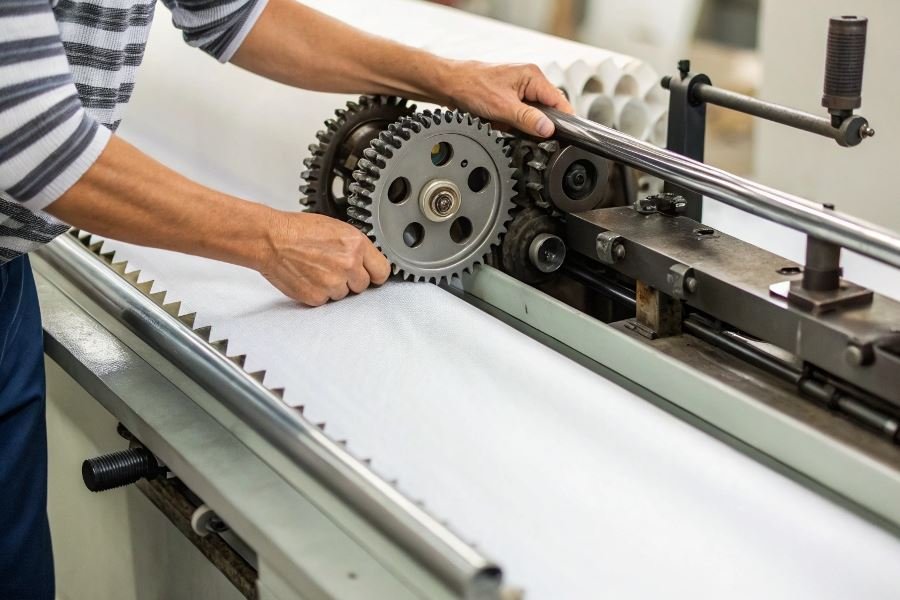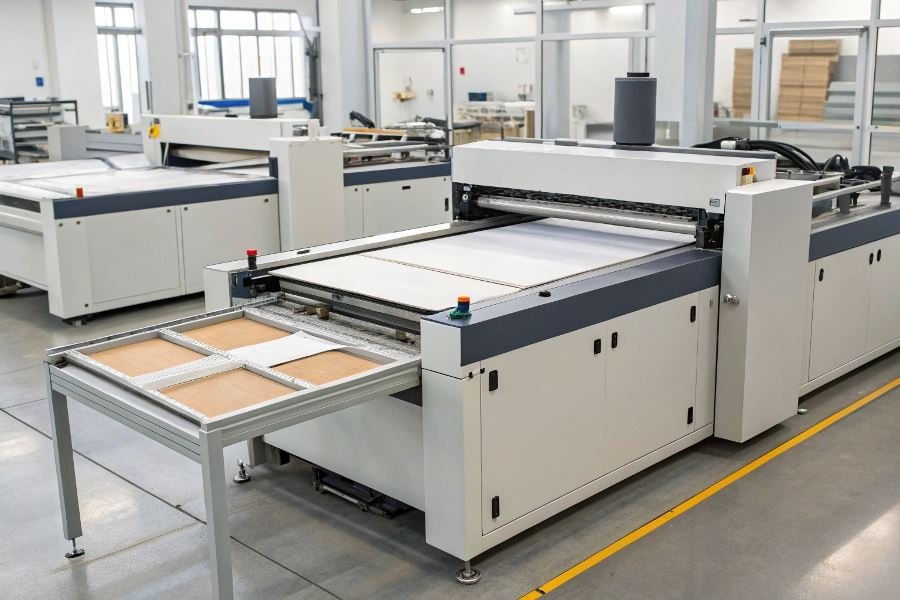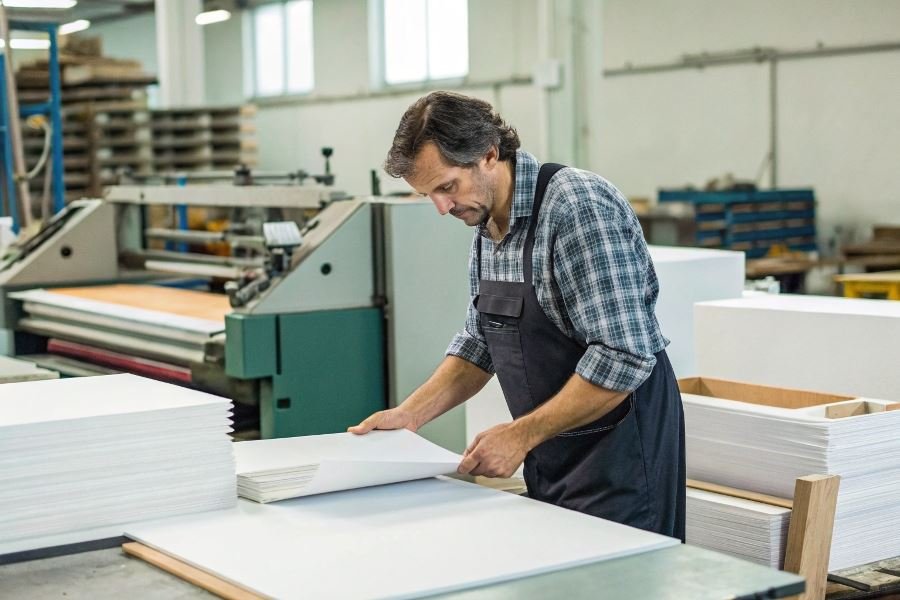
Ever watched a master bookbinder transform flat sheets into a stunning hardcover book? That magical transformation happens in the post-printing phase—often the most overlooked profit center in small printing operations.
Post-printing equipment transforms raw printed materials into finished products clients actually pay for. While many small print shop owners obsess over the latest digital presses, the finishing equipment often determines whether clients return with more business or take their projects elsewhere.
Selecting the right post-printing equipment requires balancing three critical factors: production needs, workflow efficiency, and investment constraints. A thoughtful approach here can dramatically increase your profit margins without requiring massive capital outlays.
The workflow multiplier effect
Your post-printing equipment should complement your existing workflow, not disrupt it. A $30,000 perfect binding machine sitting idle 90% of the time represents dead capital, while a $5,000 creaser running constantly creates genuine value.
Matching equipment to business reality
Before purchasing any equipment, analyze your actual production patterns:
- Which finishing processes do you currently outsource?
- What finishing requests do you regularly decline?
- Which services generate the highest margins?
The quality-speed-cost triangle
Every post-printing equipment decision involves tradeoffs between:
“You can have it fast, cheap, or good—pick two.”
The most successful small print shops identify which two factors matter most to their specific client base, then select equipment that excels in those areas while accepting reasonable compromises on the third.
Essential Post-Printing Equipment for Small Print Shops
The difference between an amateur print job and professional-grade output often comes down to what happens after the ink hits the paper. Selecting the right post-printing equipment transforms raw prints into polished, market-ready products that command premium prices and build your reputation. When setting up or upgrading a small printing house, understanding which finishing equipment delivers the best return on investment can make or break your operation.
Choosing post-printing equipment for a small printing house requires balancing immediate needs against future growth potential. The right mix of cutting, binding, and finishing equipment creates a versatile production environment capable of handling diverse client requests without breaking the bank. Let’s explore the essential categories that deserve your attention.
Precision Cutting Solutions
Nothing screams “amateur hour” like crooked edges or inconsistent dimensions. Professional cutting equipment ensures every piece leaves your shop with razor-sharp precision.
Guillotine cutters remain the workhorses of small print shops, with entry-level models starting around $2,000 and professional-grade options from Triumph or Challenge ranging from 8, 000−15,000. Look for:
- Cutting width of at least 18-26 inches
- Digital programming capabilities for repeat jobs
- Safety features including two-hand operation
- Cutting accuracy within 0.1mm
For specialized applications, rotary trimmers offer precision for smaller jobs, while die-cutters enable custom shapes and creative finishing touches that command premium pricing.
Binding Equipment That Impresses
The binding method you choose dramatically affects both aesthetics and functionality of the final product.
Perfect binding creates that professional book-like spine clients associate with quality. Entry-level Fastbind machines start around $3,500, while mid-range options from Duplo deliver higher throughput at $12,000+.
| Binding Type | Best For | Entry Price Point | Production Speed |
|---|---|---|---|
| Perfect Binding | Books, catalogs, thick documents | $3,500+ | 30-120 books/hour |
| Saddle Stitching | Magazines, booklets | $2,000+ | 500-2,000 pieces/hour |
| Spiral/Coil | Manuals, calendars | $800+ | 250-450 books/hour |
Saddle stitchers deliver cost-effective binding for multi-page documents, while spiral binding machines create practical, lay-flat documents perfect for manuals and reference materials.
Finishing Equipment That Elevates
The final touches often determine whether a print job merely satisfies or truly impresses the client.
Laminators add durability and visual impact to printed materials. Roll laminators from GBC starting at $1,200 handle most small shop needs, while pouch laminators work well for lower volumes.
Folding machines eliminate the telltale signs of hand-folding and dramatically increase productivity. Look for:
- Multiple fold patterns (letter, accordion, gate)
- Sheet capacity appropriate for your typical stock weights
- Programmable memory for repeat jobs
- Feed systems that prevent marking
For shops ready to offer premium services, foil stamping and embossing equipment creates tactile, eye-catching effects that command premium pricing. While traditional hot-foil stampers require significant investment, newer digital options from Scodix or MGI offer versatility for shops with diverse client needs.
The right combination of cutting, binding, and finishing equipment transforms your print shop from a basic service provider into a full-solution partner capable of delivering complete, professional products that keep clients coming back.
Making the Final Call: Critical Factors for Post-Print Equipment Selection
Space requirements that won’t box you in
The footprint of post-printing equipment deserves your undivided attention. A high-capacity perfect binder might deliver impressive results, but if it consumes half your production floor, the operational math simply doesn’t work. Modern printing facilities typically allocate 30-40% of total space to finishing operations—a percentage that can make or break your workflow efficiency.
Consider ceiling height constraints as well. Many folders and perfect binders require vertical clearance of at least 7-8 feet. Don’t forget about the “operational bubble” each machine needs—space for operators, material staging, and maintenance access typically adds 3-5 feet on all sides of equipment.
Smart space planning pays dividends. One print shop in Portland increased throughput by 22% simply by reconfiguring their finishing department layout based on workflow analysis rather than equipment dimensions alone.
Maintenance economics that protect your bottom line
The sticker price is merely the opening chapter in your equipment’s financial story. Annual maintenance costs typically run between 8-15% of the initial purchase price, with more automated systems landing at the higher end of that spectrum.
Reliability metrics matter more than glossy brochures. Research Mean Time Between Failures (MTBF) data for prospective equipment. Industry leaders like Horizon and Müller Martini publish these figures, while lesser-known manufacturers might not—a telling difference.
Service availability creates the safety net your business requires. Consider:
| Service Factor | Questions to Ask | Why It Matters |
|---|---|---|
| Response Time | Can you get same-day service? | Every hour of downtime costs money |
| Parts Availability | Are parts stocked domestically? | Overseas shipping can mean weeks of delays |
| Technical Support | Is remote diagnostics available? | Can prevent unnecessary service calls |
| Training Options | Is operator training included? | Proper operation prevents breakdowns |
Future-proofing your investment
The most expensive equipment is the kind you outgrow too quickly. Scalability isn’t just about speed—it’s about adaptability. Modular systems from manufacturers like Duplo allow you to add capabilities as your business evolves without replacing entire production lines.
Integration capabilities with existing workflow systems prevent costly islands of automation. Before purchasing, verify compatibility with your:
- Current prepress workflow software
- Job ticketing and management information systems
- Existing finishing equipment upstream and downstream
Digital connectivity features have transformed from luxury to necessity. Equipment with JDF/JMF compatibility enables automated job setup, reducing touchpoints and errors while providing valuable production data.
The smartest buyers think beyond current needs. A perfect example: a commercial printer in Austin invested in a slitter/cutter/creaser with capacity 30% beyond their current volume. Within 18 months, they had fully utilized that “excess” capacity without additional capital expenditure.
When evaluating integration potential, request a detailed workflow analysis from vendors. The most valuable suppliers will map your entire production process, identifying bottlenecks and recommending solutions that extend beyond their equipment alone.
Remember that the true cost of poor integration isn’t measured in dollars but in missed deadlines, quality inconsistencies, and frustrated operators—factors that ultimately determine whether your investment delivers returns or regrets.
Discover how to select the right post-printing equipment for your small print shop. Learn about essential cutting, binding, and finishing solutions while balancing quality, space requirements, and budget constraints for optimal workflow efficiency.
Discover how to select the right post-printing equipment for your small print shop. Learn about essential cutting, binding, and finishing solutions while balancing quality, space requirements, and budget constraints for optimal workflow efficiency.