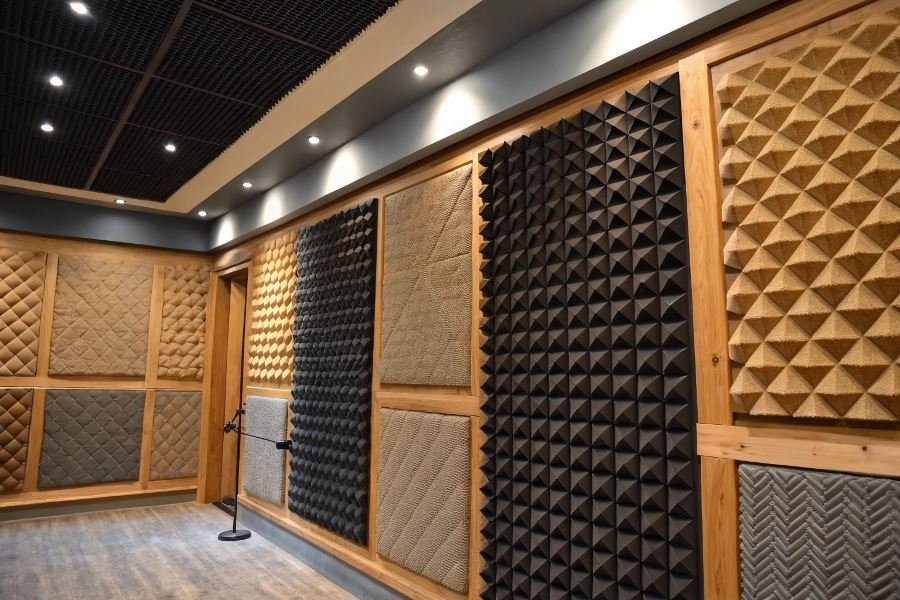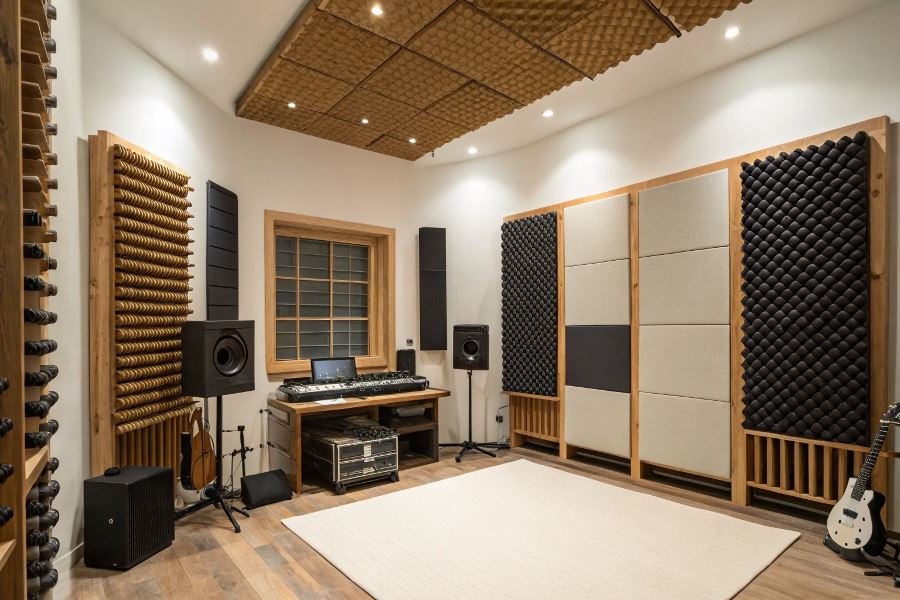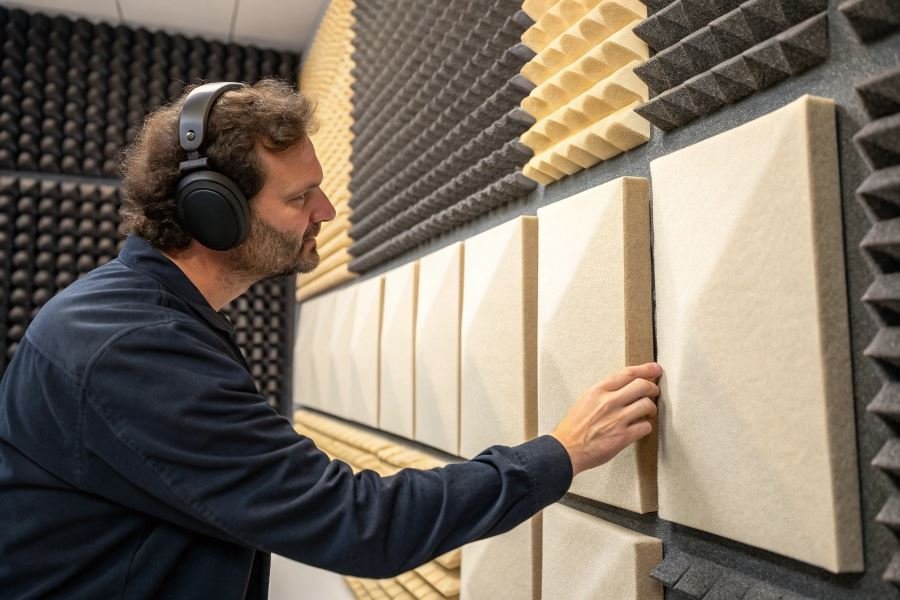
Ever walked into a room and felt an immediate sense of calm because the sound just worked? That’s no accident—it’s acoustic engineering at its finest. Behind that auditory magic lies a carefully selected array of acoustic panels, each with unique properties that can transform a chaotic echo chamber into a precisely controlled sound environment.
Acoustic panels serve as the unsung heroes of sound management, absorbing, diffusing, and controlling sound waves that would otherwise bounce chaotically around a space. These specialized materials intercept sound energy, converting it into minute amounts of heat through friction within their fibers or cellular structure. The result? Dramatically reduced reverberation time, enhanced speech intelligibility, and elimination of those frustrating acoustic anomalies like flutter echoes.
When comparing acoustic panel materials, professionals rely on several critical performance metrics. Noise Reduction Coefficient (NRC) stands as the industry standard, measuring absorption efficiency on a scale from 0.0 (perfect reflection) to 1.0 (perfect absorption). But that’s just the beginning. Sound Absorption Average (SAA) provides a more comprehensive measurement across frequencies, while Sound Transmission Class (STC) quantifies how effectively a material blocks sound transmission between spaces.
Testing methodologies have evolved significantly since the first standardized acoustic measurements in the 1930s. Today’s gold standards include ASTM C423 for absorption testing in reverberation chambers and ISO 354 for measuring sound absorption in diffuse fields. These rigorous protocols ensure that when manufacturers claim a material performs at a certain level, you can trust those numbers represent real-world performance.
The Ultimate Acoustic Panel Showdown: Material Performance Decoded
When designing spaces where sound matters, choosing the right acoustic panel material can make the difference between audio excellence and acoustic disappointment. The comparison of acoustic panel materials reveals significant performance variations that directly impact their effectiveness in different applications. Let’s dive into the science and specifications behind these sound-taming champions.
Fibrous Materials: The Absorption Specialists
Fibrous materials represent the workhorses of acoustic treatment, with fiberglass leading the pack in professional applications. With Noise Reduction Coefficients (NRC) typically ranging from 0.85 to 0.95, 2-inch fiberglass panels absorb up to 95% of sound energy across mid and high frequencies.
Mineral wool, particularly Rockwool’s stone wool products, delivers impressive low-frequency performance with absorption coefficients reaching 0.95-1.00 at 250Hz and above. This makes it particularly valuable for music studios and performance spaces where bass management presents challenges.
Recycled cotton panels, like those from Acoustimac, offer an eco-friendly alternative with NRC ratings around 0.85. While slightly less effective than fiberglass at higher frequencies, they eliminate the respiratory irritation concerns associated with traditional fibrous materials.
| Material | NRC Rating | Low Freq. Performance | Environmental Impact |
|---|---|---|---|
| Fiberglass | 0.85-0.95 | Moderate | Moderate |
| Mineral Wool | 0.90-1.00 | Excellent | Moderate |
| Recycled Cotton | 0.80-0.85 | Good | Excellent |
Foam-Based Panels: Accessibility Meets Performance
Acoustic foam represents the most recognizable and accessible solution for many users. Standard 2-inch pyramid foam typically achieves NRC ratings between 0.50-0.70, with performance heavily weighted toward mid and high frequencies (1000Hz-4000Hz).
Melamine foam deserves special attention for its exceptional fire-resistance properties while maintaining NRC values around 0.65-0.75. However, its frequency response curve shows significant drop-off below 500Hz, making it less suitable for spaces requiring comprehensive bass management.
Polyester-based acoustic foams from manufacturers like Auralex have evolved to offer improved low-frequency response, with specialized bass traps achieving absorption coefficients of 0.60+ at 125Hz—impressive for foam-based solutions.
Wood and Composite Materials: Where Aesthetics Meet Acoustics
Wood and composite acoustic treatments have revolutionized the market by balancing visual appeal with acoustic performance. Perforated wood panels with backing typically achieve NRC ratings of 0.50-0.75, depending on perforation patterns and backing materials.
Micro-perforated wood veneer systems from companies like Armstrong can reach NRC values of 0.65-0.85 while maintaining the warm aesthetic of natural wood. These systems excel in applications where visual design cannot be compromised, such as concert halls and upscale conference facilities.
Diffusive wooden elements, while technically not absorbers, complement absorption strategies by scattering sound energy. Quadratic diffusers constructed from solid wood provide critical mid-frequency diffusion while serving as statement architectural elements.
The material selection process ultimately depends on your specific acoustic challenges, aesthetic requirements, and budget constraints. High-traffic commercial spaces might prioritize durability and fire ratings of melamine foam, while recording studios might justify the investment in premium mineral wool treatments for their superior low-frequency performance.
By understanding the unique performance characteristics of each material category, you can create acoustic environments that deliver exceptional sound quality while complementing your space’s design vision.
Making the Smart Choice in Acoustic Panel Materials
The dollars and sense of acoustic treatment
When investing in acoustic treatment, the cost-benefit equation extends far beyond the price tag. Mineral wool panels typically range from $2-5 per square foot, offering exceptional value for their performance. Fiberglass solutions command $3-7 per square foot, while premium polyester options can reach $5-10 per square foot.
But here’s where it gets interesting: long-term value often contradicts initial expense. Polyester panels, despite their higher upfront cost, frequently outlast fiberglass by 5-7 years in high-traffic environments. Meanwhile, wood wool composites, though priced at $6-8 per square foot, deliver both acoustic performance and aesthetic appeal that can eliminate the need for additional decorative elements.
The true cost of acoustic treatment isn’t what you pay today—it’s what you gain tomorrow in productivity, comfort, and space functionality.
For commercial spaces, the ROI calculation should include potential revenue increases from improved customer experience. Recording studios report up to 30% more booking requests after upgrading to premium acoustic treatments, quickly offsetting the initial investment.
Installation factors that make or break performance
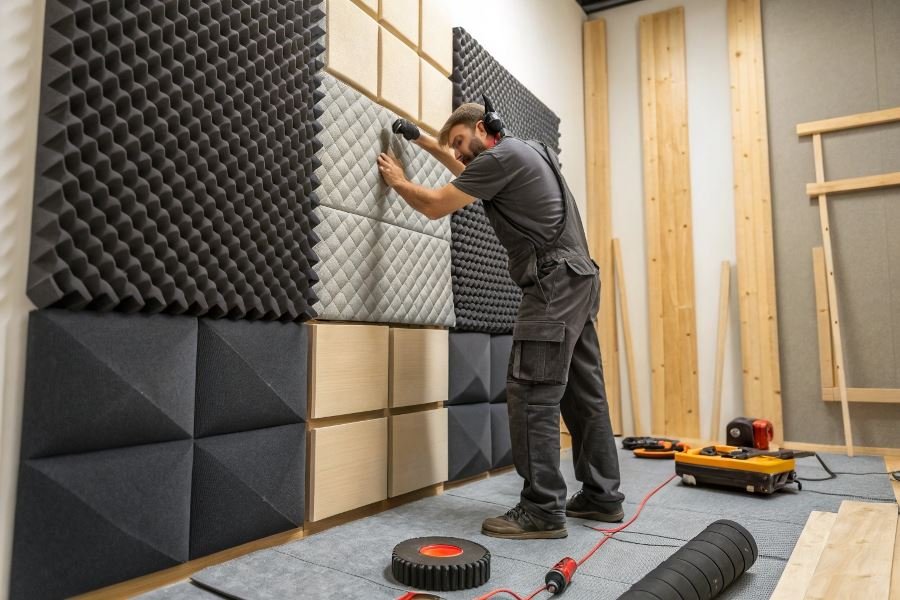
The most sophisticated acoustic panel becomes worthless when improperly installed. Wall mounting methods dramatically affect performance—direct mounting reduces low-frequency absorption by up to 40% compared to panels installed with an air gap.
Material weight creates distinct installation challenges. Fiberglass panels typically weigh 0.5-1 pound per square foot, while stone wool can exceed 2 pounds per square foot, potentially requiring reinforced mounting systems. Polyester and foam options shine in DIY applications, requiring minimal specialized hardware.
Environmental conditions further complicate installation decisions:
| Material | Humidity Tolerance | Temperature Stability | Installation Complexity |
|---|---|---|---|
| Fiberglass | Moderate | Excellent | Medium |
| Mineral Wool | Poor-Moderate | Excellent | Medium-High |
| Polyester | Excellent | Good | Low |
| Wood Wool | Good | Good | Medium |
| Foam | Poor | Poor-Moderate | Very Low |
Installation orientation matters significantly. Ceiling-mounted panels typically capture 15-20% more reflected sound than identical wall-mounted versions, particularly in rooms with parallel hard surfaces.
Matching materials to environments
Different spaces demand different acoustic solutions. For recording studios requiring precise sound control, layered combinations of dense fiberglass (2-4 inches) backed by air gaps deliver superior broadband absorption. Owens Corning 703 and 705 fiberglass remain industry standards for this application.
Conference rooms benefit from polyester panels that balance speech intelligibility with aesthetic considerations. Their washable surfaces and formaldehyde-free composition make them ideal for spaces where air quality concerns exist.
Restaurants and hospitality venues thrive with wood wool cement panels that combine acoustic performance with distinctive visual appeal. These panels absorb up to 0.95 NRC (Noise Reduction Coefficient) while contributing to the design narrative.
For home theaters, melamine foam products like Auralex provide exceptional high-frequency absorption while remaining lightweight enough for DIY installation. However, supplementing with denser materials for bass trapping becomes essential for balanced acoustic performance.
Industrial environments with temperature fluctuations and potential moisture exposure demand mineral wool panels with protective facings. Their fire resistance (typically Class A) provides additional safety benefits in these settings.
The most effective acoustic treatment rarely involves a single material, but rather strategic combinations addressing specific frequency ranges and acoustic challenges unique to each environment.
Discover which acoustic panel materials deliver superior sound management for your space. Compare absorption coefficients of fibrous, foam, and wood-based options to make an informed selection based on performance metrics and your specific environmental needs.
Discover which acoustic panel materials deliver superior sound management for your space. Compare absorption coefficients of fibrous, foam, and wood-based options to make an informed selection based on performance metrics and your specific environmental needs.