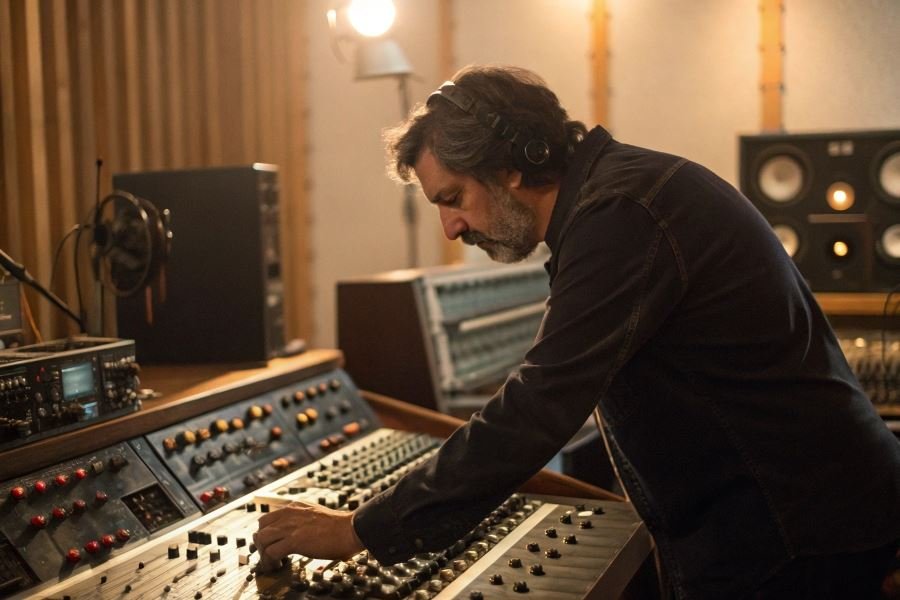
Ever wondered why some recordings sound warm and rich while others feel clinical and precise? The secret often lies in a small but mighty component: the microphone preamp. The choice between tube and transistor technology shapes the sonic character of everything from Grammy-winning albums to podcast interviews.
The journey of these competing technologies began in the early 20th century. Vacuum tubes dominated audio equipment from the 1930s until the 1960s, when solid-state transistor technology emerged as a revolutionary alternative. While RCA and Western Electric pioneered tube preamps in recording studios of the 1940s, companies like Neve capitalized on transistor technology in the late 1960s, forever changing the audio landscape.
At their core, these technologies amplify signals through fundamentally different processes. Tube preamps use vacuum tubes where electrons flow through a vacuum, creating natural harmonic distortion that many describe as “musical” or “warm.” Transistor preamps, utilizing semiconductor materials, offer cleaner amplification with greater precision and typically lower noise floors.
The specifications tell a compelling story of contrasts:
| Characteristic | Tube Preamps | Transistor Preamps |
|---|---|---|
| Harmonic Distortion | Higher (often desirable) | Lower |
| Transient Response | Slightly slower | Faster, more accurate |
| Noise Floor | Generally higher | Typically lower |
| Dynamic Range | Compressed at higher volumes | More linear throughout |
| Power Efficiency | Lower (generates heat) | Higher (runs cooler) |
This fundamental difference explains why vintage Neve consoles (transistor-based) deliver pristine clarity while classic Telefunken preamps (tube-based) impart that coveted analog warmth. The choice isn’t about better or worse—it’s about which sonic character serves your creative vision.
The Soul of Sound: Tube vs Transistor Preamp Showdown
Warmth, Harmonics, and the Character Question
When engineers and producers debate tube vs transistor microphone preamps, they’re really discussing two fundamentally different approaches to sound. Tube preamps, with their glowing glass hearts, impart a distinctive warmth and harmonic richness that many describe as “musical” or “three-dimensional.” This isn’t just subjective preference—it’s measurable science. Tubes naturally generate even-order harmonics (particularly second-order) that our ears perceive as pleasing saturation, adding a subtle thickness to vocals and acoustic instruments.
The decision between tube vs transistor microphone preamps which is better ultimately depends on your specific recording needs and sonic goals. Transistor designs deliver clinical precision with their lower noise floor and flatter frequency response, making them ideal for capturing uncolored source material. Meanwhile, tube preamps offer that coveted analog warmth through harmonic distortion that can transform a lifeless recording into something with character and dimension.
Transistor preamps, by contrast, typically produce odd-order harmonics when pushed, which can sound comparatively harsh. However, modern solid-state designs have become incredibly transparent, offering what many engineers call “wire with gain”—a faithful reproduction with minimal coloration. This clinical accuracy makes transistor preamps the go-to choice for applications requiring absolute fidelity.
Technical Performance Under the Microscope
| Specification | Tube Preamps | Transistor Preamps |
|---|---|---|
| Noise Floor | Typically higher (-70 to -85 dB) | Lower (-90 to -130 dB) |
| Headroom | Generous, with gradual saturation | More defined clipping point |
| Frequency Response | Often rolled-off highs, enhanced mids | Flatter, wider response |
| Transient Response | Slightly slower, more compressed | Faster, more accurate |
The technical differences between these technologies create distinct performance profiles. Transistor preamps from manufacturers like Grace Design offer remarkably low noise floors, making them ideal for capturing delicate sources or distant microphone placements. Their wider frequency response—often extending beyond human hearing—ensures nothing is lost in translation.
Tube preamps from companies like Manley Labs trade some of this technical perfection for character. Their higher noise floor (though still perfectly acceptable in most recording scenarios) comes with the benefit of increased headroom and a more forgiving response to transients, naturally compressing peaks in a musical way.
Real-world Applications: When to Choose Each
Tube Preamp Sweet Spots:
- Vocals requiring warmth and presence
- Acoustic instruments needing “glue” and dimension
- Bass guitar recordings seeking thickness
- Drum room mics where character trumps precision
- Any source that sounds too “digital” or sterile
Transistor Preamp Excellence:
- Orchestral and classical recordings
- Detailed acoustic guitar work
- Percussion with complex transients
- Location recording where noise floor matters
- Multi-microphone setups requiring phase coherence
The magic often happens when engineers strategically deploy both technologies. A Neve transistor preamp might capture the attack of a snare drum with lightning precision, while a Universal Audio tube preamp adds body to an otherwise thin vocal performance.
In professional studios, it’s never about which technology is universally “better”—it’s about having both options available and knowing when each will serve the music most effectively. The most versatile recording setups incorporate both tube and transistor signal paths, treating them as complementary colors on a sonic palette rather than competing technologies.
Making the Right Choice: Tube vs Transistor Preamps
Matching Preamps to Your Recording Needs
Studio recording is where preamp selection truly matters. Different instruments and vocal styles benefit from specific preamp characteristics that enhance their natural qualities.
For vocals, tube preamps like the Universal Audio 710 Twin-Finity excel with singers needing warmth and presence. The natural compression and harmonic richness can transform a thin vocal into something that sits perfectly in a mix. Conversely, detailed female vocals or acoustic performances often shine through the clean transparency of transistor preamps like the Focusrite ISA One.
When recording drums, the application dictates the choice. Overhead microphones benefit from the transient response of transistor preamps, preserving the attack of cymbals. Meanwhile, room mics often sound more cohesive through tubes, which gently round off harsh transients while adding dimension.
Electric guitars present an interesting case. While many engineers default to tube preamps to complement guitar amplifiers, clean guitar work often benefits from the precision of solid-state designs. Bass guitar recordings typically favor transistor preamps for their tight low-end response and headroom, though a tube preamp can add character to an otherwise sterile bass tone.
Pro tip: Don’t just choose based on instrument type—consider the musical genre and desired emotional impact. Jazz recordings often benefit from the subtle coloration of tubes, while electronic music production might require the clinical accuracy of transistor designs.
Top Preamp Recommendations Across Price Points
| Price Range | Tube Preamp Recommendation | Transistor Preamp Recommendation |
|---|---|---|
| Entry-Level | ART Pro MPA II ($299) | DBX 286s ($219) |
| Mid-Range | Warm Audio WA73-EQ ($799) | API 512c ($995) |
| High-End | Manley VOXBOX ($4,599) | Neve 1073DPX ($3,295) |
The ART Pro MPA II delivers remarkable tube warmth at an accessible price point, making it perfect for home studios seeking analog character without breaking the bank. Its variable input impedance allows matching with different microphones for optimal results.
In the solid-state realm, the DBX 286s offers exceptional value with its built-in processing chain, including compression and de-essing—perfect for podcast production or vocal tracking.
Moving up, the Warm Audio WA73-EQ provides Neve-inspired tone with EQ flexibility at a fraction of vintage prices. For transistor aficionados, the API 512c delivers the punchy, forward sound that’s defined countless hit records.
At the premium tier, the Manley VOXBOX represents the pinnacle of tube technology with its comprehensive channel strip capabilities, while the Neve 1073DPX offers the legendary Neve sound in a modern package.
Hybrid Solutions: The Best of Both Worlds
Why choose between tube warmth and transistor precision when you can have both? Hybrid preamps represent the cutting edge of audio engineering, combining technologies to deliver versatility that purist designs can’t match.
The Universal Audio 710 Twin-Finity pioneered this approach with its blend knob, allowing engineers to dial in precisely the right amount of tube character or solid-state clarity. This innovation makes it exceptionally versatile across different sources.
Another standout hybrid design is the Grace Design m501, which uses a transistor front end for clean gain and headroom, followed by a tube output stage that imparts subtle harmonics without sacrificing detail.
The hybrid approach isn’t just about compromise—it’s about expanding creative possibilities. Modern recording often demands both clinical precision and analog character, sometimes within the same track. Hybrid preamps allow for this flexibility without requiring multiple units.
Bottom line: Your choice ultimately depends on your specific recording needs, musical style, and budget. The best preamp is the one that helps you capture the sound you hear in your head.
Discover the crucial differences between tube and transistor microphone preamps in this comprehensive comparison. Learn which technology delivers the warmth, clarity, and performance your recordings need based on sound characteristics and technical specifications.
Discover the crucial differences between tube and transistor microphone preamps in this comprehensive comparison. Learn which technology delivers the warmth, clarity, and performance your recordings need based on sound characteristics and technical specifications.