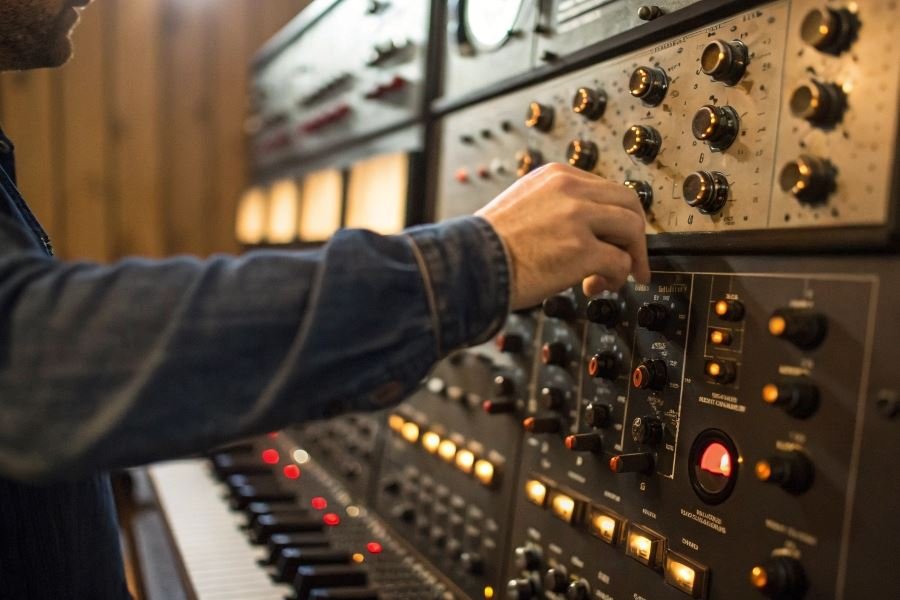
Ever wondered why the same microphone can sound radically different in various recording setups? The secret lies not in the microphone itself, but in what comes next in the signal chain. The preamp—that often overlooked piece of equipment—might just be the most crucial decision you’ll make for your sound.
When a microphone captures your voice or instrument, it produces a whisper-thin electrical signal—often just thousandths of a volt. This delicate signal needs significant amplification before it can be processed, recorded, or broadcast. That’s where preamps shine, transforming these microscopic signals into usable audio while preserving the character and nuance of the original sound.
The preamp-microphone relationship: A critical partnership
Think of your microphone and preamp as dance partners—they must complement each other perfectly. A vintage ribbon microphone paired with a clean, transparent solid-state preamp might sound clinical and lifeless. That same microphone through a tube preamp with gentle harmonic distortion? Magic happens.
The preamp you select dramatically shapes your microphone’s performance in three critical ways:
- Gain structure – Different microphones require different amounts of clean amplification
- Impedance matching – The electrical “handshake” between microphone and preamp affects frequency response
- Coloration – Preamps can be transparent or add desirable harmonic content
Matching factors that matter
When selecting a preamp for your specific microphone, consider:
- Microphone type – Condenser, dynamic, and ribbon microphones have vastly different gain requirements
- Output impedance – Low-impedance microphones need preamps with appropriate input impedance
- Sonic character – Are you seeking transparency or complementary coloration?
The perfect preamp doesn’t just amplify—it elevates your microphone’s natural strengths while complementing its weaknesses.
Technical Matchmaking: Pairing Preamps with Microphones
Finding the perfect preamp for your microphone isn’t just about brand names or price tags—it’s about understanding the technical relationship between these two critical components. When these devices speak the same electrical language, magic happens in your recordings.
The process of selecting a microphone preamp for a specific microphone requires careful consideration of several technical parameters that directly impact your sound quality. Think of it as finding the perfect dance partner for your microphone—when the match is right, the performance soars. Let’s dive into the technical details that make this relationship work.
Impedance: The First Date Between Mic and Preamp
Impedance matching might sound like engineering jargon, but it’s fundamental to your sound quality. Measured in ohms (Ω), impedance represents the resistance to electrical current flow.
The golden rule: Your preamp’s input impedance should be at least 5-10 times higher than your microphone’s output impedance.
Most professional microphones have output impedances between 150-300Ω, while quality preamps typically offer input impedances of 1.5kΩ-2.5kΩ or higher. When this relationship is balanced:
- Signal transfer maximizes
- Frequency response remains flat
- Unwanted noise minimizes
Mismatched impedance can cause low-end roll-off, distortion, and overall thinness in your recordings.
| Microphone Type | Typical Output Impedance | Recommended Preamp Input Impedance |
|---|---|---|
| Dynamic | 150-600Ω | 1.5kΩ or higher |
| Condenser | 50-200Ω | 1kΩ or higher |
| Ribbon | 100-300Ω | 2.5kΩ or higher (crucial!) |
Ribbon microphones deserve special attention—their delicate elements can be damaged by phantom power and require preamps with particularly high input impedance. Models like the AEA TRP or Cloudlifter CL-1 are specifically designed with ribbon mics in mind.
Gain Requirements: Power for Every Voice
Different microphone types have vastly different sensitivity levels, directly affecting how much gain they need from a preamp:
Dynamic microphones (like the Shure SM7B) output relatively weak signals, often requiring 60+ dB of clean gain. Budget preamps might struggle here, introducing noise when pushed to their limits.
Condenser microphones are more sensitive, typically needing only 30-40 dB of gain. Most preamps handle these comfortably, but the quality of that gain still matters tremendously.
Ribbon microphones are the gain-hungry champions, often requiring 65-70 dB of clean gain. This is where premium preamps truly justify their cost.
Noise Floor: The Silent Partner
A preamp’s noise floor specification (measured in dB) tells you how much self-noise it generates—essentially, how quiet it can be.
The lower this number, the cleaner your recordings will sound, especially during quiet passages or when recording subtle sound sources.
For professional results:
- Look for equivalent input noise (EIN) ratings of -125 dB or lower
- Consider the signal-to-noise ratio (SNR)—higher numbers (90+ dB) indicate cleaner performance
- Remember that high-gain scenarios amplify not just your signal but any inherent noise
Premium preamps like the Grace Design m101 or Rupert Neve Designs 511 offer remarkably low noise floors, preserving the nuance and detail in your recordings even when substantial gain is applied.
By understanding these three critical factors—impedance matching, gain requirements, and noise specifications—you’ll make informed decisions that result in cleaner, more professional recordings with whatever microphone you choose to use.
Making the Final Decision: Your Perfect Preamp Match
Balancing Technical Specs with Sonic Character
Choosing the right microphone preamp isn’t just about numbers on a spec sheet—it’s about finding that perfect marriage between technical excellence and the sonic character that makes your recordings shine. While clean gain and low noise floor provide the foundation, it’s often the subtle coloration and harmonic characteristics that create that “magic” in a recording.
The technical-artistic balance requires understanding both sides of the equation. A technically superior preamp with ultra-low THD (Total Harmonic Distortion) might be perfect for classical recordings but could leave your rock vocals feeling sterile. Conversely, a preamp with beautiful tube warmth might add too much character to delicate acoustic instruments.
The best preamp decisions come from understanding not just what a preamp does, but how it makes you feel when you hear your recordings played back.
Consider creating a priority matrix for your specific needs:
| Priority | Technical Considerations | Sonic Character Elements |
|---|---|---|
| High | Noise floor, Gain range | Warmth, Transparency |
| Medium | Impedance matching | Harmonic richness |
| Low | Feature set | “Vintage” sound |
Budget Realities and Studio Evolution
Let’s talk money and growth. Preamp investments range from $100 budget options to $5,000+ boutique units, with diminishing returns as you climb the price ladder. The key is identifying where your specific recording needs intersect with your budget constraints.
Investment strategy matters. For project studios, consider starting with one exceptional channel of preamp for your most-used microphone, then adding more channels as budget allows. This “building block” approach often yields better results than spreading your budget across multiple mediocre preamps.
Future-proofing your studio means considering:
- Expandability (can you add more channels later?)
- Versatility across microphone types
- Resale value (quality gear holds value)
- Maintenance costs (especially for tube units)
Remember that a $1,500 preamp you’ll use for 10 years costs just $150 annually—a reasonable investment for something touching every recording you make.
Top Preamp Recommendations by Microphone Type
Based on extensive testing and industry consensus, here are standout preamp pairings for common microphone categories:
For Condenser Microphones:
- Rupert Neve Designs Portico 511 – Delivers pristine clarity with just enough transformer character to add dimension ($950)
- Grace Design m101 – Transparent and detailed, perfect for capturing nuance in vocals and acoustic instruments ($695)
- Warm Audio WA-412 – Four channels of API-inspired punch at a fraction of vintage prices ($1,199)
For Dynamic Microphones:
- Cloudlifter CL-1 – Essential for gain-hungry dynamics like the SM7B ($149)
- FetHead – Ultra-compact inline solution for broadcast dynamics ($90)
- ART Pro MPA II – Affordable tube warmth that complements dynamic microphones’ midrange ($299)
For Ribbon Microphones:
- AEA TRP2 – Purpose-built for ribbons with massive clean gain and proper impedance matching ($1,795)
- True Systems Precision 8 – Eight channels of ultra-clean gain that lets ribbons’ natural character shine ($2,995)
- Focusrite ISA One – Variable impedance makes it adaptable to vintage and modern ribbons alike ($549)
The perfect preamp isn’t just about specifications—it’s about finding the right tool that elevates your specific microphones and serves your creative vision. Choose wisely, and your recordings will thank you.
Learn how to match the perfect preamp to your specific microphone with our comprehensive technical guide. Discover impedance matching, gain requirements for different mic types, and how to balance specs with sound character for professional audio quality.
Learn how to match the perfect preamp to your specific microphone with our comprehensive technical guide. Discover impedance matching, gain requirements for different mic types, and how to balance specs with sound character for professional audio quality.