Ever wondered how your favorite albums capture that perfect blend of instruments, or how film sound designers create immersive audio experiences? Behind these sonic masterpieces lies a powerful tool: the multichannel recorder.
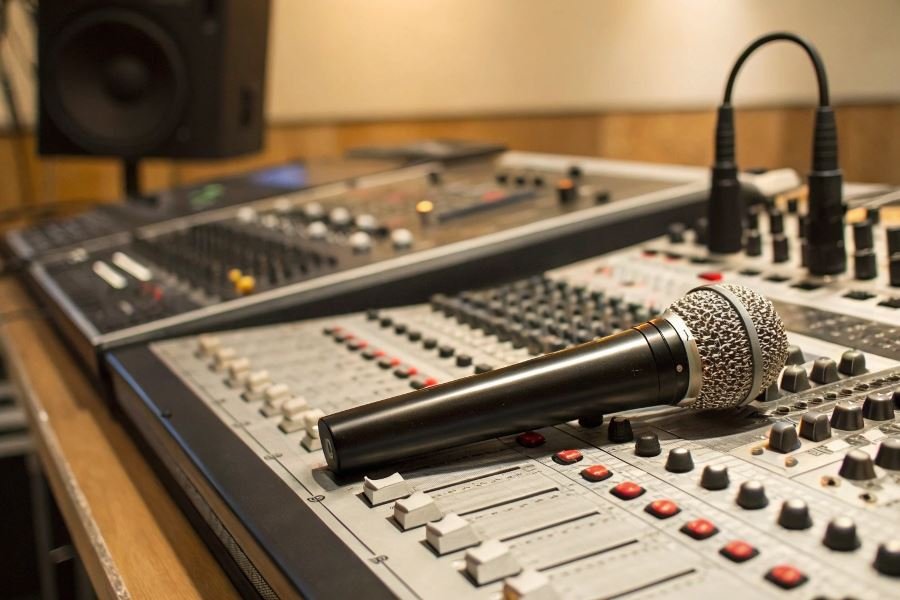
A multichannel recorder is essentially a specialized device that can simultaneously capture multiple audio signals from different sources, process them independently, and store them as separate tracks. Unlike traditional single-track recorders, these sophisticated systems allow sound engineers to record a drummer, vocalist, and guitarist all at once, while maintaining complete control over each element during mixing and production.
The evolution of this technology tells a fascinating story of innovation. What began as bulky reel-to-reel machines in professional studios during the 1960s has transformed into sleek, portable devices with astonishing capabilities. Today’s market offers everything from compact 8-track field recorders to comprehensive 64-channel digital systems that integrate seamlessly with computer workstations.
Professional studios remain the primary users, where multichannel recorders serve as the backbone of music production. However, their application extends far beyond. Live sound engineers capture concert performances for later mixing, podcast producers record multiple speakers with pristine clarity, and filmmakers synchronize dialogue, ambient sounds, and effects with precision.
The democratization of this technology has been remarkable. What once required a $100,000 investment and a dedicated facility can now be achieved with a $500 portable recorder and a laptop. This accessibility has empowered independent musicians, content creators, and audio enthusiasts to produce professional-quality recordings without the traditional barriers to entry.
The Technical Heart of Multichannel Recording
When you dive beneath the surface of professional audio production, you’ll discover that multichannel recorders serve as the central nervous system of modern sound capture. These sophisticated devices have transformed how we document everything from intimate podcast conversations to sprawling orchestral performances.
The evolution of multichannel recorders has dramatically expanded creative possibilities for sound engineers and content creators alike. Multichannel recorders: features and advantages extend far beyond simple stereo capture, offering unprecedented control over audio environments and post-production flexibility that was once available only in high-end studios costing tens of thousands of dollars.
Channel Capacity That Matches Your Ambition
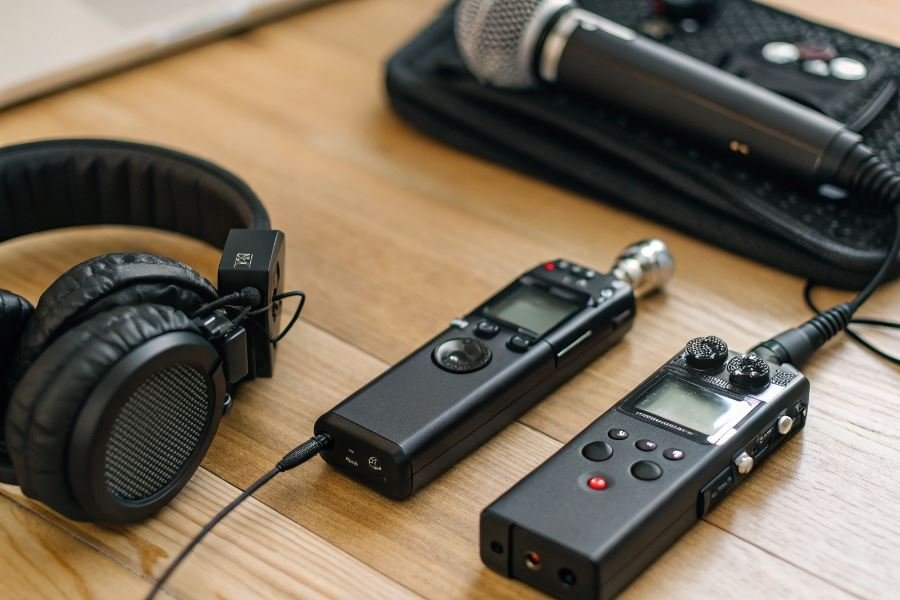
Today’s multichannel recorders offer astonishing input capabilities, ranging from modest 4-channel portable units to professional-grade 32+ channel behemoths. The Zoom H8 exemplifies versatility with its expandable input system, while the Sound Devices Scorpio delivers a staggering 32 recording channels in a field-ready package.
What truly matters is simultaneous recording capability—the number of discrete audio streams a device can capture at once. This specification determines whether you can record a full band, capture room ambience, or maintain backup safety tracks without compromise.
| Recorder Type | Typical Channel Count | Best Use Case |
|---|---|---|
| Portable | 4-12 | Field recording, small ensembles |
| Mid-range | 16-24 | Band sessions, podcasts with guests |
| Professional | 32+ | Live performances, film production |
Audio Quality That Defines Your Sound
The technical specifications that govern audio quality have reached impressive heights. Modern recorders routinely offer 24-bit depth (providing a theoretical dynamic range of 144dB) and sample rates up to 192kHz—far exceeding human hearing capabilities but providing ample headroom for processing.
Dynamic range—the span between the quietest and loudest recordable sounds—has become a crucial differentiator. Premium units like the Tascam Portacapture X8 deliver ultra-low noise floors with high-quality preamps that capture whisper-quiet details while handling thunderous transients without distortion.
The practical impact of these specifications translates to recordings with:
- Greater editing flexibility in post-production
- Richer harmonic content that preserves the character of acoustic instruments
- Dramatically improved signal-to-noise ratio compared to consumer equipment
Storage and Connectivity That Streamlines Workflow
The days of limited recording time are firmly behind us. Contemporary multichannel recorders employ multiple storage solutions:
- Internal memory (typically 8GB-256GB)
- SD/SDXC cards supporting up to 1TB per card
- Direct-to-computer recording via USB interfaces
Connectivity options have similarly expanded, with the Fostex FR-2LE offering timecode synchronization for film work, while the Roland R-88 provides eight balanced XLR inputs alongside SMPTE timecode and wireless remote control capabilities.
Integration with digital audio workstations has become seamless through standardized protocols:
“The ability to function both as a standalone recorder and as a computer interface represents perhaps the most significant advancement in field recording technology of the past decade.”
Many units now function as control surfaces for popular DAWs, allowing for immediate review and rough mixing of captured material without transferring files—a game-changer for time-sensitive productions where immediate quality assessment is essential.
Unleashing the Power of Multichannel Recorders
Professional audio production transformed
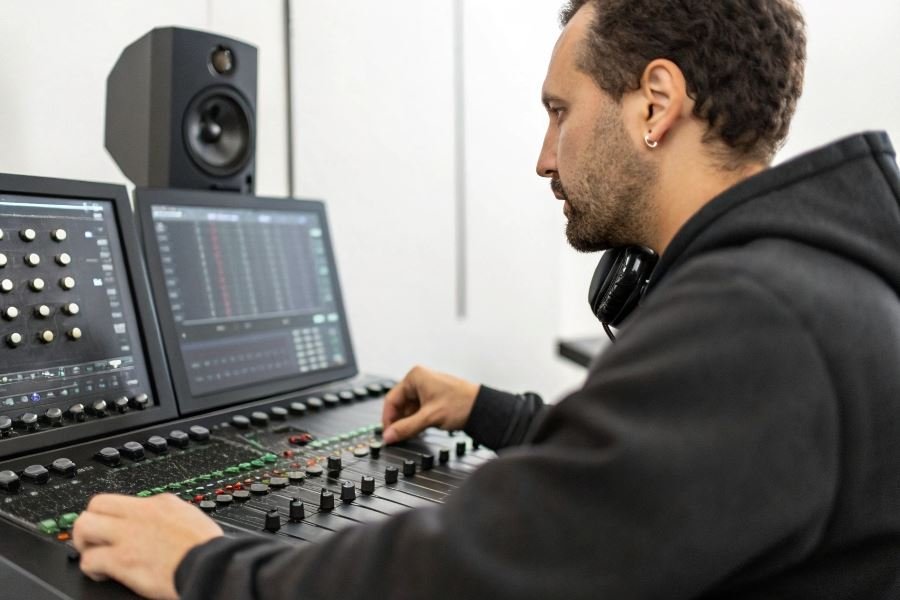
In professional audio studios, multichannel recorders have revolutionized the production landscape. Simultaneous track recording stands as perhaps the most significant advantage—engineers can capture up to 32 separate audio sources in perfect synchronization. This capability eliminates the tedious process of recording instruments one by one, preserving the natural interplay between musicians.
The isolation factor cannot be overstated. With Pro Tools or similar digital audio workstations connected to multichannel systems, producers gain unprecedented control over each element in the mix. A drummer’s performance can be captured with multiple microphones—kick, snare, toms, overheads—each on dedicated channels for precise manipulation during mixing.
The editing flexibility extends beyond basic adjustments. Modern multichannel systems allow for non-destructive editing, meaning original recordings remain intact while producers experiment with different processing chains, effects, and arrangements. This safety net encourages creative exploration without fear of losing the initial performance magic.
Live performance documentation excellence
When capturing live events, multichannel recorders deliver unmatched versatility. Concert sound engineers rely on these systems to create both front-of-house mixes for the audience and separate multitrack recordings for later refinement. This dual-purpose functionality means a single system handles both immediate needs and future production requirements.
The redundancy factor provides crucial insurance against technical failures. Many professional multichannel recorders like the Sound Devices MixPre-10 II offer backup recording paths, ensuring that even if one storage medium fails, the performance remains preserved on another.
For documentary filmmakers and event videographers, these systems integrate seamlessly with video equipment through timecode synchronization. This precision alignment eliminates the post-production headache of manually matching audio to video, saving countless hours in the editing suite.
Workflow efficiency and cost benefits
The economic advantages of multichannel recording systems extend far beyond their initial price tags. Studio time reduction represents significant savings—sessions that once required multiple days can now be completed in hours. With all instruments captured simultaneously, the efficiency gains compound with each project.
| Traditional Recording | Multichannel Recording |
|---|---|
| Sequential tracking | Simultaneous capture |
| Multiple sessions | Single-pass recording |
| Limited flexibility | Non-destructive editing |
| Higher studio costs | Reduced facility needs |
The portability revolution has democratized professional recording. Systems like the Zoom H8 pack studio-quality multichannel capabilities into devices smaller than a laptop, allowing professionals to record on location without sacrificing quality. This mobility eliminates the need for expensive studio rentals for many projects.
Perhaps most valuable is the collaborative efficiency these systems enable. Musicians can perform together naturally, maintaining the emotional connection that drives compelling performances. Engineers can focus on capturing the moment rather than managing technical limitations. Producers gain the raw materials needed for creative post-production without compromise.
The integration with modern digital workflows completes the efficiency picture. Multichannel recordings transfer seamlessly to editing platforms, with metadata intact and tracks properly labeled. This organizational advantage eliminates hours of file management and allows creative professionals to focus on what matters most—crafting exceptional audio experiences.
Discover the essential features and advantages of multichannel recorders for professional audio production. Learn about channel capacity, audio quality specifications, and how these versatile devices enhance studio recording and live performance workflows.
Discover the essential features and advantages of multichannel recorders for professional audio production. Learn about channel capacity, audio quality specifications, and how these versatile devices enhance studio recording and live performance workflows.