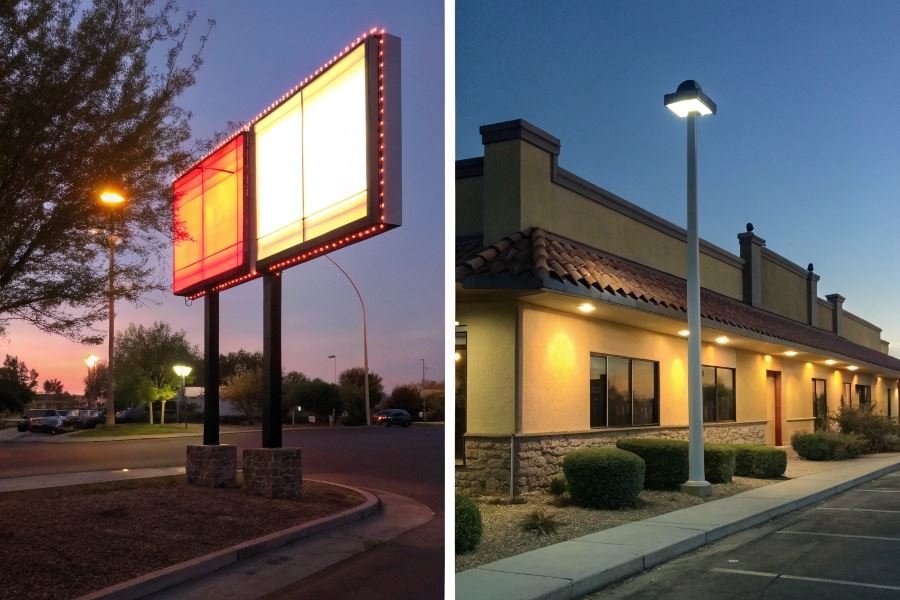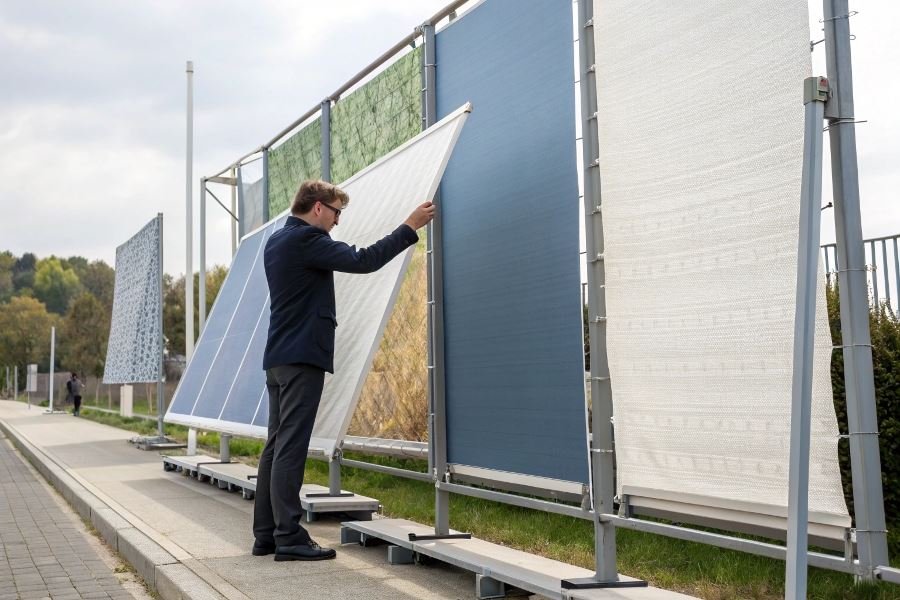
Ever noticed how some outdoor advertisements seem to pop with vibrant colors even after months in harsh sunlight, while others fade into ghostly remnants within weeks? The difference isn’t magic—it’s material science.
Behind every successful advertising banner lies a critical decision that many marketers overlook: selecting the right material. This choice forms the foundation upon which your entire visual marketing strategy stands or falls. When a company invests thousands of dollars in design and placement, cutting corners on materials can transform a potential brand ambassador into a public embarrassment.
The material selection process involves navigating a complex matrix of considerations—durability requirements, environmental conditions, visual quality needs, and budget constraints. Each factor carries weight in determining whether your message will maintain its impact for days, months, or years. For instance, a vinyl banner might cost 30% less than fabric initially, but in high-wind locations, that “savings” could literally be blown away within weeks.
“The most expensive banner is the one you have to replace before it’s done its job.” — A truth every experienced marketer learns, sometimes painfully.
The return on investment calculation extends beyond mere durability. Premium materials create subtle psychological effects that influence brand perception. Research shows that consumers unconsciously associate material quality with product quality, making your banner a silent ambassador for your brand’s values.
Choosing wisely isn’t just about preventing failure—it’s about engineering success.
Making Banner Materials Matter
When your advertising banner faces the elements, material selection becomes the difference between lasting impact and premature replacement. The criteria for selecting materials for advertising banners must balance durability, visual quality, and financial constraints—a trifecta that determines campaign success long before the first impression.
Weather Warriors: Durability That Delivers
Banner materials must withstand whatever Mother Nature throws their way. Vinyl banners with 13-18oz weight offer exceptional durability for outdoor applications, with reinforced edges preventing tears even in high winds. For extreme conditions, mesh banners allow wind to pass through while maintaining visual integrity.
Temperature resilience separates premium materials from budget options. Quality vinyl maintains flexibility in temperatures from -20°F to 180°F without cracking or warping. This matters particularly in regions with dramatic seasonal shifts where inferior materials quickly deteriorate.
“The most expensive banner is the one you have to replace mid-campaign.”
For installations exceeding six months, UV-resistant inks and laminates prevent color fading—particularly critical for brand-specific colors where consistency is non-negotiable. Marine-grade vinyl offers superior protection against moisture and salt exposure, making it ideal for coastal applications where standard materials might deteriorate within weeks.
Visual Fidelity: When Every Pixel Counts
The substrate directly impacts print quality and color reproduction capabilities. Smooth, calendered vinyl surfaces provide superior ink adhesion compared to rough-textured alternatives, resulting in sharper text and more vibrant images.
Material selection affects color gamut significantly:
| Material Type | Color Vibrancy | Detail Reproduction | Recommended Use |
|---|---|---|---|
| Premium Vinyl | Excellent | High | Brand-critical displays |
| Mesh Banner | Good | Medium | Windy locations |
| Fabric Banner | Very Good | Medium-High | Indoor events |
| Recyclable PE | Moderate | Medium-Low | Short-term campaigns |
White point variations between materials can shift color perception dramatically. Premium materials maintain consistent white points, ensuring blues don’t appear purple and reds don’t trend orange—critical for brand identity preservation.
Budget Alignment Without Compromise
Cost-effectiveness doesn’t mean choosing the cheapest option. The total cost of ownership includes:
- Initial material costs
- Installation expenses
- Maintenance requirements
- Replacement frequency
For short-term promotions lasting under 30 days, lightweight 10oz vinyl provides adequate durability at lower cost. For campaigns spanning seasons, investing in 18oz scrim-reinforced vinyl delivers superior value despite higher upfront costs.
Material lifespan dramatically affects ROI. Premium banners from manufacturers like 3M typically offer 3-5 year outdoor lifespans compared to 6-12 months for economy options. This extended service life often justifies the 30-40% price premium for high-visibility, long-term installations.
Smart material selection also reduces waste. Recyclable polyethylene banners cost marginally more but appeal to environmentally-conscious audiences and may qualify for sustainability incentives in certain municipalities.
The material selection process requires balancing immediate budget constraints against long-term performance requirements. By prioritizing the specific environmental challenges, visual requirements, and financial parameters of your campaign, you’ll select materials that deliver maximum impact without unnecessary expense—ensuring your message remains visible, vibrant, and effective throughout your entire campaign lifecycle.
Making Smart Banner Material Decisions
The decision-making framework that works
Selecting the right material for your advertising banner isn’t just a procurement decision—it’s a strategic business move. The most effective approach combines systematic evaluation with forward-thinking analysis. Start by creating a weighted criteria matrix that prioritizes your specific needs: durability requirements, viewing distance, installation environment, and budget constraints.
This framework should include:
- Performance requirements scoring (1-10 for each criterion)
- Environmental exposure assessment (indoor/outdoor, weather conditions)
- Installation method compatibility
- Cost-to-lifespan ratio calculation
Pro tip: Document your decision process. When you track material performance against your initial criteria, you create valuable institutional knowledge for future campaigns.
Many banner projects fail not because of poor materials, but because of mismatched expectations. A vinyl banner might be perfect for a three-month outdoor promotion but disastrous for a permanent installation. Your framework should force the crucial question: “What does success look like for this specific application?”
Long-term benefits beyond the price tag
Strategic material selection delivers compounding returns that transform your advertising investment:
| Benefit | Short-term Impact | Long-term Value |
|---|---|---|
| Brand perception | Immediate visual quality | Consistent brand representation |
| Operational efficiency | Simplified installation | Reduced replacement frequency |
| Environmental footprint | Reduced waste | Sustainability credentials |
| Total cost of ownership | Initial investment | Lifecycle savings |
When 3M conducted their signage longevity study, they found that premium materials typically reduced the total five-year ownership cost by 23-37% compared to budget alternatives, despite higher initial investment. This isn’t just about avoiding replacement costs—it’s about maintaining consistent brand presentation throughout the campaign lifecycle.
The most overlooked benefit? Peace of mind. When you’ve selected materials that perfectly match your requirements, you eliminate the constant worry about premature failures or unexpected maintenance.
Future trends reshaping banner material selection
The banner material landscape is evolving rapidly, driven by three converging forces: sustainability demands, technological innovation, and changing consumer expectations.
Watch for these emerging developments:
- Biodegradable vinyl alternatives with comparable performance metrics but dramatically reduced environmental impact
- Smart materials with embedded NFC/RFID technology enabling interactive experiences and campaign analytics
- Ultra-lightweight composites that reduce transportation costs and carbon footprint while maintaining durability
The selection criteria themselves are evolving too. More organizations now include end-of-life considerations in their initial decision matrix. How will the material be disposed of? Can it be recycled? These questions are becoming standard parts of the evaluation process.
Material manufacturers like Avery Dennison are responding with innovative solutions that balance performance with sustainability. Their latest eco-conscious films maintain 95% of traditional performance metrics while reducing environmental impact by over 40%.
The future belongs to adaptive frameworks that can incorporate these rapidly evolving materials and technologies while maintaining focus on your core advertising objectives. The most successful organizations are already developing material selection protocols that can flex with these innovations without sacrificing performance or brand standards.
Discover the 7 essential criteria for selecting high-quality banner materials that maximize durability, visual impact, and ROI. Learn how proper material choices enhance weather resistance, print quality, and cost-effectiveness for your advertising campaigns.
Discover the 7 essential criteria for selecting high-quality banner materials that maximize durability, visual impact, and ROI. Learn how proper material choices enhance weather resistance, print quality, and cost-effectiveness for your advertising campaigns.