What if your morning commute could be 15 minutes shorter every day? That’s not just wishful thinking—it’s becoming reality thanks to the silent revolution happening above our streets.
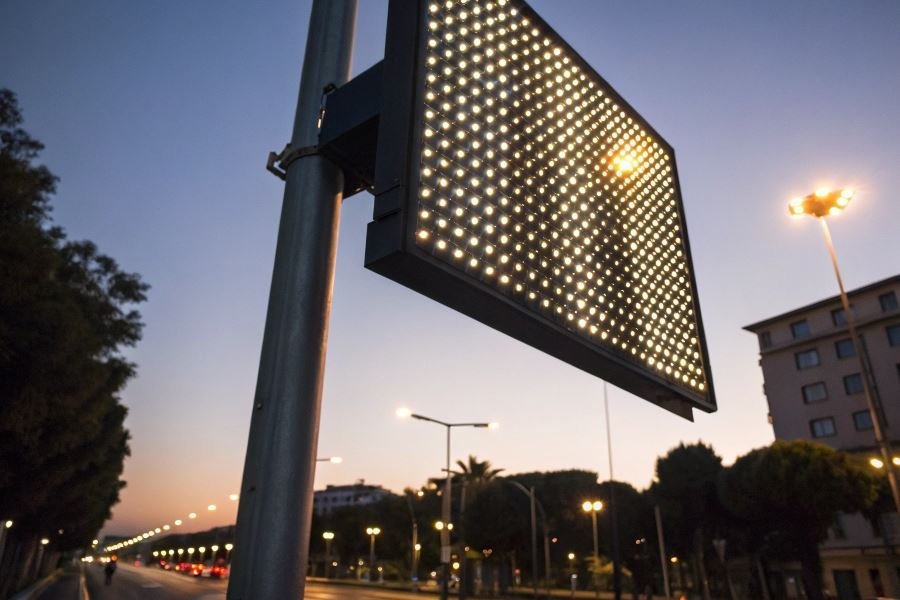
Intelligent traffic sign control systems represent the convergence of traditional traffic infrastructure with cutting-edge digital technology. At their core, these systems combine dynamic electronic signage, networked sensors, AI-powered analytics, and centralized management platforms to create responsive traffic environments that adapt in real-time to changing conditions. Unlike their static predecessors, these systems “think” before they direct.
“The difference between traditional and intelligent traffic systems is like comparing a record player to streaming music—both play songs, but one responds to what you want, when you want it.” — Transportation Engineering Quarterly
The journey to today’s sophisticated systems began with simple traffic lights in the early 1900s. By the 1960s, computer-controlled traffic management emerged, but the true transformation came with the Internet of Things revolution in the 2010s, enabling fully connected, responsive infrastructure.
Major U.S. metropolitan areas have embraced this technology at varying speeds. Los Angeles leads with implementation across 85% of major intersections, while New York City’s Smart Traffic Management Initiative has reduced congestion by 23% in Manhattan pilot zones. Meanwhile, cities like Austin and Denver are rapidly expanding their networks, focusing on high-traffic corridors first.
These systems don’t just manage traffic—they’re fundamentally changing how our cities breathe, move, and grow.
Transforming Roads with Smart Traffic Management
Revolutionizing traffic flow optimization
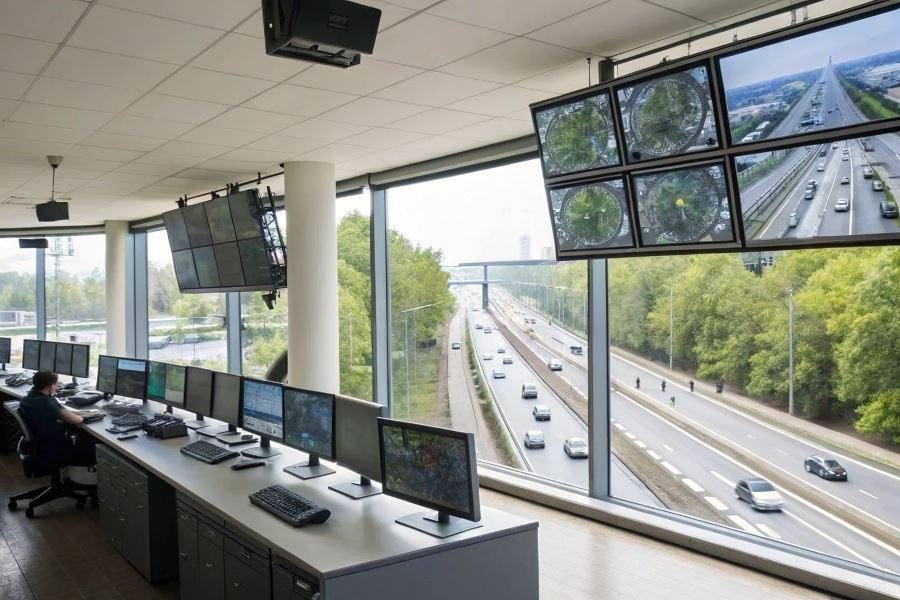
Traffic congestion costs American drivers an average of 97 hours and $1,348 annually in wasted time and fuel. Intelligent traffic sign control systems are changing this equation dramatically by creating responsive roadways that adapt to real-time conditions. These systems leverage a network of sensors, cameras, and AI algorithms to continuously monitor traffic patterns and make split-second adjustments to signage and signals.
The results speak volumes: cities implementing these technologies report up to 25% reduction in travel times during peak hours. Minneapolis saw a 22% decrease in congestion after deploying adaptive traffic control across major corridors. The systems excel particularly at handling unexpected surges, such as those following major events or during emergency situations.
| City | Congestion Reduction | Implementation Scale |
|---|---|---|
| Portland | 28% | 135 intersections |
| Atlanta | 23% | 1,000+ traffic signals |
| San Diego | 25% | 12 major corridors |
Creating safer roads through dynamic signage
Road safety improvements represent perhaps the most compelling advantage of intelligent traffic management. Dynamic speed limits that adjust based on weather conditions, visibility, and traffic density have reduced accidents by up to 30% in some implementations.
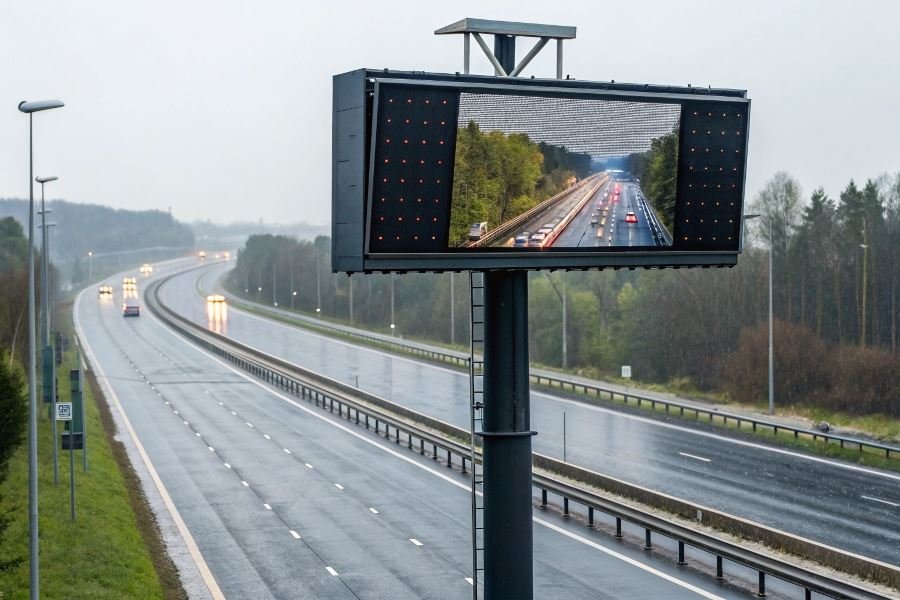
These systems shine during hazardous conditions by immediately communicating dangers ahead. When sensors detect fog, ice, or accidents, warning messages appear on digital signs miles before drivers reach the hazard. The Virginia Department of Transportation documented a 52% reduction in crashes on equipped highways during adverse weather conditions.
Real-time responsiveness makes these systems particularly effective at protecting vulnerable road users. When pedestrians or cyclists are detected at crossings, enhanced warning systems activate, significantly reducing near-miss incidents at high-risk intersections.
Environmental benefits beyond congestion
The environmental advantages of smart traffic systems extend far beyond reduced idling time. By optimizing traffic flow, these systems directly impact emissions profiles across entire transportation networks. Studies show reductions of up to 22% in carbon emissions and 17% in nitrogen oxide emissions in corridors with fully implemented systems.
Fuel consumption decreases measurably when vehicles maintain steady speeds rather than repeatedly stopping and starting. A study in Pittsburgh documented a 12% reduction in fuel consumption after implementing adaptive traffic control on major arteries.
The sustainability benefits compound when these systems are integrated with public transportation. By prioritizing buses and high-occupancy vehicles at intersections, cities can enhance the appeal of mass transit options while further reducing per-capita emissions.
Smart integration with emerging technologies
The true potential of these systems emerges when they connect with other smart city initiatives. Integration with connected vehicle technology allows for direct communication between infrastructure and vehicles, creating opportunities for personalized routing and further optimization.
As autonomous vehicles become more common, intelligent traffic sign control systems will serve as crucial infrastructure partners, providing real-time data that helps self-driving cars navigate complex urban environments more safely and efficiently.
The investment pays for itself quickly—most cities report ROI periods of 3-5 years through reduced infrastructure maintenance, lower accident rates, and improved economic productivity from reduced congestion.
The Road Ahead for Smart Traffic Systems
Autonomous Vehicles Meet Smart Signage
The convergence of intelligent traffic sign systems with autonomous vehicle infrastructure represents a watershed moment in transportation evolution. Leading automakers like Tesla and Waymo are actively collaborating with municipal traffic authorities to create bidirectional communication channels between vehicles and roadway infrastructure.
These systems enable real-time data exchange where smart signs don’t just display information—they broadcast digital instructions directly to vehicle operating systems. A pilot program in Phoenix demonstrated how autonomous vehicles received advance warning of construction zones 1.8 miles ahead, allowing for route recalculation before human drivers even spotted the first orange cone.
The Vehicle-to-Infrastructure (V2I) protocols being developed by the U.S. Department of Transportation will standardize these communications, creating a universal “language” between all traffic signs and self-driving vehicles regardless of manufacturer.
The most profound aspect of this integration isn’t just convenience—it’s the potential 73% reduction in traffic-related fatalities when autonomous vehicles can “see” beyond visual range through smart infrastructure.
Predictive Traffic Management Through AI
Machine learning algorithms have transformed traffic prediction from educated guesswork to near-clairvoyant accuracy. Modern intelligent traffic systems employ multilayered neural networks that process data from thousands of sensors, cameras, and connected vehicles simultaneously.
These AI systems don’t just react to current conditions—they anticipate congestion patterns before they materialize. The INRIX traffic prediction platform demonstrated in Seattle achieved 94% accuracy in predicting traffic slowdowns up to 45 minutes before they occurred.
| AI Capability | Traditional Systems | Next-Gen AI Systems |
|---|---|---|
| Data Sources | 3-5 inputs | 50+ diverse inputs |
| Prediction Window | 5-10 minutes | Up to 60 minutes |
| Accuracy Rate | 65-75% | 90-95% |
| Adaptation Speed | Hours/Days | Seconds/Minutes |
Machine learning models from companies like Siemens Mobility now incorporate weather patterns, social media event mentions, and even economic indicators to create holistic traffic predictions that dynamically adjust signage, timing, and routing recommendations.
Overcoming Implementation Hurdles
Despite the promising technology, widespread adoption faces significant challenges. The infrastructure investment requirement presents the most immediate obstacle. Retrofitting existing traffic networks with smart capabilities costs between 25, 000−40,000 per intersection in urban environments.
Regulatory frameworks remain fragmented, with each municipality often developing independent standards. The National Transportation Safety Board has proposed a unified implementation framework that would standardize protocols across state lines, potentially reducing implementation costs by 35%.
Data privacy concerns have also emerged as a critical consideration. Smart traffic systems capture massive volumes of movement data that, while anonymized, still raise questions about surveillance and tracking. Industry leaders like Cubic Transportation Systems are developing privacy-by-design architectures that limit data retention and minimize personally identifiable information.
The strategic roadmap for widespread adoption follows a three-phase approach:
- Corridor-based implementation along major highways
- Urban center deployment focusing on high-congestion zones
- Suburban and rural expansion through federal infrastructure funding
This phased approach allows for iterative improvements while delivering immediate benefits to the most congested areas first, creating a sustainable expansion model that balances costs with measurable traffic improvements.
Discover how intelligent traffic sign control systems are revolutionizing urban mobility by optimizing flow, reducing congestion, and enhancing safety through real-time adjustments and AI-powered traffic management technology.
Discover how intelligent traffic sign control systems are revolutionizing urban mobility by optimizing flow, reducing congestion, and enhancing safety through real-time adjustments and AI-powered traffic management technology.