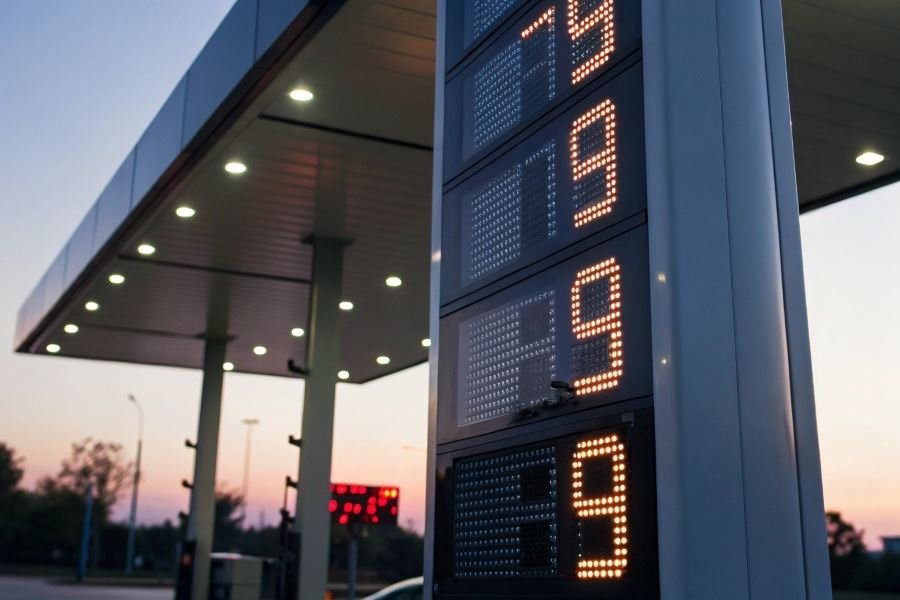
Ever glanced at those bright LED numbers while filling up and wondered what’s behind them? Gas station price displays aren’t just illuminated numbers—they’re sophisticated communication tools representing thousands of dollars in investment. The question isn’t whether your station needs one, but rather how much you should expect to pay.
Digital price displays have revolutionized the fuel retail landscape. Gone are the days of manually changing plastic numbers in all weather conditions. Today’s electronic displays offer remote updates, enhanced visibility, and brand-consistent aesthetics that can make or break customer impressions in seconds.
Why these displays matter more than you think: In the hyper-competitive fuel market, price displays serve as your frontline marketing weapon. Studies show that 76% of drivers make decisions based on visible pricing, often while still approaching the station. A clear, bright display can literally redirect traffic to your pumps.
The cost equation for gas station displays involves several critical variables:
- Display technology: LED remains dominant, but newer technologies like E-paper are emerging with lower power consumption
- Size and configuration: From single-product displays to multi-product pylons
- Weather resistance: Displays rated for extreme conditions command premium prices
- Smart features: Remote updating, scheduling, and integration capabilities
Key cost determinants
The investment range for gas station displays spans from $1,500 for basic models to $15,000+ for premium installations. This significant variation stems from three primary factors:
- Technical specifications: Resolution, brightness (measured in nits), and viewing angle
- Durability requirements: Expected lifespan in your specific climate conditions
- Software capabilities: From simple displays to fully networked price management systems
Understanding these variables isn’t just about budgeting—it’s about making an investment that delivers measurable returns through increased visibility and customer conversion.
What Drives Gas Station Display Costs
When investing in digital displays for your fuel station, understanding the cost factors can save thousands of dollars while ensuring you get exactly what your business needs. The price spectrum for these specialized displays ranges dramatically—from $1,500 for basic LED price signs to upwards of $25,000 for premium multi-product digital displays with advanced features.
The cost of a display for gas stations: what the price depends on boils down to three critical factors that every station owner should evaluate before making this significant investment. These factors not only affect initial purchase price but also long-term operational expenses and customer experience.
Display Size and Resolution Specifications
Size matters—especially when customers need to read your fuel prices from the road. Display dimensions directly impact visibility and cost:
- Small displays (under 4 feet): 1, 500−5,000
- Medium displays (4-6 feet): 5, 000−12,000
- Large displays (over 6 feet): 12, 000−25,000+
Resolution requirements compound these costs. Modern LED displays typically offer:
| Resolution Type | Pixel Pitch | Visibility Distance | Price Impact |
|---|---|---|---|
| Standard | 16-20mm | 50-150 ft | Base price |
| Enhanced | 10-16mm | 30-100 ft | +15-25% |
| Premium | 6-10mm | 15-50 ft | +30-50% |
Higher resolution displays deliver sharper images but at significantly higher costs. For most gas stations, the sweet spot lies in the 10-16mm range, offering excellent visibility without breaking the bank.
Weather Resistance and Durability Requirements
Gas station displays face brutal environmental challenges—from scorching sun to freezing temperatures. Durability specifications dramatically affect pricing:
Standard weather resistance (1, 500−8,000):
- Operating temperature range: 14°F to 104°F
- Basic moisture protection
- 3-5 year typical lifespan
Enhanced durability (8, 000−15,000):
- Extended temperature range: -4°F to 122°F
- IP65 water/dust protection
- 5-7 year typical lifespan
Premium all-weather systems ($15,000+):
- Extreme temperature range: -40°F to 140°F
- IP66/IP67 protection against powerful water jets and temporary immersion
- 7-10+ year lifespan with Watchfire Signs or similar premium manufacturers
Stations in regions with extreme weather conditions must factor these durability requirements into their budgeting decisions, as cutting corners here often leads to costly replacements.
Single vs. Multi-Product Display Capabilities
The complexity of information displayed creates the third major cost variable:
Single product displays (1, 500−7,000):
- Display one fuel type and price
- Simpler control systems
- Lower maintenance costs
Dual product displays (7, 000−15,000):
- Show two fuel types simultaneously
- Moderate complexity
- Medium maintenance requirements
Multi-product digital displays (15, 000−25,000+):
- Display 3+ fuel types, often with additional advertising capabilities
- Complex control systems with Skyline Products or equivalent technology
- Higher maintenance needs but greater marketing flexibility
The additional circuitry, programming, and display elements required for multi-product systems drive costs higher, but they also provide greater flexibility for stations offering premium fuels, diesel, or alternative energy options.
When evaluating these cost factors, remember that the right display isn’t just an expense—it’s a revenue-generating investment that can significantly impact customer traffic and station visibility.
Beyond the Price Tag: Total Cost of Gas Station Displays
Installation and setup costs that surprise owners
When investing in gas station display systems, the upfront hardware cost is just the beginning. Installation expenses can add 15-30% to your initial investment, depending on complexity. A basic LED price sign might require simple electrical work, while a full digital display network demands professional installation teams with specialized equipment.
Labor costs vary significantly by region, with metropolitan areas commanding premium rates. For example, installation in New York or San Francisco might cost $2,500-4,000, while the same work in smaller markets might run $1,500-2,500.
Maintenance isn’t optional—it’s essential for longevity. Annual maintenance contracts typically run 8-12% of the initial hardware cost. This includes:
- Scheduled preventive maintenance visits
- Emergency repair services
- Replacement parts coverage
- Software updates and technical support
The most expensive display is the one that stops working during peak business hours.
Software systems that power modern displays
The brains behind your displays often represent a substantial investment. Verifone Commander and Gilbarco Passport point-of-sale systems offer robust integration with price displays, but require licensing fees ranging from $1,200-3,000 annually.
Remote management capabilities transform static signs into dynamic marketing tools, but add complexity:
| Feature | Typical Cost | Business Impact |
|---|---|---|
| Cloud-based management | $75-150/month | Update prices from anywhere |
| Automated price changes | $500-1,500 setup | Reduces labor and human error |
| Content scheduling | Included to $50/month | Dayparting promotions increases sales |
| Analytics integration | $1,000-2,500 setup | Measure promotion effectiveness |
Integration costs often surprise owners who assume displays will seamlessly connect with existing systems. Custom API development can add $3,000-10,000 to project costs when systems don’t “talk” to each other natively.
Calculating true ROI beyond initial expense
Smart operators look beyond sticker shock to evaluate total value. A premium LED display might cost 40% more upfront but consume 60% less electricity and last twice as long as economy models.
The Daktronics Galaxy series, for instance, commands premium pricing but delivers 100,000+ hour lifespans compared to 50,000-60,000 hours for budget alternatives.
Consider these ROI factors when evaluating display investments:
- Energy efficiency – Modern LED displays use 40-60% less power than older technology
- Visibility impact – High-brightness displays attract 15-25% more impulse customers
- Promotional flexibility – Digital displays allow real-time price adjustments for margin optimization
- Warranty coverage – Premium displays often include 5-7 year warranties versus 1-3 years for budget options
The most successful operators recognize that display systems represent infrastructure investments rather than expenses. A quality system with robust software integration typically reaches positive ROI within 18-36 months through increased traffic, reduced labor costs, and enhanced promotional capabilities.
Discover what drives gas station display pricing in today's competitive fuel market. From size and durability to multi-product capabilities and maintenance costs, learn how to evaluate display investments for maximum ROI and customer visibility.
Discover what drives gas station display pricing in today's competitive fuel market. From size and durability to multi-product capabilities and maintenance costs, learn how to evaluate display investments for maximum ROI and customer visibility.