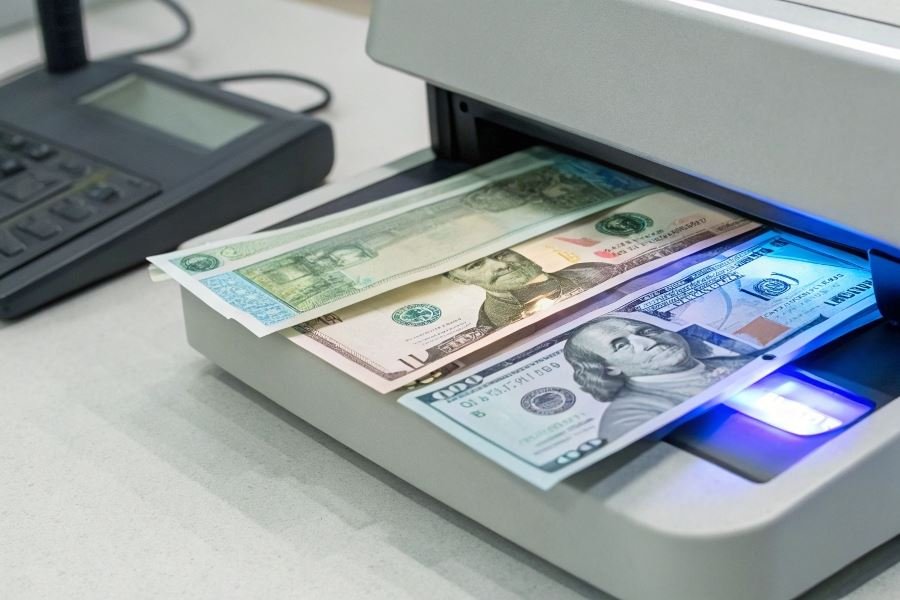
Ever watched a cashier meticulously check a $100 bill while a line forms behind you? That 30-second delay multiplied across hundreds of transactions represents thousands in lost productivity. This is precisely why banknote detectors with counting functions have become essential tools for businesses handling cash daily.
The market for these devices has exploded with options ranging from $89 basic models to sophisticated systems commanding $2,500+. What exactly separates these price points? Is it genuine innovation or clever marketing?
Today’s detection technology landscape features three distinct tiers: entry-level validators that simply authenticate bills, mid-range models adding counting capabilities, and premium systems offering multi-currency support, counterfeit detection rates exceeding 99.9%, and processing speeds of 1,200+ notes per minute.
The features that truly matter
The premium price tag typically buys you three critical advantages:
-
Advanced counterfeit detection – High-end models utilize multiple authentication methods (UV, magnetic ink, infrared, etc.) simultaneously, while budget options often rely on just one or two.
-
Processing speed and accuracy – Premium detectors count mixed denominations at 3-5x the speed of basic models with significantly lower error rates.
-
Durability and support – Enterprise-grade machines are built to handle 500,000+ bills before maintenance, compared to 50,000-100,000 for entry-level options.
For businesses processing over $5,000 daily, the efficiency gains from premium models typically recover the additional investment within 6-8 months. However, smaller operations may find mid-range options provide the optimal balance between capability and cost.
The True Cost of Accuracy: Banknote Detectors Worth Your Investment
When selecting cash handling equipment for your business, the question of whether premium banknote detectors with counting capabilities justify their higher price tags deserves careful consideration. Banknote detectors with counting function: is it worth overpaying for advanced features when basic models might seem sufficient? The answer lies in understanding the measurable differences in performance, reliability, and long-term value across price points.
Detection accuracy that protects your bottom line
The primary function of any detector is catching counterfeits, and the difference between price tiers is striking:
| Price Tier | Average Detection Accuracy | False Positive Rate | Counterfeit Types Detected |
|---|---|---|---|
| Entry-level ($200-500) | 92-95% | 1:200 | Basic counterfeits |
| Mid-range ($500-1200) | 96-98% | 1:500 | Advanced counterfeits |
| Premium ($1200+) | 99%+ | <1:1000 | Sophisticated super-notes |
Testing by the Independent Cash Handling Association revealed that premium models from brands like Safescan and Cassida detect sophisticated counterfeits that entry-level units consistently miss. For businesses handling large cash volumes, that 3-4% accuracy difference represents significant protection against losses.
Processing efficiency that pays for itself
The speed differential between basic and advanced models creates a compelling business case:
Entry-level units typically process 600-800 notes per minute, while premium models from Cummins Allison can handle 1,500+ notes per minute with multi-currency recognition. For a business processing $5,000 daily, this translates to approximately 15 minutes saved per day—or 60+ hours annually.
Time is money: At $20/hour labor cost, the efficiency gain alone represents $1,200+ in annual savings, potentially covering the price difference between mid-range and premium equipment in the first year.
Reliability under pressure
The durability gap between price tiers becomes evident under heavy usage:
- Entry-level units: Typically rated for 500,000 notes before requiring service
- Premium models: Often guaranteed for 2+ million notes with minimal maintenance
When Glory Global tested their premium models against budget alternatives, the mean time between failures was nearly triple for their higher-end equipment. The service interruption from a single breakdown can cost more in lost productivity than the price difference between models.
ROI calculations by business size
Small businesses (under $2,000 daily cash handling):
- Entry-level models provide adequate protection
- ROI timeline: 12-18 months
Medium businesses (2, 000−10,000 daily):
- Mid-range models offer optimal balance
- ROI timeline: 8-12 months
Large operations ($10,000+ daily):
- Premium models deliver clear financial advantages
- ROI timeline: Often under 6 months
The higher your cash volume, the faster premium equipment pays for itself.
For businesses processing significant cash volumes, the premium paid for advanced detection and counting capabilities isn’t an expense—it’s an investment with measurable returns. The combination of superior counterfeit detection, faster processing, and extended service life creates a compelling value proposition that basic models simply cannot match.
The question isn’t whether you can afford to invest in premium equipment, but whether you can afford not to.
Making the Right Investment: Banknote Detectors That Count
Every cash-handling business faces a critical decision when upgrading their money management systems. Premium banknote detectors with counting functionality command significantly higher price tags—often 800−1,500 more than basic models. But does this investment actually pay off? Let’s dive into the real-world considerations that should drive your decision.
Know your transaction volume first
The foundation of your decision should be a clear-eyed assessment of your daily cash handling reality:
- Transaction frequency: How many cash transactions do you process daily?
- Average transaction value: Are you primarily handling small purchases or larger payments?
- Peak periods: Do you experience significant rushes that create bottlenecks?
A neighborhood coffee shop processing 200 cash transactions daily has fundamentally different needs than a currency exchange handling fewer but larger transactions. Your specific pattern matters more than general recommendations.
The math matters: Calculate your monthly cash handling volume. If you’re processing over $50,000 monthly in cash, advanced detection features typically pay for themselves within 12-18 months through error reduction alone.
When premium models justify their cost
High-volume retail environments
Businesses processing 300+ cash transactions daily benefit dramatically from the time savings. Cummins JetScan and similar high-end models can process 1,200+ bills per minute, potentially saving 15-20 labor hours monthly compared to basic models.
Financial service providers
Banks, credit unions, and currency exchanges face heightened counterfeit risks. Premium models offer multi-point authentication that can detect sophisticated counterfeits that basic UV detection might miss. The cost of a single significant counterfeit incident typically exceeds the price premium of advanced equipment.
Multi-branch operations
Businesses with multiple locations benefit from advanced reporting features in premium models. These allow centralized tracking of cash handling across locations, standardizing procedures and identifying potential issues before they become problems.
Smart alternatives for budget-conscious buyers
Mid-tier hybrid solutions
Several manufacturers now offer “bridge” models that combine counting functionality with good (though not comprehensive) counterfeit detection. The Cassida 5520 represents this category well, offering 80% of premium functionality at roughly 60% of the cost.
Staged implementation
Consider starting with a quality standalone detector and separate counter, then upgrading to an integrated solution as your business grows. This approach spreads costs while providing immediate security benefits.
Refurbished equipment
Certified refurbished units from major manufacturers typically come with warranties and can save 30-40% compared to new equipment. This option works particularly well for established models with proven reliability records.
Matching solutions to business types
| Business Type | Transaction Volume | Recommended Approach |
|---|---|---|
| Small Retail | Under 100 daily | Basic detector + manual counting |
| Mid-size Retail | 100-300 daily | Mid-tier hybrid solution |
| Large Retail | 300+ daily | Premium integrated system |
| Financial Services | Any volume | Premium with advanced authentication |
| Hospitality | Varies by size | Focus on speed over advanced features |
The most expensive mistake isn’t overpaying—it’s underpaying and getting equipment that fails to meet your actual needs. Your investment should align with your specific cash handling requirements, not just your budget constraints.
Discover whether premium banknote detectors with counting functions deliver real value for your business. Compare accuracy rates, processing speeds, and ROI across price points to make an informed investment decision tailored to your cash handling needs.
Discover whether premium banknote detectors with counting functions deliver real value for your business. Compare accuracy rates, processing speeds, and ROI across price points to make an informed investment decision tailored to your cash handling needs.