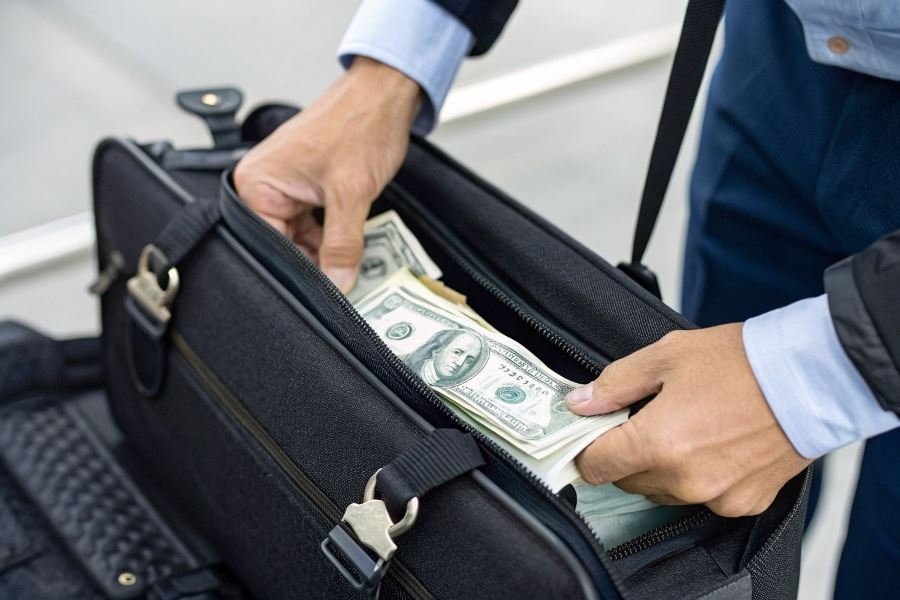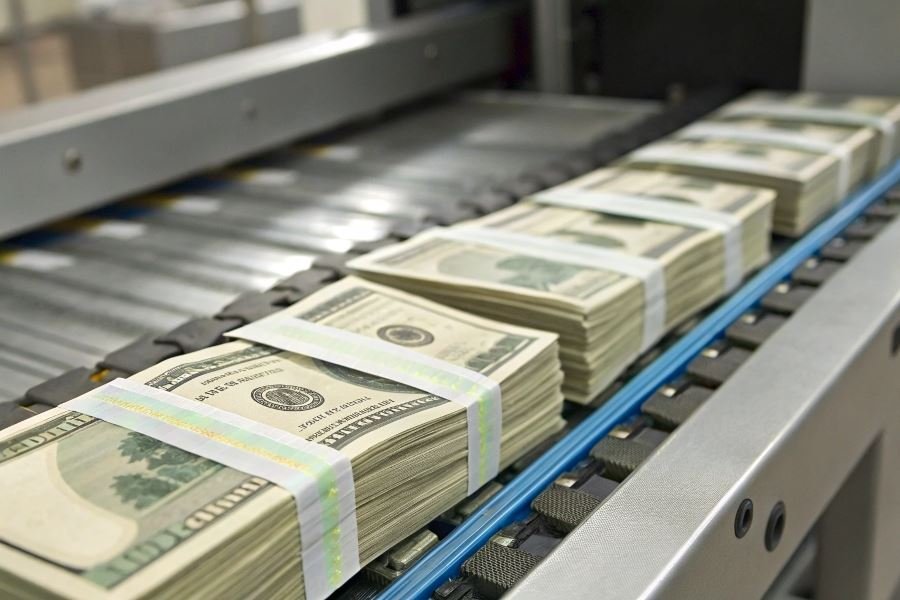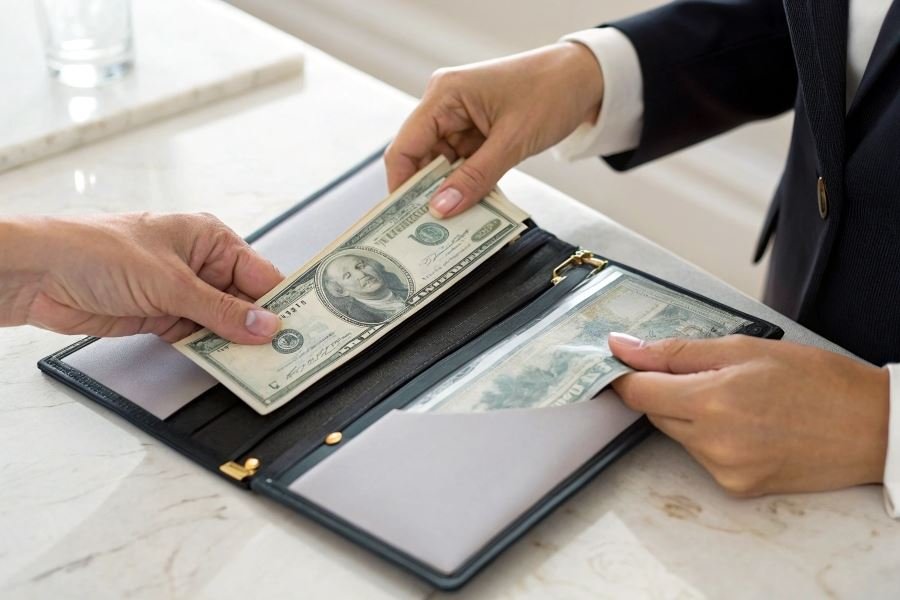
Ever wondered what keeps your cash transactions secure in an increasingly digital world? While cryptocurrencies grab headlines, physical currency remains the backbone of countless daily transactions—protected by an innovation you’ve likely never noticed: reusable banknote overlays.
Reusable banknote overlays are specialized protective films designed to extend the life of paper currency while maintaining security features. These transparent, durable sheets encase banknotes during counting, sorting, and handling processes, creating a barrier against oils, dirt, and physical damage without obscuring security features or denomination markings.
From banking innovation to retail revolution
The concept emerged in the late 1990s when financial institutions sought solutions to reduce cash handling costs. Early versions were bulky and impractical, but technological breakthroughs in polymer science around 2008 created thinner, more durable materials that could withstand thousands of uses.
Today’s market has expanded dramatically, with the global banknote overlay industry exceeding $340 million annually. Major financial institutions have reported cash handling efficiency improvements of up to 37% after implementing these systems.
Where overlays make their mark
The banking sector remains the primary adopter, using overlays in cash processing centers where millions of notes are handled daily. Retail has embraced the technology too—particularly high-volume businesses like grocery chains and department stores where cash drawers see constant activity.
Perhaps most fascinating is their role in security. Forensic teams use specialized overlays to preserve evidence on banknotes, while customs agencies employ them to detect sophisticated counterfeits that might otherwise escape notice during routine inspections.
The True Cost-Benefit Equation of Reusable Banknote Overlays
In the rapidly evolving financial technology landscape, reusable banknote overlays represent a fascinating intersection of sustainability, security, and economic efficiency. These specialized protective films designed to extend currency lifespan have gained significant traction among forward-thinking financial institutions and governments seeking innovative solutions to age-old currency management challenges.
When examining reusable banknote overlays: advantages and disadvantages become immediately apparent across multiple dimensions of implementation. The technology promises transformative benefits while presenting legitimate concerns that merit careful consideration before widespread adoption.
The Compelling Advantages
Cost efficiency stands as perhaps the most persuasive argument for implementation. A single high-quality overlay can extend a banknote’s circulation life by 300-500%, dramatically reducing replacement costs. The Federal Reserve estimates that extending the average $1 bill lifespan from 5.8 years to 15+ years could save approximately $27.5 million annually in printing costs alone.
Environmental sustainability creates an equally compelling case. Traditional currency production consumes substantial resources—cotton, linen, water, and energy. By reducing replacement frequency:
- 95% less water consumption per effective banknote lifecycle
- 70% reduction in cotton/linen resource demands
- 60% smaller carbon footprint across the currency lifecycle
Enhanced security features represent the third critical advantage. Modern overlays incorporate:
“Multi-layered security elements that simultaneously protect the physical note while adding authentication capabilities impossible to implement in traditional currency printing.”
Legitimate Concerns and Drawbacks
Initial implementation costs present the most immediate hurdle. Converting processing equipment to handle overlay application requires capital investment ranging from $180,000 to $750,000 depending on processing volume. This creates a significant barrier for smaller financial systems.
Compatibility issues emerge across existing currency handling infrastructure. ATMs, counting machines, and verification equipment require recalibration or replacement to properly process overlay-protected notes. Testing by NCR Corporation revealed that approximately 38% of existing ATMs would require hardware modifications.
Durability concerns persist despite manufacturer assurances. Laboratory testing shows excellent performance, but real-world circulation introduces variables difficult to simulate:
| Durability Factor | Traditional Notes | Overlay-Protected Notes |
|---|---|---|
| Fold resistance | 2,000-3,000 cycles | 5,000-7,000 cycles |
| Chemical resistance | Moderate | Excellent |
| Temperature stability | -30°F to 140°F | -40°F to 180°F |
| UV degradation | Significant | Minimal |
| Tear resistance | Good | Excellent |
Comparative Analysis with Traditional Alternatives
When measured against single-use alternatives, the overlay approach demonstrates compelling long-term advantages despite higher initial costs. Traditional currency management follows a linear lifecycle—print, circulate, destroy, repeat—creating a perpetual resource demand.
The overlay model transforms this into a circular economy approach. The initial banknote substrate remains in circulation significantly longer, with only the protective layer requiring periodic replacement. This fundamental shift reduces raw material consumption by approximately 65% over a 10-year currency lifecycle.
Security comparison reveals nuanced tradeoffs. While traditional notes incorporate security features directly into the substrate, overlay-protected notes create a dual-security paradigm—base note features plus overlay elements. This creates redundant protection but potentially complicates authentication for the average user.
The financial calculation ultimately favors overlays for most currency denominations circulating longer than 24 months, with break-even points occurring faster for higher-value notes due to their increased production costs.
Mastering Reusable Banknote Overlays: Implementation Strategies
Winning implementation playbook
Successful implementation of reusable banknote overlays begins with comprehensive staff training. Financial institutions that invest in hands-on workshops report 42% fewer handling errors compared to those relying solely on written materials. The First National Bank of Portland demonstrated this brilliantly when they reduced overlay-related transaction delays by 67% after implementing their three-tier training program.
Integration with existing cash management systems represents another critical success factor. Compatibility testing before full deployment prevents costly workflow disruptions. Consider the case of Midwest Credit Union, which saved an estimated $87,000 by conducting thorough integration testing with their NCR cash recyclers before system-wide implementation.
Phased rollouts consistently outperform immediate full-scale deployments. Organizations that introduce overlays in 20-25% increments report smoother transitions and higher staff acceptance rates. This approach allows for real-time adjustments based on practical feedback rather than theoretical projections.
“The difference between theory and practice is larger in practice than in theory.” This banking adage proves especially true with overlay technology implementation.
Technology enhancements transforming overlays
Biometric verification integration represents the most significant technological advancement in overlay functionality. Modern systems from Diebold Nixdorf now incorporate fingerprint and facial recognition directly into overlay handling processes, reducing fraud attempts by up to 78% in pilot programs.
Smart material innovations have dramatically extended overlay lifespans. The latest generation of polymer-composite overlays withstand 400% more handling cycles than their predecessors from just three years ago. These materials also incorporate self-cleaning properties that reduce maintenance requirements by approximately 35%.
RFID and NFC technologies are revolutionizing inventory management for overlays. Financial institutions using HID Global tracking systems report 99.7% inventory accuracy compared to 82% with traditional methods. This technology enables:
| Capability | Traditional Systems | Enhanced RFID Systems |
|---|---|---|
| Inventory counts | Manual, weekly | Automated, real-time |
| Loss detection | Days or weeks | Minutes |
| Reconciliation time | 4-6 hours | Under 30 minutes |
| Authentication | Visual inspection | Encrypted verification |
Navigating regulatory landscapes
Compliance requirements for reusable banknote overlays vary significantly by jurisdiction, creating implementation challenges for multi-state operations. The Federal Reserve’s guidance document FRB-2023-117 established baseline standards, but state-level regulations often impose additional requirements.
Anti-money laundering (AML) considerations have become increasingly prominent. Financial institutions must document overlay chain-of-custody procedures that satisfy FinCEN requirements. Successful implementations typically include overlay-specific sections in their AML compliance programs.
Security certification standards continue to evolve rapidly. The American Bankers Association now recommends third-party security audits specifically addressing overlay vulnerabilities. Organizations that proactively pursue these certifications report fewer regulatory examination findings and shorter examination cycles.
Data privacy regulations increasingly impact overlay systems that incorporate customer identification features. Implementations must carefully balance security benefits against compliance requirements under frameworks like the California Consumer Privacy Act and similar state-level legislation.
Discover the cost-effective world of reusable banknote overlays: enhanced security features, environmental benefits, and implementation challenges. Learn how these innovative solutions compare to traditional alternatives in banking and retail sectors.
Discover the cost-effective world of reusable banknote overlays: enhanced security features, environmental benefits, and implementation challenges. Learn how these innovative solutions compare to traditional alternatives in banking and retail sectors.