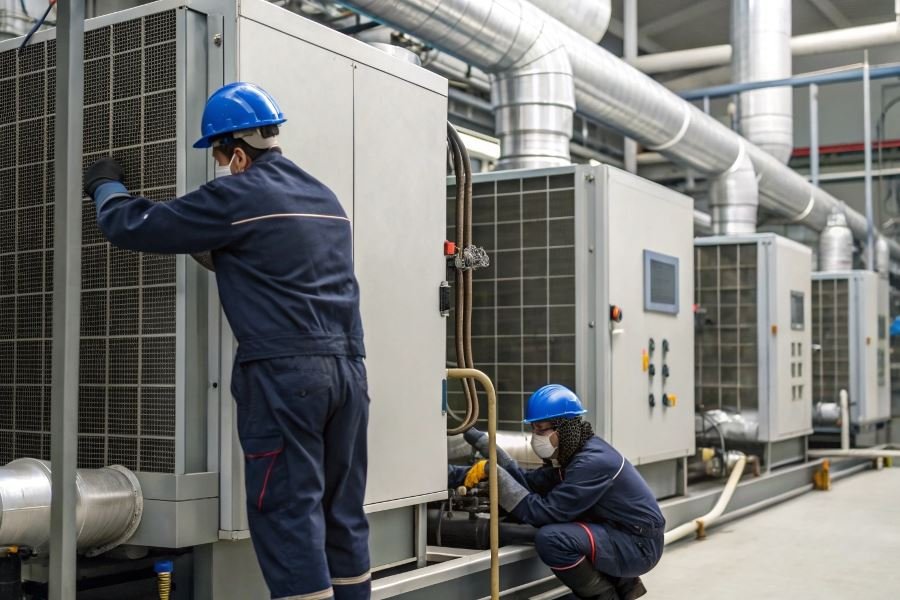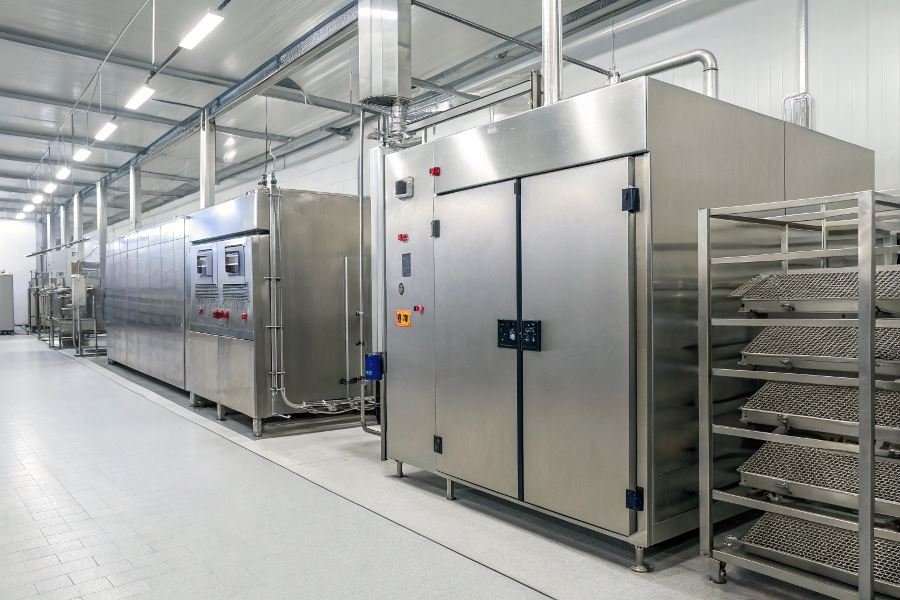
What’s the hidden factor that separates thriving food businesses from those that struggle? It’s not just recipes or marketing—it’s the cooling system working silently behind the scenes.
The selection of appropriate cooling equipment in food processing and storage represents perhaps the most critical infrastructure decision a food business will make. When a California cheese producer upgraded their cooling systems in 2022, they didn’t just reduce spoilage by 37%—they extended product shelf life by nearly two weeks, transforming their distribution capabilities and market reach.
The safety imperative
Food safety isn’t negotiable. Proper cooling systems prevent the growth of harmful microorganisms by maintaining temperatures in the critical “danger zone” (40°F-140°F) for minimal time. The FDA Food Safety Modernization Act established stringent requirements for temperature control, with violations potentially resulting in operations shutdown and six-figure penalties.
“Temperature control failures account for approximately 31% of food safety incidents that lead to recalls.” — Food Safety Magazine
Regulatory landscape navigation
The regulatory framework governing cooling equipment includes FDA requirements, USDA guidelines, and industry-specific standards like 3-A Sanitary Standards. Equipment must be constructed of food-grade materials, designed for thorough cleaning, and capable of maintaining consistent temperatures with appropriate documentation.
The efficiency equation
Beyond safety, properly selected cooling systems directly impact:
- Energy consumption: Right-sized systems can reduce energy costs by 15-25%
- Product quality: Consistent cooling preserves texture, flavor, and nutritional value
- Operational flow: Integrated cooling solutions minimize handling and maximize throughput
The selection criteria for cooling equipment must balance immediate capital expenditure against long-term operational benefits, with the most successful implementations treating cooling as a strategic investment rather than a necessary expense.
Technical Essentials for Food Industry Cooling Systems
When evaluating cooling systems for food processing operations, technical specifications become the foundation of a smart investment decision. The selection criteria for a cooler in the food industry must prioritize food safety, operational efficiency, and long-term value—factors that separate adequate cooling solutions from exceptional ones.
Temperature precision that preserves quality
Food safety regulations demand precise temperature control, but exceptional cooling systems deliver beyond minimum requirements. Commercial coolers should maintain temperatures within ±0.5°C of the setpoint—a standard that protects both product integrity and compliance status.
Temperature stability under stress becomes evident during peak production periods when doors open frequently or ambient temperatures fluctuate. Premium cooling systems incorporate rapid recovery technology, maintaining critical temperatures even when challenged by external factors.
The difference between 34°F and 38°F might seem minor, but represents the margin between optimal freshness and accelerated spoilage for many dairy products.
Temperature zoning capabilities allow processors to maintain different climate conditions within the same unit—particularly valuable for operations handling diverse product lines with varying temperature requirements.
| Product Type | Optimal Temperature Range | Humidity Requirements |
|---|---|---|
| Fresh Meat | 29°F to 32°F (-1.5°C to 0°C) | 85-90% RH |
| Dairy | 33°F to 38°F (0.5°C to 3.3°C) | 75-85% RH |
| Produce | 32°F to 41°F (0°C to 5°C) | 90-95% RH |
| Prepared Foods | 33°F to 38°F (0.5°C to 3.3°C) | 70-80% RH |
Sizing and capacity calculations that prevent costly mistakes
Undersized cooling systems struggle during peak demands, while oversized units waste energy and capital. Proper sizing requires calculating:
- Total heat load including product load, infiltration load, and equipment heat
- Peak production volume accounting for seasonal fluctuations
- Future expansion plans that might increase cooling demands
The cooling capacity should exceed calculated requirements by 15-20% to accommodate unexpected production increases or unusually warm ambient conditions. This buffer prevents system strain during critical operations.
The most expensive cooler isn’t the one with the highest price tag—it’s the one that fails during your busiest production day.
For operations with variable production schedules, modular cooling systems from manufacturers like Trane or Carrier offer scalable capacity that adjusts to current needs, preventing energy waste during lower-demand periods.
Energy efficiency that protects both planet and profit
Modern cooling systems from leaders like Danfoss incorporate variable speed compressors that adjust output based on actual cooling demands—reducing energy consumption by up to 40% compared to fixed-speed alternatives.
When evaluating energy efficiency, examine:
- Energy Efficiency Ratio (EER) – higher numbers indicate better efficiency
- Seasonal Energy Efficiency Ratio (SEER) – performance across varying conditions
- Annual operating costs – calculated based on local energy rates and usage patterns
Heat recovery systems capture waste heat from cooling processes, redirecting it to water heating or space heating applications. This integration can reduce facility energy costs by 15-30% while improving sustainability metrics.
The initial investment in premium efficiency components typically returns 2-3× value over the equipment lifecycle through reduced energy costs, making efficiency ratings a critical factor in total cost of ownership calculations.
Maximizing Your Cooling Investment in Food Production
Rigorous evaluation drives smarter decisions
When evaluating industrial coolers against your established criteria, documentation becomes your most powerful ally. Create a comprehensive evaluation matrix that weighs each criterion according to your specific production needs. The most successful food manufacturers typically assign weighted values (1-10) to each requirement, with critical factors like temperature precision receiving higher weights than secondary considerations.
Cross-reference performance claims with third-party verification whenever possible. The National Sanitation Foundation certification, for example, provides independent validation of food safety compliance that transcends manufacturer marketing. Similarly, energy efficiency claims should be verified through ENERGY STAR ratings or comparable industry benchmarks.
“The difference between a good cooler and a great cooler isn’t just in the specs—it’s in how those specs translate to your specific production environment.”
Consider implementing a trial period with potential suppliers. Many premium manufacturers like Traulsen and True Manufacturing offer demonstration units that allow you to test performance under your actual production conditions before committing to a full-scale implementation.
Beyond purchase price to total ownership cost
The sticker price of industrial cooling equipment typically represents just 20-30% of its lifetime cost. Maintenance requirements vary dramatically between models and can significantly impact your bottom line over time.
Preventative maintenance schedules should be factored into your TCO calculations. High-efficiency models from manufacturers like Hussmann may command premium prices but often require less frequent service intervals, translating to lower downtime costs and extended operational lifespans.
Consider these long-term cost factors:
| Cost Component | Percentage of TCO | Notes |
|---|---|---|
| Initial Purchase | 20-30% | Includes installation and commissioning |
| Energy Consumption | 35-50% | Often the largest lifetime expense |
| Maintenance | 15-25% | Includes parts and labor |
| Downtime | 5-15% | Production losses during repairs |
| Disposal/Replacement | 5-10% | End-of-life considerations |
Parts availability becomes crucial as equipment ages. Manufacturers like Copeland maintain parts inventories for decades, while lesser-known brands may discontinue support after just 5-7 years, potentially forcing premature replacement.
Future-proofing for tomorrow’s requirements
The food industry cooling landscape continues to evolve rapidly, driven by regulatory changes and technological advancements. Investing in modular systems allows for component upgrades without wholesale replacement when requirements change.
Refrigerant evolution represents one of the most significant future considerations. Systems compatible with natural refrigerants like CO2 or ammonia provide insulation against potential regulatory phase-outs of synthetic options. The International Institute of Refrigeration projects that natural refrigerants will become the industry standard within the next decade.
Digital monitoring capabilities deliver substantial long-term value. Modern systems from Danfoss and Emerson offer predictive maintenance algorithms that can reduce unexpected failures by up to 70% while optimizing energy consumption through real-time adjustments.
The most future-proof cooling investments incorporate scalability by design. Systems that can adapt to changing production volumes without complete replacement provide significant competitive advantages as market demands fluctuate.
Discover essential criteria for selecting food industry coolers that ensure product safety, regulatory compliance, and operational efficiency. Learn temperature requirements, capacity considerations, and energy efficiency factors for optimal cooling system investment.
Discover essential criteria for selecting food industry coolers that ensure product safety, regulatory compliance, and operational efficiency. Learn temperature requirements, capacity considerations, and energy efficiency factors for optimal cooling system investment.