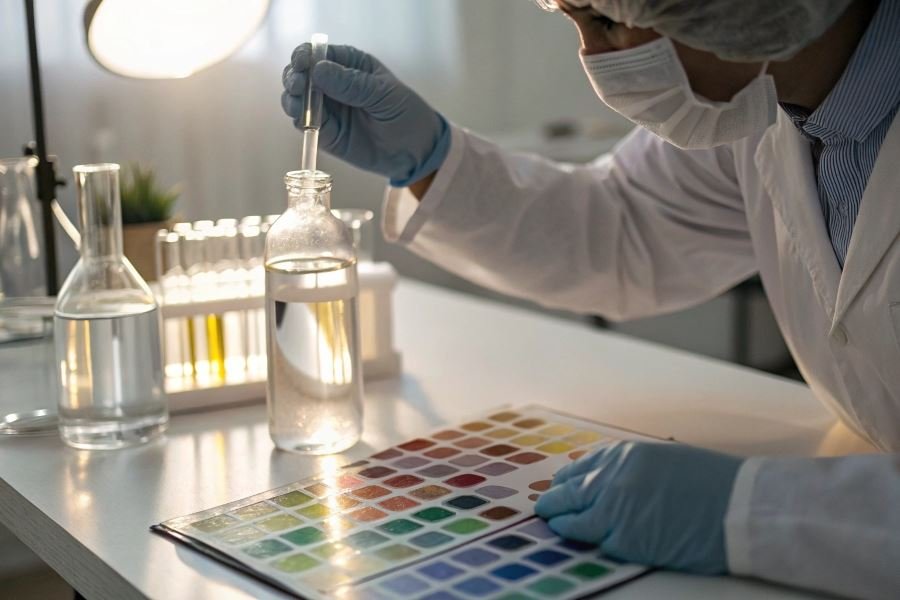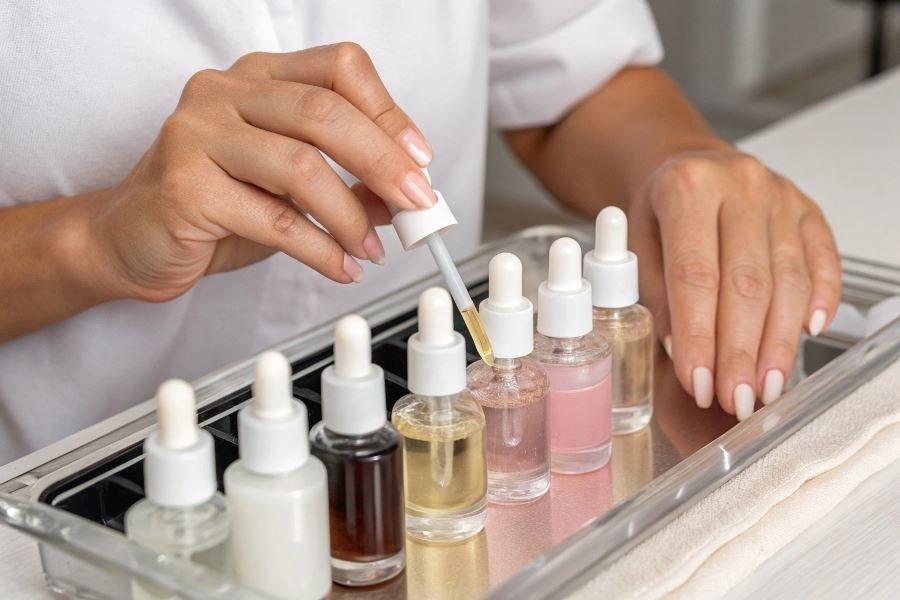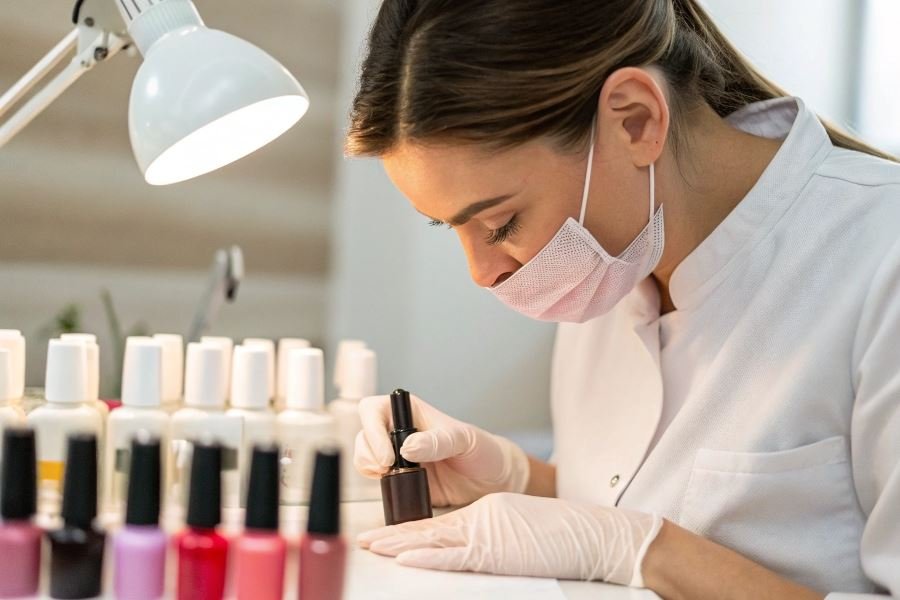
Ever wondered why some acrylic nails look flawless while others crack within days? The secret often lies not in the technique, but in what you can’t see: the quality of the monomer.
When building the perfect acrylic enhancement, your monomer isn’t just another liquid in your kit—it’s the architectural foundation of your entire creation. This clear liquid component works in chemical partnership with the acrylic powder (polymer) to create that durable, glass-like finish that clients expect from professional applications.
The chemistry at your fingertips
Monomer (typically methyl methacrylate or ethyl methacrylate) serves as the catalyst that activates the polymer powder. When these components meet, they trigger a polymerization process—essentially a chemical reaction that transforms from wet mixture to solid enhancement. The quality of this reaction directly impacts everything from application smoothness to final durability.
Why quality cannot be compromised
The difference between premium and substandard monomers becomes evident in:
- Working time: Higher-quality formulations provide optimal setting times that allow proper manipulation
- Odor intensity: Superior products feature reduced odor technology without sacrificing performance
- Yellowing resistance: Premium monomers maintain clarity over time, preventing that telltale aging appearance
- Adhesion properties: Quality directly affects how well the enhancement bonds to the natural nail
Evaluating monomer excellence
Professional nail technicians assess monomers based on several critical factors:
- Viscosity (thickness/flow properties)
- Curing time consistency
- MMA-free formulation (for safety)
- Clarity and color stability
- Compatibility with preferred powder systems
The investment in superior monomer pays dividends in client satisfaction, reduced service corrections, and ultimately, your reputation as a nail professional.
The Science Behind Perfect Acrylics: Quality Criteria for Monomers
When your acrylic projects demand excellence, the monomer you select becomes the foundation of your success. Professional nail technicians and artists understand that superior results begin with superior materials. The difference between amateur and professional-grade work often comes down to how carefully you select your monomer components.
Choosing the right monomer for acrylic applications requires understanding several critical quality factors. How to choose a monomer for acrylic: main quality criteria involves evaluating purity levels, viscosity, odor, curing properties, and long-term stability. These elements collectively determine whether your finished product will shine with professional brilliance or fall short of expectations.
Purity and Chemical Composition
The purity of your monomer directly impacts the final product’s integrity. Professional-grade monomers typically offer:
- 99.9% purity levels for methyl methacrylate (MMA) or ethyl methacrylate (EMA)
- Minimal stabilizers while maintaining shelf stability
- Absence of contaminants that could trigger yellowing or brittleness
Premium monomers from manufacturers like CND and OPI maintain strict quality control standards, ensuring consistent chemical composition batch after batch.
Viscosity and Flow Behavior
The perfect monomer flows with purpose—neither too runny nor too thick.
| Viscosity Level | Characteristics | Best For |
|---|---|---|
| Low (thin) | Fast spreading, difficult control | Speed applications |
| Medium | Balanced flow, moderate control | General purpose work |
| High (thick) | Slower flow, excellent control | Detailed art, sculptures |
Your application technique should match your monomer’s viscosity. Medium viscosity offers the most versatility for beginners while professionals often prefer customizing viscosity to specific projects.
Odor Profile and Safety Considerations
The infamous acrylic smell varies dramatically between products:
- Low-odor formulations utilize advanced stabilizers and purer ingredients
- Ventilation requirements decrease with higher-quality monomers
- Toxicity profiles improve with EMA-based products versus MMA
Modern premium monomers from Kiara Sky and Mia Secret have revolutionized the workspace environment with significantly reduced odor profiles without sacrificing performance.
Polymerization and Curing Properties
The perfect cure creates the perfect nail. Quality monomers offer:
- Predictable setting times between 1-3 minutes
- Even polymerization from surface to core
- Minimal heat spikes during the exothermic reaction
The relationship between your monomer and polymer powder determines curing behavior. Premium combinations cure consistently regardless of environmental factors like humidity and temperature.
Long-term Stability and Yellowing Resistance
The true test of monomer quality reveals itself weeks after application:
- UV stabilizers prevent yellowing from sun exposure
- Plasticizers maintain flexibility preventing cracks
- Anti-oxidants protect against environmental degradation
Products from Young Nails and Tammy Taylor incorporate advanced stabilization technology that maintains clarity and strength for weeks longer than budget alternatives.
The investment in premium monomer pays dividends in client satisfaction, reduced rework, and enhanced reputation. When professionals evaluate how their work will look not just today but weeks later, monomer quality becomes non-negotiable.
Making the Right Choice: Monomer Selection for Acrylic Success
When it comes to acrylic applications, the monomer you choose can make or break your project. The perfect selection balances technical requirements with practical considerations—a delicate equilibrium that demands attention to detail.
Quality and budget in perfect harmony
Finding the sweet spot between premium quality and reasonable cost represents the eternal challenge for professionals and enthusiasts alike. High-grade monomers from established manufacturers like Mia Secret or Kiara Sky typically command higher prices, but deliver consistent performance and reliable results.
The true cost of monomer isn’t just the price tag—it’s measured in the time saved from redoing failed applications and the reputation preserved by delivering excellent results.
Budget-conscious buyers should consider mid-tier options that maintain essential quality markers while trimming premium features. For instance:
| Price Point | Expected Features | Best For |
|---|---|---|
| Premium ($35-60) | Low odor, UV stabilizers, flexibility enhancers | Client services, professional portfolios |
| Mid-range ($20-35) | Balanced curing time, moderate odor | Regular practitioners, small businesses |
| Economy ($10-20) | Basic formulation, faster evaporation | Learning, practice pieces, temporary applications |
Remember that economy options often contain higher percentages of methyl methacrylate (MMA), which can cause sensitivity issues and poorer adhesion. The investment in a quality ethyl methacrylate (EMA) formulation typically pays dividends in durability and client satisfaction.
Test before you invest
Before committing to a large quantity of any monomer, implement these practical testing methods:
-
The consistency test: Place a small drop on a glass surface. Quality monomers maintain their shape without excessive spreading.
-
The curing test: Mix with polymer and time the setting process. Premium products offer a predictable working window—typically 1-3 minutes before initial setting begins.
-
The yellowing test: Apply a thin layer of cured acrylic to a clear surface and expose half to direct sunlight for 48 hours. Compare the exposed and unexposed sections for discoloration.
-
The odor assessment: Work with the product in your typical environment. Excessive chemical smell often indicates higher volatile organic compound (VOC) content.
Small sample sizes or trial kits from manufacturers like Young Nails provide an economical way to conduct these tests before making a larger investment.
Professional standards versus DIY realities
Professional applications demand uncompromising quality, while DIY projects allow more flexibility in selection criteria.
For professionals working with clients, prioritize:
- Consistency between batches
- Predictable curing behavior
- Hypoallergenic formulations
- Long-term color stability
DIY enthusiasts can adjust expectations by:
- Accepting slightly faster evaporation rates
- Working in smaller sections to compensate for less predictable setting times
- Using additional ventilation for products with stronger odors
- Focusing on application technique to overcome minor product limitations
The professional-grade distinction isn’t just marketing—it reflects real differences in formulation stability, ingredient purity, and manufacturing consistency. However, dedicated hobbyists can achieve remarkable results with mid-tier products by mastering application techniques and understanding the limitations of their materials.
The perfect monomer choice ultimately depends on your specific application requirements, working environment, and client expectations. By balancing these quality criteria thoughtfully, you’ll find the product that delivers the perfect combination of performance and value for your unique needs.
Discover the 5 essential criteria for selecting premium acrylic monomer: purity, viscosity, odor, curing properties, and yellowing resistance. Learn how to evaluate quality for professional-grade results in your nail applications.
Discover the 5 essential criteria for selecting premium acrylic monomer: purity, viscosity, odor, curing properties, and yellowing resistance. Learn how to evaluate quality for professional-grade results in your nail applications.