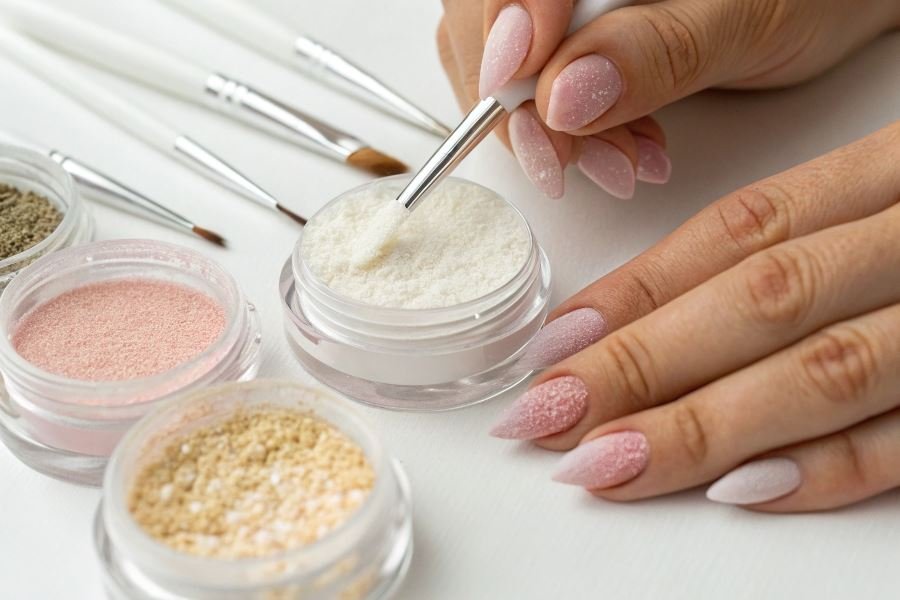
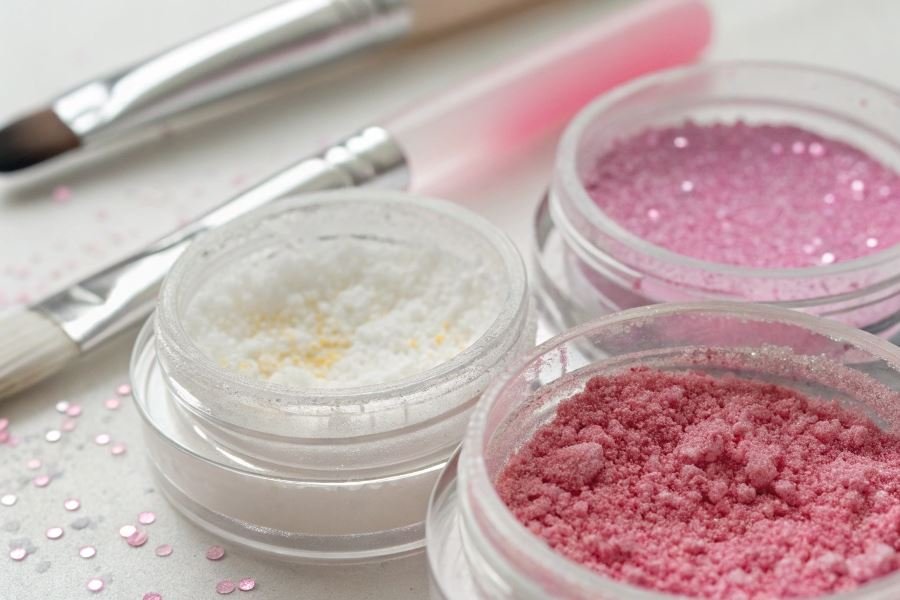
Ever wondered why some acrylic nails look salon-perfect while others chip and yellow within days? The secret lies not in technique alone, but in the quality of materials—particularly the acrylic powder that forms the structural backbone of the enhancement.
Behind every stunning acrylic set is a carefully selected powder that balances durability with aesthetic appeal. Professional nail technicians understand this critical relationship, often spending years perfecting their product selection process. Now that more enthusiasts are mastering acrylic application at home, knowing how to choose the right powder has become essential knowledge rather than industry secrets.
Acrylic nail systems work through a remarkably elegant chemical reaction. When powder (polymer) meets liquid monomer, they create a plastic-like substance that hardens as it dries, forming a durable overlay that protects and extends the natural nail. The quality of this reaction—and ultimately the longevity of your manicure—depends significantly on the powder’s composition.
The powder’s pivotal role
The acrylic powder isn’t just a building material; it’s the foundation that determines:
- Strength and flexibility of the finished enhancement
- Clarity and color stability over weeks of wear
- How easily the product can be shaped and buffed
- The risk of allergic reactions or sensitivities
When evaluating acrylic powders, professionals look beyond marketing claims to assess particle size, polymerization quality, and pigment stability. These factors directly impact application ease, durability, and the overall aesthetic result that clients expect.
In the following sections, we’ll explore the specific criteria that separate premium acrylic powders from substandard options, helping you make informed decisions for your professional kit or personal collection.
The Science Behind Perfect Acrylic Nails
When selecting professional-grade acrylic powder, understanding the technical specifications separates salon-quality results from amateur attempts. The molecular structure, working properties, and long-term performance characteristics of acrylic powders create the foundation for stunning nail enhancements that truly last.
Navigating the complex world of nail enhancement products requires knowledge of how to choose acrylic powder for nails: main criteria that professionals rely on. The difference between mediocre and exceptional results often comes down to understanding the chemistry behind these specialized polymers and how they interact with your application techniques.
Polymer Composition and Particle Size
The molecular architecture of acrylic powder directly impacts application quality and durability. Premium formulations contain:
- Poly-methyl methacrylate (PMMA) as the primary polymer
- Cross-linking agents for structural integrity
- Benzoyl peroxide as the catalyst for polymerization
Particle size distribution creates dramatic differences in performance. Finer particles (15-35 microns) produce smoother applications but may set faster, while coarser particles (40-60 microns) offer extended working time but require more buffing.
The particle consistency determines how evenly your acrylic will cure and how much filing you’ll need to achieve a glass-like finish.
Professional-grade powders maintain strict quality control over particle uniformity, preventing the dreaded “clumping” that plagues lower-quality products.
Working Time and Application Window
The ideal setting time balances workability with efficiency:
| Setting Speed | Working Time | Best For |
|---|---|---|
| Fast-set | 30-45 seconds | Experienced technicians, detailed work |
| Medium-set | 60-90 seconds | General application, most nail beds |
| Slow-set | 120+ seconds | Learning, complex designs, humid environments |
Temperature and humidity significantly affect polymerization rates. Quality formulations include stabilizers that maintain consistent setting times across varying environmental conditions.
Adhesion Properties and Nail Compatibility
Superior acrylic powders create molecular bonds rather than merely mechanical adhesion. This distinction becomes evident when examining:
- Primer compatibility – How the acrylic interacts with acid-free and acid-based primers
- Porosity control – Balanced to prevent lifting while allowing natural nail respiration
- Flexibility coefficient – Must match natural nail flexibility to prevent stress fractures
Natural nail condition dramatically influences which formulation will perform best. Oily nail beds require products with enhanced adhesion properties, while dry, brittle nails benefit from more flexible formulations.
Color Stability and Anti-Yellowing Technology
The hallmark of premium acrylic powder is its resistance to environmental discoloration. This comes from:
- UV inhibitors that prevent polymer chain degradation
- Optical brighteners that maintain clarity and brilliance
- Anti-oxidant compounds that neutralize yellowing agents
The most advanced formulations incorporate titanium dioxide nanoparticles that reflect rather than absorb UV radiation, dramatically extending the color stability from weeks to months.
Testing for yellowing resistance involves accelerated aging under concentrated UV exposure—quality products show minimal color shift even after the equivalent of 3-4 months of normal wear.
When evaluating acrylic powders, these technical specifications provide the framework for selecting products that deliver consistent, professional results that truly satisfy clients’ expectations.
The Professional’s Guide to Acrylic Powder Selection
When you move beyond basic application and into the realm of professional nail artistry, your acrylic powder selection becomes a critical business decision. The difference between mediocre and magnificent nail enhancements often lies in the quality of materials used. Let’s dive into the three considerations that separate casual practitioners from true nail professionals.
Brand reputation matters more than you think
The acrylic powder market is flooded with options, but not all are created equal. Professional nail technicians consistently gravitate toward brands with established reputations and proper certification.
Industry leaders like OPI, CND, and Kiara Sky have earned their status through rigorous testing and consistent performance. These companies invest heavily in research and development, ensuring their products meet or exceed industry standards.
The most telling indicator of a quality acrylic powder isn’t its marketing—it’s its certification standards and the community of professionals who swear by it.
Look for products that comply with regulations from organizations like the Cosmetic Ingredient Review (CIR) and FDA approval for ingredients. This isn’t just about legality—it’s about client safety and your professional reputation.
Value assessment beyond the price tag
Professional-grade acrylic powders typically command higher prices, but evaluating true value requires looking beyond the dollar sign. Consider these factors when assessing price-to-performance ratio:
| Factor | What to Look For |
|---|---|
| Coverage | How many applications per container |
| Setting time | Consistency across temperature/humidity conditions |
| Durability | Average wear time before lifting or breaking |
| Pigmentation | Color stability and true-to-jar application |
A $45 jar that delivers 50 flawless sets is ultimately more economical than a $25 option requiring frequent corrections or resulting in premature lifting. The most expensive powder isn’t always the best, but the cheapest rarely is.
Application efficiency also factors into value—premium powders typically offer better workability, reducing application time and allowing you to serve more clients.
Specialized formulations for specific techniques
The most discerning professionals maintain a diverse arsenal of acrylic powders, each selected for particular applications:
- Competition white powders feature enhanced opacity and sculpting properties for perfect smile lines and competition-worthy French manicures
- Clear builders with varying viscosities for creating depth in encapsulated designs
- Colored acrylics with specialized pigments for artwork and one-step application
Advanced techniques demand specialized formulations. For instance, 3D nail art requires powders with exceptional structural integrity and slower setting times, while reverse application techniques benefit from powders with enhanced adhesion properties.
Temperature-adaptive formulations represent the cutting edge of professional acrylic systems. These innovative powders adjust their setting behavior based on environmental conditions, maintaining consistent working times whether you’re in humid Miami or dry Denver.
The truly professional approach isn’t finding one perfect powder—it’s building a collection of specialized formulations that gives you versatility across all client needs and design possibilities.
Discover the 7 essential criteria for selecting premium acrylic powder for flawless nail enhancements. Learn about polymer composition, setting time, adhesion properties, and professional considerations to achieve salon-quality results at home or in your business.
Discover the 7 essential criteria for selecting premium acrylic powder for flawless nail enhancements. Learn about polymer composition, setting time, adhesion properties, and professional considerations to achieve salon-quality results at home or in your business.