What if the instrument measuring your most critical process was silently failing right now? For industries where precision isn’t just preferred but essential, this question isn’t theoretical—it’s a daily concern that keeps engineers awake at night.
Flowmeters serve as the vigilant sentinels of industrial processes, continuously monitoring the movement of liquids and gases with remarkable precision. When these instruments falter, the consequences ripple throughout entire production systems. Recognizing the signs of flowmeter malfunction and implementing regular verification protocols isn’t just good practice—it’s a fundamental safeguard against costly disruptions and quality compromises.
The backbone of industrial measurement
Flowmeters form the critical backbone of measurement systems across industries from pharmaceutical manufacturing to oil refinement. A properly functioning flowmeter doesn’t just measure—it validates product integrity, ensures regulatory compliance, and maintains operational efficiency. When accuracy drifts by even 1-2%, the financial impact can be staggering—sometimes reaching millions of dollars annually for large operations.
When flowmeters fail: The domino effect
The cascading consequences of flowmeter malfunction extend far beyond simple measurement errors:
- Production quality deviations that can render entire batches unusable
- Energy waste from improperly controlled processes
- Safety risks when critical flows aren’t accurately monitored
- Compliance violations that can trigger regulatory penalties
Failure signatures across flowmeter types
Different flowmeter technologies exhibit unique failure patterns:
| Flowmeter Type | Common Failure Modes | Early Warning Signs |
|---|---|---|
| Magnetic | Electrode coating, circuit failure | Erratic readings, signal noise |
| Ultrasonic | Transducer degradation, acoustic interference | Signal strength reduction, inconsistent measurements |
| Coriolis | Tube corrosion, vibration issues | Zero shift, density reading fluctuations |
| Vortex | Sensor fouling, bluff body damage | Irregular pulse patterns, decreased sensitivity |
Spotting Flowmeter Failures: The Definitive Diagnostic Guide
When your flowmeter starts acting up, it’s rarely subtle. These precision instruments communicate their distress through a variety of telltale signals that demand immediate attention. Experienced operators develop an almost intuitive sense for detecting these anomalies before they escalate into costly system failures.
The ability to recognize signs of flowmeter malfunction and methods for checking its operability separates reactive maintenance from proactive system management. This distinction can mean the difference between a minor adjustment and a complete production shutdown costing thousands of dollars per hour in lost productivity.
Visual Red Flags That Demand Attention
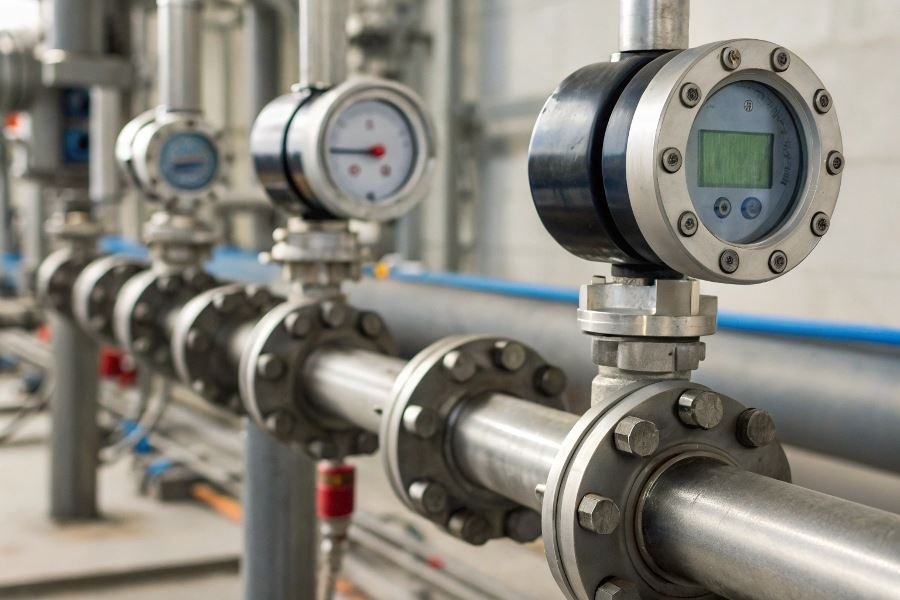
The most immediate indicators of flowmeter problems are often visible to the naked eye. Digital displays showing erratic numbers, error codes, or complete blank-outs signal electronic or power supply issues. Physical inspection might reveal hairline cracks in housings, particularly at connection points where vibration stress concentrates.
Leakage represents perhaps the most serious visual indicator. Even minor seepage around gaskets or flanges suggests seal degradation that can rapidly worsen under pressure. For electromagnetic flowmeters from Endress+Hauser, look for corrosion around electrode connections—a common failure point in harsh chemical environments.
Pro tip: Document all visual anomalies with dated photographs. This creates a valuable timeline of deterioration that helps pinpoint when problems began.
Performance Patterns That Signal Trouble
Beyond what you can see, flowmeters communicate problems through their performance characteristics:
- Reading inconsistency: Fluctuations exceeding manufacturer-specified stability ranges (typically ±0.5% for premium models)
- Calibration drift: Gradual deviation from known reference values during verification tests
- Unexpected alarms: System warnings that trigger without apparent cause
- Response lag: Delayed reaction to genuine flow changes
These symptoms often manifest in patterns. For instance, Siemens ultrasonic flowmeters typically show reading instability before complete failure, while thermal mass flowmeters from Sierra Instruments more commonly exhibit gradual drift.
The most insidious performance issue is intermittent failure—problems that appear briefly then seemingly resolve themselves. These require systematic documentation and analysis to diagnose effectively.
Systematic Diagnostic Approaches
When troubleshooting flowmeter issues, methodical assessment trumps guesswork every time:
| Diagnostic Method | Best For | Required Equipment |
|---|---|---|
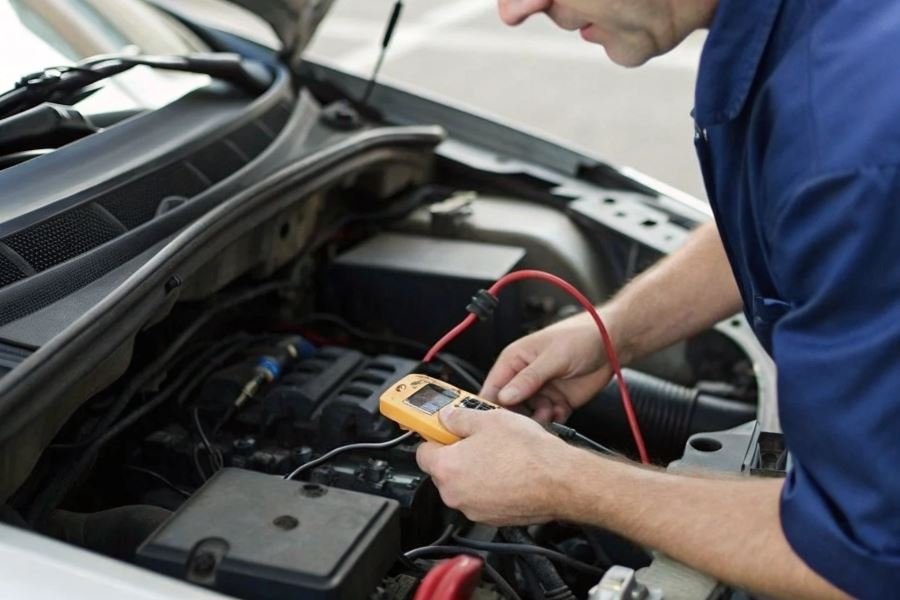
| Loop testing | Signal integrity verification | Multimeter, loop calibrator |
| Zero verification | Baseline calibration check | Isolation valves, manufacturer software |
| Simulation signals | Electronics validation | Signal generator, manufacturer interface |
| Comparative measurement | Accuracy verification | Secondary reference meter |
Start with the manufacturer’s diagnostic procedures—they’re designed specifically for your equipment. Yokogawa and Emerson both provide excellent troubleshooting flowcharts that walk through common failure modes for their respective product lines.
For Coriolis meters, vibration analysis often reveals issues before they affect measurement accuracy. Magnetic flowmeters benefit from impedance testing to check coating buildup on electrodes—a common cause of drift that’s easily remedied once identified.
Remember: Documentation is your strongest ally. Record all test results, including date, time, ambient conditions, and specific measurements. This creates a diagnostic trail that can reveal patterns invisible in isolated observations.
Mastering Flowmeter Health: Verification, Maintenance, and Smart Replacement Decisions
Verification Procedures That Actually Work
Flowmeter verification isn’t just a checkbox—it’s your first line of defense against costly process failures. Different technologies demand different approaches, and knowing the right procedure can save thousands in downtime.
For electromagnetic flowmeters, verification starts with a zero-point check. Isolate the meter, ensure the pipe is full, and confirm a zero reading. Then perform a simulation test using the manufacturer’s verification tool—devices like the Endress+Hauser Heartbeat Technology can verify performance without process interruption, documenting results automatically.
Ultrasonic flowmeters require acoustic path verification. Start by checking transducer waveforms using oscilloscope functionality (built into many modern units). Next, verify signal strength—it should be at least 25% of the manufacturer’s recommended minimum. Finally, conduct a “speed of sound” test to confirm the fluid properties match expected values.
Coriolis meters demand a different approach:
- Zero verification (with no flow)
- Drive gain assessment (should be stable and within range)
- Tube frequency measurement (deviations indicate coating or corrosion)
- Phase difference check (confirms sensor alignment)
The most overlooked verification step? Comparing flowmeter readings against a known reference or master meter. This reveals issues no self-diagnostic can catch.
Preventative Maintenance That Pays Dividends
Maintenance isn’t an expense—it’s an investment that delivers reliability. Structured maintenance schedules prevent the cascade of problems that begin with minor issues.
| Flowmeter Type | Inspection Frequency | Key Maintenance Tasks |
|---|---|---|
| Electromagnetic | Quarterly | Electrode cleaning, ground verification |
| Ultrasonic | Bi-annually | Transducer inspection, signal path clearing |
| Coriolis | Annually | Tube inspection, zero calibration |
| Vortex | Quarterly | Sensor check, bluff body inspection |
Documentation requirements extend beyond simple checklists. Modern maintenance demands:
- Baseline performance metrics established during commissioning
- Trend analysis of key parameters (zero drift, signal strength)
- Verification certificates with traceability to standards
- Deviation logs with corrective actions taken
Smart maintenance teams don’t just record data—they analyze patterns to predict failures before they happen.
The Replace or Repair Decision Framework
When a flowmeter falters, the repair-versus-replace question becomes a financial calculation with multiple variables. The decision framework should consider:
Repair justification factors:
- Remaining useful life exceeds 5 years
- Replacement costs exceed repair by 60%+
- Downtime for replacement significantly impacts production
- Current model still supported by manufacturer
Replacement indicators:
- Recurring issues despite repairs
- Parts availability becoming limited
- New technology offers substantial efficiency gains
- Total cost of ownership analysis favors replacement
The cost-benefit analysis must include hidden factors like calibration requirements, energy consumption, and maintenance labor hours—not just the immediate repair bill.
The smartest operations teams track mean time between failures (MTBF) for each meter type and use this data to optimize replacement timing, often replacing critical meters preventatively before failure occurs.
By implementing these verification procedures, maintenance practices, and decision frameworks, you’ll transform flowmeter management from reactive firefighting to strategic asset optimization.
Discover the 7 critical signs of flowmeter failure and learn effective diagnostic methods to prevent costly downtime. Our comprehensive guide covers visual indicators, performance issues, and maintenance best practices for all flowmeter types.
Discover the 7 critical signs of flowmeter failure and learn effective diagnostic methods to prevent costly downtime. Our comprehensive guide covers visual indicators, performance issues, and maintenance best practices for all flowmeter types.