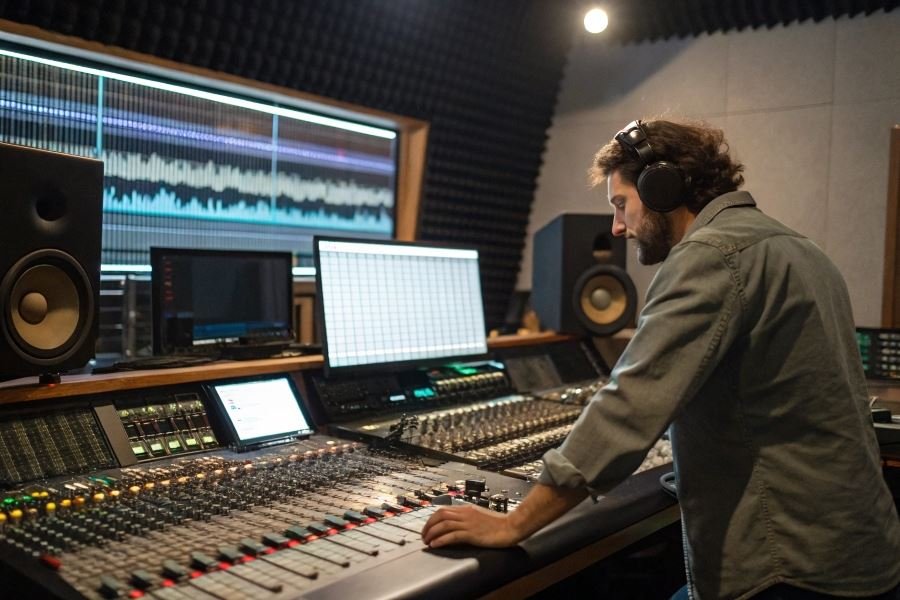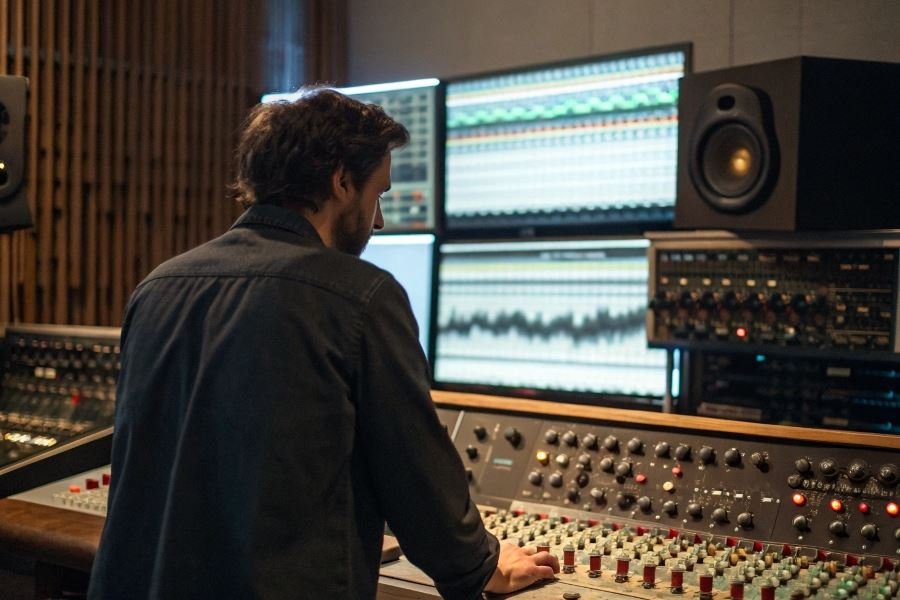
Ever wondered why some recordings sound crystal clear while others fall flat? The secret often lies in one powerful tool: the equalizer. This unsung hero shapes the sonic landscape of every track you hear, yet many beginners find themselves at a crossroads when choosing between analog and digital options.
The equalizer serves as the sound engineer’s scalpel, precisely carving frequency responses to enhance vocals, tame harsh instruments, or add warmth to lifeless recordings. Whether you’re mixing your first podcast or producing a debut EP, understanding equalization fundamentals transforms good audio into great audio.
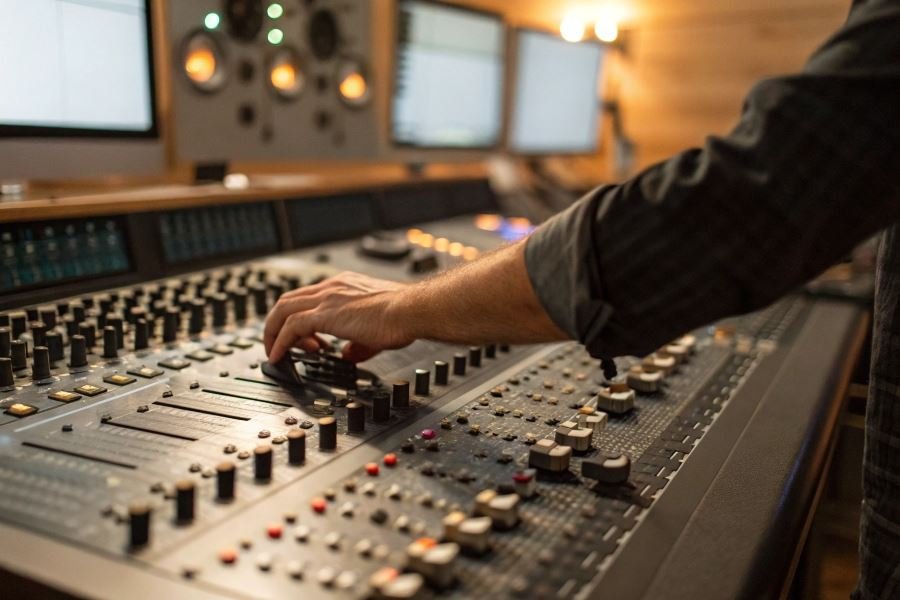
Analog equalizers deliver their magic through physical circuits and components, creating a distinctive warmth and character that many professionals swear by. Their tactile knobs and switches provide immediate feedback, making them intuitive for hands-on learners. Digital equalizers, meanwhile, offer surgical precision with visual feedback, presets, and automation capabilities that analog simply can’t match.
For beginners stepping into sound engineering, the choice between analog and digital often comes down to three factors: learning curve, workflow preferences, and budget constraints. Digital options typically offer more forgiveness—allowing unlimited undos and visual representations of your adjustments—while analog demands commitment to each tweak but rewards with a distinctive sonic character that many describe as having “soul.”
Understanding your specific needs as a beginner will ultimately guide your decision more than any blanket recommendation could.
Analog vs Digital Equalizers: The Ultimate Showdown
When diving into the world of sound engineering, few tools are as fundamental as the equalizer. The debate between analog and digital equalizers continues to shape studio decisions worldwide, with passionate advocates on both sides. For those just beginning their audio journey, choosing between these two approaches can significantly impact both your sound and development as an engineer.
The question of analog vs digital equalizers: which is better for a beginner sound engineer isn’t simply about technology—it’s about workflow, sound character, learning approach, and budget considerations. Let’s break down these crucial differences to help you make an informed decision that aligns with your specific needs.
Sound Quality and Character: The Sonic Fingerprint
Analog equalizers impart a distinctive character to audio that many engineers describe as “warm,” “musical,” or “three-dimensional.” This isn’t just marketing jargon—it stems from the physical components inside:
- Transformers and capacitors introduce subtle harmonic distortion
- Circuit design limitations create unique compression characteristics
- Component tolerances add unpredictability that can sound pleasing
Digital equalizers, by contrast, offer clinical precision with:
- Perfect recall of settings across sessions
- Surgical precision for problem-solving specific frequencies
- Consistent, predictable results regardless of temperature or age
“Analog EQs don’t just process sound—they participate in it. Digital EQs observe and modify with mathematical precision.”
Workflow and Interface: Hands-on vs Screen-based
The physical experience differs dramatically between these approaches:
| Aspect | Analog EQ | Digital EQ |
|---|---|---|
| Controls | Physical knobs and switches | Mouse/touchscreen interaction |
| Visual feedback | Limited to knob position | Detailed frequency displays |
| Recall | Manual documentation required | Perfect preset recall |
| Parallel processing | Requires additional hardware | Simple to implement in software |
Beginners often find the tactile nature of analog gear creates a more intuitive connection to parameter changes. However, the visual feedback of digital Fabfilter Pro-Q 3 or iZotope Ozone provides educational insights into what you’re actually doing to the sound.
Cost Analysis: Investment vs Value
The financial equation is multifaceted:
Analog Investment:
- Higher initial cost ($800-3,000+ per channel)
- Maintenance expenses (recalibration, repairs)
- Space requirements (rack space, power, cooling)
- Potential resale value that often appreciates
Digital Investment:
- Lower entry point ($0-299 for quality plugins)
- Unlimited instances per purchase
- Regular updates adding features
- No maintenance costs
For beginners with limited budgets, digital options like Waves EQ plugins or even free alternatives like TDR Nova provide exceptional value while you develop your skills.
Learning Curve and Skill Development
The educational journey differs significantly between platforms:
Analog systems force beginners to:
- Trust their ears rather than rely on visual feedback
- Develop memory for frequency ranges
- Make deliberate decisions due to limited track count
Digital platforms offer:
- Visual learning aids showing frequency response
- A/B comparison capabilities
- Presets as educational starting points
- Unlimited experimentation without consequence
The skills developed on either platform ultimately transfer to the other, but many educators recommend starting digital to understand the fundamentals before investing in analog hardware that requires more refined listening skills to fully appreciate.
Whichever path you choose, remember that the best equalizer is the one that helps you achieve your creative vision with the least resistance—whether that’s through the inspiring physicality of analog or the boundless flexibility of digital.
Charting Your EQ Journey: The Beginner’s Decision Guide
Smart Starting Options for Every Scenario
The equalizer decision doesn’t need to be paralyzing. For beginners stepping into sound engineering, your initial choice should align with your specific situation and goals.
If you’re working primarily in a home studio with budget constraints, digital equalizers offer the most bang for your buck. The Fab Filter Pro-Q 3 provides exceptional visualization and precision for around $179, making frequency identification intuitive. For those on tighter budgets, TDR Nova delivers professional-grade dynamic EQ capabilities as a free option with paid upgrades.
For beginners working in live sound environments, consider starting with affordable analog options like the dbx 231s (approximately $199) which offers reliability without menu-diving during high-pressure situations. The tactile feedback becomes invaluable when quick adjustments are needed.
Recording studio apprentices might benefit most from whatever equipment the facility already uses. This practical approach allows you to develop skills on tools you’ll actually access regularly, whether that’s Avid Pro Tools stock plugins or a Rupert Neve Designs 5033 hardware EQ.
Embracing Hybrid Workflows
The analog versus digital debate misses an important truth: many successful engineers use both approaches simultaneously.
A practical hybrid setup might include:
| Component | Purpose | Approximate Cost |
|---|---|---|
| Basic analog EQ | Broad tonal shaping during tracking | $200-500 |
| Digital EQ plugin | Surgical corrections during mixing | $0-200 |
| Channel strip | Combined preamp/EQ for recording | $300-1000 |
This layered approach allows you to capture the warmth and character of analog during recording while maintaining the precision and recall capabilities of digital during mixing. The Warm Audio WA73-EQ ($899) paired with Slate Digital Fresh Air plugin creates a powerful combination that leverages both worlds’ strengths.
The hybrid approach isn’t about compromise—it’s about strategic deployment of the right tool at the right time.
Engineering Your Growth Path
Your first equalizer purchase represents just the beginning of a technical evolution. Consider how your initial investment fits into a longer-term progression.
Digital-first beginners benefit from starting with quality plugins that offer visual feedback. As your ears develop, you might gradually incorporate hardware units for specific applications. The Universal Audio Apollo Twin interface ($899) offers an elegant bridge between worlds with its high-quality preamps and the ability to run UAD’s exceptional analog-modeled plugins.
Analog-first engineers often begin with modest hardware like a Behringer Ultragraph Pro FBQ3102HD ($149) before upgrading to higher-end units from manufacturers like API or Manley. This progression builds transferable skills while allowing for incremental investment.
Remember that your technical growth should parallel your ear training development. The most sophisticated equalizer becomes truly valuable only when you can hear the subtle differences it creates. Regular critical listening sessions with reference tracks will accelerate your progress more than any equipment upgrade.
The ideal path combines deliberate practice, strategic equipment additions, and patience. Whether you begin with analog warmth or digital precision, your journey as a sound engineer ultimately depends more on developing discernment than accumulating gear.
Explore the key differences between analog and digital equalizers for new sound engineers. Learn about sound quality, workflow, cost considerations, and which option best suits your audio production journey.
Explore the key differences between analog and digital equalizers for new sound engineers. Learn about sound quality, workflow, cost considerations, and which option best suits your audio production journey.