Ever stood for 12 hours on concrete, or walked through chemical spills, or climbed steel beams hundreds of feet in the air? Your feet know the difference between good and bad work shoes—and it all starts with what they’re made of.
The material of your work footwear isn’t just about comfort—it’s about survival. When a 500-pound object threatens to crush your toes or molten metal splashes near your feet, the difference between a hospital visit and going home safely often comes down to what your boots are made of. The right materials don’t just protect; they extend careers.
Since the Industrial Revolution, work shoe materials have undergone a remarkable transformation. What began as simple leather boots in the 1800s has evolved into specialized composites engineered at the molecular level. The steel-toe boot, first introduced in Germany after World War I, revolutionized worker safety. Today’s materials combine ancient wisdom with space-age technology.
“The material selection process for work footwear is essentially risk management you wear on your feet.” – American Safety Institute
Different environments demand different solutions. Construction sites require puncture resistance and impact protection, while healthcare settings prioritize fluid resistance and easy cleaning. Manufacturing floors need static dissipation, while outdoor work demands waterproofing and insulation.
Material selection factors that matter most:
- Hazard protection – What specific dangers exist in your workplace?
- Environmental conditions – Temperature, moisture, terrain
- Duration of wear – 8-hour shifts versus 12+ hour marathons
- Weight considerations – Heavier protection versus mobility needs
- Maintenance requirements – Daily cleaning versus occasional care
The evolution continues as manufacturers develop materials that are simultaneously lighter, stronger, and more comfortable than ever before. Your grandfather’s work boots served him well, but today’s materials offer protection he could only dream of.
Material Matters: Work Shoe Foundations
When safety meets the workday, what stands between your feet and potential hazards matters tremendously. The most popular materials for work shoes have evolved significantly, balancing protection with comfort in ways that previous generations of workers could only dream about. Today’s options range from traditional leathers to high-tech synthetics, each bringing unique properties to the protection equation.
Full-Grain and Top-Grain Leather: The Gold Standard
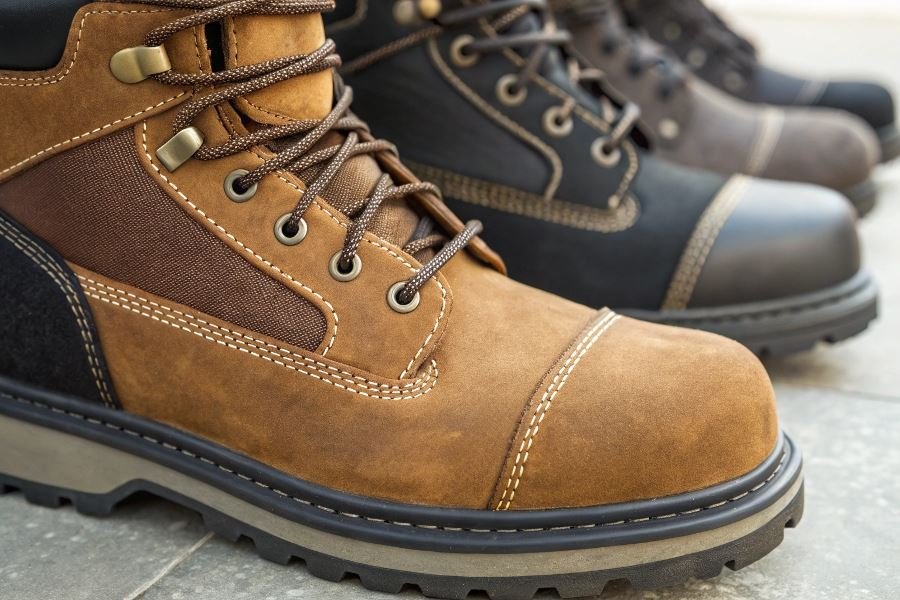
Full-grain leather remains the undisputed champion of work boot materials for demanding environments. Harvested from the top layer of the hide with its natural grain intact, this material offers exceptional:
- Puncture resistance that improves with age
- Natural water repellency when properly treated
- Unmatched durability spanning years, not months
Red Wing and Thorogood have built their reputations on full-grain leather work boots that often last 5-7 years with proper care.
Top-grain leather, while slightly less robust than its full-grain counterpart, offers a more refined appearance while maintaining impressive protective qualities. The sanding process removes imperfections but sacrifices some durability—a worthwhile trade-off for many professionals who need a more polished appearance.
Synthetic Leather and Microfiber: Smart Economics
The advancement in synthetic materials has revolutionized the work footwear industry. Modern synthetic leather options from brands like Skechers Work deliver:
- 40-60% cost reduction compared to genuine leather
- Consistent performance across all weather conditions
- Significantly lighter weight for all-day comfort
Microfiber has emerged as the premium synthetic option, offering remarkable properties:
| Property | Microfiber | Synthetic Leather | Natural Leather |
|---|---|---|---|
| Weight | Lightest | Light | Heaviest |
| Water Resistance | Excellent | Good | Variable |
| Breathability | Moderate | Poor | Excellent |
| Cost | Moderate | Lowest | Highest |
| Durability | 2-3 years | 1-2 years | 5+ years |
These materials have found particular favor in healthcare, food service, and light industrial applications where frequent cleaning and consistent performance outweigh extreme durability requirements.
Mesh and Textile: Breathing Room for Hard Work
The integration of advanced textiles and mesh panels represents perhaps the most significant comfort innovation in work footwear. These materials deliver:
- Superior ventilation that reduces foot temperature by up to 10°F
- Dramatic weight reduction compared to all-leather alternatives
- Flexibility that eliminates the traditional “break-in period”
Timberland PRO has pioneered hybrid designs that strategically place mesh panels in low-risk areas while maintaining protective materials where hazards are most likely to occur.
Athletic-inspired work shoes from New Balance Work have successfully brought running shoe comfort to industrial environments, using compression-molded EVA midsoles and breathable uppers that maintain ASTM safety standards.
The ideal material choice ultimately depends on your specific working conditions, but understanding these fundamental options ensures your feet remain protected, comfortable, and ready for whatever your workday demands.
Specialized Materials That Define Modern Work Footwear
Rubber and TPU Compounds: The Unsung Heroes
When safety meets the ground, rubber and thermoplastic polyurethane (TPU) compounds stand as the first line of defense. These materials have revolutionized work footwear by delivering exceptional slip resistance even in the most challenging environments.
High-performance rubber outsoles now incorporate specialized compounds that maintain grip on surfaces ranging from oil-slicked factory floors to rain-soaked construction sites. The science behind these materials has advanced dramatically, with manufacturers like Vibram developing rubber compounds that maintain flexibility at temperatures as low as -20°F while resisting degradation from industrial chemicals.
TPU has emerged as rubber’s sophisticated cousin, offering:
- Superior abrasion resistance – up to 3-5 times more durable than standard rubber
- Enhanced flexibility – maintains performance across extreme temperature ranges
- Chemical resistance – withstands exposure to oils, solvents, and corrosive substances
These compounds aren’t just about safety—they’re engineered for longevity. Modern TPU outsoles can withstand over 1 million flexes without cracking, translating to footwear that maintains its protective properties throughout extended wear cycles.
Composite Materials: Strength Without the Weight
The steel-toe boot has met its match. Composite materials have transformed the protective elements in work footwear, delivering ASTM-certified safety without the traditional weight penalty.
The average composite safety toe reduces footwear weight by 30-40% compared to steel while providing equivalent impact protection.
Today’s composite technologies include:
| Material | Key Benefits | Typical Applications |
|---|---|---|
| Carbon Fiber | Exceptional strength-to-weight ratio, non-conductive | Electrical work, lightweight industrial |
| Kevlar | Impact resistance, puncture protection | Construction, manufacturing |
| Fiberglass Composites | Temperature neutral, metal-detector friendly | Security, aerospace, food processing |
These materials extend beyond toe protection. Puncture-resistant midsoles made from layered composites can stop a nail at 1,100 Newtons of force while remaining flexible enough for all-day comfort. Companies like Keen Utility have pioneered asymmetrical composite toe designs that match foot anatomy for improved comfort without sacrificing protection.
Material Innovations Reshaping Work Footwear
The future of work shoe materials is arriving faster than anticipated. Biomechanical research and advanced manufacturing techniques are yielding materials that adapt to both environmental conditions and the wearer’s movements.
Emerging technologies include:
Reactive Polymers that stiffen upon impact but remain flexible during normal movement, providing dynamic protection that traditional materials can’t match.
Graphene-Enhanced Compounds delivering unprecedented durability—early tests show outsoles with 50% greater abrasion resistance than the most advanced current materials.
Biodegradable Safety Components addressing the environmental impact of protective footwear. Timberland PRO has already introduced partially bio-based materials that maintain safety standards while reducing petroleum dependency.
Perhaps most promising are Smart Materials that respond to environmental changes. Temperature-adaptive foams that provide cushioning calibrated to surface hardness and moisture-reactive textiles that enhance breathability during exertion represent the cutting edge of occupational footwear.
The evolution of these specialized materials continues to push boundaries, ensuring that tomorrow’s work boots will be lighter, stronger, and more responsive than anything we’ve seen before—without compromising the protection that workers in demanding environments require.
Discover the top 7 materials for work shoes that provide optimal safety and comfort in various work environments. Learn how leather, synthetic options, and specialized compounds can protect your feet while ensuring all-day comfort.
Discover the top 7 materials for work shoes that provide optimal safety and comfort in various work environments. Learn how leather, synthetic options, and specialized compounds can protect your feet while ensuring all-day comfort.