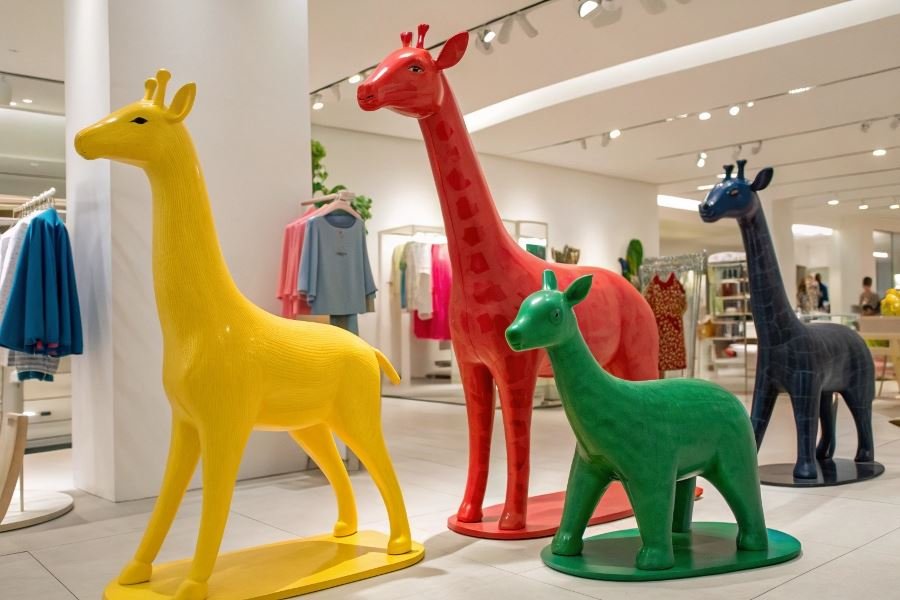
Ever watched a child’s eyes light up at the sight of a friendly giraffe displaying their potential new outfit? That magical moment isn’t accidental—it’s carefully crafted visual merchandising at work.
Children’s retail spaces face a unique challenge: they must appeal to both the practical-minded parent and the imagination-driven child. Animal mannequins bridge this gap brilliantly, transforming ordinary shopping trips into memorable adventures. When selecting these whimsical display elements, retailers must balance aesthetic appeal with practical considerations.
The visual merchandising advantage
Visual merchandising in children’s retail isn’t just about displaying products—it’s about creating environments that tell stories. Effective displays can increase foot traffic by up to 30% and boost sales in specific sections by as much as 25%. Animal mannequins serve as focal points that guide customers through the retail journey while creating emotional connections with young shoppers.
Creating magical shopping moments
Animal-shaped displays do what traditional mannequins cannot: they spark joy and curiosity. A monkey showcasing a raincoat or a penguin modeling winter accessories creates an instant narrative that children connect with. This emotional engagement extends browsing time and encourages multi-item purchases as parents and children explore complementary pieces that complete the “character’s” look.
Selection criteria that matter
When investing in animal mannequins, consider these critical factors:
- Age appropriateness: Match animal selections to your target demographic’s interests
- Durability: Look for reinforced joints and quality materials that withstand frequent outfit changes
- Versatility: Choose designs that accommodate various clothing styles and seasonal merchandise
- Pose and expression: Select positions that showcase garments effectively while maintaining the animal’s charm
The right animal mannequins don’t just display merchandise—they become beloved characters in your store’s ongoing story, bringing customers back season after season.
Quality Factors That Make or Break Animal Mannequins
When selecting animal mannequins for your children’s retail space, the details make all the difference between a forgettable display and one that captivates young shoppers and their parents. The market for specialized retail fixtures has evolved dramatically, with animal mannequins becoming central characters in creating immersive shopping experiences. Understanding what to pay attention to when choosing animal mannequins for children’s stores requires focusing on three critical areas that industry leaders consistently prioritize.
Material Excellence Matters
The foundation of any quality animal mannequin begins with its construction materials. Top-tier options typically feature:
- Fiberglass-reinforced plastic (FRP) – Offering the perfect balance of durability and lightweight properties
- Medical-grade silicone – For premium, touchable displays with lifelike texture
- High-density polyethylene (HDPE) – Providing excellent impact resistance for high-traffic areas
Material selection directly impacts both longevity and safety. The best manufacturers use non-toxic, phthalate-free materials that comply with Consumer Product Safety Commission standards. This isn’t just about regulatory compliance—it’s about creating displays that parents instinctively trust.
“The material quality of your mannequins speaks volumes about your brand before customers even examine your merchandise.”
Flame-retardant treatments have become industry standard, with premium options featuring integrated (not surface-applied) fire resistance. This distinction matters tremendously for long-term performance.
Anatomical Precision Drives Engagement
Children are surprisingly discerning when it comes to animal representations. The most effective mannequins demonstrate:
| Age Group | Recommended Anatomical Approach |
|---|---|
| 0-3 years | Simplified, rounded forms with exaggerated friendly features |
| 4-7 years | Balanced realism with playful proportions |
| 8-12 years | Anatomically correct with educational value |
The finest manufacturers employ zoologists during design phases to ensure proportions and features accurately represent the animals while remaining age-appropriate. This attention to detail creates displays that educate while they entice.
Surface texture variations have emerged as a differentiating factor, with multi-textured finishes mimicking fur, scales, or feathers creating tactile experiences that digital shopping simply cannot replicate.
Brand Alignment Through Customization
Standard animal forms rarely tell your unique brand story. The customization capabilities to look for include:
- Posture flexibility that showcases your specific product lines
- Color-matching services that align perfectly with your brand palette
- Scale variability to accommodate different store layouts and merchandise types
Leading manufacturers like Mannequin Mall and Genesis Mannequins offer proprietary customization processes that transform basic forms into brand ambassadors.
Modular design features represent the cutting edge, allowing seasonal adjustments without complete replacement. This approach delivers approximately 40% cost savings over a three-year display lifecycle while reducing environmental impact.
The most successful children’s retailers recognize that animal mannequins aren’t merely display tools—they’re storytelling elements that create memorable shopping experiences. By focusing on material quality, age-appropriate anatomical accuracy, and brand-aligned customization, your animal mannequin investment will deliver returns far beyond the initial purchase.
Maximizing Impact with Animal Mannequins in Children’s Retail
Strategic placement transforms browsing into buying
The difference between a mannequin that sells and one that simply stands comes down to strategic placement. Animal mannequins perform best when positioned at children’s eye level—typically 3-4 feet from the floor. This height creates direct visual engagement with your primary influencers: the children themselves.
Corner configurations create storytelling opportunities. Position fox or bear mannequins in store corners with complementary props to create immersive scenes that capture imagination. Retail Design Institute research shows that themed display areas increase dwell time by up to 27% in children’s retail environments.
Window displays remain your most powerful conversion tool. Rotate animal mannequins seasonally, with larger statement pieces (elephants, giraffes) commanding attention from sidewalk traffic. The most effective window displays follow the “rule of three”—featuring three coordinated mannequins with varied heights and poses to create visual rhythm.
The most successful children’s retailers change their animal mannequin configurations every 14-21 days to maintain the “discovery” element that drives repeat visits.
Maintenance requirements that protect your investment
Fiberglass animal mannequins offer superior durability but require quarterly cleaning with non-abrasive, ammonia-free cleaners. Soft-cloth microfiber wipes prevent micro-scratches that accumulate over time. Premium models from Mannequin Madness include specialized cleaning kits designed specifically for their finishes.
Fabric-covered mannequins demand more frequent attention—monthly vacuuming with upholstery attachments prevents dust accumulation that can trigger allergies. These models typically have a 3-5 year lifespan before requiring refurbishment, while properly maintained fiberglass versions often last 7-10 years.
Joint maintenance determines longevity. Articulated animal mannequins with movable limbs need bi-annual joint inspection. Apply silicone lubricant to prevent stiffening, particularly in mannequins frequently repositioned for seasonal displays.
ROI analysis for smart purchasing decisions
The investment spectrum for quality animal mannequins ranges from $200 for basic models to $1,200+ for premium articulated versions with custom finishes. The sweet spot for independent retailers typically falls between 350−550 per unit, balancing quality with budget constraints.
Mid-tier mannequins from manufacturers like Genesis Mannequins deliver the strongest ROI, with an average cost-per-impression of just $0.002 when calculated against a 5-year lifespan in moderate-traffic stores.
Purchase timing significantly impacts acquisition costs. Industry overstock periods in February and August typically yield 15-25% discounts on previous season models.
| Mannequin Type | Initial Cost | Lifespan | Maintenance Cost/Year | Total 5-Year Cost |
|---|---|---|---|---|
| Basic Fiberglass | $200-350 | 4-6 years | $25 | $325-475 |
| Mid-Range Articulated | $450-650 | 5-8 years | $40 | $650-850 |
| Premium Custom | $800-1,200+ | 8-12 years | $75 | $1,175-1,575 |
Bulk purchasing creates leverage. Orders of 5+ mannequins typically qualify for 10-15% volume discounts. Consider forming buying cooperatives with complementary children’s retailers to reach these thresholds without overcommitting floor space.
The most successful implementations pair mannequins with integrated lighting solutions. LED-equipped display bases increase product visibility by 34% and create dramatic shadow effects that enhance the theatrical quality of animal-themed displays—transforming ordinary merchandise into must-have treasures that children (and their parents’ wallets) simply can’t resist.
Discover how to select high-quality animal mannequins for your children's store displays. Learn about material safety, design authenticity, and strategic placement to enhance visual merchandising and create engaging shopping experiences that boost sales.
Discover how to select high-quality animal mannequins for your children's store displays. Learn about material safety, design authenticity, and strategic placement to enhance visual merchandising and create engaging shopping experiences that boost sales.