Ever wondered why some workers seem to “light up” a room? It’s not their personality—it might be the dangerous static electricity building up in their inadequate footwear. In high-risk environments, this isn’t just uncomfortable; it’s potentially catastrophic.
Work sneakers with antistatic protection represent a critical evolution in occupational safety equipment. These specialized shoes incorporate conductive materials that allow controlled electricity flow between the wearer’s body and the ground, preventing dangerous static buildup while maintaining enough resistance to protect against electrical shocks. Unlike standard footwear, they maintain electrical resistance between 100 kilohms and 1000 megohms—the sweet spot for safety.
The journey toward standardized antistatic protection began in earnest during the 1970s when major industrial accidents highlighted the dangers of static electricity. By 1994, the European Union had established comprehensive standards (EN ISO 20345), while in America, ASTM F2413 became the benchmark for electrical hazard protection in footwear.
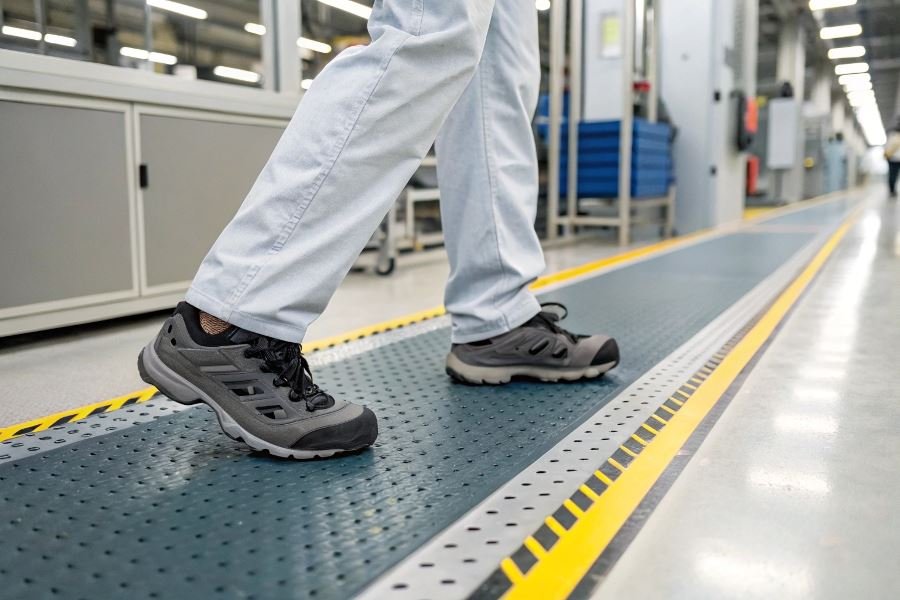
Today’s workplace electrical hazards are surprisingly diverse. Electronics manufacturing facilities, where a single static discharge can destroy sensitive components worth thousands of dollars. Oil refineries, where a spark could trigger catastrophic explosions. Healthcare settings, where static might interfere with sensitive equipment monitoring patient vitals. Even modern warehouses with automated systems require workers to be properly grounded.
The right antistatic footwear isn’t just about compliance—it’s about coming home safely at the end of each workday.
The Engineering Behind Antistatic Work Footwear
When electrical safety meets workplace comfort, the result is nothing short of engineering brilliance. Antistatic work sneakers represent the perfect intersection of safety technology and ergonomic design, creating footwear that protects both workers and sensitive equipment from the invisible threat of static electricity.
The fundamental purpose of work sneakers with antistatic protection: features and applications centers on controlling the flow of static electricity between the human body and the ground. These specialized shoes maintain electrical resistance within a specific range—typically between 100 kilohms and 100 megohms—allowing static charges to dissipate gradually rather than building up to dangerous levels or discharging suddenly.
Meeting ESD Standards Through Technical Innovation
Antistatic footwear must comply with rigorous international standards, including EN ISO 20345:2011 and ASTM F2413-18. These standards establish the electrical resistance parameters that define true antistatic protection.
Resistance testing involves measuring the electrical pathway from the wearer’s foot through the shoe to the ground. Quality antistatic sneakers maintain this resistance in the “sweet spot”—conductive enough to prevent static buildup but resistant enough to protect against electrical shock.
The difference between antistatic and fully conductive footwear is crucial—antistatic shoes dissipate charges safely, while conductive shoes allow electricity to flow freely, which can be dangerous in certain environments.
| Protection Type | Resistance Range | Primary Application |
|---|---|---|
| Antistatic | 100KΩ – 100MΩ | Electronics manufacturing, laboratories |
| ESD | 100KΩ – 35MΩ | Semiconductor production, precision electronics |
| Conductive | 0 – 100KΩ | Explosive environments (with additional safety measures) |
Material Science Meets Safety Engineering
The magic of antistatic footwear lies in its specialized materials and construction techniques:
Carbon-loaded rubber compounds form outsoles that create controlled electrical pathways. These compounds contain precisely calibrated amounts of carbon black to achieve the perfect resistance level.
Conductive thread networks woven throughout the shoe’s interior create continuous electrical pathways from foot to floor. These invisible conductors work regardless of where the foot contacts the insole.
Moisture-wicking fabrics serve dual purposes—keeping feet comfortable while maintaining the electrical conductivity that human perspiration naturally provides.
Comfort Without Compromise
The engineering challenge of antistatic footwear extends beyond electrical properties to address the human factors:
Impact absorption systems using advanced polymers protect against fatigue in environments where workers stand for extended periods. Nike React and similar cushioning technologies have revolutionized comfort in safety footwear.
Breathable membranes like GORE-TEX maintain antistatic properties while allowing moisture vapor to escape, preventing the discomfort of sweaty feet during long shifts.
Anatomical support structures prevent pronation and supination while maintaining the critical ground contact needed for static dissipation. Many manufacturers now incorporate custom orthotic compatibility without compromising antistatic performance.
The weight reduction in modern antistatic sneakers represents perhaps the most significant advancement. Early models often felt like concrete blocks, while today’s versions utilize composite materials that maintain protection while reducing weight by up to 40% compared to traditional safety footwear.
For professionals in electronics manufacturing, healthcare, aerospace, and other static-sensitive environments, these engineered marvels aren’t just footwear—they’re essential safety equipment disguised as comfortable sneakers.
Where Antistatic Sneakers Shine Brightest
Electronics Manufacturing: The Static-Free Zone
The electronics manufacturing industry tops our list of sectors where antistatic footwear isn’t just recommended—it’s essential. In facilities producing semiconductors, circuit boards, and sensitive electronic components, even a minor static discharge of 100 volts (imperceptible to humans) can irreparably damage components designed to operate at 5 volts or less.
Precision matters here: A typical electronics assembly line maintains Electrostatic Protected Areas (EPAs) where every element—including footwear—must contribute to static control. The Intel Corporation and other semiconductor giants require comprehensive ESD (Electrostatic Discharge) programs where properly certified antistatic footwear forms the foundation of personnel grounding systems.
Pharmaceutical Production: Beyond Contamination Control
Pharmaceutical manufacturing environments present a unique challenge where static electricity creates dual risks: potential ignition of flammable solvents and unwanted attraction of contaminants to sterile products.
The stakes couldn’t be higher: In cleanroom environments where medications are formulated and packaged, antistatic footwear prevents powder ingredients from clinging to surfaces while reducing explosion risks. Companies like Pfizer implement strict footwear protocols in areas handling active pharmaceutical ingredients (APIs) where static discharge could compromise product integrity or worker safety.
Petrochemical Facilities: Where Safety Is Non-Negotiable
The petrochemical industry operates in environments where flammable vapors and combustible dusts create explosion hazards that static electricity can trigger. Refineries, chemical processing plants, and fuel storage facilities all require comprehensive static control measures.
The numbers tell the story: A static discharge as small as 0.2 millijoules can ignite many hydrocarbon vapor-air mixtures. Properly rated antistatic footwear keeps workers safely grounded in these high-risk environments, forming a critical part of ExxonMobil’s and similar companies’ comprehensive safety programs.
Selecting the Right Antistatic Protection
When choosing antistatic work sneakers, focus on these critical factors:
| Selection Criteria | What to Look For |
|---|---|
| Certification Standards | ESD certification to EN 61340-5-1 or ASTM F2413 with “SD” marking |
| Resistance Range | Optimal range: 1×10⁵ to 1×10⁹ ohms (not too conductive, not too insulating) |
| Comfort Features | Ergonomic design, shock absorption, and proper arch support for all-day wear |
| Environmental Suitability | Chemical resistance, temperature tolerance, and slip resistance appropriate to your industry |
Beyond the basics: Consider your specific working conditions. Cleanroom environments require washable materials, while chemical processing needs acid-resistant compounds. Your footwear should match your precise working conditions without compromising on antistatic performance.
Maintaining Antistatic Performance
The effectiveness of antistatic footwear depends significantly on proper maintenance:
-
Clean regularly but carefully: Remove debris from soles using mild soap and water—never harsh solvents that might degrade conductive elements.
-
Test consistently: Implement a verification program using resistance testers at the beginning of each shift. Many facilities install “footwear testers” at entrances to critical areas.
-
Replace when necessary: Antistatic properties deteriorate over time. Most manufacturers recommend replacement after 6-12 months of regular use, regardless of visible wear.
The most expensive antistatic footwear becomes worthless the moment its conductive path fails—regular testing isn’t optional, it’s essential.
Remember that environmental conditions affect performance—excessive humidity can increase conductivity while extreme dryness reduces it. The best antistatic protection comes from understanding not just the footwear itself, but how it interacts with your specific working environment.
Discover the essential features of antistatic work sneakers and their critical applications across industries. Learn how these specialized safety shoes protect against electrical hazards while maintaining comfort and meeting strict ESD standards for workplace protection.
Discover the essential features of antistatic work sneakers and their critical applications across industries. Learn how these specialized safety shoes protect against electrical hazards while maintaining comfort and meeting strict ESD standards for workplace protection.