Ever wondered why some auto shops seem to flow effortlessly while others constantly battle bottlenecks? The answer often hangs above your head—literally. The right vehicle lift doesn’t just elevate cars; it elevates your entire operation.
Selecting an appropriate lift for your auto service isn’t merely about finding equipment that can hoist vehicles off the ground. It’s about making a strategic investment that directly impacts your technicians’ safety, workflow efficiency, and ultimately, your bottom line. A study by the Automotive Service Association found that properly equipped service bays can increase productivity by up to 30%—translating directly to thousands of dollars in additional revenue monthly.
The lift landscape: More diverse than you might think
The market offers a surprising variety of lift solutions, each engineered for specific applications:
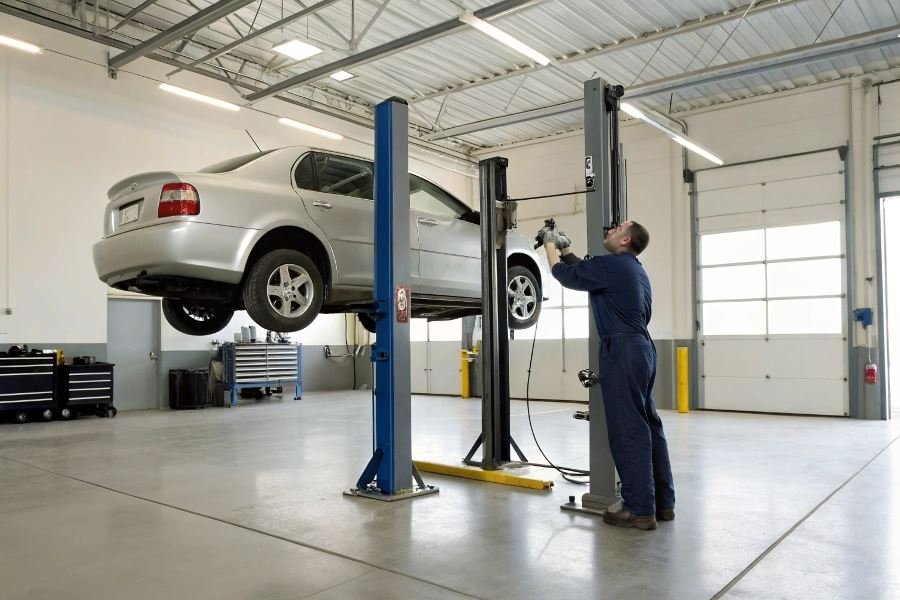
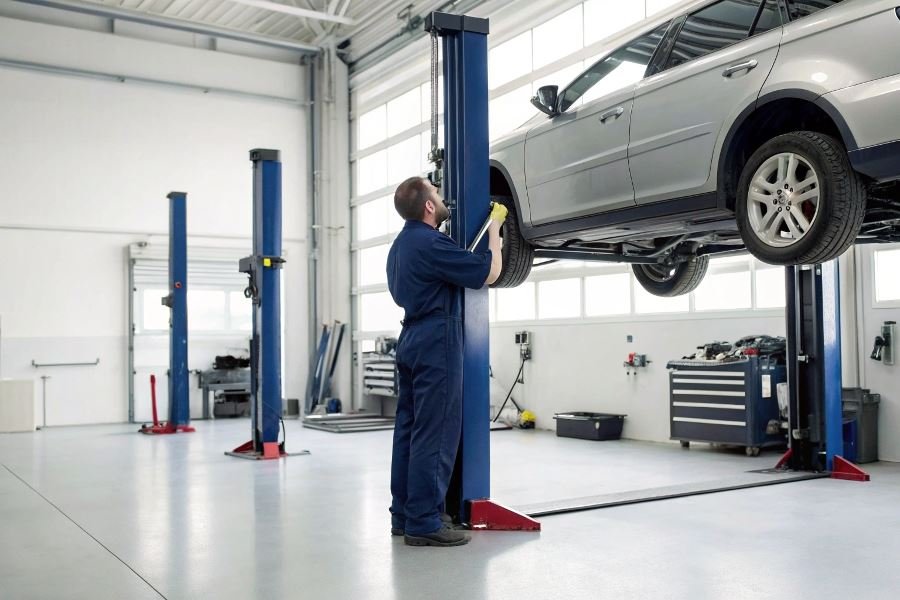
- Two-post lifts: The workhorses of general repair, offering excellent vehicle access
- Four-post lifts: Ideal for alignment work and longer-term storage
- Scissor lifts: Perfect for quick service and limited space scenarios
- In-ground lifts: The premium option providing unmatched access and shop aesthetics
Each type presents distinct advantages depending on your service focus. For example, transmission specialists typically benefit from two-post configurations, while alignment-heavy shops often require four-post systems with integrated jacking points.
The safety-efficiency-profit triangle
When chosen wisely, your lift becomes the cornerstone of operational excellence. Technicians working with properly specified equipment experience fewer injuries, complete jobs faster, and deliver higher quality work. One shop owner in Detroit reported a 22% increase in service throughput after upgrading to application-appropriate lifts—proving that the right equipment doesn’t cost; it pays.
The Technical Backbone of Auto Lift Selection
When equipping your auto service facility, few decisions impact daily operations more than selecting the right vehicle lift. The difference between a well-chosen lift and an inadequate one can mean thousands of dollars in efficiency gains or losses. Understanding the essential technical criteria for choosing a lift for an auto service requires careful consideration of vehicle types, available space, and lift mechanism options.
Weight Capacity: The Non-Negotiable Specification
The foundation of any lift selection process begins with weight capacity. This isn’t merely about handling today’s vehicles but anticipating tomorrow’s clientele as well.
Standard passenger vehicles typically require lifts rated for 7,000-10,000 pounds. However, if your service caters to light trucks, SUVs, or commercial vehicles, you’ll need lifts with 12,000-15,000 pound capacities. For heavy-duty truck servicing, capacities of 18,000-30,000 pounds become necessary.
Always select a lift with capacity that exceeds your heaviest anticipated vehicle by at least 10% to ensure safety margin and equipment longevity.
| Vehicle Type | Recommended Lift Capacity |
|---|---|
| Compact/Sedan | 7,000-9,000 lbs |
| SUV/Light Truck | 10,000-12,000 lbs |
| Commercial Van | 12,000-15,000 lbs |
| Heavy Duty Truck | 18,000-30,000+ lbs |
Space Considerations That Make or Break Installation
The physical dimensions of your facility directly dictate which lift options are viable. When evaluating space requirements for auto service lifts, consider both the footprint and ceiling height.
Ceiling clearance must accommodate the vehicle at full elevation plus additional working height. For standard two-post lifts, a minimum ceiling height of 11-12 feet is typically required, while four-post lifts may need 12-14 feet depending on application.
Bay width requirements vary by lift type:
- Two-post lifts: 12-13 feet minimum width
- Four-post lifts: 13-15 feet minimum width
- Scissor lifts: 10-12 feet minimum width
Don’t forget to account for electrical access points, concrete requirements (typically 4-6 inches of reinforced concrete), and approach/exit space for vehicles.
Lift Mechanisms: The Heart of Performance
The mechanism powering your lift dramatically affects everything from installation costs to maintenance requirements. Each technology offers distinct advantages for different service environments.
Hydraulic lifts remain the industry workhorse, offering exceptional lifting power and reliability. These systems use pressurized fluid to raise vehicles, providing smooth operation and substantial weight capacity. However, they require more maintenance due to potential fluid leaks and seal replacements.
Electric-mechanical lifts utilize screw drives or chains with motors to provide lifting action. These systems offer:
- Lower maintenance requirements
- No hydraulic fluid concerns
- Often quieter operation
The tradeoff comes with typically higher initial costs and potentially slower lifting speeds.
Pneumatic lifts, while less common in full-sized vehicle applications, offer advantages in specialized scenarios:
- Explosion-proof operation (ideal for facilities working with volatile materials)
- Simple operation with compressed air
- Lower lifting capacities (typically suitable for motorcycles or ATVs)
When selecting between these mechanisms, consider not just the initial purchase price but the total cost of ownership. Factor in installation requirements, maintenance intervals, and operational costs over the lift’s expected 10-15 year lifespan.
The right lift becomes an investment that pays dividends through improved technician efficiency, workplace safety, and service capability. By carefully evaluating these technical criteria, you’ll select equipment that serves your business needs for years to come.
Making the Final Decision on Your Auto Service Lift
When investing in a lift for your auto service, the final decision requires balancing multiple factors that will impact your business for years to come. This isn’t just about finding equipment—it’s about making a strategic business decision that affects your workflow, safety standards, and bottom line.
The dollars and sense of lift investment
The upfront cost of a quality lift—ranging from $2,500 for basic two-post models to $15,000+ for advanced four-post or scissor lifts—represents only part of the financial equation. Smart shop owners look beyond the price tag to calculate true ROI.
A Rotary Lift that costs $8,000 might seem expensive compared to a $4,000 generic alternative, but consider the productivity gains: premium lifts typically reduce vehicle setup time by 1-2 minutes per cycle. With 15 vehicles daily, that’s up to 30 minutes saved—translating to an additional $10,000+ annual revenue potential for most shops.
ROI calculation factors to consider:
- Daily lift utilization rate
- Average labor rate
- Time saved per vehicle
- Additional service capacity gained
- Energy efficiency differences
- Warranty coverage period
The cheapest lift often becomes the most expensive when measured across its lifespan.
Maintenance realities and reliability factors
Every lift requires maintenance, but the frequency, complexity, and cost vary dramatically between models and manufacturers. Premium lifts from BendPak or Challenger Lifts typically require major service every 4-5 years, while budget alternatives might need attention annually.
| Lift Type | Average Annual Maintenance Cost | Typical Lifespan | Common Maintenance Tasks |
|---|---|---|---|
| Two-Post | $200-400 | 10-15 years | Cable adjustments, hydraulic fluid changes, bushing replacements |
| Four-Post | $150-300 | 15-20 years | Runway alignment, cable tension checks, roller maintenance |
| Scissor | $300-500 | 8-12 years | Hydraulic system service, pivot point lubrication, cylinder inspection |
Reliability isn’t just about preventing breakdowns—it’s about maintaining consistent performance. A lift that gradually loses lifting speed or develops alignment issues can silently drain productivity long before it fails completely.
Safety standards that protect everything
The difference between a certified lift and a non-certified one isn’t just paperwork—it’s the difference between confidence and liability. Every quality lift should carry ALI certification, which ensures compliance with ANSI/ALI ALCTV safety standards.
Critical safety certifications to verify:
- ALI/ETL certification label
- Third-party testing documentation
- Load capacity verification
- Compliance with OSHA requirements
- Regular inspection protocols
Beyond certification, evaluate safety features like:
- Automatic locking systems with redundant backups
- Overload protection mechanisms
- Power failure safeguards
- Anti-sway stabilization
- Emergency lowering capabilities
Remember that safety certification isn’t optional—it’s essential for insurance coverage, liability protection, and regulatory compliance.
The best lift decision balances these three pillars: financial sense, maintenance practicality, and uncompromising safety. When these align with your specific service needs, you’ve found the right lift—one that will elevate not just vehicles, but your entire business.
Discover the essential criteria for selecting the perfect auto service lift. Learn about weight capacities, space requirements, and lift mechanisms to maximize safety, efficiency, and profitability in your automotive business.
Discover the essential criteria for selecting the perfect auto service lift. Learn about weight capacities, space requirements, and lift mechanisms to maximize safety, efficiency, and profitability in your automotive business.