When a 175-pound force slams into your spine at 30 mph, the difference between walking away and permanent disability often comes down to what you’re wearing. That’s not hyperbole—that’s physics.
Back injuries account for nearly 20% of all workplace disabilities and over 30% of injuries in extreme sports. Yet many professionals and enthusiasts treat back protection as an afterthought rather than a necessity. The reality? Your spine deserves better.
Selecting appropriate back protection for extreme conditions isn’t just about comfort—it’s about understanding the specific threats your body faces. Whether you’re tackling black diamond slopes, navigating treacherous construction sites, or handling heavy machinery in unpredictable environments, your back protection needs change dramatically based on your activity.
Understanding risk profiles
Different extreme environments present unique spinal hazards:
| Environment | Primary Risk Factors | Protection Priority |
|---|---|---|
| Winter Sports | High-velocity impacts, rotational forces | Impact absorption, flexibility |
| Construction | Falling objects, repetitive strain | Weight distribution, puncture resistance |
| Motorsports | Sudden deceleration, compression | Multi-impact protection, ventilation |
The most effective back protectors combine rigid plates with energy-absorbing materials that disperse impact forces away from your spine. Modern protection systems have evolved dramatically, with some high-end protectors reducing impact forces by up to 87% while remaining lightweight and breathable.
When evaluating options, prioritize certification standards like CE Level 2, which ensures the equipment has been rigorously tested under conditions that simulate real-world impacts. Remember: the best back protector is the one that matches your specific activity profile—and the one you’ll actually wear.
The Backbone of Extreme Protection
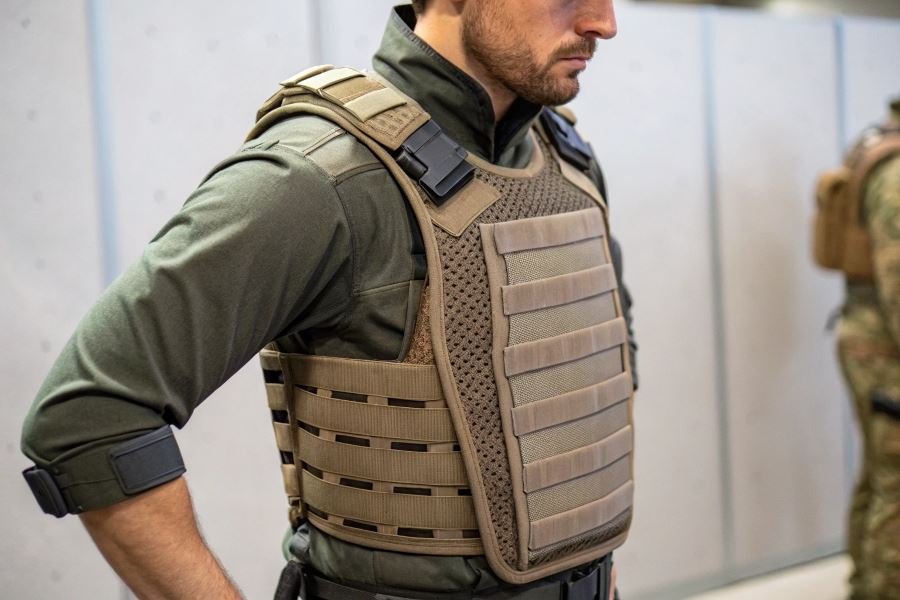
When your body is on the line, your spine deserves nothing less than fortress-level defense. The market for protective gear has evolved dramatically, with back protectors becoming increasingly sophisticated to meet the demands of extreme sports and hazardous environments. Selecting the right back protection for extreme conditions requires understanding crucial performance factors that separate life-saving equipment from merely adequate padding.
The science behind back protection for extreme conditions has advanced significantly, with manufacturers now engineering products that balance maximum protection with comfort and mobility. This evolution reflects growing awareness about spinal injury risks in activities ranging from downhill mountain biking to industrial work in volatile environments.
Impact Resistance That Meets the Standard
The cornerstone of any quality back protector is its impact resistance, which should be certified to recognized standards. The gold standard remains the EN 1621-2 certification, which tests a protector’s ability to distribute impact forces below 18 kN (kiloNewtons)—the threshold at which serious spinal injury becomes likely.
Level 1 protectors transmit less than 18 kN, while superior Level 2 protectors must transmit less than 9 kN, offering approximately twice the protection. For truly extreme conditions, accept nothing less than Level 2 certification.
Some manufacturers like D3O have developed proprietary materials that remain flexible during normal movement but instantly harden upon impact, providing remarkable protection-to-comfort ratios.
Movement Matters: Ergonomics in Action
The most protective back shield becomes worthless if it restricts movement to the point where you can’t perform necessary actions. Modern ergonomic designs address this through:
- Articulated plates that move with your body
- Segmented protection zones that flex independently
- Anatomical curvature that matches natural spine positioning
For activities requiring extreme range of motion like free climbing or freestyle skiing, look for multi-panel designs with connecting elastic elements. These maintain protection coverage while allowing your body to twist, bend, and contort as needed.
The difference between budget and premium protectors becomes most apparent during extended wear periods, where ergonomic refinements prevent the fatigue that compromises performance.
Material Performance Under Pressure
| Material Type | Temperature Range | Impact Performance | Weight |
|---|---|---|---|
| Viscoelastic foam | -10°F to 120°F | Excellent | Medium |
| Hardshell composite | -40°F to 140°F | Superior | Heavy |
| Honeycomb polymer | -20°F to 130°F | Very good | Light |
Materials must perform consistently across temperature extremes. Arctic expeditions require protectors that won’t become brittle in sub-zero conditions, while desert environments demand materials that maintain integrity in scorching heat.
Moisture management represents another critical factor. Extended exposure to sweat, rain, or snow can degrade some protective materials. Look for hydrophobic treatments or inherently water-resistant compositions in protectors intended for wet environments.
The latest generation of back protectors from companies like POC incorporate multi-impact materials that don’t degrade after a single crash, maintaining protection levels through multiple incidents—crucial when immediate replacement isn’t possible.
When selecting back protection for truly extreme conditions, remember that the best choice balances certified impact standards with ergonomic design and material durability appropriate for your specific activity and environment. Your spine is irreplaceable; protect it accordingly.
Extreme Back Protection That Actually Works
When your spine meets extreme conditions, ordinary protection simply won’t cut it. Whether you’re carving through powder at 60mph or launching your mountain bike off a cliff face, your back protection needs to match the intensity of your adventure.
Activity-Specific Protection Ratings
Back protectors aren’t created equal, and the protection level you need varies dramatically based on your activity. The industry standard EN 1621-2 certification divides protectors into two critical levels:
- Level 1: Transmits less than 18kN of force in impact testing
- Level 2: Transmits less than 9kN of force in impact testing
For context, that’s the difference between feeling the impact and potentially avoiding serious injury altogether.
Different activities demand different levels of protection:
| Activity | Recommended Protection | Key Features |
|---|---|---|
| Downhill MTB | Level 2 | Extended coverage, ventilation |
| Motocross | Level 2 | Rigid plating, neck brace compatibility |
| Backcountry Skiing | Level 1-2 | Lightweight, avalanche compatibility |
| Ice Climbing | Level 1 | Flexibility, moisture management |
| Snowboarding | Level 1-2 | Impact absorption, low profile |
The right protector doesn’t just meet certification standards—it addresses the specific risks of your sport.
Finding Your Perfect Fit
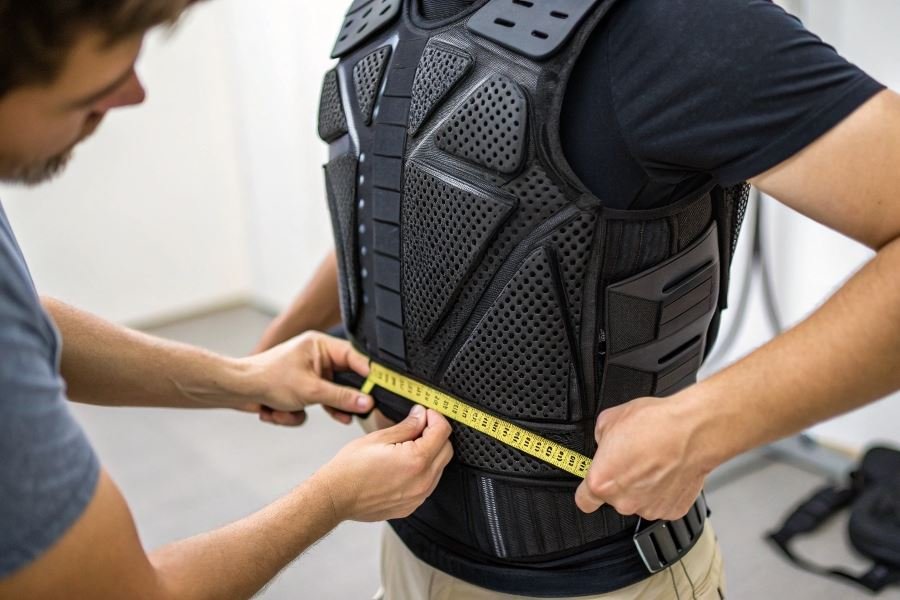
A poorly fitted back protector might as well be left at home. The effectiveness of even the most advanced protection technology diminishes dramatically with improper sizing.
Critical fit points to verify:
- Length: Should extend from between your shoulder blades to your tailbone
- Width: Must cover from side to side without restricting arm movement
- Strap tension: Tight enough to prevent shifting but not so tight it restricts breathing
When trying on protectors, simulate your activity position. A protector that feels perfect standing upright might shift dangerously when you’re in an aggressive downhill mountain biking stance or a tucked skiing position.
The most advanced protection technology becomes useless if it shifts away from the impact zone during activity.
For activities requiring extreme mobility, consider articulated protectors from brands like POC or Dainese that move with your body rather than against it.
Extending Protection Lifespan
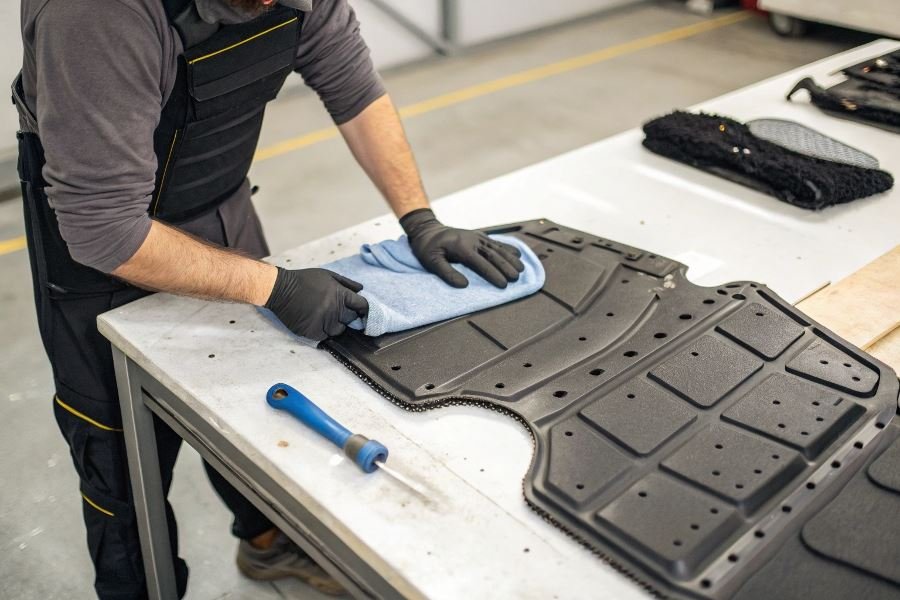
Quality back protection represents a significant investment—one that deserves proper maintenance to ensure it performs when you need it most.
Essential maintenance practices:
- Post-impact inspection: Thoroughly examine after any significant fall; look for cracks, compression, or deformation
- Cleaning protocol: Follow manufacturer guidelines precisely—harsh chemicals can degrade impact-absorbing materials
- Storage discipline: Store flat or hanging, never folded or compressed, in temperature-controlled environments
- Replacement schedule: Most high-quality protectors should be replaced every 3-5 years, even without impacts
Materials like D3O and SAS-TEC have revolutionized protection by offering flexibility during normal movement but instantly hardening upon impact. However, these advanced materials require specific care to maintain their protective properties.
After heavy use in wet conditions, allow your protector to dry naturally—never use direct heat sources which can compromise the molecular structure of impact-absorbing materials.
Remember that invisible UV damage from extended sun exposure can significantly reduce the protective capacity of your gear. A protector that looks perfect might have lost critical protective properties if repeatedly exposed to harsh sunlight.
The best back protection combines cutting-edge materials, proper sizing, and diligent maintenance—because when you’re pushing limits, your safety equipment needs to perform flawlessly every single time.
Discover how to select optimal back protection for extreme environments with our comprehensive guide. Learn about impact resistance standards, ergonomic designs, and material durability to keep your spine safe during high-risk activities.
Discover how to select optimal back protection for extreme environments with our comprehensive guide. Learn about impact resistance standards, ergonomic designs, and material durability to keep your spine safe during high-risk activities.