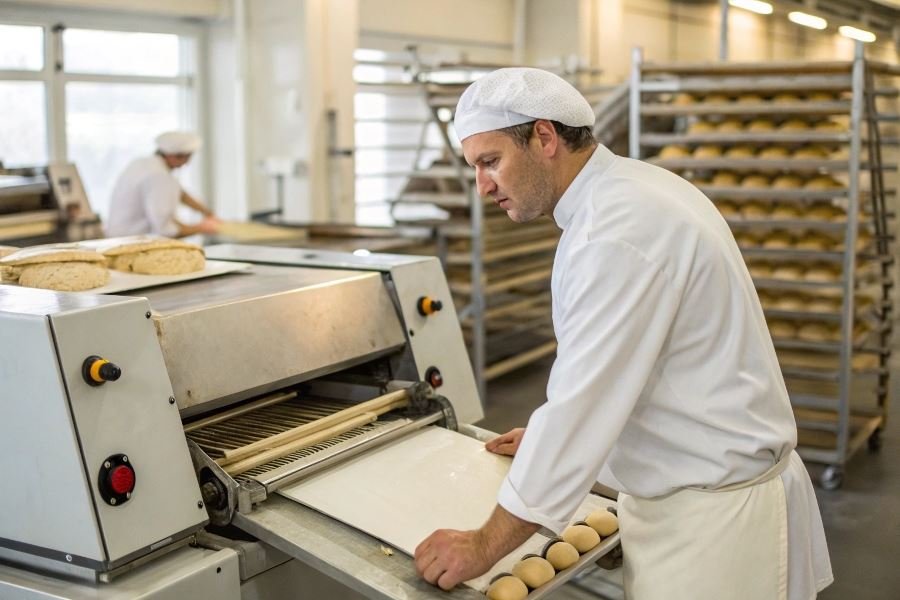
Ever watched a master baker transform a lump of dough into perfectly uniform pastry sheets with seemingly magical precision? Behind that magic often stands a crucial piece of equipment: the dough sheeter. This unsung hero of professional bakeries might just be the difference between inconsistent, labor-intensive production and bakery brilliance.
When consistency becomes your competitive edge, a quality dough sheeter isn’t just helpful—it’s transformative. The right machine turns hours of manual rolling into minutes of automated precision, ensuring every croissant, pie crust, or pizza base meets the exact specifications your customers expect. Consistency isn’t just about aesthetics; it directly impacts baking times, texture, and ultimately, your reputation.
The efficiency gains are equally impressive. What once required skilled hands and considerable time becomes a streamlined process, allowing your team to focus on creativity and craftsmanship rather than repetitive labor. Many bakery owners report productivity increases of 300-400% after introducing the right sheeter into their operations.
Before investing in this game-changing equipment, consider three critical factors:
-
Production volume and space constraints – Will you be processing 20 pounds of dough daily or 200? Your answer dramatically narrows your options.
-
Dough versatility requirements – Different doughs demand different handling. From delicate pastry to sturdy pizza dough, your product range dictates sheeter specifications.
-
Long-term reliability – The cheapest option rarely delivers the best value over time. Quality construction means fewer breakdowns during your busiest seasons.
Choosing wisely means understanding not just what you need today, but how your bakery might evolve tomorrow.
Essential Factors for Selecting the Perfect Dough Sheeter
When equipping your bakery with the right tools, few decisions impact your daily operations quite like choosing a dough sheeter. This workhorse equipment transforms your production capacity, consistency, and even product quality. Let’s dive into the critical factors that separate an adequate sheeter from one that revolutionizes your bakery operations.
Production Volume and Capacity Requirements
The first question isn’t what sheeter you want—it’s what sheeter your business demands. Understanding your production needs is fundamental when selecting a dough sheeter for a bakery that will serve you well for years to come.
Entry-level vs. industrial capacity: A small artisan bakery producing 50-100 pastries daily requires vastly different equipment than a commercial operation churning out thousands of units. Entry-level sheeters from brands like Doyon typically handle 20-30 pounds of dough hourly, while industrial models from Rondo can process upwards of 500 pounds per hour.
Speed capabilities matter more than many bakers initially realize. A sheeter that processes dough at 15 feet per minute might seem adequate until your business grows and that same speed creates a production bottleneck.
| Production Level | Recommended Capacity | Typical Speed | Example Models |
|---|---|---|---|
| Small Bakery | 20-50 lbs/hr | 10-20 ft/min | Bench models |
| Medium Operation | 50-200 lbs/hr | 20-40 ft/min | Floor standing |
| Large Commercial | 200+ lbs/hr | 40+ ft/min | Automated lines |
Space Considerations and Physical Dimensions
The perfect sheeter becomes considerably less perfect if it doesn’t fit your space. Dimensional planning is non-negotiable.
Footprint realities: Floor models from manufacturers like Somerset can require 6-8 feet of linear space, plus additional clearance for operation. Bench models offer more flexibility but sacrifice production capacity.
Consider the three-dimensional space: Height clearance matters for reversible models that flip dough during the sheeting process. Some bakeries have discovered too late that their perfect sheeter won’t fit under existing hood systems or shelving.
Wisdom nugget: Measure twice, purchase once. Include space for operators to move around the machine and account for dough handling areas on both sides of the sheeter.
Don’t overlook the weight factor—industrial sheeters can exceed 800 pounds, potentially requiring floor reinforcement in older buildings.
Dough Versatility and Thickness Control
The true test of a sheeter isn’t just speed—it’s adaptability across different dough types and precision in thickness control.
Roller material and design: Stainless steel rollers from manufacturers like Fritsch offer superior performance with sticky doughs like ciabatta, while synthetic coatings excel with delicate pastry doughs.
Thickness range capabilities vary dramatically between models. Entry-level sheeters typically offer settings between 0.5mm and 30mm, while premium models from Koenig can achieve micro-adjustments down to 0.1mm—critical for laminated doughs like croissants and puff pastry.
The belt material matters too—food-grade synthetic belts provide better release for high-hydration doughs compared to traditional canvas belts, though they typically come at a premium price point.
Programmability features have transformed high-end sheeters, allowing bakers to store specific thickness sequences for consistent results across different products. This automation reduces training time and ensures product consistency regardless of who operates the machine.
By carefully evaluating these three critical factors—production capacity, spatial requirements, and dough versatility—you’ll select a sheeter that becomes not just a purchase but a genuine production partner for your bakery.
Technical Specifications That Make or Break Your Dough Sheeter
When investing in a dough sheeter, the difference between a workhorse and a headache often lies in the technical details. Let’s dive into the specifications that separate exceptional machines from mediocre ones—the kind of insights that can save you thousands of dollars and countless hours of frustration.
Power Under the Hood
The motor is the beating heart of any dough sheeter. Commercial models typically range from 0.5HP to 3HP, with premium models pushing even higher. But raw power isn’t everything—efficiency matters more than brute force.
A 1.5HP motor with proper gearing and thermal protection will outperform and outlast a poorly designed 2HP unit. Look for motors with copper windings rather than aluminum, as they dissipate heat more effectively and extend service life by up to 40%.
The durability equation isn’t complete without considering the transmission system. Belt-driven systems offer quieter operation but require more maintenance, while direct-drive systems deliver superior torque consistency—critical when working with high-hydration doughs that demand precise handling.
The difference becomes apparent during peak production hours when lesser machines struggle with thermal shutdown while quality units maintain consistent performance.
Belt Materials That Define Quality
The conveyor belt is your dough’s primary contact surface, making it perhaps the most critical component to evaluate.
| Belt Material | Advantages | Limitations | Cleaning Requirements |
|---|---|---|---|
| Food-grade PVC | Cost-effective, good release | Less durable, 2-3 year lifespan | Daily wipedown, weekly deep clean |
| Polyurethane | Superior durability, excellent release | Higher initial cost | Quick-release for thorough cleaning |
| Silicone-coated | Outstanding non-stick properties | Premium pricing | Easiest cleaning, dishwasher-safe segments |
The best dough sheeters from manufacturers like Rondo feature tool-free belt removal systems that allow complete cleaning in under 5 minutes—a game-changer for bakeries with multiple daily production runs.
Belt thickness matters tremendously. Thinner belts (under 2mm) offer better dough sensing but wear faster, while thicker options (3-4mm) provide longevity but sacrifice some precision. The sweet spot for most operations is 2.5mm with reinforced edges to prevent stretching.
Automation That Pays for Itself
The manual versus automated debate ultimately comes down to production volume and consistency requirements.
Entry-level manual sheeters require operator skill to maintain consistent results. While they’re more affordable upfront (typically 3, 000−7,000), they demand more labor and introduce variability that can affect your final product.
Semi-automated systems with programmable thickness settings and automatic sheet folding strike an excellent balance, reducing labor costs while maintaining flexibility. These mid-range options (8, 000−15,000) often deliver the best ROI for growing bakeries.
Fully automated systems from companies like Fritsch integrate with production lines and can handle multiple dough types with preset programs. While the investment is substantial ($20,000+), the operational benefits are transformative:
- Reduction in labor costs by up to 60%
- Consistency improvements that reduce waste by 15-25%
- Production capacity increases of 200-300% with the same floor space
The automation sweet spot depends on your production volume—automation that sits idle is just expensive decoration, while understaffed manual processes create bottlenecks.
When evaluating automation features, prioritize those that address your specific pain points rather than paying for capabilities you’ll rarely use. The most valuable automated features typically include precise thickness control, automatic flour dusting, and programmable folding sequences.
Discover the 7 critical features to evaluate when selecting the perfect dough sheeter for your bakery. Learn how to match production needs, space constraints, and technical specifications to improve consistency and efficiency in your operations.
Discover the 7 critical features to evaluate when selecting the perfect dough sheeter for your bakery. Learn how to match production needs, space constraints, and technical specifications to improve consistency and efficiency in your operations.