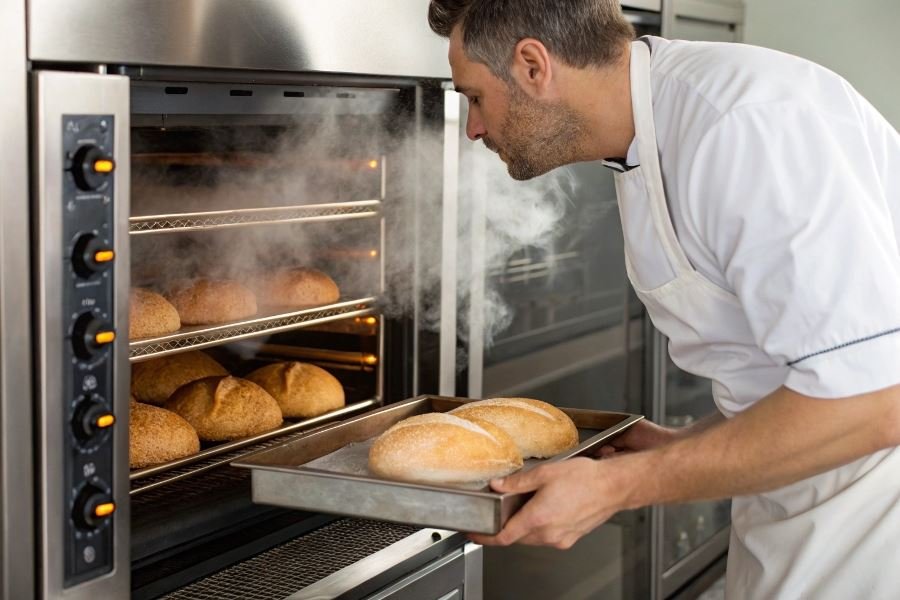
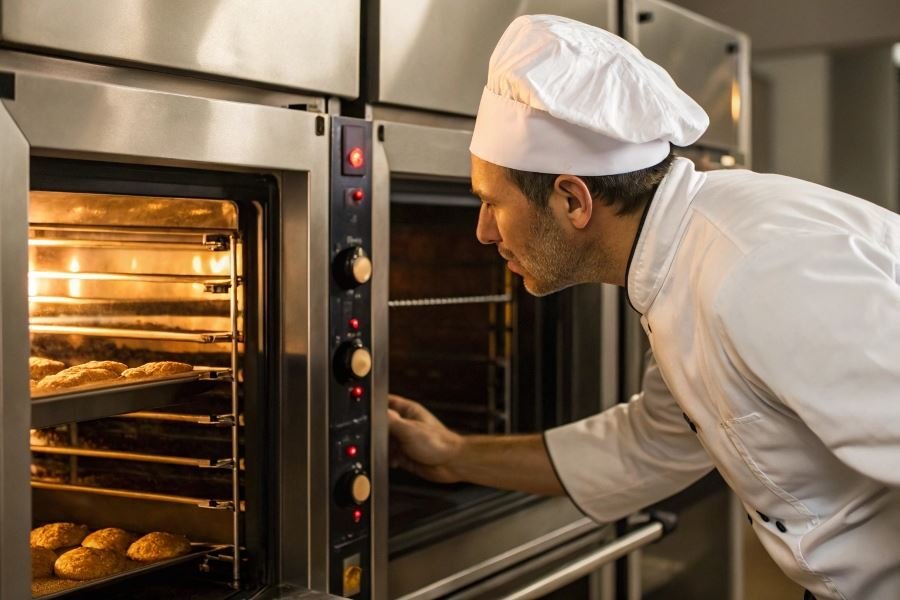
Ever walked into a bakery where everything flows like a choreographed dance? Where fresh pastries emerge with clockwork precision? Behind that magic stands an unsung hero: the humble baking cabinet.
For small bakery owners, the right storage solution isn’t just furniture—it’s the backbone of your operation. The commercial baking cabinet market has evolved dramatically, with specialized options now available for everything from proofing to cooling to display. Gone are the days when bakeries made do with repurposed kitchen cabinets; today’s options include temperature-controlled environments, humidity regulation, and materials specifically designed to meet food safety standards.
“The difference between a good bakery and a great one often comes down to workflow efficiency. And that starts with proper storage.” — James Beard Award-winning baker Mark Furstenberg
The impact of cabinet selection extends far beyond mere organization. Studies show that optimized storage solutions can reduce production time by up to 23% and minimize ingredient waste by nearly 30%. When ingredients are properly stored at ideal temperatures and humidity levels, product consistency improves dramatically.
Consider the case of Sweetness Bakery in Portland, which doubled its daily output after investing in specialized proofing and cooling cabinets. Their croissants achieved consistent lamination, their bread developed perfect crusts, and staff reported significantly less fatigue from improved ergonomics.
The right baking cabinet doesn’t just store your tools—it becomes an extension of your craft.
The Backbone of Your Bakery Business
When setting up a small bakery operation, the equipment you choose becomes the foundation of your success. Baking cabinets for small businesses: what to pay attention to often gets overlooked in the excitement of recipe development and branding decisions. Yet these specialized units serve as the command center for your product quality, consistency, and ultimately, your reputation.
Climate Control That Makes or Breaks Your Bake
The difference between amateur and professional baking often comes down to precision. Professional baking cabinets offer temperature control systems that maintain consistency within ±1°F—a game-changer when developing delicate pastries or artisanal breads.
Humidity management deserves equal attention. Modern cabinets from manufacturers like Hobart feature digital humidity controls that can maintain environments from 30% to 95% relative humidity. This precision allows you to:
- Create the perfect environment for croissant lamination (65-70% humidity)
- Maintain ideal proofing conditions for sourdough (85-90% humidity)
- Extend shelf life of finished products (40-50% humidity)
The investment in precise climate control pays dividends in product consistency that customers will notice immediately.
Space Optimization: The Small Business Advantage
Square footage equals dollars in commercial spaces. The latest generation of baking cabinets addresses this reality with remarkable efficiency.
| Cabinet Type | Footprint (sq ft) | Capacity (sheet pans) | Space Efficiency Ratio |
|---|---|---|---|
| Traditional | 12-15 | 12-16 | 1.2 pans/sq ft |
| Modern Modular | 8-10 | 16-20 | 2.0 pans/sq ft |
| Vertical Solutions | 6-8 | 18-24 | 3.0+ pans/sq ft |
Modular designs from companies like Alto-Shaam allow you to stack components, separating proofing, holding, and cooling functions while maintaining a minimal footprint. Look for units with:
- Adjustable interior configurations
- Removable racks and dividers
- Stackable components with unified control systems
- Caster-mounted bases for mobility and cleaning access
Material Science Meets Food Safety
The construction materials of your baking cabinet directly impact both food safety and equipment longevity. The FDA Food Code and NSF International establish strict guidelines for food-contact surfaces.
304-grade stainless steel has become the industry standard for interior surfaces, offering:
- Corrosion resistance against acidic ingredients
- Non-porous surface that prevents bacterial growth
- Durability against cleaning chemicals
- Heat resistance up to 1598°F
Beyond the obvious surfaces, examine the less visible components. True Manufacturing cabinets feature food-safe silicone gaskets rather than PVC, eliminating the risk of plasticizer migration at high temperatures.
The intersection of material science and regulatory compliance creates equipment that protects both your customers and your business reputation.
When evaluating baking cabinets, remember that these aren’t just storage units—they’re precision instruments that actively participate in your production process. The right cabinet becomes an extension of your craft, silently supporting your culinary vision with engineering excellence.
Smart Investment Strategies for Bakery Cabinets
When equipping your bakery operation, few decisions impact your daily workflow and bottom line quite like your choice of baking cabinets. These workhorses of the bakery world represent more than just storage—they’re the backbone of your production capacity and efficiency.
Beyond the price tag
The sticker shock of premium bakery cabinets can be intimidating. Entry-level models from brands like Hobart might start around $3,000, while high-end Baxter or Rational units can command $15,000 or more. But focusing solely on acquisition cost misses the bigger financial picture.
A comprehensive total cost of ownership analysis reveals what seasoned bakery owners already know: initial investment represents just 30-40% of lifetime cabinet costs. The remaining 60-70% comes from:
- Energy consumption (potentially $500-1,200 annually)
- Maintenance and repairs
- Downtime costs
- Replacement parts
- Eventual disposal/replacement
Premium cabinets from manufacturers like Moffat typically offer superior insulation, more efficient heating elements, and digital controls that can reduce energy consumption by 25-40% compared to budget alternatives. Over a 10-year lifespan, this efficiency difference alone can offset thousands in upfront costs.
The cheapest cabinet you can buy is rarely the cheapest cabinet you can own.
Maintenance matters
Maintenance accessibility separates truly commercial-grade cabinets from glorified residential equipment. Key maintenance-friendly features to evaluate include:
- Removable side panels for component access
- Front-serviceable control systems
- Standardized, readily available replacement parts
- Self-diagnostic capabilities
Doyon and Blodgett cabinets typically excel in maintenance design, with modular components that minimize downtime during repairs. This translates to fewer emergency service calls and less production disruption.
Consider establishing a maintenance schedule based on manufacturer recommendations:
| Maintenance Task | Frequency | DIY Possible | Avg. Professional Cost |
|---|---|---|---|
| Door seal inspection | Monthly | Yes | $0 |
| Control calibration | Quarterly | Sometimes | $150-250 |
| Element inspection | Bi-annually | No | $200-350 |
| Full service | Annually | No | $400-700 |
Growing with your business
The scalability of your baking cabinet infrastructure directly impacts your ability to seize growth opportunities without disruptive overhauls.
Modular systems from manufacturers like Alto-Shaam allow bakeries to start with core components and add capacity incrementally. Their stackable designs maximize vertical space utilization—critical for operations in high-rent districts where every square foot counts.
Programmability represents another dimension of scalability. Cabinets with digital interfaces and recipe storage from Pavailler or Empire Bakery Equipment enable consistent production scaling without proportional labor increases. Some advanced models store hundreds of baking profiles, allowing rapid menu expansion without extensive staff training.
When evaluating scalability, consider:
- Maximum capacity utilization (can you run at 90%+ capacity without performance degradation?)
- Compatibility with existing and future equipment
- Ability to handle diverse product lines
- Power and ventilation requirements for expanded configurations
The most forward-thinking bakeries select cabinets that not only meet current production needs but accommodate 3-5 years of projected growth without replacement—a strategy that typically delivers 15-25% better return on investment compared to sequential equipment upgrades.
Discover essential features for selecting the perfect baking cabinets for your small bakery business. Learn about temperature control, space optimization, and durability factors that maximize efficiency, ensure food safety, and support your growing operation.
Discover essential features for selecting the perfect baking cabinets for your small bakery business. Learn about temperature control, space optimization, and durability factors that maximize efficiency, ensure food safety, and support your growing operation.