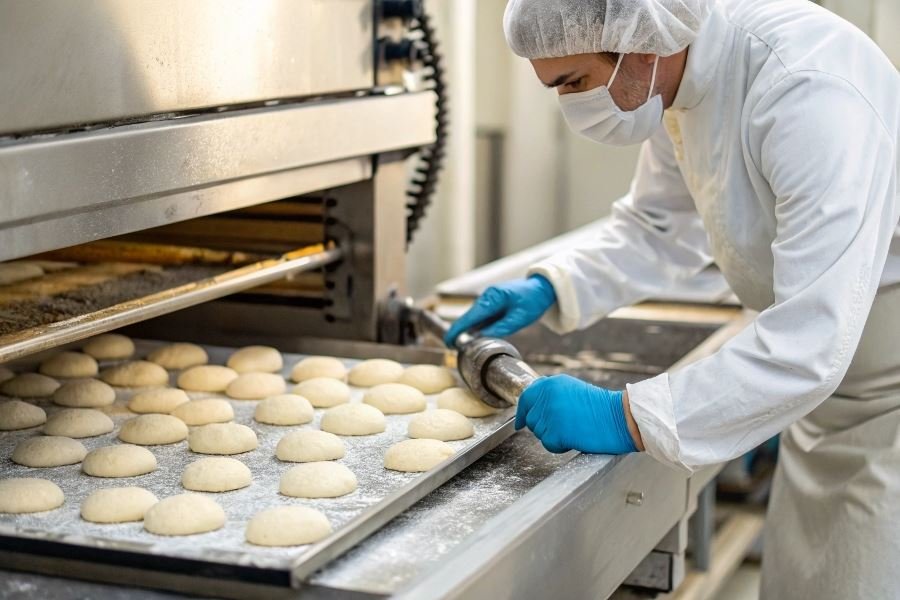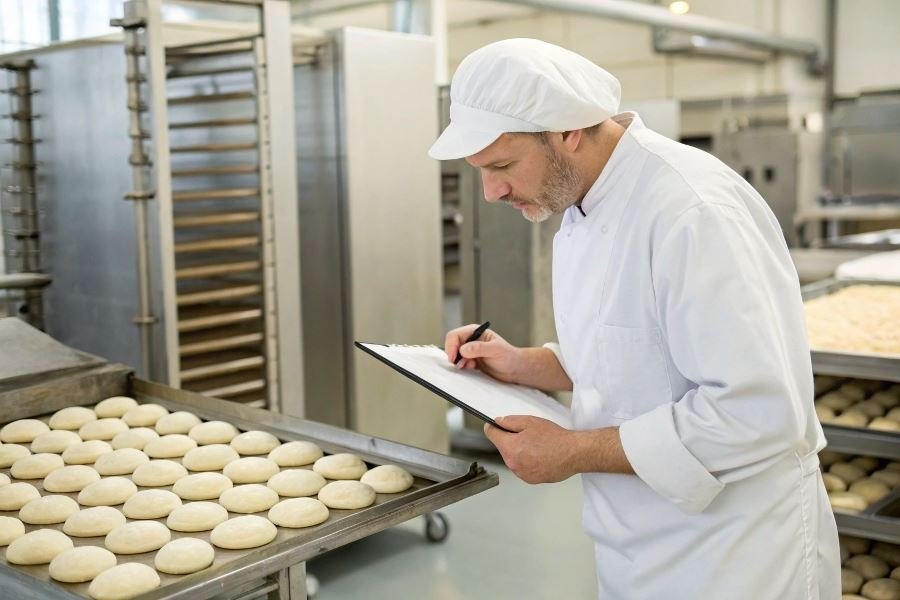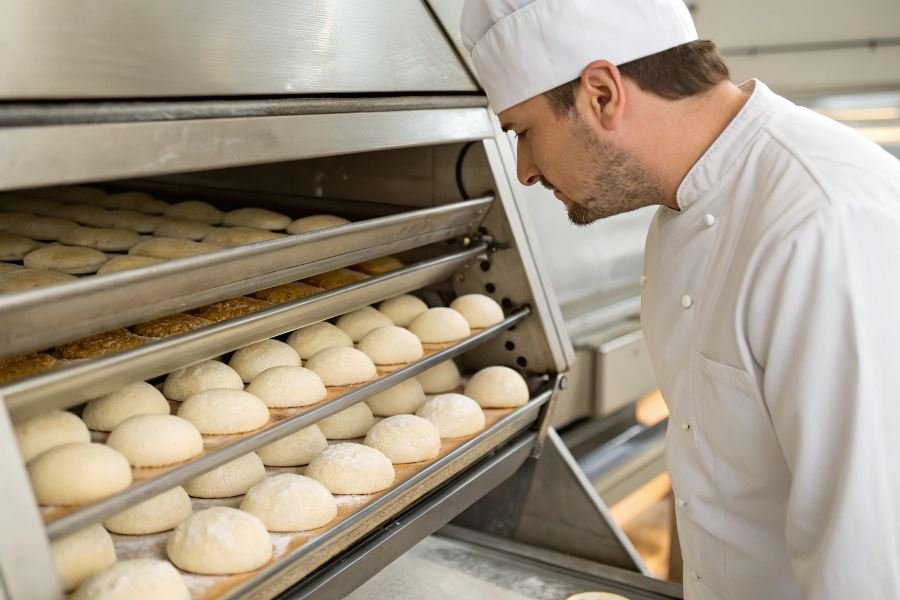
Ever watched a master baker portion dough with such precision that each loaf comes out identical? That’s not just skill—it’s the foundation of bakery consistency and profitability. Behind every perfectly uniform bread loaf or pastry lies a critical decision: how to divide dough efficiently without sacrificing quality.
For small bakery owners, the choice between automatic and manual dough dividers represents more than just an equipment decision—it’s a strategic business move that affects everything from production capacity to labor costs and product consistency. While manual dividers offer tactile control and connection to traditional baking methods, automatic systems promise precision and efficiency that can transform a struggling operation into a streamlined success.
The beating heart of bakery operations
Dough division might seem like just another step in the baking process, but it’s where consistency begins. Uneven portions lead to inconsistent baking times, customer dissatisfaction, and ultimately, wasted product. A variance of just 5% in dough weight can significantly impact your bottom line over time.
Technology at your fingertips
Manual dividers typically involve hand-operated mechanisms that cut dough into portions through pressure or cutting actions. They range from simple bench knives to lever-operated dividers that can portion multiple pieces simultaneously.
Automatic dividers, by contrast, use programmable settings to measure and cut dough with computer-controlled precision. Modern systems can handle various dough types—from stiff artisan breads to delicate pastry doughs—with minimal operator intervention.
Making the right investment
Small bakery owners must weigh several factors when choosing between these technologies:
- Production volume: How many pieces do you need to divide hourly?
- Labor availability: Is skilled labor readily available in your area?
- Space constraints: Will the equipment fit your production area?
- Initial investment vs. long-term savings: Can you justify the higher upfront cost of automation?
The right divider doesn’t just portion dough—it portions your time, allowing you to focus on what truly matters: creating exceptional baked goods that keep customers coming back.
The True Cost of Dough Division for Bakeries
When deciding between automatic and manual dough dividers, small bakery owners face a pivotal business decision that impacts everything from daily operations to long-term profitability. The choice between these technologies represents more than just equipment selection—it’s a strategic investment that shapes production capabilities, product consistency, and operational efficiency. Automatic vs manual dough dividers: which is more effective for small businesses depends on several critical factors that extend far beyond the initial price tag.
Investment reality check
The financial equation starts with stark differences in upfront costs:
| Divider Type | Initial Investment | Operational Cost (Annual) |
|---|---|---|
| Manual | 500−2,000 | 200−500 |
| Semi-Auto | 3, 000−8,000 | 500−1,200 |
| Automatic | 10, 000−30,000+ | 800−2,500 |
Entry-level manual dividers from brands like Doyon offer accessibility at 500−2,000, making them attractive for startups. However, this affordability comes with hidden costs—primarily labor. Automatic systems from manufacturers like Erika Record require substantial capital (10, 000−30,000+) but dramatically reduce labor expenses, often paying for themselves within 2-3 years for operations producing over 500 units daily.
Production throughput matters
The production capacity gap is significant:
Manual dividers process 100-200 dough pieces hourly, requiring constant operator attention.
Automatic systems handle 500-2,000+ pieces hourly with minimal supervision, representing a 5-10x productivity increase.
For bakeries experiencing growth constraints due to production bottlenecks, this throughput difference can be transformative. A Dutchess automatic divider-rounder can replace 2-3 staff members during peak production periods, allowing reallocation of skilled labor to higher-value tasks like finishing and decoration.
Precision equals profitability
Product consistency directly impacts customer satisfaction and waste reduction:
- Manual dividers: ±5-10% weight variation
- Automatic dividers: ±1-2% weight variation
This precision difference translates to tangible savings. A bakery producing 1,000 bread loaves daily using an automatic system from Benier might save 7, 000−10,000 annually just from reduced ingredient waste compared to manual operations.
Space and facility considerations
Footprint requirements vary dramatically:
Manual dividers occupy minimal space (2-3 square feet) and require no special electrical connections. Automatic systems demand dedicated floor space (15-40 square feet) plus 220V power and sometimes compressed air connections. For urban bakeries where space costs 30−50 per square foot annually, this spatial difference represents a significant operational consideration.
Maintenance realities
The maintenance equation favors simplicity:
Manual dividers require basic cleaning and occasional blade replacement (50−100 annually). Automatic systems demand scheduled maintenance, professional servicing, and potential downtime costs (800−2,500 annually). However, newer models from Koenig feature modular designs that simplify maintenance and reduce downtime by up to 40% compared to older equipment.
The effectiveness question ultimately depends on production volume, labor costs, and growth trajectory. Bakeries producing fewer than 200 units daily often find manual dividers more economical, while operations exceeding this threshold typically benefit from automation’s efficiency, despite the higher initial investment.
Making the Smart Dough Divider Decision for Your Business
Aligning with your growth trajectory
Small bakeries face a pivotal decision when scaling operations: stick with manual dividers or invest in automation? Your business growth trajectory should drive this decision. Manual dividers make perfect sense for artisanal bakeries producing under 500 units daily. However, businesses experiencing 15-20% annual growth should consider automatic dividers that can handle 1,000+ portions hourly.
Growth-ready businesses benefit most from automatic systems like the Adamatic ADR-2 or Empire’s AutoDivide, which can scale from 800 to 2,400 units per hour without additional labor costs. Meanwhile, stable businesses with consistent production volumes may find the ROI on manual equipment more favorable.
The right divider isn’t about what you need today—it’s about what you’ll need tomorrow.
Flexibility for diverse product offerings
Product diversity demands equipment flexibility. Manual dividers excel here, allowing bakers to adjust weight, shape, and handling for different dough types with minimal reconfiguration.
Automatic dividers traditionally struggled with versatility, but newer models have evolved significantly. Consider these flexibility factors:
| Factor | Manual Dividers | Automatic Dividers |
|---|---|---|
| Dough types handled | 8-12 varieties | 3-8 varieties |
| Weight range | 1oz – 5lbs | 1oz – 3lbs (typically) |
| Changeover time | 1-3 minutes | 5-15 minutes |
| Hydration tolerance | 55-80% | 60-75% |
Bakeries with signature items that require special handling should weigh this flexibility against production needs. The Sottoriva ATHENA offers a middle ground with programmable settings for up to 100 recipes while maintaining throughput of 1,800 pieces hourly.
Crunching the ROI numbers
The financial equation isn’t simply about upfront costs—it’s about long-term value. A comprehensive ROI analysis should include:
- Initial investment (2, 000−5,000 for quality manual dividers vs. 15, 000−60,000 for automatic systems)
- Labor savings (automatic dividers typically reduce labor needs by 60-75%)
- Maintenance costs (averaging 5-8% of purchase price annually for automatic systems)
- Product consistency (reduced waste from weight inconsistencies)
Most small bakeries find automatic dividers reach breakeven within 18-36 months when production exceeds 1,000 units daily. For example, a bakery producing 1,500 rolls daily might save $28,000 annually in labor costs with a $45,000 automatic divider—reaching breakeven in under two years.
Planning your transition strategy
Implementing new equipment requires careful planning. Consider these transition approaches:
- Phased implementation: Start with a semi-automatic divider like the Doyon DSF015 before moving to fully automatic systems
- Production scheduling: Initially use automatic equipment for high-volume products while maintaining manual processes for specialty items
- Staff training: Allocate 2-3 weeks for comprehensive training to maximize equipment benefits
- Maintenance preparation: Establish preventative maintenance schedules and identify local service providers before purchase
Smart bakeries don’t just buy equipment—they integrate it strategically. Create a 6-12 month transition plan that includes benchmarks for evaluating success, such as production increases, consistency improvements, and actual labor savings compared to projections.
The right divider choice ultimately depends on your specific business context, but a methodical decision framework ensures you’ll rise to the occasion.
Discover which dough divider is right for your small bakery. Compare automatic vs manual options based on cost, efficiency, precision, and ROI to maximize productivity and product quality in your baking operations.
Discover which dough divider is right for your small bakery. Compare automatic vs manual options based on cost, efficiency, precision, and ROI to maximize productivity and product quality in your baking operations.