
Ever wondered what keeps $1.08 trillion in U.S. physical currency secure as it moves between businesses and banks? The answer might be smaller than you think.
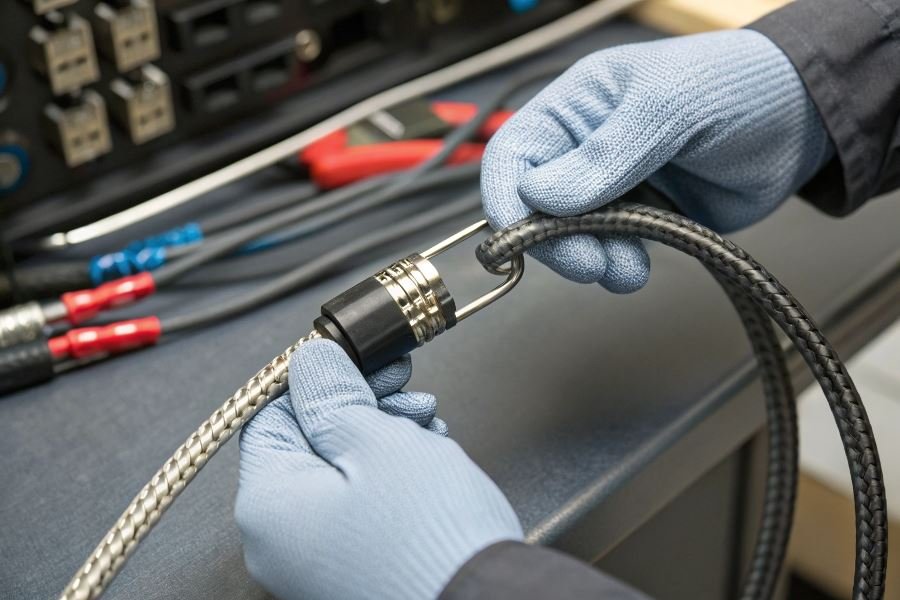
Behind every successful cash collection operation lies an unsung hero: the humble bank cord. These specialized security devices serve as the first line of defense against tampering and theft during cash transport. When selecting the right cord for your business’s cash collection needs, the stakes couldn’t be higher – the difference between security and vulnerability often comes down to this seemingly simple component.
Bank cords are specially designed sealing mechanisms that secure cash bags, cassettes, and containers during transit. Unlike ordinary zip ties or fasteners, these cords incorporate unique security features: tamper-evident designs, sequential numbering, and specialized materials that reveal unauthorized access attempts. The right cord doesn’t just secure your money; it creates an unbroken chain of custody documentation.
“Security breaches in cash handling typically occur at transition points. A properly selected bank cord eliminates these vulnerabilities.” – Federal Reserve Cash Operations Manual
The Federal Deposit Insurance Corporation (FDIC) and the Bank Secrecy Act establish strict guidelines for cash handling security. These regulations require businesses to implement specific security protocols, including proper sealing mechanisms for cash in transit. Non-compliance doesn’t just risk your assets—it can trigger substantial penalties.
Choosing the appropriate bank cord isn’t merely a procurement decision—it’s a critical security strategy that protects your business’s financial integrity.
Essential Criteria for Bank Cord Selection
When securing cash in transit, the humble bank cord represents your first line of defense against tampering and theft. Financial institutions across the country recognize that choosing the right security cord isn’t merely a procedural detail—it’s a critical decision that directly impacts cash integrity. Understanding how to choose a bank cord for cash collection requires evaluating several essential criteria that separate premium security solutions from basic alternatives.
Material Durability That Withstands Attack
The foundation of any effective bank cord starts with its construction materials. Premium security cords utilize high-tensile polypropylene or reinforced nylon that resists cutting, stretching, and environmental degradation. These materials undergo rigorous testing to ensure they maintain structural integrity under extreme conditions.
Tamper-evident features have evolved significantly in recent years, with advanced options including:
- Color-changing fibers that reveal manipulation attempts
- Micro-perforations that create irreparable tears when tampered with
- UV-reactive elements for authentication under specialized lighting
The most effective cords incorporate multiple tamper-evident technologies simultaneously, creating layered security that makes unauthorized access immediately apparent. According to security experts, the ideal cord should show evidence of tampering within seconds of an attempt, leaving unmistakable visual indicators.
Advanced Security Mechanisms
Modern bank cords feature sophisticated security elements that go far beyond basic sealing functions. The most advanced options include:
| Security Feature | Function | Detection Method |
|---|---|---|
| Sequential numbering | Unique identifier for each cord | Visual inspection |
| Barcode integration | Digital tracking and verification | Scanner verification |
| RFID embedding | Wireless authentication | Electronic reader |
| Holographic elements | Visual authentication | Multi-angle inspection |
These authentication elements create a verification ecosystem that extends beyond the physical cord itself. When integrated with Chase or Bank of America security protocols, these features enable real-time tracking and verification throughout the cash transportation process.
The most sophisticated cords now incorporate blockchain-verified digital twins, creating an immutable record of the cord’s journey from creation to final destination.
Banking Industry Compliance Standards
Financial institutions must adhere to strict regulatory frameworks governing cash handling procedures. Premium bank cords meet or exceed standards established by:
- Federal Reserve Cash Operations Manual guidelines
- American Bankers Association security recommendations
- ANSI/ASIS physical security standards
Compliance-ready cords typically come with certification documentation that validates their adherence to these standards. This documentation serves both operational and audit purposes, streamlining regulatory reviews.
When evaluating cords from manufacturers like Tyden Security or American Casting & Manufacturing, verify their compliance with ISO 17712 standards for security seals, even though this certification primarily addresses freight containers. The principles of tamper evidence and physical security remain directly applicable to cash handling.
The intersection of material durability, security mechanisms, and regulatory compliance creates a comprehensive evaluation framework for selecting bank cords that truly protect your assets. By prioritizing these criteria, financial institutions can significantly reduce risk exposure while streamlining cash collection operations.
Making the Smart Investment in Bank Cords for Cash Collection
Premium vs standard: The real cost equation
When evaluating bank cords for cash collection, the price tag tells only part of the story. Premium models from manufacturers like Securicord and BankSafe typically cost $75-150 more than standard options, but this investment often pays dividends through extended lifespan and enhanced security features.
A comprehensive cost-benefit analysis reveals that premium cords generally last 3-5 years longer than standard alternatives. For businesses processing daily deposits, this translates to approximately $300-450 in savings over the cord’s lifetime when factoring in replacement costs and administrative overhead.
The true value proposition isn’t in the initial purchase price but in the total cost of ownership across the product lifecycle.
Consider this comparison of lifetime costs:
| Cord Type | Initial Cost | Average Lifespan | Replacement Frequency | 10-Year Total Cost |
|---|---|---|---|---|
| Standard | $200-350 | 2-3 years | 4-5 times | $800-1,750 |
| Premium | $350-500 | 5-7 years | 1-2 times | $700-1,000 |
Implementation strategies that work
Implementing new bank cords requires thoughtful planning beyond the purchase decision. For multi-location businesses, a phased rollout allows for testing and adjustment before full-scale deployment.
Staff training represents a critical implementation component often overlooked. Even the most secure cord becomes a vulnerability when improperly handled. Develop clear protocols addressing:
- Proper sealing techniques
- Verification procedures
- Chain of custody documentation
- Tamper identification
Integration with existing systems deserves careful consideration. The most sophisticated cord will create friction if it doesn’t align with your current cash management processes. Before purchase, map your collection workflow and identify potential compatibility issues with new equipment.
The most successful implementations treat bank cords as part of an ecosystem rather than isolated products.
For businesses with seasonal fluctuations, consider maintaining a small inventory of backup cords during peak periods. This redundancy prevents collection delays when volumes surge.
Maintenance matters: Maximizing cord lifespan
Even premium bank cords require proper maintenance to deliver their full value. Establish a regular inspection schedule—monthly for high-volume operations, quarterly for lower-volume businesses—to check for:
- Seal integrity
- Closure mechanism functionality
- Barcode/RFID readability
- Physical damage to cord material
The optimal replacement schedule depends on usage patterns and environmental factors. However, most security experts recommend preemptive replacement rather than waiting for failure. For standard cords, plan for replacement every 24-30 months; premium cords typically maintain integrity for 60-84 months.
Document each cord’s deployment date and condition in your security records to establish data-driven replacement cycles tailored to your specific usage patterns.
Temperature extremes accelerate degradation, particularly for cords used in outdoor environments. Businesses operating in regions with significant seasonal temperature variations should adjust their replacement schedules accordingly, potentially shortening intervals by 15-20% in harsh conditions.
By approaching bank cord selection as a strategic investment rather than a commodity purchase, your business can enhance security, reduce long-term costs, and streamline cash collection operations for years to come.
Discover the essential criteria for selecting secure bank cords for cash collection. Learn about durability, tamper-evident features, security mechanisms, and industry compliance standards to protect your business assets effectively.
Discover the essential criteria for selecting secure bank cords for cash collection. Learn about durability, tamper-evident features, security mechanisms, and industry compliance standards to protect your business assets effectively.
