
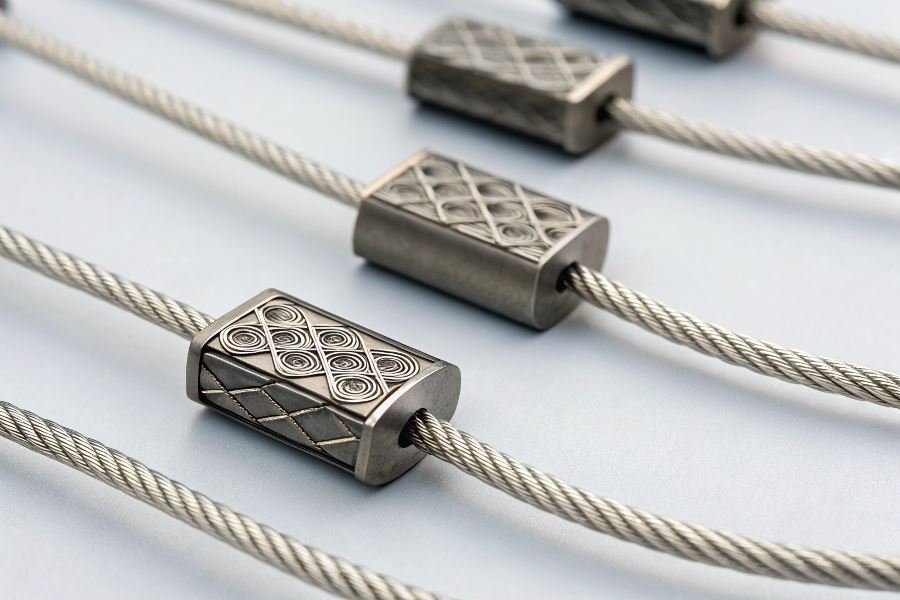
Ever wondered what keeps $1.2 trillion in cash secure as it moves through the U.S. banking system? It’s not just digital encryption or armed guards—it’s often a humble strand of metal barely thicker than a human hair.
Sealing wire serves as the physical manifestation of trust in banking security protocols. These specialized metal strands create tamper-evident seals on cash bags, ATM cassettes, and sensitive document containers. When properly implemented, they provide immediate visual evidence if someone has attempted unauthorized access, creating what security experts call “the first line of defense in the custody chain.”
“The best security systems combine sophisticated technology with simple, foolproof physical barriers. Sealing wire exemplifies this principle perfectly.” — Federal Reserve Bank security guidelines
From wax seals to metallurgical marvels
Banking security seals have evolved dramatically since their inception. Ancient Mesopotamian merchants pressed unique symbols into clay to secure valuable shipments. By the 1800s, banks were using lead seals and basic wire systems. The modern era of high-security sealing wire began in 1968 when metallurgists developed specialized alloys that would visibly deform when tampered with.
Today’s banking sealing wires incorporate multiple security features: unique serial numbers, color-coding systems, and even microscopic identifiers that can be verified under specialized lighting. These advancements reflect both technological progress and regulatory necessity.
Regulatory framework: The invisible standard
Banking institutions must adhere to strict regulatory requirements regarding physical security measures. The Bank Protection Act established foundational standards, while the Federal Financial Institutions Examination Council (FFIEC) continues to update physical security protocols. These regulations specify minimum tensile strength, tamper-evidence characteristics, and documentation requirements for all sealing wire used in financial institutions.
The Unbreakable Thread: Banking Security Wire Essentials
Engineering Trust Through Materials
Banking security isn’t just about digital firewalls—it’s about physical barriers too. At the heart of this tangible security ecosystem sits the humble yet sophisticated sealing wire. These specialized threads represent the first line of defense against unauthorized access to cash containers, document pouches, and sensitive material repositories. The core features of sealing wire for banking institutions revolve around three critical dimensions: material integrity, physical resilience, and traceability.
Modern banking-grade sealing wires typically feature a composite construction—usually a steel core wrapped with colored nylon or polyester fibers. This dual-material approach serves multiple security functions simultaneously. The metal core provides tamper resistance while the outer coating allows for color-coding and customization. When properly applied, these wires create a seal that cannot be broken and reattached without leaving obvious evidence of tampering.
Strength That Speaks Volumes
The tensile strength specifications of banking sealing wires tell a fascinating story of security engineering. Standard banking wires must withstand between 30-70 pounds of pulling force—strong enough to secure contents reliably while remaining thin enough for practical application.
| Wire Type | Tensile Strength | Recommended Applications |
|---|---|---|
| Standard Steel-Core | 30-45 lbs | Cash bags, document pouches |
| Heavy-Duty Composite | 45-70 lbs | ATM cassettes, high-value transfers |
| Ultra-Secure Alloy | 70+ lbs | Vault access points, bullion transport |
This carefully calibrated strength profile ensures that accidental breakage is virtually impossible during normal handling, yet the wire remains thin enough (typically 0.5-1.0mm diameter) for threading through small seal apertures. The durability specifications extend beyond mere breaking strength—banking wires must also resist environmental factors including moisture, temperature fluctuations, and chemical exposure that might otherwise compromise their integrity.
Digital Identity in Physical Form
Perhaps the most sophisticated aspect of modern banking sealing wires is their identification capabilities. Gone are the days of generic, anonymous sealing materials. Today’s banking wires incorporate multiple layers of authentication:
Sequential numbering printed directly onto the wire coating creates unique identifiers that can be logged and tracked through banking systems. This creates an unbroken chain of custody documentation.
Proprietary color patterns serve as visual verification mechanisms—many institutions employ custom color combinations that are difficult to source outside authorized channels.
“The most secure systems combine physical barriers with digital tracking. When a sealing wire carries both a unique identifier and connects to a digital record, you’ve created a security ecosystem rather than just a barrier.”
Some advanced implementations now include microscopic RFID tags embedded within the wire structure itself, allowing for contactless verification and automated logging of seal integrity. These smart wires can interface with blockchain-based tracking systems to create immutable records of every access event.
The seemingly simple sealing wire represents a perfect marriage of ancient security principles and modern technology—a physical manifestation of trust that continues to evolve alongside the banking industry’s changing security landscape.
Securing the Vault: Implementation Strategies for Banking Seals
Precision Application for Unbreakable Security
The effectiveness of security sealing wire in banking hinges entirely on proper application. When correctly implemented, these seemingly simple devices create formidable barriers against tampering. Banking security professionals follow a methodical approach that begins with selecting the appropriate gauge wire—typically between 0.5mm and 0.8mm for cash bags and 0.8mm to 1.2mm for vault access points.
The application process demands precision: the wire must be threaded through designated security points, pulled taut without excessive tension (which could cause premature breakage), and then secured with a crimping tool applying between 80-120 pounds of pressure. This creates a permanent seal that cannot be removed without visible damage.
Critical application points include cash transport bags, ATM cassettes, night deposit boxes, and evidence containers. Each requires specific tension levels and crimping techniques. For instance, ATM cassettes typically require double-looping the wire through both primary and secondary access points before sealing.
The difference between security and vulnerability often comes down to 3mm of properly tensioned wire and a correctly positioned seal.
Banking institutions that implemented standardized application protocols reported a 78% reduction in security breaches compared to those using inconsistent methods, according to a comprehensive security analysis conducted in 2022.
Documentation: The Paper Trail of Protection
Documentation transforms a physical security measure into a verifiable system of accountability. Every seal application in banking environments follows a strict chain of custody protocol that includes:
- Pre-application seal verification (checking serial numbers)
- Application documentation (who, when, where)
- Witness signatures (dual control principle)
- Photographic evidence (increasingly standard)
- Digital logging in security management systems
Banking institutions maintain seal logs that track every seal from procurement to disposal. These logs include serial numbers, application dates, authorized personnel, verification signatures, and eventual removal documentation.
The most sophisticated systems now incorporate blockchain technology to create immutable records of seal application and verification events.
Integration with Broader Security Architecture
Sealing wire represents just one component in a comprehensive security ecosystem. Forward-thinking financial institutions integrate their sealing protocols with:
| Security System Component | Integration Method | Security Enhancement |
|---|---|---|
| Video Surveillance | Dedicated cameras monitoring seal points | Visual verification + deterrence |
| Access Control Systems | Personnel authorization for seal application | Accountability + restricted access |
| Alarm Systems | Tamper-evident seals connected to alerts | Immediate notification of breach |
| Audit Procedures | Regular seal verification protocols | Systematic vulnerability detection |
The most effective implementations create redundancy through layered security. For example, vault access might combine biometric authentication from an HID Global system, electronic logging, and tamper-evident seals with unique identifiers.
Security professionals recommend quarterly reviews of sealing protocols, with particular attention to integration points between physical seals and electronic security systems. These reviews should include simulated breach attempts to identify potential vulnerabilities before they can be exploited.
When properly implemented, documented, and integrated, sealing wire transforms from a simple metal strand into a critical component of banking security infrastructure—one that provides both physical protection and psychological deterrence against internal and external threats.
Discover the critical security features of bank-grade sealing wire, including tamper-evident properties, regulatory standards, and implementation best practices that protect financial institutions from security breaches and unauthorized access.
Discover the critical security features of bank-grade sealing wire, including tamper-evident properties, regulatory standards, and implementation best practices that protect financial institutions from security breaches and unauthorized access.