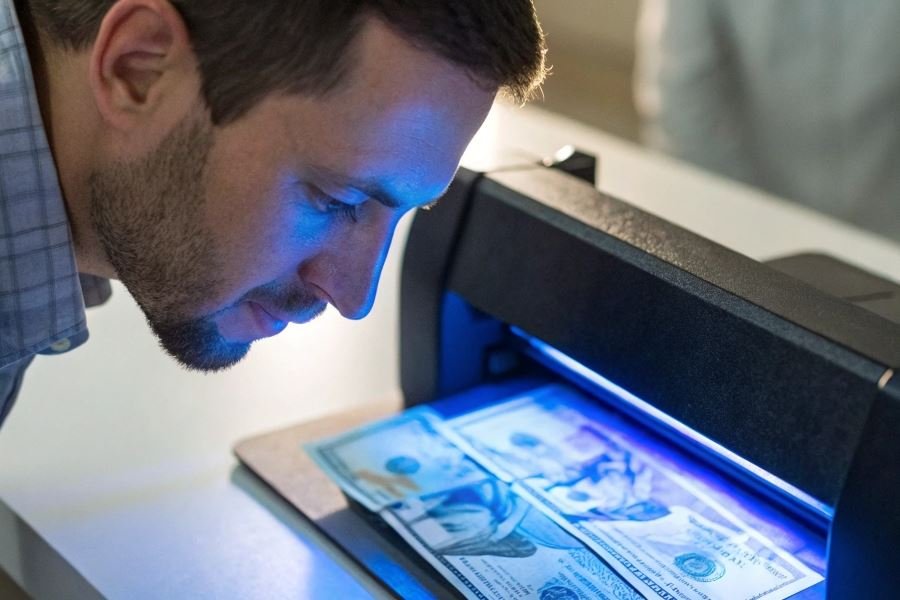
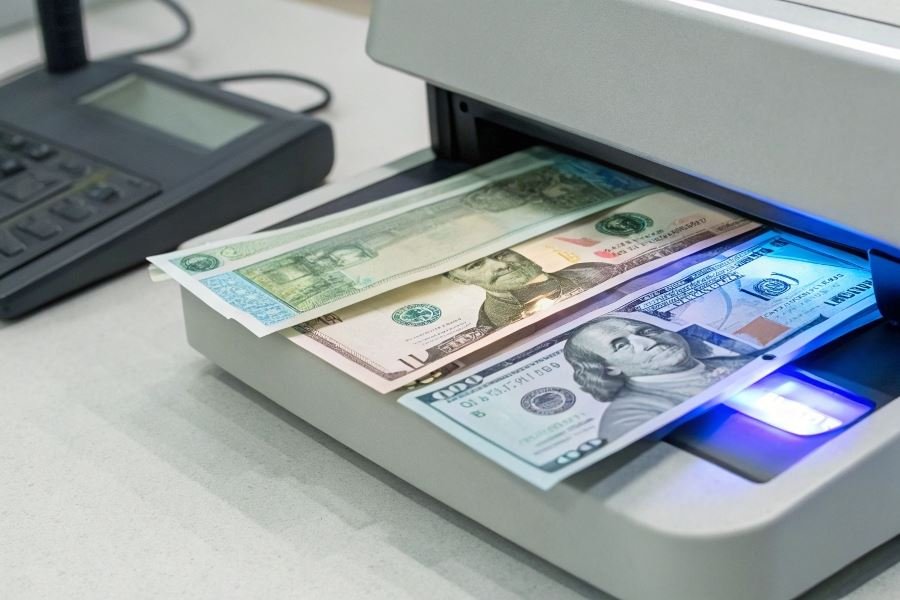
Did you know that approximately $70 million in counterfeit U.S. currency remains in circulation? Behind every transaction lurks the possibility of receiving sophisticated fake bills that could cost your business thousands.
When it comes to protecting your financial operations, the battle between automatic and manual counterfeit detection represents a critical decision point. Modern businesses face increasingly sophisticated counterfeiting techniques that evolve faster than ever before. The choice between automated detection systems and traditional manual verification methods isn’t merely about convenience—it’s about security, efficiency, and ultimately, your bottom line.
Automatic detectors leverage advanced technologies like ultraviolet detection, magnetic ink analysis, and infrared scanning to identify counterfeit notes with minimal human intervention. These machines can process multiple bills per second, providing instant verification through sophisticated algorithms that detect microscopic printing flaws invisible to the naked eye.
Manual detectors, by contrast, rely on trained human judgment supplemented by simple tools like counterfeit detection pens, UV lights, and magnifying glasses. They require more time per bill but offer flexibility and the irreplaceable human intuition that machines sometimes lack.
When evaluating which system best suits your needs, consider these critical factors:
- Transaction volume: How many bills do you process daily?
- Staff expertise: Can your team reliably identify sophisticated counterfeits?
- Budget constraints: What’s your investment threshold for security?
- Error tolerance: What’s the acceptable false positive/negative rate for your operation?
The effectiveness of either approach ultimately depends on your specific business context, risk profile, and operational requirements.
The Battle of the Bill Checkers: Effectiveness Decoded
Speed That Pays
When handling cash transactions, time literally equals money. Automatic banknote detectors process 60-100 bills per minute, while even the most experienced cashier manually checking bills might handle 15-20 per minute at peak performance. This 4-5x speed differential becomes critical during high-volume periods. The Safescan 185-S automatic detector, for instance, can verify a bill in under one second, allowing businesses to serve customers rapidly without sacrificing security.
The question of automatic vs manual banknote detectors: which is more effective becomes particularly relevant when examining real-world scenarios. A medium-sized retail operation processing 500 transactions daily might spend an additional 2-3 hours on cash handling with manual verification compared to automatic methods. This translates to approximately 750 hours annually—nearly 19 weeks of full-time work dedicated solely to bill verification.
Accuracy Under Pressure
| Detection Method | Accuracy Rate | False Positive Rate | False Negative Rate |
|---|---|---|---|
| Premium Automatic | 99.995% | 0.002% | 0.003% |
| Mid-Range Automatic | 99.9% | 0.05% | 0.05% |
| Trained Human | 95-98% | 0.5-2% | 1-3% |
| Untrained Human | 80-90% | 3-8% | 5-12% |
The data speaks volumes. Even the most skilled human verifiers typically achieve 95-98% accuracy, while modern automatic detectors like the Cummins JetScan consistently deliver 99.9%+ accuracy rates. The human eye, while remarkable, simply cannot compete with multi-spectral imaging technology that simultaneously checks UV markings, magnetic patterns, infrared features, and microprinting.
False negatives (rejecting genuine bills) create customer friction, while false positives (accepting counterfeits) directly impact the bottom line. A business accepting just one counterfeit $100 bill weekly loses $5,200 annually—enough to purchase several high-end automatic detectors.
The Economics of Detection
Initial investment represents the most significant difference between the approaches:
- Entry-level automatic detectors: $100-300
- Mid-range models with multiple detection methods: $500-1,200
- Premium multi-currency systems: $1,500-3,000
Manual detection tools (UV lights, counterfeit pens) might cost just $20-50 initially, creating an appealing entry point. However, this surface-level comparison misses crucial operational factors.
Long-term Operational Mathematics
The true cost comparison emerges when calculating Total Cost of Ownership (TCO):
- Labor costs: At $15/hour, the additional 750 hours spent on manual verification annually costs $11,250
- Training expenses: Staff turnover requires ongoing training for manual detection
- Error costs: Higher false positive/negative rates with manual methods create direct financial impact
- Maintenance: Quality automatic detectors require minimal maintenance—typically $50-100 annually
The crossover point where automatic detection becomes more economical occurs surprisingly quickly—often within 3-6 months for businesses processing moderate cash volumes.
The Verdict on Value
While small operations with minimal cash handling might reasonably rely on manual methods, the data overwhelmingly favors automatic detection for most business scenarios. The Accubanker D580 and similar mid-range automatic detectors deliver the optimal balance of initial investment and operational efficiency for most businesses.
The effectiveness equation ultimately depends on transaction volume, staff costs, and risk tolerance—but for operations processing more than 50 cash transactions daily, automatic detection consistently delivers superior return on investment while significantly reducing fraud exposure.
Making the Right Choice: Banknote Detection for Your Business
Transaction Volume as the Decision Maker
The effectiveness of your counterfeit detection strategy hinges primarily on your business’s transaction volume. High-volume operations processing hundreds of cash transactions daily face fundamentally different challenges than businesses handling just a few dozen.
For businesses processing over 200 cash transactions daily, automatic detectors deliver clear advantages. The time savings alone can recover the initial investment within months. A mid-range Cassida Quattro can process up to 1,200 bills per minute—a task that would take a human operator with a manual detector nearly an hour.
Conversely, small businesses with limited cash handling may find manual detectors perfectly adequate. When processing fewer than 50 cash transactions daily, the investment in automatic equipment may not generate sufficient returns to justify the expense.
The tipping point typically occurs at 100-150 daily cash transactions, where the labor costs of manual verification begin to exceed the amortized cost of automatic equipment.
When Automatic Detectors Prove Indispensable
Automatic detection technology demonstrates clear superiority in three key scenarios:
High-volume retail environments
Retail operations like supermarkets and department stores process hundreds of transactions hourly. Manual verification creates unacceptable bottlenecks, particularly during peak periods. Automatic detectors integrated with POS systems can verify currency in under two seconds, maintaining customer flow while providing superior detection accuracy.
Banking and financial services
Financial institutions handling thousands of notes daily require both speed and comprehensive verification. Modern automatic detectors like the JetScan iFX series can simultaneously verify multiple security features while sorting by denomination—a level of efficiency impossible with manual methods.
Currency exchange operations
Businesses dealing with multiple currencies face compounded challenges. Automatic multi-currency detectors can instantly recognize and verify dozens of currencies, applying the appropriate verification protocols to each. Manual operators would need extensive training and experience with each currency’s security features, making automation not just faster but significantly more reliable.
Implementing Your Optimal Detection Strategy
Developing an effective counterfeit detection approach requires thoughtful implementation:
-
Conduct a transaction volume analysis before making equipment decisions. Track cash transactions for at least two weeks, noting peak periods and average processing times.
-
Consider a hybrid approach for medium-volume operations. Deploy automatic detection at main registers or during peak hours, while using manual verification during slower periods.
-
Invest in staff training regardless of your detection method. Even with automatic systems, operators need to understand basic security features and proper machine operation.
-
Establish clear protocols for handling suspected counterfeits, including documentation procedures and secure storage.
-
Schedule regular equipment maintenance for automatic detectors to ensure optimal performance and accuracy.
The most successful businesses recognize that counterfeit detection isn’t merely about equipment—it’s about creating a comprehensive system that balances efficiency, accuracy, and cost-effectiveness based on your specific operational needs.
Discover which counterfeit detection technology offers superior protection for your business. Compare speed, accuracy, and cost-effectiveness of automatic vs manual banknote detectors to make an informed security investment.
Discover which counterfeit detection technology offers superior protection for your business. Compare speed, accuracy, and cost-effectiveness of automatic vs manual banknote detectors to make an informed security investment.