Ever walked into a salon and felt instantly transported to a realm of luxury? That sensation isn’t accidental—it’s meticulously crafted through thoughtful material selection for every surface you touch.
Behind every stunning salon lies a critical decision-making process about materials that balance durability, aesthetics, and functionality. The materials chosen for your salon furniture don’t just determine how long your investment lasts; they silently communicate your brand’s values to every client who walks through your door.
When evaluating materials for beauty salon furniture, three factors reign supreme: resilience against constant use, ease of sanitization, and visual appeal. Premium salons increasingly favor materials like marine-grade plywood cores with hardwood veneers for styling stations, antimicrobial solid surfaces for treatment areas, and commercial-grade fabrics treated with stain-resistant finishes for seating.
“The materials you select become the physical embodiment of your brand promise. Choose wisely—clients feel quality before they see it.”
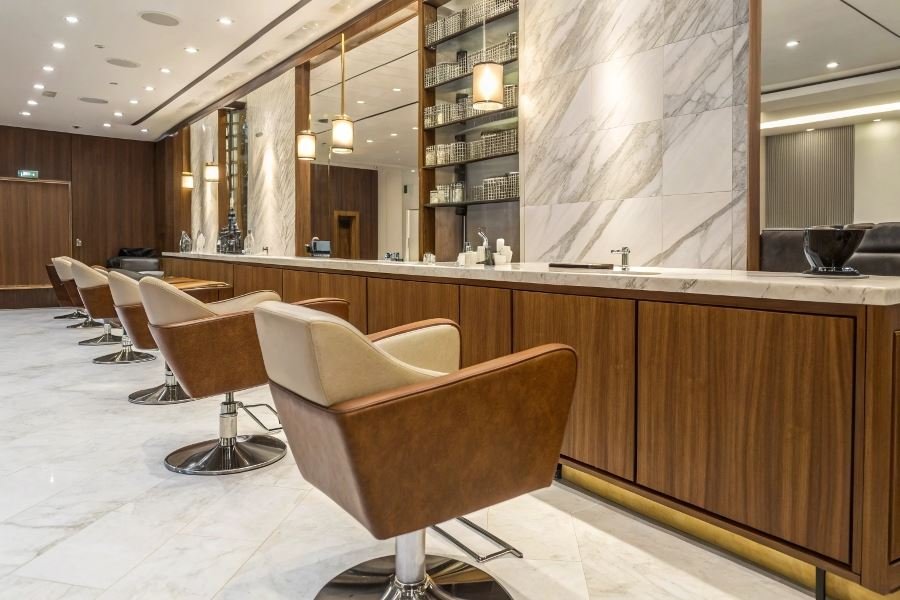
Material selection profoundly shapes client experience. The subtle give of memory foam beneath premium leatherette in a styling chair can transform a routine haircut into a comfort-focused experience. Meanwhile, the cool touch of marble reception counters instantly elevates perceived value, potentially justifying higher service pricing.
Your material choices also create sensory branding opportunities. The warm grain of walnut communicates established tradition, while sleek metals and glass project contemporary innovation. These tactile experiences become signature elements of your salon’s identity, creating memorable touchpoints that clients associate exclusively with your brand.
Essential Materials for Beauty Salon Furniture
Reception and Waiting Area Materials
The reception area creates that crucial first impression. Smart salon owners understand that selecting materials for beauty salon furniture requires balancing aesthetics with practical considerations like cleaning protocols and durability under constant use.
Engineered wood with laminate finishes dominates reception desks and waiting area furniture for good reason. These materials offer the warm appearance of natural wood while providing superior resistance to water damage, scratches, and discoloration. Premium laminates from manufacturers like Formica can withstand thousands of surface impacts without showing wear.
Upholstery choices make or break waiting areas. Commercial-grade vinyl and performance fabrics treated with stain-resistant coatings offer 5-7 years of service life compared to residential fabrics that typically fail within 18 months in salon environments. Look for materials with minimum 100,000 double rubs on the Wyzenbeek abrasion test.
Top 3 Materials for Styling Stations
Styling stations endure constant exposure to chemicals, heat tools, and daily wear. Three materials consistently outperform all others:
-
Quartz composite countertops – Non-porous surfaces resist hair color stains and chemical damage while providing a premium aesthetic. Unlike natural stone, engineered quartz requires no sealing.
-
Powder-coated steel frames – Provides structural integrity while resisting corrosion from chemical exposure. Modern powder coating processes create finishes that maintain appearance for 10+ years.
-
Tempered glass accents – Adds visual lightness while standing up to heat tools and cleaning chemicals. Minimum 10mm thickness prevents breakage.
| Material | Durability Rating | Chemical Resistance | Cost Factor |
|---|---|---|---|
| Quartz Composite | ★★★★★ | ★★★★★ | |
| Powder-Coated Steel | ★★★★☆ | ★★★★☆ | $$$ |
| Tempered Glass | ★★★☆☆ | ★★★★★ | $$ |
Specialized Materials for Wet Areas
Wet areas and spa sections demand specialized materials that can withstand constant moisture exposure while maintaining appearance and safety standards.
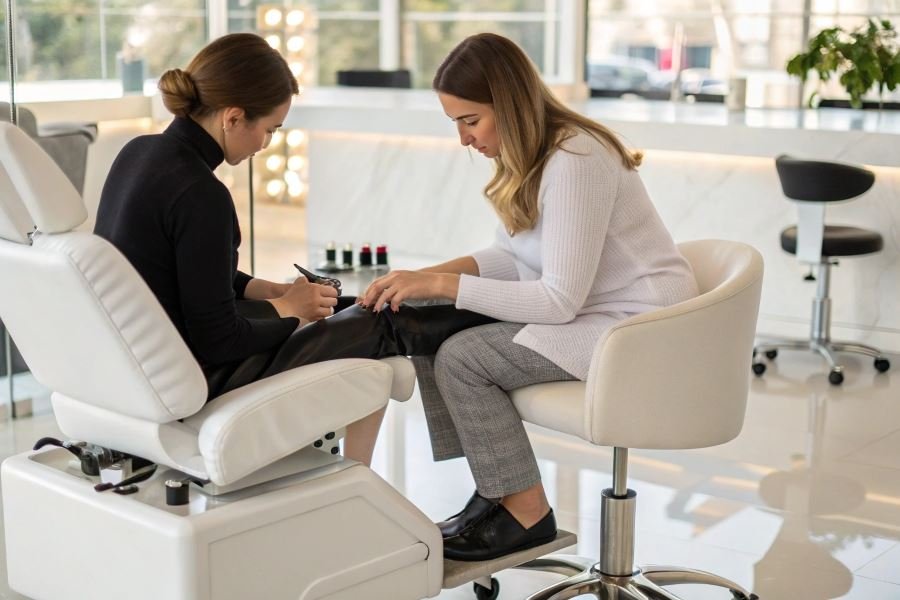
Solid surface materials like Corian and Krion offer seamless construction that eliminates crevices where bacteria could grow. These materials can be thermoformed into curved shapes ideal for spa stations and pedicure areas.
Marine-grade plywood cores provide the structural foundation for wet area cabinetry. Unlike standard plywood that delaminates when exposed to moisture, marine-grade plywood uses waterproof adhesives and rot-resistant woods.
Designer insight: The most successful salons choose materials that maintain their appearance under harsh conditions rather than those that simply look impressive on installation day.
Porcelain tile flooring with minimum R10 slip resistance ratings has become the gold standard for wet areas. Modern manufacturing techniques create porcelain tiles that convincingly mimic luxury materials like marble while offering superior water resistance and maintenance profiles.
For shampoo stations, solid surface basins with integrated overflow protection and reinforced mounting systems prevent the leakage issues common with lower-quality alternatives. The initial investment typically pays for itself within 24 months through reduced maintenance and replacement costs.
When selecting materials for any salon area, remember that initial cost rarely reflects long-term value. The materials that truly perform in salon environments often command premium prices but deliver exceptional returns through extended service life and reduced maintenance requirements.
Making the Smart Material Choice for Your Salon
The dollars and sense of salon materials
When investing in beauty salon furniture, the upfront cost is just the beginning of the story. Premium materials like genuine leather and solid hardwood command higher prices—often 30-50% more than their synthetic counterparts—but their durability can transform this premium into long-term savings.
Consider a high-traffic salon chair: upholstered in commercial-grade vinyl (400 − 600), itmightneedreplacementwithin3 − 5years.Thesamechairinpremiumleather(800-1200) could maintain its appearance for 7-10 years with proper care. The mathematics becomes compelling when you factor in replacement costs and downtime.
Material cost-benefit breakdown:
| Material | Initial Investment | Lifespan | Cost Per Year | Client Perception |
|---|---|---|---|---|
| Laminate | $$ | 3-5 years | $$ | Moderate |
| Solid Wood | 10-15+ years | $$ | High | |
| Vinyl | $$ | 3-5 years | $$ | Moderate |
| Genuine Leather | 7-10+ years | $$$ | Premium | |
| Metal | $$$ | 10+ years | $ | Modern/Luxury |
The true value equation must include client perception—premium materials often translate directly to higher service pricing potential and client retention.
Maintenance reality check
The most beautiful materials can become the most burdensome without proper maintenance consideration. This reality check can save thousands in premature replacements.
Leather requires regular conditioning to prevent cracking and maintain suppleness. Solid wood needs protection from moisture and occasional refinishing. Meanwhile, metal frames might require nothing more than occasional dusting and checking for loose fasteners.
Maintenance requirements directly impact operational costs:
- High-maintenance materials (natural stone, untreated wood): Require specialized cleaning products, regular professional treatments, and staff training
- Medium-maintenance materials (leather, treated wood): Need consistent but straightforward care routines
- Low-maintenance materials (laminates, vinyl, powder-coated metals): Can withstand commercial cleaning products and require minimal specialized attention
The most expensive material isn’t always the one with the highest price tag—it’s the one that fails prematurely due to improper maintenance.
The sustainable salon advantage
The beauty industry’s environmental footprint is prompting a material revolution. Eco-friendly alternatives aren’t just ethically sound—they’re becoming business differentiators.
Reclaimed wood offers the warmth and durability of virgin timber while telling a compelling sustainability story. Moso bamboo provides hardwood-like durability with remarkable renewability—reaching maturity in just 5 years compared to hardwoods’ 40-100 years.
For upholstery, Desserto offers cactus-based leather alternatives that reduce water consumption by 95% compared to animal leather production. Piñatex, derived from pineapple leaf fibers, provides another innovative option that diverts agricultural waste from landfills.
These materials often command premium pricing but deliver marketing advantages that traditional materials cannot. Clients increasingly select salons based on sustainability commitments, making eco-friendly materials both an ethical choice and a business strategy.
The final decision requires balancing immediate budget constraints against long-term operational costs, maintenance realities, and the evolving expectations of an increasingly eco-conscious clientele. The wisest approach combines materials strategically—investing in premium, sustainable options for high-visibility, high-touch areas while making practical choices for less prominent elements.
Discover the best materials for salon furniture that balance durability with elegant design. Learn how to select quality options for different salon areas that enhance client experience while reflecting your brand's unique style.
Discover the best materials for salon furniture that balance durability with elegant design. Learn how to select quality options for different salon areas that enhance client experience while reflecting your brand's unique style.