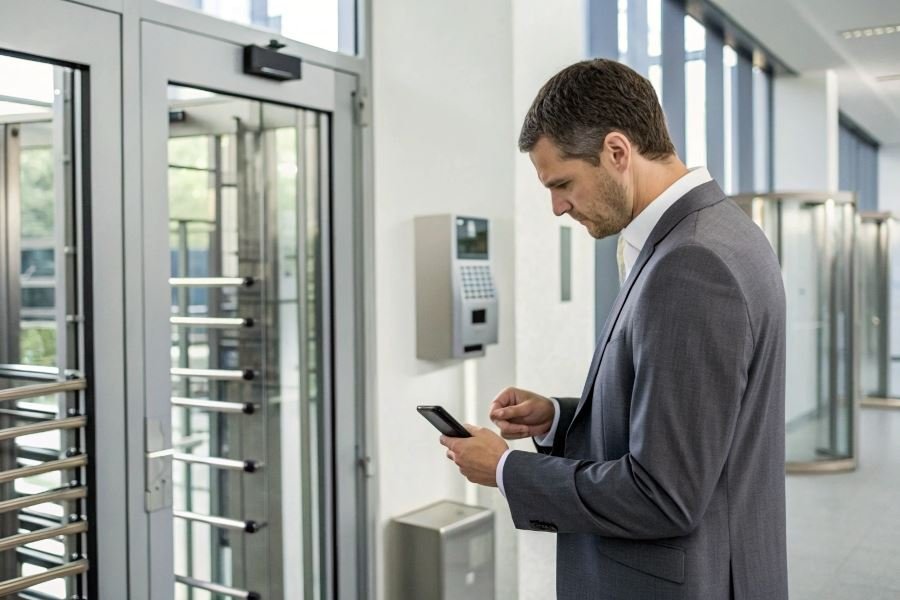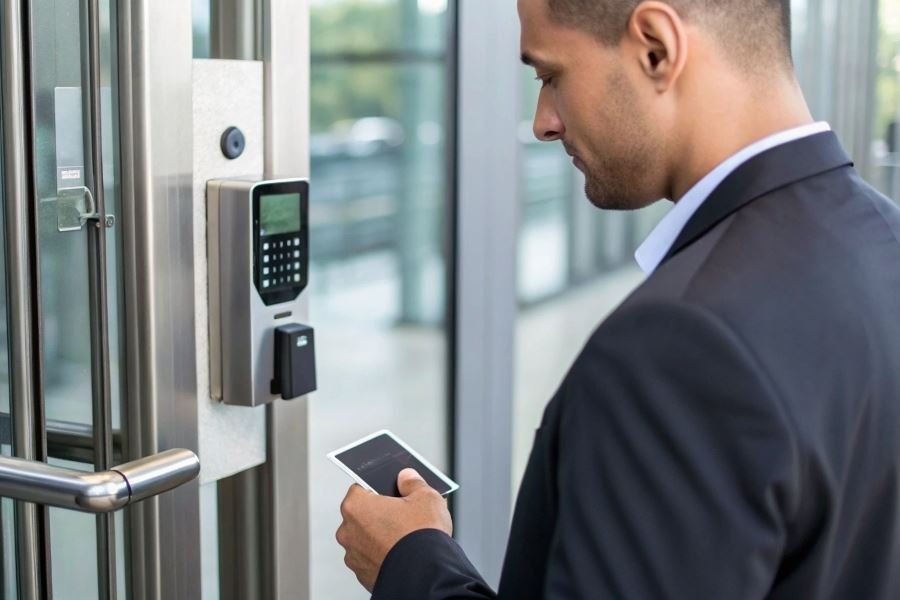
The average employee swipes their access card 12 times daily. But what if your fingerprint, face, or even the pattern of your walk could be your key instead?
Physical security has undergone a remarkable transformation since the days of simple metal keys. The battle between traditional access cards and emerging biometric tag technologies represents a pivotal moment in how we protect our spaces and information. Organizations now face a critical decision: stick with the familiar plastic cards in everyone’s pockets or embrace the biological uniqueness that makes each of us impossible to duplicate.
The security landscape has evolved dramatically over the past two decades. What began with basic magnetic stripe cards in the 1960s progressed to proximity cards in the 1990s, then to smart cards with encryption capabilities. Today, biometric technologies—fingerprint scanners, facial recognition systems, and even vascular pattern readers—are challenging the dominance of physical credentials.
The shifting security paradigm
Market analysts report a significant shift toward biometric solutions, with the global biometric system market projected to reach $82.9 billion by 2027. This growth reflects increasing concerns about credential sharing, lost cards, and sophisticated hacking techniques that can compromise traditional systems.
When evaluating effectiveness, security professionals must consider multiple factors beyond just preventing unauthorized access:
- Authentication strength: Does the system verify who you are or merely what you possess?
- User experience: How seamlessly does the technology integrate into daily workflows?
- Scalability: Can the system grow with your organization without exponential cost increases?
- Resilience against emerging threats: Will today’s security investment remain effective tomorrow?
The question isn’t simply which technology is better—it’s which solution best addresses your specific security challenges while balancing convenience, cost, and compliance requirements.
The Security Showdown: Technical Capabilities Compared
When evaluating physical access control systems, the battle between traditional access cards and emerging biometric technologies reveals striking differences in their fundamental security architecture. Organizations increasingly find themselves at this technological crossroads, weighing the merits of familiar card-based systems against the promise of biometric authentication methods.
The question of biometric tags vs access cards: which is more effective ultimately hinges on three critical factors: inherent security vulnerabilities, authentication reliability, and integration flexibility. Each technology presents distinct advantages that must be carefully evaluated against an organization’s specific security requirements and operational constraints.
Security Vulnerabilities and Their Countermeasures
Traditional access cards face several well-documented security challenges. Standard proximity cards using 125 kHz technology remain vulnerable to cloning attacks, where inexpensive devices can capture and replicate card data within seconds. More advanced smart cards employing HID Global technologies incorporate encryption and mutual authentication, significantly raising the barrier against unauthorized duplication.
Biometric systems present a different security profile. While fingerprint readers have historically been susceptible to presentation attacks using artificial prints, modern systems from providers like Suprema incorporate liveness detection to distinguish between authentic biological features and sophisticated forgeries.
Comparative Security Vulnerabilities:
| Technology | Primary Vulnerabilities | Effective Countermeasures |
|---|---|---|
| Access Cards | Cloning, theft, sharing | Encryption, multi-factor authentication |
| Biometric Tags | Spoofing, template theft | Liveness detection, encrypted templates |
Authentication Reliability Metrics
The reliability of any access control system can be quantified through false acceptance rates (FAR) and false rejection rates (FRR). These metrics reveal crucial performance differences between technologies.
Modern access card systems typically achieve FAR rates of approximately 0.001%, meaning only one unauthorized access attempt in 100,000 might succeed. However, this assumes proper implementation and up-to-date security protocols.
Biometric systems demonstrate more variable performance. Fingerprint systems from industry leaders like Idemia achieve FAR rates as low as 0.00001% in controlled environments, though environmental factors can impact real-world performance. Facial recognition technologies have made remarkable advances, with error rates declining by a factor of 20 between 2014 and 2018 according to NIST evaluations.
The critical balance between security and convenience emerges in the false rejection rates, where biometric systems typically show higher variability based on environmental conditions and user interaction quality.
Integration With Existing Infrastructure
The practical implementation of any access control technology depends heavily on its compatibility with existing security ecosystems. Access card systems benefit from decades of standardization, with protocols like Wiegand and OSDP (Open Supervised Device Protocol) ensuring broad compatibility across manufacturers.
Biometric systems have historically presented integration challenges, often requiring proprietary software and dedicated hardware. However, modern solutions from Genetec and Lenel have significantly improved interoperability through standardized APIs and support for common communication protocols.
Key integration considerations include:
- Backend database compatibility
- Network infrastructure requirements
- Credential management workflows
- Emergency override capabilities
- Compliance with regulatory frameworks
The technical evaluation reveals that while biometric systems offer superior theoretical security through their connection to unique physical characteristics, access cards provide established reliability and straightforward integration paths that remain compelling for many deployment scenarios.
Making the Right Choice: Biometric vs Access Cards
The ROI equation that matters
When evaluating security solutions, the bottom line often drives decision-making. Biometric systems typically require a higher initial investment—ranging from $1,500 to $10,000 per entry point for quality fingerprint or facial recognition systems. Traditional access cards, by comparison, generally cost 200−800 per reader with ongoing card replacement expenses of 3−8 per card.
The ROI calculation extends beyond hardware costs. Biometric solutions eliminate card replacement costs entirely, which can save organizations with high turnover up to $15,000 annually. A mid-sized company of 500 employees typically replaces approximately 20% of access cards yearly due to loss, damage, or employee departures.
The true cost of security isn’t what you pay today—it’s what you pay over the system’s lifetime plus what you risk losing from a breach.
Organizations using HID Global access cards report spending roughly 12, 000−18,000 annually on card management for a 500-person workforce. Biometric systems from providers like Suprema eliminate these recurring costs but require more substantial maintenance contracts.
Implementation realities and challenges
Deploying either system presents distinct challenges. Biometric implementations typically require:
- 2-3 weeks for installation and configuration
- Dedicated enrollment sessions for all personnel
- Integration with existing security infrastructure
- Privacy compliance documentation and consent processes
Access card systems offer faster deployment (typically 5-7 business days) but create ongoing administrative overhead. The practical considerations extend to user experience—biometric authentication takes 1-2 seconds versus the sub-second tap of an access card.
Environmental factors significantly impact system reliability. Fingerprint readers struggle in construction environments where hands may be dirty or damaged. Facial recognition performs poorly in low-light conditions without supplementary lighting.
Future-proofing your security investment
The security landscape evolves rapidly, making future-compatibility crucial. Modern access card systems using technologies like MIFARE DESFire offer encryption that remains secure against current threats, but history suggests a 5-7 year effective lifespan before vulnerabilities emerge.
Biometric systems demonstrate greater longevity through software updates. Leading platforms from ZKTeco and Idemia receive quarterly algorithm improvements that enhance accuracy and security without hardware replacement.
The adaptability factor cannot be overstated. Organizations experiencing growth should consider:
| Factor | Biometric Systems | Access Cards |
|---|---|---|
| Scalability | Additional licenses and sensors | Bulk card ordering |
| Expansion Cost | 800−1,200 per new entry point | 200−400 per new entry point |
| Integration Flexibility | API-dependent, vendor-specific | Standardized protocols |
| Future Technology Compatibility | Algorithm updates extend lifespan | May require complete system replacement |
Multi-factor authentication represents the emerging gold standard. Forward-thinking organizations increasingly implement hybrid solutions combining biometrics with mobile credentials through platforms like Openpath, offering both security and convenience.
The most future-proof approach balances immediate needs with strategic flexibility—investing in infrastructure that supports multiple authentication methods as security requirements evolve.
Discover which access control system offers superior security for your business: biometric tags or traditional access cards. Compare reliability, vulnerabilities, and ROI to make an informed security investment decision.
Discover which access control system offers superior security for your business: biometric tags or traditional access cards. Compare reliability, vulnerabilities, and ROI to make an informed security investment decision.