
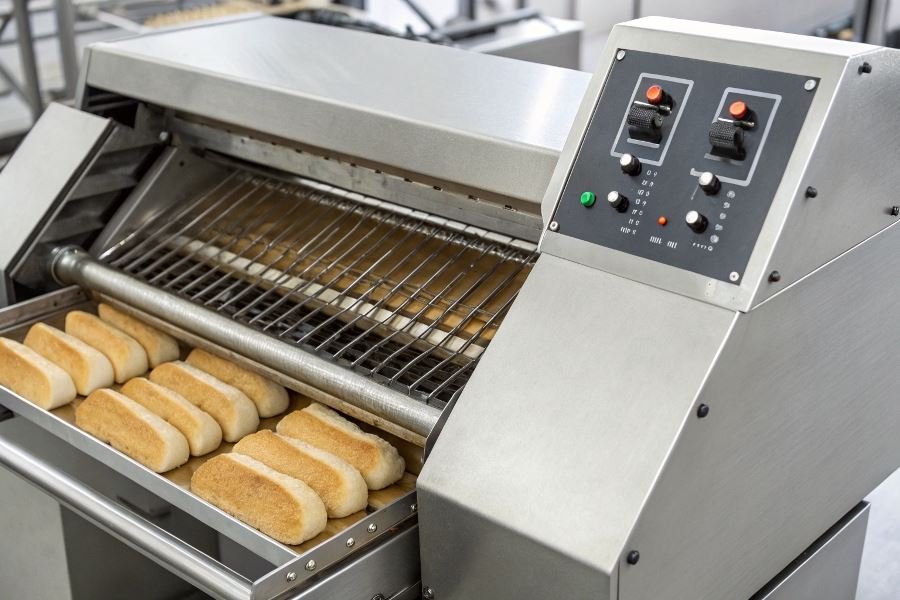
What if I told you the humble device grinding your artisanal sourdough has a lineage older than most civilizations? The journey from primitive stone mortars to today’s precision-engineered bread grinders tells a fascinating story of human ingenuity and our enduring relationship with bread.
The functional features of modern bread grinders represent centuries of innovation. Ancient Egyptians first ground grain between stones around 8000 BCE, while Romans later introduced the more efficient rotary quern. Fast-forward to the Industrial Revolution, and metal mechanisms revolutionized grinding efficiency. Today’s models bear little resemblance to their ancestors, featuring adjustable settings, preservation of nutritional content, and even smart technology integration.
The kitchen renaissance
Modern kitchens have embraced bread grinders as essential tools rather than luxury items. Why? The difference between store-bought flour and freshly ground grain is like comparing instant coffee to a barista-crafted espresso. Fresh grinding preserves volatile oils, nutrients, and flavors that commercial processing strips away.
Engineering excellence
The technological leap in grinding mechanisms has been nothing short of revolutionary. Modern grinders now offer:
- Precision-engineered burrs that create consistent particle size without generating excessive heat
- Adjustable settings for everything from coarse cracked grain to ultra-fine flour
- Noise reduction technology that transforms what was once a deafening process into a pleasant kitchen ritual
This evolution reflects our return to food authenticity while embracing technological advancement—proving that sometimes the best innovations honor tradition rather than replacing it.
The Precision Revolution in Modern Bread Grinders
The humble bread grinder has undergone a remarkable transformation. Today’s models offer unprecedented control, versatility, and efficiency that would make our grandparents’ jaws drop. What once was a simple mechanical device has evolved into sophisticated kitchen equipment with precision engineering that rivals professional bakery tools.
Modern bread grinders have revolutionized home baking through their advanced functional features. The technological leap forward means home bakers can now achieve bakery-quality results with minimal effort. These machines don’t just crush grain—they orchestrate a precise milling process that preserves nutrients while delivering exactly the texture you desire.
Dial-in Your Perfect Texture
Adjustable grinding settings represent perhaps the most significant advancement in contemporary grinders. Unlike older models with one-size-fits-all approaches, today’s machines offer:
- Micro-adjustments from ultra-fine flour (perfect for pastries) to coarse meal (ideal for rustic breads)
- Digital precision controls with up to 45 distinct settings
- Memory functions that save your preferred configurations
The difference between settings can be measured in microns, allowing bakers to create everything from silky cake flour to hearty cracked grains for artisanal loaves.
Beyond Wheat: Multi-Grain Mastery
Modern grinders handle an impressive array of grains and seeds with equal proficiency:
| Grain Type | Processing Capability | Best Uses |
|---|---|---|
| Wheat | Excellent | All-purpose baking |
| Rye | Excellent | Sourdough, pumpernickel |
| Spelt | Very Good | Ancient grain breads |
| Quinoa | Good | Gluten-free baking |
| Flaxseed | Good | Nutritional enhancement |
This versatility eliminates the need for multiple specialized machines, saving both counter space and investment. The KoMo Classic Mill exemplifies this multi-grain capability, processing everything from tiny amaranth to large corn kernels without adjustment.
Whisper-Quiet Efficiency
Remember the days when grinding grain meant waking the entire household? The latest models incorporate:
- Brushless DC motors that reduce energy consumption by up to 40%
- Thermal protection systems preventing overheating during extended use
- Noise-dampening enclosures bringing operation down to 65dB (comparable to normal conversation)
The Mockmill 100 exemplifies this efficiency, using just 360 watts while processing over a pound of grain per minute—all while maintaining a conversation-friendly noise level.
Built to Last Generations
Durability factors have become central to modern grinder design:
- Industrial-grade grinding stones made from corundum-ceramic composites
- Self-sharpening stone surfaces that maintain efficiency over decades
- Modular construction allowing for component replacement rather than whole-unit disposal
Maintenance requirements have simultaneously decreased, with many premium models requiring only occasional brushing of grinding chambers. The Nutrimill Harvest demonstrates this durability with its lifetime warranty on grinding stones—a testament to the manufacturer’s confidence in their longevity.
The investment in a quality grinder pays dividends through years of reliable service, consistent performance, and the incomparable taste of freshly ground flour that simply cannot be matched by store-bought alternatives.
The Evolution of Bread Grinders: Three Game-Changing Features
The humble bread grinder has undergone a remarkable transformation. What was once a simple mechanical device has evolved into a sophisticated kitchen companion that combines precision engineering with user-centric design. Today’s models offer capabilities that would have seemed like science fiction just a decade ago.
Smart Technology That Thinks Ahead
Modern bread grinders have embraced the digital revolution with open arms. The integration of smart technology has fundamentally changed how these machines operate and interact with users.
The KitchenTech Pro X7 exemplifies this evolution with its programmable memory settings that remember your preferred grinding consistency for different bread types. Whether you’re processing day-old sourdough or fresh brioche, these machines adjust their grinding mechanisms automatically.
The difference between yesterday’s and today’s grinders isn’t just technological—it’s philosophical. Modern machines anticipate needs rather than simply responding to commands.
Advanced models now feature touchscreen interfaces with intuitive controls that eliminate guesswork. The Breville BreadMaster includes moisture sensors that detect bread staleness and adjust grinding power accordingly—preventing both under-processing and motor strain.
Connectivity has become standard in premium models, with companion apps that offer recipe suggestions based on your grinding history and even maintenance reminders when blade sharpening is due.
Space-Saving Design Without Compromise
Kitchen counter real estate is precious, and manufacturers have responded with remarkable design innovations that maximize functionality while minimizing footprint.
Vertical orientation has replaced the traditional horizontal layout in many new models. The Cuisinart VerticalGrind stands just 8 inches tall while maintaining a grinding capacity comparable to units twice its size.
Collapsible components have become increasingly common, as demonstrated in this comparison:
| Feature | Traditional Design | Modern Design |
|---|---|---|
| Storage Footprint | 12″ x 10″ x 8″ | 8″ x 6″ x 4″ (collapsed) |
| Grinding Capacity | 4 cups | 4-5 cups |
| Weight | 7-9 lbs | 3-5 lbs |
| Material | Primarily metal | Composite alloys |
Multi-functionality represents another space-saving breakthrough. The Hamilton Beach FusionGrind combines bread grinding with spice processing capabilities, effectively eliminating the need for two separate appliances.
Safety and Ergonomics That Protect Users
Perhaps the most meaningful advancements have come in the realm of user safety and comfort—areas often overlooked in earlier generations of kitchen appliances.
Modern bread grinders incorporate automatic shut-off mechanisms that activate when unusual resistance is detected, preventing both machine damage and potential injury. The Braun SafetyPlus features a dual-verification system that won’t operate unless both the lid is secured and the collection container is properly positioned.
Ergonomic improvements have addressed the physical strain of operation. Soft-grip handles positioned at optimal angles reduce wrist fatigue, while vibration-dampening technology minimizes the transfer of mechanical energy to the user’s hands.
Noise reduction technology has transformed what was once a conversation-stopping kitchen activity. Advanced models utilize insulated motor housings and specialized blade designs that maintain grinding efficiency while operating at significantly lower decibel levels—some achieving reductions of up to 40% compared to older models.
These advancements collectively represent not just incremental improvements but a fundamental rethinking of how bread grinders serve the modern kitchen—smarter, smaller, and significantly safer than their predecessors.
Discover how modern bread grinders transform home baking with adjustable settings, multi-grain capabilities, and smart technology. Learn which functional features matter most for creating perfect homemade bread with less noise and energy consumption.
Discover how modern bread grinders transform home baking with adjustable settings, multi-grain capabilities, and smart technology. Learn which functional features matter most for creating perfect homemade bread with less noise and energy consumption.


