The $5 billion tanning industry stands at a crossroads. With consumer preferences shifting and operational costs rising, your equipment choices today will determine your profitability tomorrow. The vertical vs horizontal tanning bed decision isn’t just about equipment—it’s about your entire business model.
Market trends reshaping the tanning landscape
The tanning industry has evolved dramatically since the first commercial beds appeared in the 1970s. Today’s consumers demand efficiency, results, and experience—not just UV exposure. Vertical beds have captured 65% of new installations in urban markets, while horizontal options maintain dominance in suburban and rural settings.
“Equipment selection represents the single most consequential decision a tanning business owner will make.” — Indoor Tanning Association
Choosing between vertical and horizontal: beyond the obvious
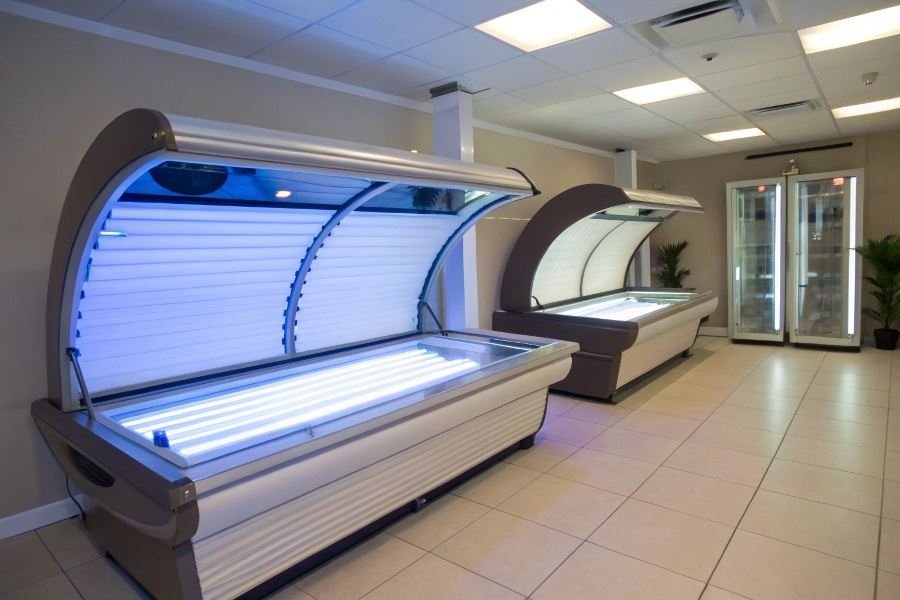
The decision extends far beyond the initial purchase price. Vertical beds typically require 35-50% less floor space than their horizontal counterparts—translating to potentially double the revenue-generating capacity per square foot. However, horizontal beds often deliver longer session times and higher per-session revenue.
Investment reality check
Initial investment varies significantly:
- Vertical units: 7, 000−25,000 per unit
- Horizontal units: 5, 000−30,000 per unit
But the true cost equation must include:
- Maintenance requirements (vertical beds have fewer moving parts)
- Energy consumption (horizontal beds typically use 15-20% more electricity)
- Client preferences in your specific market
The most successful salon owners don’t just follow trends—they analyze their unique market position, space constraints, and client demographics before making this critical business decision.
Business Performance Showdown: Vertical vs Horizontal Tanning Beds
The Client Experience Differential
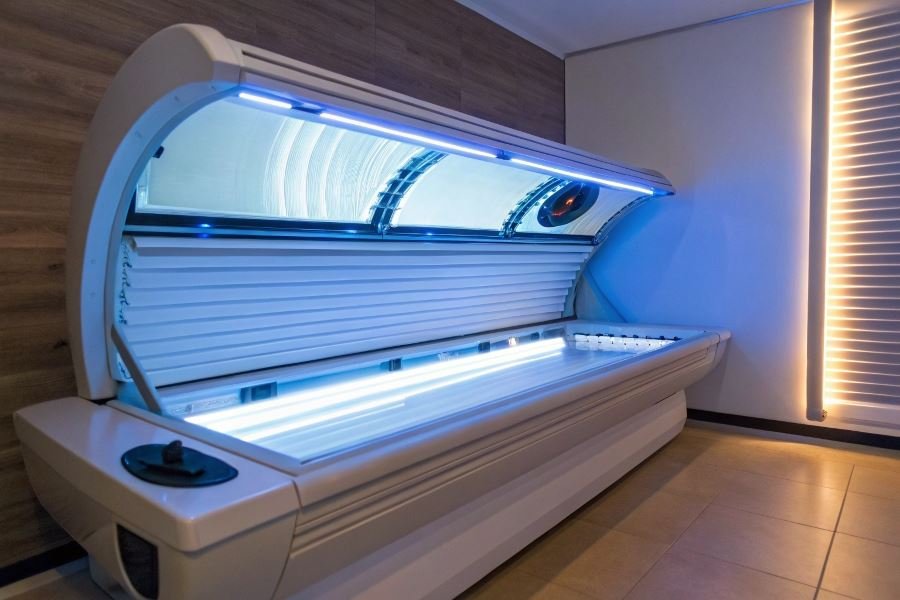
When evaluating tanning equipment for your salon, understanding how clients physically experience each option becomes crucial. Horizontal beds offer the familiar, relaxing experience of lying down—similar to a traditional bed—which many clients find comfortable and familiar. The reclined position allows for complete muscle relaxation, particularly appealing to clients who want to unwind during their session.
Vertical tanning beds fundamentally transform the experience by having clients stand throughout the session. This standing position creates several distinct advantages when considering vertical vs horizontal tanning beds: which is better for your business often depends on how your clientele values convenience versus relaxation. Vertical booths typically deliver faster, more even tans since gravity doesn’t create pressure points or “white spots” where skin contacts the bed surface. For busy professionals who value efficiency, vertical options can be particularly appealing.
Client preference data reveals interesting patterns:
| Client Factor | Horizontal Preference | Vertical Preference |
|---|---|---|
| First-time tanners | 68% | 32% |
| Regular tanners | 41% | 59% |
| Clients over 45 | 73% | 27% |
| Clients under 30 | 35% | 65% |
Maintenance Requirements and Operational Costs
The operational reality of tanning equipment significantly impacts your bottom line. Horizontal beds typically contain 24-32 bulbs that require regular replacement every 800-1,000 hours of operation. The acrylic shields need frequent cleaning and occasional replacement due to constant body contact.
Vertical booths generally contain 40-60 bulbs but offer surprising maintenance advantages:
- Less body oil accumulation on bulbs and acrylics
- Reduced cleaning time (approximately 40% less than horizontal beds)
- Fewer replacement parts due to minimal mechanical components
Maintenance costs for horizontal beds average $1,200-1,800 annually per unit, while vertical options typically run $1,500-2,200—higher initially but often more economical when calculated per client session.
Energy Consumption and Utility Impact
Power consumption represents one of the most significant ongoing expenses for tanning businesses. Horizontal beds typically draw 5,000-7,500 watts during operation, while vertical booths consume 7,000-10,000 watts due to their larger bulb arrays.
However, the efficiency equation isn’t straightforward:
Energy efficiency comparison:
| Factor | Horizontal Beds | Vertical Booths |
|---|---|---|
| Average wattage | 6,200W | 8,500W |
| Session duration | 20 min | 12 min |
| Energy per session | 2.07 kWh | 1.7 kWh |
| Monthly utility cost* | $180-240 | $160-210 |
*Based on 150 sessions/month at average US commercial electricity rates
Session Duration and Customer Throughput
Perhaps the most compelling business performance factor is throughput potential. Horizontal tanning sessions typically last 15-20 minutes, with an additional 5-7 minutes for cleaning between clients. Vertical sessions average just 9-12 minutes with 3-5 minutes for turnover.
This efficiency creates dramatic differences in daily capacity:
- Horizontal bed: 2-3 clients per hour = 16-24 clients per 8-hour day
- Vertical booth: 3-4 clients per hour = 24-32 clients per 8-hour day
The vertical advantage becomes particularly valuable during peak seasons when appointment slots are at a premium. Many successful salons implement a hybrid approach, offering both options to maximize both client satisfaction and operational efficiency.
The throughput advantage of vertical units can translate to approximately 30% higher revenue potential per square foot—a compelling consideration for salons in high-rent locations where space optimization directly impacts profitability.
Strategic Tanning Bed Selection for Maximum Business Impact
Vertical Beds for High-Volume Operations
Vertical tanning beds shine in business models prioritizing efficiency and throughput. Fitness centers and multi-service spas benefit tremendously from these stand-up units. With average session times of just 8-12 minutes (compared to 15-20 for horizontals), vertical beds can serve up to 40% more clients daily during peak hours.
The space efficiency factor cannot be overstated. A standard Sun Capsule V Series vertical booth occupies approximately 15 square feet, while comparable horizontal units require 25-35 square feet. For urban locations where rent exceeds $30 per square foot annually, this difference translates to thousands in savings.
Membership-based tanning salons with high client turnover particularly benefit from vertical options. The quick-service model aligns perfectly with the “get in, get tan, get out” mentality of busy professionals seeking efficiency.
Vertical beds also demonstrate superior performance during the January-April “tanning season” when demand spikes dramatically and maximizing throughput becomes essential.
Horizontal Beds for Premium Experiences
Horizontal tanning beds dominate in business models emphasizing comfort and premium experiences. Luxury day spas, boutique tanning salons, and high-end wellness centers leverage these units to create differentiated offerings.
The relaxation factor drives significant revenue potential. Clients using horizontal beds typically spend 20-30% longer in your establishment, creating opportunities for additional service sales and product recommendations. The Ergoline Advantage and similar premium horizontal units feature comfort enhancements that justify premium pricing—often $5-10 more per session than vertical alternatives.
Businesses in areas with older demographic profiles report stronger preference for horizontal options, with surveys showing 68% of tanners over 45 preferring to recline during sessions.
The most successful premium tanning businesses don’t just sell UV exposure—they sell an experience where comfort justifies premium pricing.
The Hybrid Approach Advantage
Many thriving tanning businesses implement a strategic hybrid approach. The optimal mix typically follows the 70/30 rule:
| Business Type | Recommended Vertical % | Recommended Horizontal % | Key Consideration |
|---|---|---|---|
| High-volume salon | 70% | 30% | Maximize throughput while offering options |
| Luxury spa | 30% | 70% | Emphasize comfort while accommodating efficiency-seekers |
| Fitness center | 80% | 20% | Focus on quick service for active clientele |
The hybrid approach allows strategic tiered pricing. Entry-level packages can feature vertical beds exclusively, while premium memberships include horizontal access. This creates natural upsell opportunities and membership stratification.
Seasonal adjustments prove particularly effective with a hybrid setup. During winter months when demand peaks, vertical beds maximize throughput. During slower summer periods, promoting horizontal “relaxation sessions” maintains revenue despite lower client volume.
The most successful hybrid implementations feature clear differentiation in marketing materials. Rather than presenting the choice as merely technical, savvy owners position vertical beds as “Express Tanning” and horizontal options as “Premium Relaxation Tanning”—creating distinct value propositions that appeal to different client segments and maximize overall business performance.
Discover which tanning bed style delivers better ROI for salon owners. Compare vertical vs horizontal options based on client experience, maintenance costs, energy efficiency, and business throughput to make the most profitable investment decision.
Discover which tanning bed style delivers better ROI for salon owners. Compare vertical vs horizontal options based on client experience, maintenance costs, energy efficiency, and business throughput to make the most profitable investment decision.