Ever wondered why the most respected chefs are so particular about their jackets? It’s not vanity—it’s necessity. Behind every pristine white coat lies a carefully considered decision that impacts everything from safety to professional identity.
When selecting a chef’s jacket, you’re not just choosing a uniform—you’re investing in a critical piece of equipment that stands between you and kitchen hazards while simultaneously announcing your culinary credentials. The right jacket doesn’t just look professional; it performs under pressure when temperatures rise and service hits its peak.
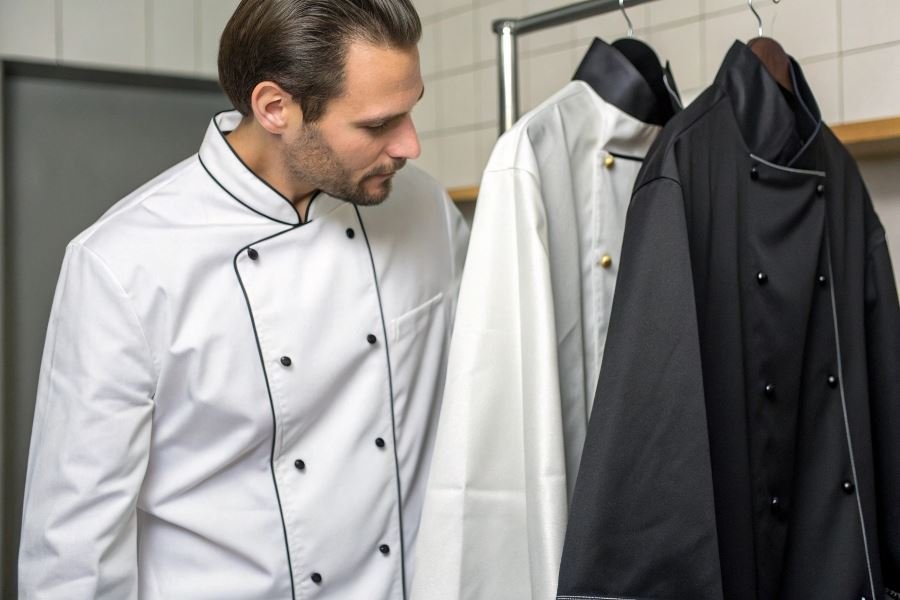
Quality criteria for chef’s jackets have evolved dramatically since Auguste Escoffier standardized kitchen uniforms in the late 19th century. Today’s professional kitchens demand jackets that balance traditional elements with modern performance features. The double-breasted design—originally created to allow chefs to reverse their jacket to hide stains—remains standard, but now incorporates advanced fabrics that breathe, stretch, and protect.
Three factors consistently determine a jacket’s quality: material composition, construction details, and functional design. Premium jackets feature reinforced stress points, thermally efficient fabrics, and ergonomic cuts that allow for movement without sacrificing protection. These aren’t just preferences—they’re standards established by culinary institutions and reinforced by the demands of professional kitchens worldwide.
“The chef’s jacket is both armor and canvas—it protects the chef while projecting their professional identity.” – James Beard Award-winning Chef Michael Voltaggio
Essential Quality Criteria for Chef’s Jackets
When professional chefs evaluate their work attire, they don’t just grab any white coat off the rack. The difference between an amateur jacket and professional-grade chef wear can mean the difference between comfort during a 12-hour shift and unbearable discomfort that affects performance. Understanding how to choose a chef’s jacket based on main quality criteria requires examining three critical components: fabric composition, functional design elements, and safety features.
Fabric That Performs Under Pressure
The foundation of any exceptional chef’s jacket begins with its material. Premium jackets typically feature:
- 100% cotton – Breathable and comfortable, though requires more ironing
- Cotton-polyester blends (65/35 or 50/50) – Offers wrinkle resistance while maintaining comfort
- Egyptian cotton – Superior breathability with a luxurious feel, commanding higher prices
Thread count matters significantly. Higher thread counts (above 240) indicate tighter weaves that resist stains and maintain structural integrity through countless wash cycles.
The best chef jackets maintain their crisp appearance even after 200+ industrial washes, making them an investment rather than an expense.
Fabric weight also determines durability and comfort. Professional-grade jackets typically range from 5-10 oz, with heavier fabrics (8-10 oz) providing maximum durability for intense kitchen environments.
| Fabric Type | Weight | Best For | Expected Lifespan |
|---|---|---|---|
| 100% Cotton | 6-7 oz | Hot kitchens | 1-2 years |
| Poly-Cotton | 7-8 oz | All-purpose | 2-3 years |
| Egyptian Cotton | 8-10 oz | Fine dining | 3+ years |
Design Elements That Enhance Function
The seemingly decorative elements of chef jackets serve crucial functional purposes:
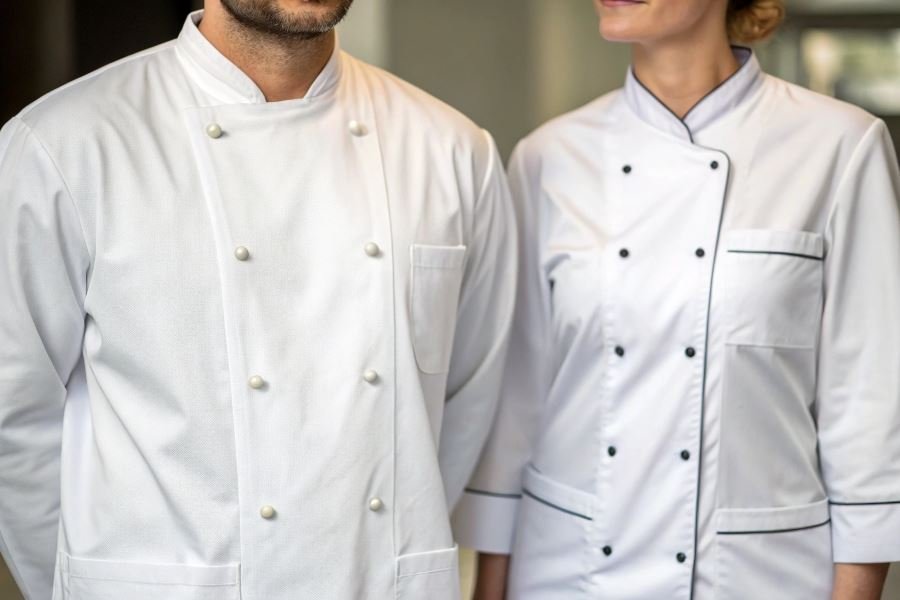
Double-breasted construction isn’t just traditional—it provides an additional layer of protection against heat, spills, and burns. This design allows chefs to “re-button” by switching sides when one becomes soiled, maintaining a professional appearance throughout service.
Sleeve length options matter tremendously:
- Long sleeves protect arms from burns but can be uncomfortable in extreme heat
- Three-quarter sleeves offer a practical compromise
- Short sleeves maximize mobility and cooling but sacrifice protection
Collar styles vary based on both tradition and function:
- Mandarin collars provide a sleek, modern look with less fabric at the neck
- Traditional stand-up collars offer additional neck protection
- Convertible collars provide versatility for different kitchen environments
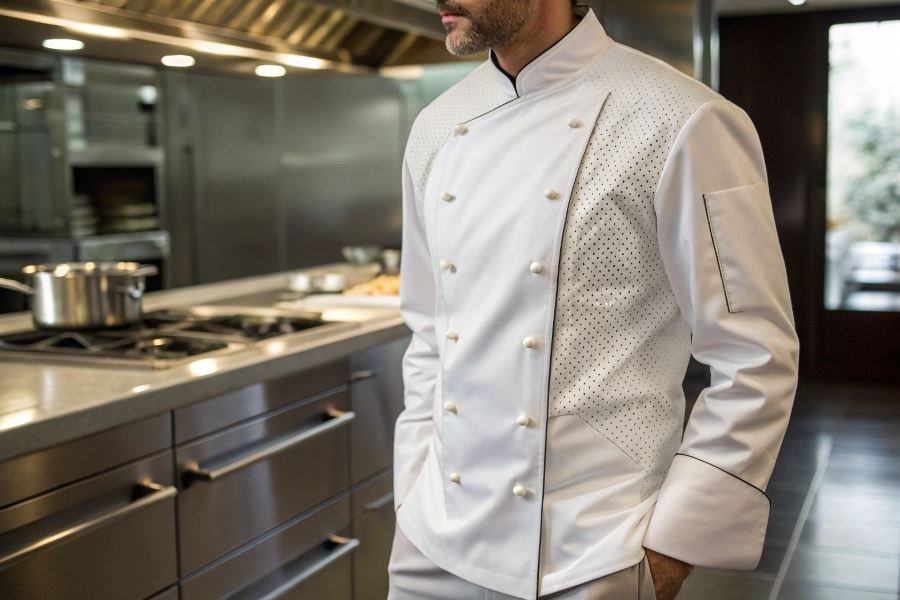
Ventilation panels under arms or along the back significantly improve comfort during long shifts. Premium jackets from brands like Chef Works incorporate mesh panels that enhance airflow without compromising professional appearance.
Heat Resistance and Safety Features
Modern chef jackets incorporate advanced safety features that weren’t available even a decade ago:
Flame-resistant treatments can be applied to fabrics, creating an additional safety barrier in environments with open flames. These treatments maintain effectiveness through multiple washes when properly cared for.
Thermodynamic properties of different fabrics determine how quickly heat transfers through the material. Premium jackets create an insulating barrier that slows heat transfer, giving chefs precious extra seconds to react before burns occur.
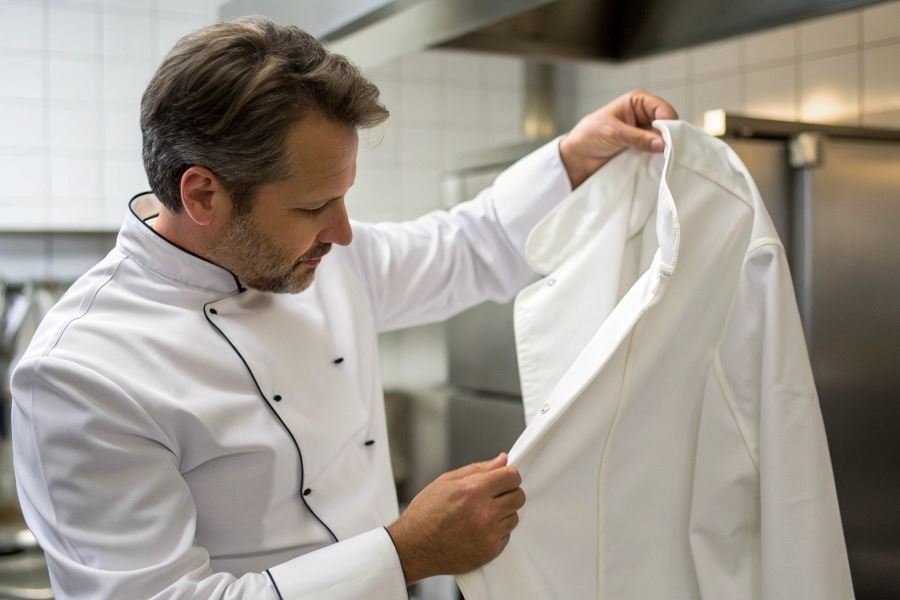
Reinforced stress points at shoulders, underarms, and cuffs prevent tearing and extend jacket lifespan. Look for double-stitched seams and bar tacking at these critical junctures.
The best chef jackets balance these quality criteria with practical considerations like price point and kitchen environment. By prioritizing these essential elements, culinary professionals can select jackets that enhance performance while providing necessary protection in demanding kitchen environments.
Making the Final Decision on Your Chef’s Jacket
When it comes to selecting the perfect chef’s jacket, the final decision requires balancing multiple factors. Let’s cut through the confusion and focus on what truly matters for your professional kitchen attire.
Balancing Quality and Budget
The age-old dilemma of quality versus cost doesn’t have to be a zero-sum game. Premium chef jackets from brands like Chef Works typically range from $50-120, offering superior fabric quality and construction. However, mid-range options between $30-50 can deliver remarkable value without compromising essential features.
Investment perspective: A higher-quality jacket might cost twice as much upfront but last three times longer, making it more economical over time. Consider this calculation:
| Quality Level | Initial Cost | Lifespan | Cost Per Year |
|---|---|---|---|
| Economy | $25 | 6 months | $50 |
| Mid-range | $45 | 1 year | $45 |
| Premium | $95 | 2+ years | Under $48 |
The true cost of a chef’s jacket extends beyond the price tag to include replacement frequency and professional image.
Maintenance Requirements Matter
Maintenance needs should influence your selection as much as the initial specifications. The best jacket becomes a burden if it requires special care that disrupts your workflow.
Key maintenance considerations include:
- Wash resistance: Premium jackets maintain their appearance after 200+ industrial washes
- Stain release technology: Some fabrics like those from Dickies Chef incorporate stain-release treatments
- Drying time: Quick-dry fabrics can be ready for the next shift with minimal downtime
- Wrinkle resistance: Poly-cotton blends typically require less ironing than pure cotton
A jacket requiring specialized cleaning or excessive ironing adds hidden costs in time and effort. The most practical jackets balance performance with straightforward care requirements.
Top Professional Recommendations
After evaluating dozens of options against professional standards, these three chef jackets consistently deliver exceptional performance:
-
Mercer Culinary Genesis – The gold standard for serious professionals, featuring moisture-wicking technology and reinforced stress points. The thermometer pocket and underarm vents make this a functional masterpiece that justifies its $85 price point.
-
Bragard Grand Chef Jacket – French craftsmanship meets modern functionality with 100% cotton that breathes beautifully while maintaining a crisp appearance. At $110, it’s an investment in both comfort and prestige.
-
Happy Chef Executive Chef Coat – The value champion at $55 delivers surprising quality with reinforced buttons, multiple pockets, and a poly-cotton blend that stands up to rigorous kitchen conditions without special maintenance.
When making your final selection, prioritize the features that align with your specific kitchen environment. A pastry chef might value stain resistance differently than someone working the grill station. The perfect jacket balances universal quality markers with your particular professional needs.
Remember that your chef’s jacket is both a tool and a statement—choose one that performs under pressure while projecting the professional image you’ve worked hard to build.
Discover the essential quality criteria for selecting professional chef's jackets, from fabric composition to heat resistance features. Learn how to evaluate durability, functionality, and design elements to make an informed investment in your culinary career.
Discover the essential quality criteria for selecting professional chef's jackets, from fabric composition to heat resistance features. Learn how to evaluate durability, functionality, and design elements to make an informed investment in your culinary career.